Categories
Issue 1 Volume 8

‘It’s Maine; People Like to Feel Connected’: Traditional Standards and Community Engagement in Local Television News

About the Author: Theodora Ruhs, Department of Journalism, Central Connecticut State University. Correspondence for this article should be addressed to Theodora Ruhs, Department of Journalism, Central Connecticut State University, New Britain, CT 06050.
Contact: ruhs@ccsu.edu
Abstract

New communication technology creates new ways for local television journalists to both engage with and learn about their communities. At the same time, there seems to be an overall push for these journalists to connect with their communities in multiple other ways. This study employs a thematic analysis of interviews with local television journalists in Maine to explore how they negotiate traditional journalism, while also adapting new technology and evolving what it means to serve the community. The analysis suggests journalists find it challenging to align traditional responsibilities with new media norms.

Keywords: journalism, professional standards, local news, social media, community engagement

In a small-market television newsroom in Maine, journalists regularly post selfies, behind-the-scenes information, and comments directly to audience members on Facebook and Twitter. A scroll through Twitter reveals these types of tweets from Maine broadcast journalists: A selfie sitting at the desk in a winter coat captioned, “You know you work in Maine when”; a shot of a fellow reporter looking windswept after reporting a storm; a reporter’s vantage point of a city council meeting showing what the reporter sees. “It’s Maine,” a local journalist said when this practice was questioned. “People like to feel connected.”

Journalists are required to cultivate engaged personas both on social media and within the community they serve, while also maintaining authority as distributors of essential civic information. Journalists must simultaneously preserve the neutrality and independence that safeguards their credibility, while simultaneously participating in conversations with the community that did not occur in previous eras.

This paper proposes that the tensions between these two roles are leading to new uncertainties journalists must learn to navigate. Through a thematic analysis of interviews with local television journalists in Maine, community involvement is explored, along with tensions and ambiguities that arise when involvement overlaps with changing technology and traditional journalistic standards.

The field of journalism continues to transform as technological and economic challenges alter what it means to be a journalist. Looking at television news in Maine, this paper suggests the impact of new technology on television journalists’ social and political roles can be further investigated through local journalists’ perceptions of the dual purposes of local television news—credible information distribution and local connections. These journalists are not just doing local television news, but also community journalism.

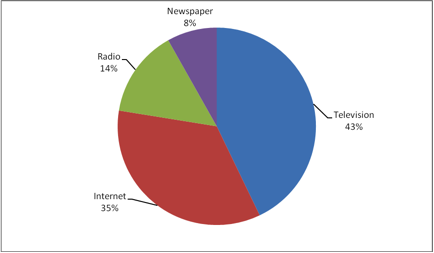
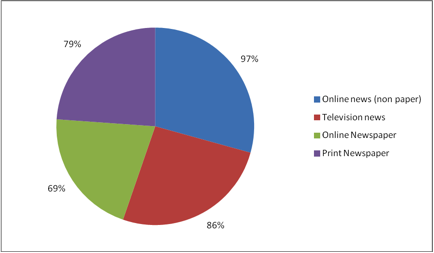
Local television news is a consistently influential part of democracy in the United States. Despite the decline in audience, it continues to draw larger audiences than other television news sources, according to Pew Research Center (2018). While digital news media audience size has increased to 43 percent of adults often getting their news online (though 93 percent find some of their news online), 50 percent of American adults still consistently get their news from television. Of that percentage, local television news has the largest share (Gottfried & Shearer, 2017).

In Maine, it seems local television news remains viable precisely because journalists are proving adaptable as technologies alter traditional practices. In particular, journalists define their role as being both integrated with and responsive to their local communities. While this idea is not new when it comes to local news media, audiences are increasingly seen as collaborative partners in the creation and distribution of information.  For instance, Batsell (2015) argues that it is imperative for today’s journalists to interact with audience members to survive in this new environment. While established norms, such as objectivity and independence, remain integral to practice, the tension between traditional and contemporary responsibilities can be stark. Understanding this relationship can inform news production practices beyond local television news and guide journalism training and education.

While local journalism does not necessarily mean community journalism, journalists’ roles in the community are an important part of how they think about what they do. Of note, since this research was conducted, one of the stations from which journalists were interviewed now has a section on their website for “Maine Moms” that brings together “a variety of news sources, community journalists, and comments and suggestions from Moms like you” (“Maine Moms”, n.d.).

While the primary job of journalism is to inform, its democratic function must also include space for a diversity of voices that engage the viewer with issues of common interest in both the broadcast and the larger public sphere. Continually declining audience numbers, overall, point to the fact that, while news is available, the public can’t be made to engage. Here, it is clear that local broadcast news sits in a unique position. That local news retains its significance among news audiences suggests its varying approaches and attitudes towards community engagement and traditional practices and standards may continue to impact the profession, and its differing connections to community are aspects worth examining.

Literature Review

The search for definition and standards of practice in professional journalism has seen numerous approaches, from overall deontology to situational decision-making of case studies (Bowen, 2013; Deuze, 2010). With that and the search for a global ethic focusing on transcendent principles, rather than applicable practices or concrete definitions (Herrscher, 2002; Ward, 2005), it seems best to think of standards, as Deuze (2005) argues, as part of a professional ideology. This study utilizes Deuze’s (2005) classification of this ideology as a basis to examine attitudes towards established normative practices and standards in news production.

Deuze (2005) argues that professional journalism consists of an overarching ideology that practitioners adhere to in order to provide legitimacy for their work. Based on a review of previous scholarship, Deuze breaks this ideology into five primary components: public service, autonomy, immediacy, ethics, and objectivity. These ideals, as Pihl-Thingvad (2014) finds, are an important part of a journalist’s identity, and can impact commitment to news production. Other scholars have found that traditional ideals are decreasing in priority because in their daily practices, journalists face pressures of producing more in less time with fewer resources, although they still believe they are committed to journalistic ideals in their work (Henderson & Cremedas, 2015).

A commitment to traditional standards and ideals has come up in a number of studies as a possible impediment to fully adapting the potential of online platforms such as social media (Reinardy & Bacon, 2014; Spyridou, Matsiola, Veglis, Kalliris, & Dimoulas, 2013). This impediment is not from a want of adapting to technology, but rather, as Lysak, Cremedas and Wolf’s (2012) survey results show, not fully understanding the journalistic value and how to judge its reliability as a source. Moon and Hadley (2014) found television journalists relied more heavily on Twitter than other traditional journalists. It was sometimes used as a primary source, creating concerns about credibility. Additionally, a growing workload from the adoption of multiple platforms disrupted routines and lead to concerns about quality and accuracy (Adornato, 2014; Lysak et al., 2012; Smith, Tanner, & Duhe, 2007).

The development of new technology, specifically social media, has changed how journalists choose and produce content. Lewis and Molyneux (2018) define social media broadly as media that enhance interpersonal communication but more specifically social networking platforms, such as apps. The social nature of these platforms has broadened the expectations of traditional journalists to include two-way communication and engagement with audience members, bringing them into the conversation about not just content, but journalistic practice as well (Feighery, 2011; Malone, 2010; Skoler, 2009).
Revers’ (2014) study of Twitter use among journalists in upstate New York found a divide between journalists who were wary of the breakdown of professional norms and those who embraced the platform as a space of transparency:

Traditionalists and light tweeters conceived of journalism as subjected to one set of norms, irrespective of the outlet it occurred on. Deviation from these norms on one level (or platform) meant undermining journalism as a whole. Intense tweeters assumed flexible boundaries and diversified their performance in different venues (Revers, 2014).
Although tensions still exist, relationships between the technology-adopting and the technology-ambivalent journalists were able to facilitate Twitter as a viable news alternative and push for adjusted professional norms that fit the nature of the medium. Revers (2014) further concludes the concept of transparency, as applied to journalistic use of Twitter and other social media, already fits within traditional notions of journalism, such as public service and autonomy.

While looking specifically at social media use at small circulation community newspapers, Wright (2018) found that journalists continue to hold onto traditional values and take on traditional roles in their posts. This seems to point to a continuing struggle to reconcile the engagement capabilities of new technology and journalistic ideals.
A focus on local television news provides another layer to this understanding of professional ideology. Local television news is, as argued by scholars such as Rose (1979), “its own unique, scrambled genre, with its own rules, forms and attitudes” (p. 168). Further, as Kaniss (1991) says, “local news has always played an important role in the way a city and region understands its problems, its opportunities, and its sense of local identity” (p. 2). It is biased towards a local audience. Television journalists feel the need to present newsworthy information while producing content that engages their community (Henderson & Cremedas, 2017).

Community journalism is often associated with small-circulation newspapers (Lauterer, 2006), but Reader (2012) asks, “who can really argue that a journalist who has lived and worked his whole life in a single large metropolis cannot practice community journalism because he works for the most popular TV news station in that city?” (p. 15). Community journalism also does not necessarily mean a geographic location, but can encompass journalism for a given community as it exists in many forms, especially as technology changes the boundaries of what community means (Robinson, 2014; Hatcher & Reader, 2012).

What makes a community journalist is both reporting focused on and a connection to a community. As Hatcher and Reader (2012) write, “The modern community journalist is not an autonomous outsider, objectively recording all that transpires, but a community connector who has both a professional and a personal stake in that community” (p. 8). The community journalist should be involved in community meaning-making through an active role in “listening and leading” (Lowery & Daniels, 2017).

This study aims to understand how local television journalists both view traditional standards and practices in the face of a changing news environment while engaging with their community in new ways.

Research questions

These questions seek to understand how the journalists in this study perceive aspects of their job discussed in the literature review:
RQ1: In the face of a changing news environment, what are local television journalists’ attitudes toward traditional journalistic standards?
RQ2: How do local television journalists perceive technology and social media-shaping journalistic standards and practices?
RQ3: How do local television journalists view their role in the community?

Method

This research is an analysis of data from a previous ethnographic study, which included participant observation and qualitative interviews. Only the interviews are analyzed here. The previous ethnographic research questioned attitudes toward newsroom norms and journalistic standards. The questions for the interviews were developed from observations, which revealed strong affinity to traditional standards, although not necessarily in practice, as well as interest in engaging with and participating in community through multiple means, including social media.

Semi-structured interviews allowed for the interviewer to tailor questions and interactions to the interviewee. Silverman (2011) described the interview as requiring flexibility, rapport, and active listening. The use of follow-up questions can engage the interviewee in more comprehensive replies, while building rapport creates the possibility of more open answers to questions. Higgins-Dobney and Sussman (2013) relied primarily on these types of interviews, in conjunction with descriptive data, for their study on the impact of ownership structures and technological re-organization on local television journalists, specifically regarding labor conditions. They identified several consistent trends in news production including the impact of different environments on the use of journalistic values through their interviews. How the participants constitute meaning in their discourse provides insight into how they construct themselves as good journalists.

Data Collection

Data was collected in 2015 in the state of Maine. Institutional Review Board approval was obtained for data collection. To ensure confidentiality, participant names and specific identifying information have been removed or altered.

Participants

All participants interviewed for this study worked for a local television station in Maine at the time the interviews were conducted. There were 11 participants interviewed for this study: three female and eight male journalists, ranging in age from their early 20s to late 50s, all of whom worked in four different newsrooms in Maine. These newsrooms are in markets 80, 156 and 205 (Nielsen, 2015). There was a varying degree of training, from journalism degrees to on-the-job learning. Experience ranged from approximately 30 years to less than one, with four of the participants having more than 19 years and seven having less than five years.

Interview Protocol

One-time semi-structured interviews were conducted primarily in the workplace, and one interview was conducted via telephone. The interviews used in this research were designed to promote open-ended responses and delve further into preliminary responses. Questions included “What is your job as a local news broadcaster?”, “What role does social media play in your work?”, “What are important considerations for putting together news that is up to your standards?” and “What are your thoughts on traditional journalistic standards?” Based on answers, follow-up questions included asking what it means to be part of their local community, and what kinds of activities were part of that role. Audio recordings and transcripts were made with the permission of the participants.

Data Analysis

Interview data were analyzed using a thematic analysis (Braun & Clarke, 2006; Leeds-Hurwitz, 2005; Lindlof & Taylor, 2011), which is an analytical process looking for patterns of meaning, ideas, or concepts. Within this analysis, thematic categories with sub-themes are developed from a textual analysis of recorded data. Transcripts of interviews were broken into chunks of text thought to contain a unit of meaning, and these were grouped according to similarities. The groups were then consolidated into larger thematic categories.
While there are no specific guidelines for the number of interviews for qualitative interviews, 11 interviews were found sufficient for this analysis based on participant homogeneity and thematic saturation, where new interviews did not add additional thematic content (Guest, Bunce, & Johnson, 2006). In their research on saturation, Guest, Bunce and Johnson (2006) found that saturation had occurred by the time they had analyzed 12 interviews. Additionally, based on the make-up of the journalists from the original ethnographic study, this was found to be a representative group.

Interpretation

The thematic analysis led to two primary thematic categories: Community engagement and building a relationship with community members for audience retention and story development. The first key finding is technology influences how and why stories are produced and distributed.

Within these thematic categories are notable overlaps, which highlight areas of ambiguity and tension in the journalists’ perceptions about how community engagement, technology, and traditional standards work in concert. To provide the foundation for these areas, first, I will discuss the first two themes individually, then discuss the tension between them as a third theme.

Theme 1: Community Engagement

Engaging the local community fell into three primary subcategories: Understanding and reflecting the interests of the community; Being a member of the community; and Building ethical relationships with community members. Each of these subcategories has a slightly different approach to the focus on community. In the first subcategory, Being a member of the community, the community is seen as primarily an audience that has specific needs and interests that need to be met by local media, which demonstrates the local bias discussed by Kaniss (1991). One interview participant referred to this as Mainer pride:

If we can find something that resonates with Mainers about somebody who’s working hard or, you know, a local business that a lot of people take pride in. I mean, there is such a sense of pride, especially in the part of Maine that we cover, about being from Maine. And we, I mean, it’s in our TV promos as you might have seen. I mean, that is something that we take pride in and then also try to look aggressively for stories that reflect that. I don’t know if you would call it a mission, but that trait of the place that we serve.

This sentiment was repeated by most participants, with the implication that only local news could do this job successfully, based on the connection local reporters have to the community. Phrases like “pulse on the community” and “in the know” were used to demonstrate the journalist’s ability to understand and provide for the particular needs of the local area. This includes a focus on topics of significance:

There’s certain stories that this community seems to really enjoy, like veterans pieces, for example. I think those are… that’s really something that this community connects with so, you know, you really try to focus on those kind of things.

Being in tune with the community’s needs and interests is how these journalists chose stories they believe will encourage the communities to engage with their content.

Part of being in tune is making sure to include content from all communities in the viewing area in an even manner. Audience members, they explained, need to feel like the news connects directly to their community, not just neighboring communities or the “big” city where the station is based. Without this localized attention, the audience might disengage. As one participant pointed out, specialized local content is what audiences tune in for:

You know, just try to give them as much as I can, keeping it as local as I can, ‘cause you can get any of that Red Sox… all that stuff anywhere else. So try to get stuff here that’s new to them…

Local sports, this participant said, is a key area of interest for all the communities served. Community members have children and friends on these teams and are excited to see them.

Another aspect of community engagement was that journalists themselves are members of the community. The following interview excerpt regards the number of journalists, who, unlike many younger reporters, decided to stay at their stations long-term:

We’re still local people with, with vested interest in our local community, you know. You’ve got a foundation here at this particular station where you have a lot of people who have been here a long time. They make this home. They happen to do this for a living, you know…

While not expressed by all participants, this sentiment was seen from both long-time journalists who have lived in the market for many years, as well as young journalists who still plan to move into larger markets in several years. The following excerpt came from a younger journalist, in his early 20s, who was newer to the area:

It is more of a community-based feel, and a lot of the times you’ll know, if you’re at a scene in Bangor, like I know, I often know the officers on scene just from like work, having worked here for a year and a half and just like being part of the community.

Being part of the community is not just an individual matter, but an aspect of news stations as whole entities. The participants’ stations make a point to be part of local events from holding food drives to covering and engaging in walks for cancer treatment.

I think one of my favorite parts about working in Bangor, and living in Bangor, is the community interaction, and you get to meet so many people in the community because you’re doing community events that really matter to people, and maybe one walk doesn’t matter to you, but another one might, and we’re usually at all of them.

This statement overlaps with the idea of covering stories that matter to the community, but also emphasizes the importance of being in the community as well.

Community was also discussed in terms of relationships. These relationships are integral to working effectively and living harmoniously in the stations’ coverage areas. Several participants mentioned approaching officials and other interview subjects politely, asking permission to film, even if they know they have the right to. In the following excerpt, the participant discusses finding a balance between being in a community and reporting on it:

We are small communities. We have to live with these people, and, yeah, a door can shut and you’re really in trouble trying to get information, you know. Uh, you can’t let that make you shy away from the story. At the same time, don’t go burning a bridge unnecessarily, you know. So yeah, yeah, your network, you can’t drop in, do the story and they’ll never see you again, you know.

This participant is also demonstrating the difference between local news and network or national news, highlighting the specific relationship demands of community news work, of which trust is a major element.

The term “fairness” was used frequently in the context of relationships. This is not the same fairness of equal time or providing response time to criticism, but fairness as it relates to sensitivity and building ethical relationships with the communities served. One of the participants described how a young girl and her younger brother were in an accident while using a recreational vehicle on their own. The younger brother was killed, and the police released the names of both children. The girl was not charged with anything for the accident, but, in reporting the story, questions were raised about whether it was ethical to use the girl’s name.

To be fair and sensitive, it was decided the name would not be used. The argument was that even though the story raised a number of questions about what happened, nothing in particular was gained by naming her, and it might make her life more difficult. This conception of fairness as a type of sensitivity to community members was found in the transcripts of interviews with most of the participants, ranging from dealing with reputations to deaths to illness or disability. The following excerpt encapsulates this sentiment:

You want to give the viewers the information, but you don’t also want to ruin someone’s life whose life didn’t need to be ruined in the first place.

Theme 2: Impact of Technology

Technological developments have long influenced the evolution of television news and broadcast journalism practices. With more recent changes in technology, however, participants with longer careers noted enthusiastically that the way they work has changed in multiple ways, becoming paradoxically easier and more difficult. With more mobile and networking capabilities, these participants noted both cell phones and networked, digital video created a more responsive system to breaking news or changes in story development. The expanded use of email and social media provided local journalists with more ways to reach out and connect with sources and engage with their audiences.

On the other hand, these same technologies create a heavier workload for everyone in the newsroom with more platforms to populate, the possibility of last-minute changes, and more spaces to engage with and search for information and stories. As discussed in the literature review, this concern has been found in numerous other studies. In particular, social media stood out in the interviews as an important factor in the daily workings of the newsroom, with one participant noting they are no longer a television station, but a multimedia station.

Overlapping with the concepts of community relationships, technology, specifically the use of internet and social media, have opened up avenues for building new types of relationships through accessibility to on-air talent and candid behind-the-scenes knowledge. Reporters and anchors are encouraged to post pictures and information about their work process, in addition to posting updates to and teases for the day’s big stories.

1) I want them on their personal pages because people know who they are and they’re becoming friends with them and that’s great because it’s also helpful for our brand.
2) I mean all of us are so accessible to viewers these days. We all have our own Facebook pages. We have our own Twitter pages.

These digital relationships with audience members create new avenues for connecting with what is happening in the community and what is important to audience members. Particularly, the use of social media is about new ways to engage and get input from viewers. As the following excerpt demonstrates, this includes ways for audience members to draw attention to potential news stories:

They’re more likely to weigh in their support on social media through someone who might initially start a campaign or effort, and then maybe we will look at it and say OK, well there might… maybe there’s more validity to this.

The excerpt suggests just how much impact audience members can have in getting a story covered in a space where they can engage with the newsroom as a group, creating noticeable trends, rather than individuals emailing or calling.

Participants described social media as a tool to specifically ask for audience member contributions and story ideas:

Earlier in the week we posted on Facebook, like, do you have a cool, like, Easter tradition we might be interested in covering. That’s definitely a feature story should nothing else be happening that… like nothing breaking… and people responded, oh yeah, we have like egg fights or things like that. So things like… things that sound cool. That’s a good way to, um, kind of… and then send them a message after and be like, hey, we saw you posted here. Are you interested in doing a story?

This use of social media for story development through both explicitly engaging with viewers and more passively watching and responding to viewers’ online activity was mentioned by most participants as a regular activity in the news development process.

Social media, specifically Facebook, also provides space to engage with users through posting content that is not deemed quite newsworthy enough for broadcast or worth sending a reporter to cover. It allows the newsroom to foster community without the “bridge burning” and loss of trust mentioned in the previous section in a different way.

People will write to us like a lot of fundraisers. Like, we don’t often cover fundraisers. Like if they’re like oh I want to… Like I’m trying to like start a business, here’s my Gofundme page. Can I get some coverage? Like, we’ll tell them to post it on our Facebook page where other people can see it and that way we’re not really promoting it ourselves, but it’s like they post it to us for other people to see and then people are still getting that… Not as much exposure as they would had we covered a story like that, but they’re still getting exposure and at the same time we’re not really burning any bridges by telling a person no.

Social media also provided a place to distribute content in both a more immediate and expanded way. Specifically, Twitter was mentioned as the place reporters posted information while in the middle of reporting and where breaking news is first distributed. This is part of how technology is changing audience expectations of how and when they get information, as demonstrated here:

The public’s expectation has definitely changed because you know our sense of like we have to get this out… we have to, you know, the second it happens, you know … I think court is probably for me the biggest example of that because you know every kind of major twist and turn in some sort of court proceeding is expected to be tweeted…
Rather than waiting for air time, reporters are constantly distributing information to their audiences, even though how that information is packaged changes as it moves from platform to platform.

Theme 3: Positions of Ambiguity and Tension

There is significant overlap between statements put into the previous themes of community engagement and technology. These overlaps were useful in revealing challenges facing journalism as these things further converge. It is not just changing technology that directly impacts newsroom perceptions about journalism, but it also changes ideas about community and steadfast attitudes about the importance of traditional standards. The particular intersection that spawned doubt changed from person to person, but there was an overall sense in the transcripts that there was some apprehension with the current state of local journalism.

The continued importance of traditional standards and ideals can be seen in the prevalent allusions that continued through the interviews. The focus of conversations around these topics often reflected the purpose of journalistic ideology discussed by Deuze (2005). Maintaining credibility and responsibility of the job were frequently used as explanations for the importance of these standards. The idea that following traditional journalistic standards is the responsibility of the journalist was clearly stated in several interviews, such as the following short example:

We have a responsibility to be accurate, to be, you know, to be balanced…

Others expressed a similar sentiment more implicitly. In the following excerpt, a participant discusses how being unbiased is integral to being a journalist.

I mean it’s, it’s like taking something without a bias. I mean it’s just, you know, telling viewers what they need to know and I would hope that’s what we’re doing. If not, I don’t want to work here anymore, you know what I mean? I think it’s the right of the folks watching at home to have a newscast that isn’t biased in any way or isn’t leaning in one way.

If a journalist does not do this, they are not doing journalism, as suggested by the claim, “I don’t want to work here anymore.” The concept of being unbiased is seen as integral to the point that it doesn’t require much explanation, but there is also a sense of responsibility of choice. The journalist presents facts, but it is the responsibility of the journalist to choose which ones the audience needs. Here, the journalist uses standards as tools in acting as a public servant.

Several participants repeated the importance of this sense of responsibility. In another example, a participant talks about these standards and responsibility in terms of quality.

Nice to meet your deadlines. Nice to have that as a goal and to do everything you can to meet them. Nice to get it first. Nice to scoop the competition, this is a business. And, nice to- and for egotistical, uh, reputation purposes, you know, it feels good to do that. But none of that should be the driving factor ultimately. The driving factor should be: is this solid? Can we rely on this? Have we touched enough bases here to have a solid story? You know, have we filled as many gaps as we can to put this out there, this information out there responsibly?

To do your job responsibly as a journalist requires making sure you have the best product with “gaps filled” to distribute. Ultimately, these standards of journalistic production should outweigh other business and personal motivations. If, as this participant says, “scooping” or “ego” take precedence, the implication is that a journalist is failing in their responsibility.

The concept of responsibility was most frequently brought up in relation to journalistic standards, but credibility was also emphasized as a reason for preserving related practices. It is a prudent business practice as a distrustful audience may not remain an audience. In these three excerpts, there is a sense of not losing the trust of the audience with anything that might be considered inaccurate or biased:

1) You have to serve an audience that wants to know that you’re unbiased when it comes to these things…
2) Without image what’s left for any kind of information sharing, whatever we call ourselves now, for journalists, you know. I mean you have to have credibility and you have to have um… and reputations are involved here. I mean obviously if you are very opinionated about a social issue and you share that freely then viewers and consumers have every right to question your objectivity when it comes to covering that issue…
3) You can’t be wrong or else that just makes you look bad, station look bad, and people might be, not that it’s that extreme here like if you get, like pronounce a name wrong, but people notice…

Some of the concerns about where these standards fall apart will not sound new to many, such as whether or not a story is providing free advertising for a business:

I forget what time of year, but like there’s a bakery and they have these strawberry tarts, and like every year we do a story about like, hey, the tarts are here, and I look at that and I go that’s not newsworthy.

While this attention to local business fits into a broader conception of being a part of and supporting the community, which was described by most as an important aspect of the job, there was a sense from some participants that taking on a purely promotional role for the community isn’t the right way to go about it. Making the story about a more newsworthy aspect that impacts more of the community, with the local business purely as an example, was suggested as an alternative.

Here, a poorly defined characterization of community engagement comes into conflict with traditional journalistic standards of independence. Other participants expressed this particular apprehension about community as the possibility that community members might abuse personal relationships to get promotion for their local businesses.

Local business was not the only subject of this type of tension between community engagement and journalistic standards. Prominent community members and prominent community attitudes also came up as subjects of doubt when it came to reflecting community interests while maintaining journalistic integrity:

You want to present information that your viewers are going to appreciate, but you don’t… you… I think you kind of get off the rails as far as objectivity goes when you start writing too much to what you think they want to hear, bec- You know, you obviously… You want to create content that they want to watch, but you also, you know… It’s like, oh well, people in this part of Maine think this or think that, like, I’m going to write my story a little bit more, you know, geared towards that. I think that’s dangerous.

Community engagement online seemed to lead to a similar concern about community members abusing or overly influencing news decisions based on the newsroom’s need to encourage community input. The sense of ambiguity here was around how to, with the new access social media provides audience members, gauge what topics are worth giving time to.

There are contributors, but this is still not their job and, you know. So, we have to, we have to remember that too, that it’s still our job to… to, you know, finally put out that product and things and not to say that the contribution isn’t of value, but I think sometimes we have to question the contribution and, you know, and really wonder like are we doing this just because social media deems that we should be doing something about this? I don’t know. I worry about that sometimes.

While community members are encouraged to contribute pictures, videos, anecdotes and story ideas, when do these contributions require a response? Is a specific issue trending on the station’s social media and email because of manipulation, as this excerpt posits?

A lot of the most vocal people, the ones that are really against something or really for something, they might be a very loud minority. Then again they might be a legitimate majority. But the point is that they’re going to tee off, but if they get some kind of organized response to you it can skew… it’s not scientific. We’ve got 400 responses and 300 of them were negative. Well it’s probably accurate, but you don’t know that for a fact. It could have been a concerted effort.

There are no clear guidelines for knowing when it is appropriate to incorporate audience input online into the reporting process.
The same tension resides around posted critiques and what are often called “trolls,” or people who purposely post disruptive content. Responding to legitimate critique and answering questions is not seen as a problem, but when does critique cross the line into trolling? When is it appropriate to delete comments or not respond? These two excerpts from different participants express the uncertainty around dealing with this aspect of engaging with people online:

1) Sometimes we monitor that sort of thing and we’ll delete things and other times we won’t. So that I feel like that’s something that could be… I don’t… I don’t really know how to… I feel like that’s something that like… I don’t know how many people… I don’t know if anyone knows really how to handle that because people are entitled to opinions, but, at the same time, like do you want vulgar stuff on your website, but, again, it’s just reaction from a story you did.


2) I know that we’ve run into that a couple of times in the newsroom and I can’t even pinpoint the specific examples, but it’s kind of like… you know, because a child is tit-for-tat sort of thing, and you just wonder like are we getting involved in that too much. Is that what we need to be doing?But not that can’t. You know, sometimes you do have to make an immediate response to people and reply to them.

The ambiguity around how to approach these situations comes across not only in what journalists are saying, but also in the almost hesitant way they try to explain the nature of these online interactions. While these types of commentary from audience members may have been present in the past through phone calls, letters, or visits to the station lobby, online interaction provides a whole new scope both through much greater accessibility and the public nature of such comments that raises questions about how to maintain community relationships and journalistic standards online.

The accessibility that social media provides also created a sense of ambiguity in the reverse situation, when audience members are exposed to the darker side of the medium. It opened new doors for gathering information and materials for reporting a story that, for some participants, is rife with potential ethical dilemmas. One participant described a situation during a report on a local soldier. Members of the newsroom were able to find and send a message to the wife using Facebook, but the approach and wording was not sensitive to the situation, which this participant thought was due to the more impersonal nature of the contact.

Some things that were said were kind of… like I would have never said to a person, so I kind of think there are boundaries that are kind of overlapped (…) like you can definitely reach a broader network of people on Facebook and that sort of thing, but I feel like there’s also things that, like, you shouldn’t do as a reporter, like ethically, that goes against what you should be doing.

This same participant also described another situation of reporting on a death where Facebook was used to find out information and a picture of the deceased person. Again, there was an ethical dilemma about approaching people in ways one might not do when actually in the community. For instance, the family should perhaps have been asked for permission to use the photo. However, the photo, as well as the message in the previous example, were technically public, not made private by the Facebook users. The technology provided ways to access the community in ways that are not available off-line, but using this access to report stories seems to come into conflict with the idea of building an ethical and sensitive relationship with the community discussed earlier.

Discussion and Conclusion

Local television journalists in Maine appear to be doing community journalism by, as Hatcher and Reader (2012) say, being community connectors who have “both a professional and a personal stake in that community” (p. 8). At the same time, traditional journalism standards and ideals continue to guide their practice. However, those traditional standards are evolving to respond to demands for engaging with the community. Expanding capabilities for reporting and interaction with the audience create new demands and concerns for Maine’s local television journalists. While still primarily attentive to reporting on the community interests, journalists appear to be increasing their emphasis on engagement with the community.

The concern with local community and the impact of changing technology is not new to local television news, but the current manifestations of these aspects of the local news business are evolving. The significance of community engagement and the growing use of social media are redefining the type of relationships and conversations that are occurring. These relationships are more immediate, more frequent, more accessible, and more participatory.

The questions facing journalists revolve around behavior and responsibility. When does community engagement threaten traditional journalistic ideals? When is sharing online too much? When do these activities impact journalistic integrity, as defined by traditional notions, by engaging in unprofessional or unethical behavior? These questions reflect concerns heard in the interviews regarding the possibility of giving community engagement and social media use too much emphasis over other professional concerns. This signals a need to figure out how credibility can be preserved as journalists push reporting into new arenas.

One limitation of this study is the particular nature of the location. Maine is tied as the state with the largest percentage of the population living rurally (U.S. Census, n.d.). The largest population center is in and around Portland, in the south of the state, which has a population of approximately 66,000 people. The Portland area has three local television news stations and is a medium-size market. Three additional local television stations are in Bangor, a city of about 35,000 people. One more station is in the north of the state in Presque Isle, which serves a market of approximately 27,000 viewers. While this research is based on a specific geographic area, as well as a smaller television market size, and, as such, cannot be generalized, there are some take-aways that can be useful for understanding the current state of local television news as it continues to be an important source of information for American audiences.

Overall, local television journalists in Maine are generally positive toward embracing new technology, and are working toward maintaining their work on multiple platforms.  However, there is tension at the intersection between the use of new digital platforms and a changing concept of community engagement and building relationships. Discussions with journalists showed building community relationships was an important part of their overall journalistic practice, and the use of social media was an important part of facilitating those relationships through both sharing about themselves and engaging directly in conversations with the community.

This study also provides qualitative support for a number of studies that examined journalists’ relationship to social media while bringing attention specifically to local television news. The findings here support previous research that showed journalists are trying to figure out how to combine traditional practices with new opportunities that challenge established norms. The thematic analysis also shows the tensions found with trying to fit the use of technology and traditional standards and ideals into new conceptions of community engagement and relationships.

The traditional ways of doing local news are tied up in a journalistic ideology and identity. Within local television news, this includes an embrace of technology and an understanding that viewers are connecting with on-screen personas. These aspects of the local television news journalist’s professional identity, as shown in the analysis, are still very much a part of how those interviewed for this study view their daily practice. The nature of both the current technological developments and connections with viewers are transforming in ways that sometimes conflict with older perceptions of what it is to report the news.

Even with uncertainties about how to handle new conversations happening about news work, journalists in Maine are managing to negotiate individual situations. The fact that a mostly rural state continues to support a number of local stations suggests that these negotiations are on the right track. As Newman (2016) points out, “In many cases, broadcast television is the only reliable and accessible source of information for these communities, which are outside the scope of broadband networks” (p. 5), providing an alternative explanation for local television’s continued prominence. However, as local television news seemingly maintains its position across the country, it is worth examining to see if these themes, tensions and negotiations are found in other markets.

References

  • Adornato, A. C. (2014). A digital juggling act: New media’s impact on the responsibilities of local television reporters. Electronic News, 8(1), 3–29. doi:10.1177/1931243114523963
  • Batsell, Jake. (2015). Engaged journalism: Connecting with digitally empowered news audiences. New York: Columbia University Press.
  • Bowen, S. A. (2013). Using classic social media cases to distill ethical guidelines for digital engagement. Journal of Mass Media Ethics, 28(2), 119–133. doi:10.1080/08900523.2013.793523
  • Braun, V., & Clarke, V. (2006). Using thematic analysis in psychology. Qualitative Research in Psychology, 3(2), 77–101. doi:10.1191/1478088706qp063oa
  • Deuze, M. (2005). What is journalism?: Professional identity and ideology of journalists reconsidered. Journalism, 6(4), 442–464. doi:10.1177/1464884905056815
  • Deuze, M. (2008). Understanding Journalism as Newswork: How It Changes, and How It Remains the Same. Westminster Papers in Communication and Culture, 5(2), 4–23.
  • Deuze, M. (2010). Ecquid Novi : African Journalism Studies Journalism studies beyond media : On ideology and identity Journalism studies beyond media : On ideology and identity, 0054(August 2014), 37–41. doi:10.1080/02560054.2004.9653298
  • Feighery, G. (2011). Conversation and Credibility: Broadening Journalism Criticism Through Public Engagement. Journal of Mass Media Ethics, 26(2), 158–175. doi:10.1080/08900523.2011.559806
  • Gottfried, J., & Shearer, E. (2017). Americans’ online news use is closing in on TV news use. Pew Research Center. Retrieved http://www.pewresearch.org/fact-tank/2017/09/07/americans-online-news-use-vs-tv-news-use/
  • Guest, G., Bunce, A., & Johnson, L. (2006). How Many Interviews Are Enough ? An Experiment with Data Saturation and Variability. Field Methods, 18(1), 59–82. doi:10.1177/1525822X05279903
  • Harmon, M. D. (1989). Market Size and Local Television News Judgment, (1978), 15–30.
  • Hatcher, J. A. & Reader, B. (2012). Foreword: New terrain for research in community journalism. Community Journalism, 1(1), 1-10.
  • Henderson, K., & Cremedas, M. (2017). Are traditional journalism principals alive in today’s local TV newsrooms? Electronic News, 11(4), 245-262. doi: 10.1177/1931243117694673
  • Herrscher, R. (2002). A Universal Code of Journalism Ethics : Problems , Limitations , and Proposals. Journal of Mass Media Ethics: Exploring Questions of Media Morality, 17(4), 277–289. doi:10.1207/S15327728JMME1704
  • Higgins-Dobney, C. L., & Sussman, G. (2013). The growth of TV news, the demise of the journalism profession. Media, Culture & Society, 35(7), 847-863.
  • Hutchby, I. (2006). Media talk: Conversation analysis and the study of broadcasting. Maidenhead, Berkshire, England: Open University Press.
  • Kaniss, P. (1991). Making local news. Chicago, IL: The University of Chicago Press.
  • Lauterer, J. (2006). Community journalism: Relentlessly local (3rd ed.). Chapel Hill: University of North Carolina Press.
  • Leeds-Hurwitz, W. (2005). Ethnography. In K. L. Fitch & R. E. Sanders (Eds.), Handbook of language and social interaction (pp. 327-353). Mahwah, NJ: Erlbaum
  • Lewis, S., & Molyneux, L. (2018). A Decade of Research on Social Media and Journalism: Assumptions, Blind Spots, and a Way Forward. Media and Communication, 6(4), 11-23. http://dx.doi.org/10.17645/mac.v6i4.1562
  • Lindlof, T., & Taylor, B. (2011). Qualitative communication research methods. Thousand Oaks, Calif: SAGE.
  • Lowery, W. & Daniels, G. L. (2017). Assessing a 10-year experiment in community journalism education. Journalism & Mass Communication Quarterly, 94(1), 335-354. Doi: 10.1177/1077699016681970
  • Lysak, S., Cremedas, M., & Wolf, J. (2012). Facebook and Twitter in the Newsroom How and Why Local Television News is Getting Social With Viewers? Electronic News, 6(4), 187–207. doi:10.1177/1931243112466095
  • Maine Moms. (n.d.) Retrieved from https://www.wabi.tv/momseveryday/
  • Malone, B. M. (2010). Local TV’s Top Tweeters Carry Clout Station reporters say microblogging more than a fad.
  • Moon, S. J., & Hadley, P. (2014). Routinizing a New Technology in the Newsroom: Twitter as a News Source in Mainstream Media. Journal of Broadcasting & Electronic Media, 58(2), 289–305. doi:10.1080/08838151.2014.906435
  • Neilsen. (2015, Sept. 26). Local television market universe estimates. Retrieved from http://www.nielsen.com/content/dam/corporate/us/en/docs/solutions/measurement/television/2015-2016-dma-ranks.pdf
  • Newman, L. (2016, Jan. 11). A rural lifeline not to be compromised. Broadcasting & Cable.
  • Pew Research Center. (2018a). Local TV news fact sheet. State of the Media. Retrieved from http://www.journalism.org/fact-sheet/local-tv-news/
  • Pihl-Thingvad, S. (2014). Professional ideals and daily practice in journalism. Journalism . doi:10.1177/1464884913517658
    Radio Television Digital News Association. (n.d.). Code of ethics. Retrieved from http://www.rtdna.org/content/rtdna_code_of_ethics
  • Reader, B. (2012) Community journalism: A concept of connectedness.In B. Reader & J. A. Hatcher (Eds.), Foundations of Community Journalism (3-20) Los Angeles, CA: Sage.
  • Reinardy, S., & Bacon, C. (2014). Feast and famine? Local television news workers expand the offerings but say they are hungry for quality journalism. Journal of Media Practice, 15(2), 133–145. doi:10.1080/14682753.2014.960766
  • Revers, M. (2014). The Twitterization of News Making: Transparency and Journalistic Professionalism. Journal of Communication, 64(January 2011), 806–826. doi:10.1111/jcom.12111
  • Robinson, S. (2014). Introduction. Journalism Practice, 8(2), 113-120. Doi:10.1080/17512786.2013.859822
  • Rose, B. (1979). “Good evening, here’s what’s happening…” The roots of local television news. Journal of Popular Film and Television, 7(2), 168-180.
  • Schmitz Weiss, a., & Domingo, D. (2010). Innovation processes in online newsrooms as actor-networks and communities of practice. New Media & Society, 12(7), 1156–1171. d. New Media & Society, 12(7), 1156–1171. doi:10.1177/1461444809360400
  • Silverman, D. (2011).  Interpreting qualitative data.  4th ed.  Los Angeles, CA: Sage.
  • Skoler, M. (2009). Why the news media became irrelevant – And how social media can help. Nieman Reports, 63(3), 38–40.
  • Smith, L. K., Tanner, A. H., & Duhe, S. F. (2007). Convergence Concerns in Local Television: Conflicting Views From the Newsroom. Journal of Broadcasting & Electronic Media, 51(4), 555–574.
  • Society for Professional Journalists (n.d.). SPJ Code of Ethics. Retrieved from http://www.spj.org/ethicscode.asp
  • Spyridou, L.-P., Matsiola, M., Veglis, A., Kalliris, G., & Dimoulas, C. (2013). Journalism in a state of flux: Journalists as agents of technology innovation and emerging news practices. International Communication Gazette, 75(1), 76–98. doi:10.1177/1748048512461763
  • US Census Bureau. (n.d.). Rural America. Retrieved from https://gis-portal.data.census.gov/arcgis/apps/MapSeries/index.html?appid=7a41374f6b03456e9d138cb014711e01
  • Ward, S. J. A. (2005). Philosophical Foundations for Global Journalism Ethics. Journal of Mass Media Ethics : Exploring Questions of Media Morality, 20(1), 3–21. doi:10.1207/s15327728jmme2001
  • Wright, L.L. (2018). Perceptions about posting: A survey of community journalists about social media postings. Community Journalism, 5(1), 24-40.

About the author: Theodora Ruhs, Department of Journalism, Central Connecticut State University. Correspondence for this article should be addressed to Theodora Ruhs, Department of Journalism, Central Connecticut State University, New Britain, CT 06050.
Contact: ruhs@ccsu.edu
Categories
Hyperlocal news Issue 1 Volume 8

Cultural geography: Local news fosters audience attachment to spaces and places in the digital era

Loading Viewer...

Abstract

Despite the endless struggles that larger, daily print newspapers have battled for years–including circulation and revenue declines and increasing digital competition—geographically-bounded, small-town, weekly print newspapers across the United States continuously remain vital to their communities in the digital age, as they remain faithful to their fundamental function as providers of reliable and relevant news to their audiences.

This essay explores why these media remain relevant to their audiences in a global society. Ultimately, the researcher suggests geographically-bounded U.S. weekly print newspapers aren’t facing the same struggles as their larger brethren, the daily newspapers, and audiences across the board want local news in the global and digitally-transformed era because the local content generates a sense of connectedness to a place for news consumers by socially, politically, and economically mapping out community landscapes in a way that helps them make sense of their worlds.

Keywords: Cultural geography, community journalism, space, place, newspapers, identity

Introduction

Despite the endless struggles—including circulation and revenue declines and increasing digital competition—that larger daily print newspapers have been battling for years, geographically-bounded, small-town weekly print newspapers across the United States continuously remain vital to their communities in the digital age because they remain faithful to their fundamental function as providers of reliable and relevant news to their audiences (Abernathy, 2016/2019; Knolle, 2016; Radcliffe & Ali, 2017; Still Kicking, 2018; Cross, 2019 ). Also, recent descriptive data (Pew Research Center, 2019; Schroder, 2019) have revealed that despite globalization and technology transformations shaping news production and news access, news consumers still want local news – relevant information that pertains strictly to a certain locality. Ultimately, this researcher argues that audiences want newspapers to provide local news in order to help them create their sense of spaces and places.

Conceptual Framework

While the scholarly literature on geographically-bounded, small-town weekly print newspapers is extremely thin in comparison to the literature on larger daily newspapers, some theoretical insights on this media segment have emerged over the years, with particular focus on the roles and functions of the hyper-local press, including their service as builders of social cohesion between community members (Janowitz, 1952), as advocates for local economies (Edelstein and Larsen, 1960), as resources for helping new residents integrate into the community (Ball-Rokeach, Kim, & Mattei, 2001), and as promoters of community discussions (Lewis, Holton, & Coddington, 2014).

Cultural and Humanistic Geography Theoretical Perspectives

To help further understand why geographically-bounded, small-town weekly print newspapers remain important to their audiences and why media consumers across the board still want local news in the digital age, this researcher contends the theoretical perspective of cultural and humanistic geography offers worthwhile insight into further understanding the social phenomenon of the need of local news in the current globalized and technologically-transformed era. Guided by this interpretive lens, the researcher suggests geographically-bounded, small-town weekly print newspapers remain relevant in the digital age because their audiences continue to think of these news outlets as trusted, reliable sources of information that will help them feel attached to community spaces and places. Furthermore, audiences across the board want local news, despite their growing unlimited access to information because audiences want genuine connections to places.

Within geographic theory, there are two dominant paradigms (Buchanan, 2009): Physical geographers who see places as geographically-bounded locations and cultural and humanistic geographers who view places as cultural and social constructs, meaning they are shaped by layers of influences (Massey, 1994). For cultural and humanistic geographers, there is a distinction between space and place. Space tends to be regarded as a geographically-bounded location. On the other hand, place is a significant social space that holds meaning to a person. For Tuan (1977), a place “achieves concrete reality when our experience of it is total, that is, through all the senses as well as with the active and reflective mind” (p. 18). In other words, places are significant to people because of the attached experiences and meaning(s) they have put on them.

For cultural and humanistic geographers, meaning gets attached to a space through the intertwining of time with social, political, and economic influences (Massey, 1994; Couldry, 2003). Moreover, cultural and humanistic geographers believe news media are among the multiple layers that assist in converting a space into a place that holds meanings for audiences by mapping out people, traditions, institutions, and politics within communities (Figure 1). Understanding the construction of space and place is important, because ultimately, places are about the human experience – the connection people have with other people, their hometown, their nation, and/or their past (Tuan, 1977; Buchanan, 2009).

The Newspaper’s role(s) in Constructing Space and Place

Over the years, media scholars have examined the newspaper’s role in creating this sense of connecting with and belonging to a space, and the construction of a place – a community with meaning to its members (Edelstein & Larsen, 1960; Ball-Rokeach, Kim & Matei, 2001; Buchanan, 2009; Robinson, 2013). At the hyper-local, geographically-bounded newspaper level, conceptual insights have emerged, showing media producers influence neighborhood place identity simply through the way in which they frame the news about people and places in the community and by the types of news stories they choose to publish or not publish (Martin, 2000); generate geographic knowledge by informing audiences through news topics and stories of community official and non-official leaders, community history, and community values (Howe, 2009); create senses of place through their news coverage by serving as community advocates, boosters, critics, and watchdogs (Cass, 2006); and help people stay connected to their communities through online and print subscriptions long after they’ve moved (Robinson, 2013).

Additionally, the extent to which small-town presses create meaning within places for audiences was captured in Wotanis’s (2012) study of the impact of a local, small-town newspaper moving its newsroom out of the area that it served. The study showed community members felt senses of loss after the move, as the newspaper helped construct and maintain the identity of the town to which it belonged. Together, these studies on the local press show the significant impacts geographically-bounded, small-town weekly print newspapers, and local news in general, have in creating spaces and places for their audiences.

Cultural and Humanistic Geography in a Global World

Over the years, scholars have argued for the need to re-conceptualize the appropriateness of cultural and humanistic geography in a global world. For example, Morley (2000) has argued television globalizes the “home,” and ultimately weakens a person’s local connections. Couldry (2003) has contended there is no “place,” but rather a global society that is made up of “places.” Sylvie and Chyi (2007) claimed in their study on the role of geography in online newspaper markets that while the Internet opens doors for media organizations to very wide audiences, newspapers do not always win over those audiences, as their content isn’t always relevant. Furthermore, Mersey (2010) concluded that because of the Internet, localities are no longer distinct from each other, and therefore, theoretical models that aim to understand media use, media production, and media roles in the community have become somewhat irrelevant in the emergent media landscape. More recently, Hess (2013) argued that in light of the changing media landscape, the concept “geo-social” might best be used to describe the way in which scholars understand how newspapers create senses of identity/indentities for their communities without restricting them to specific geographical spaces.

In a Global World, Hyper-Local Print Newspapers Still Relevant

This researcher agrees with the above scholars that there is a need to constantly examine how technological and global changes impact media and their influences in creating spaces and places for audiences. And while the researcher believes it is important to recognize the influences of the Internet on a person’s sense of space and place, the researcher contends that audiences of geographically-bounded, small-town weekly newspapers still heavily rely on the print products over the digital versions, unlike larger newspapers that have continued to lose print circulation revenues (Schwartz, 2017; Still Kicking, 2018). This indicates geography remains a central concern in the production of news for geographically-bounded, small-town weekly newspapers. Therefore, theorizing the function(s) of the geographically-bounded, small-town weekly newspapers and audiences’ desires for local news through the interpretive lens of cultural and humanistic geography remains relevant in the current technologically-transformed era.

Conclusion

While the above exploration of weekly print newspapers through the interpretive lens of cultural and humanistic geography is far from exhaustive, the purpose here was never to present a formal study on the topic. Rather, the researcher hopes this essay lays some groundwork for additional critical scholarly inquiry into why geographically-bounded U.S. weekly print newspapers are surviving, and in some cases exceeding expectations, as well as why audiences still want local news in the digital and global age. To help answer these why questions, the researcher suggests future scholarship should examine the news production methods currently employed by geographically-bounded U.S. weekly print newspapers through the interpretive lenses of cultural and humanistic geography. Understanding the practices in which these newspapers construct spaces and places for their communities and readers is vital, as it is these practices that enable this segment of the media industry to remain faithful to its fundamental function as providers of reliable and relevant news to audiences in the current media climate.

Ultimately, this researcher suggests geographically-bounded U.S. weekly print newspapers aren’t facing the same struggles as their larger brethren, the daily newspapers. Audiences want local news in the global and digitally-transformed era, as local content generates a sense of connectedness to a place for news consumers by socially, politically, and economically mapping out community landscapes in a way that helps them make sense of their world. Simply put, the researcher argues that this sense of connection generates personal and social identities for readers, which provides meaning and purpose to their lives, motivates their behavior, and ultimately guides them in making sense of the worlds around them (Owens, Robinson & Smith-Lovin, 2010; Oyserman, Elmore & Smith, 2012). Furthermore, the researcher contends the insights into media influences on a person’s sense of connectedness to spaces and places might provide valuable lessons to newspaper organizations struggling to survive the emergent media landscape.

References

  • Abernathy, P. M. (2016). The rise of a new media baron and the emerging threat of news
    deserts. Retrieved from http://newspaperownership.com/newspaper-ownership-report/.
  • Abernathy, P. M. (2019). The expanding news deserts. Retrieved from https://www.usnewsdeserts.com/.
  • Ball-Rokeach, S. J., Kim, Y-C, and Matei, S. (2001). Storytelling Neighborhood: Paths to belonging in diverse urban environments. Communication Research, 28(4), 392-428.
  • Buchanan, C. (2009). Sense of place in the daily newspaper. Aetner, 4, 62-84.
  • Cass, J. (2006). Wonderful weeklies. American Journalism Review, 27(6), 20-29.
  • Couldry, N. (2003) Passing ethnographies: rethinking the sites of agency and reflexivity in a mediated world. In P. Murphy and M. Kraidy (Eds.). Global media studies: An Ethnographic Perspective (pp. 40-56). New York: Routledge.
  • Cross, A. (2019). Community newspapers not hopeless, but must adapt. Wisconsin Newspaper
    Association. Retrieved from https://wnanews.com/2019/04/18/community-newspapers-not-hopeless/.
  • Edelstein, A. S. and Larsen, O. N. (1960). The weekly press’ contribution to a sense of urban community. Journalism Quarterly, 37, 489-498.
  • Hess, K. (2013). Breaking boundaries: Recasting the “local” newspaper as “geo-social” news in a digital landscape. Digital Journalism, 1(1), 48-63.
  • Hess, K. (2015). Making connections: “Mediated” social capital and the small-town press. Journalism Studies, 16(4), 482-496.
  • Howe, P. D. (2009). Newsworthy spaces: The semantic geographies of local news. Aetner, 4, 43-61.
  • Janowitz, M. (1952). The community press in an urban setting (2nd ed.). Chicago: University of Chicago Press.
  • Knolle, S. (2016). Despite ‘doom and gloom,’ community newspapers are growing stronger. EDITOR & PUBLISHER. Retrieved from
    http://www.editorandpublisher.com/feature/despite-doom-and-gloom-community-newspapers-are-growing-stronger/.
  • Lewis, S. C. Holton, A. E., & Coddington, M. (2013). Reciprocal journalism: A concept of mutual exchange between journalists and audiences. Journalism Practice, 1-13.
  • Martin, D. G. (2000). Constructing place: Cultural gemonies and media images of an inner-city neighborhood. Urban Geography, 21(5), 380-405.
  • Massey, D. (1994). Space, place and gender. Cambridge: Polity.
  • Mersey, R. D. (2010). Reevaluating Stamm’s theory of newspapers and communities in a new media environment: Toward a new theory based on identifying and interdependence. Northwestern University Law Review, 104(2), 517-535
  • Morley, D. (2000). Home territories: Media, mobility and identity. Routledge.
  • Owens, T. J., Robinson, D. T., & Smith-Lovin, L. (2010). Three faces of identity. Annual Review of Sociology, 36, 477-499.
  • Oyserman, D., Elmore, K., & Smith, G. (2012). Self, self-concept, and identity. In M. R. Leary and J. P. Tangney (Eds.). Handbook of self and identity (2nd ed.) (pp. 69-104). New York: Guilford Press.
  • Pew Research Center (2019). For Local News, Americans Embrace Digital but Still Want Strong Community Connection. Retrieved from https://www.journalism.org/2019/03/26/for-local-news-americans-embrace-digital-but-still-want-strong-community-connection/.
  • Radcliffe, D. & Ali, C. (2017). Life at small-market newspapers: A survey of over 400 journalists. Tow Center for Digital Journalism. Retrieved from https://www.cjr.org/tow_center_reports/local-journalism-survey.php.
  • Robinson, S. (2013). Community journalism midst media revolution. Journalism Practice, 1-8.
  • Still kicking: Small-town American newspapers are surprisingly resilient. (2018, June 21). The Economist. Retrieved from https://www.economist.com/united-states/2018/06/23/small-town-american-newspapers-are-surprisingly-resilient.
  • Schroder, K. C. (2019). What do news readers really want to read about? How relevance works for news audiences. Retrieved from http://www.digitalnewsreport.org/publications/2019/news-readers-really-want-read-relevance-works-news-audiences/.
  • Schwartz, S. (2017). NNA survey: Newspapers still top choice for local news. Retrieved from
    https://www.nnaweb.org/nna-news?articleTitle=nna-survey-newspapers-still-top-choice-for-local-news–1497279875–1575–1top-story.
  • Sylvie, G., and Chyi, H. I. (2007). One product, two markets: How geography differentiates online newspaper audiences. Journalism & Mass Communication Quarterly, 84(3), 562-581.
  • Tuan, Yi-Fu. (1977). Space and place: The perspective of experience. Minneapolis: University of Minnesota Press.
  • Wotanis, Lindsey L. (2012). When the weekly leaves town: The impact of one newsroom’s relocation on sense of community. Community Journalism, 1(1), 11-28.

About the author: Sr. Christina Smith is an assistant professor of communication at Georgia College and State University, where she teaches journalism. Before getting her Ph.D. in mass communications in 2015 from the University of Iowa, she worked in the newspaper industry as a daily and weekly news reporter for more than 13 years. As a scholar, Smith’s primary research interest focuses on community journalism, specifically the role of journalism in rural towns in the U.S.

Categories
Community Journalism Journal Issue 1 Volume 1

Journalism students and civic engagement: Is there still a connection?

Geoffrey Graybeal and Amy Sindik

This study focuses on the civic engagement of high school journalism students in the so-called Millennial generation. Through a pilot study and focus groups, this paper examines the way high school journalism students feel about civic engagement, and if the students connect civic engagement to their works as young journalists.  The focus group findings indicate that being involved in journalism does increase an interest in the community around them, and creates a group of students that believe they know more about current affairs than their peers.  Cyclically, the students believe that civic engagement also helps develop their journalism skills.

Key Words:  Civic engagement; scholastic journalism; Millennials; journalism students; community journalism; high school

Scholastic journalism students are caught in a civic quandary.  As news consumption and press involvement often are cited as key aspects of civic involvement in their communities, young journalists find themselves simultaneously contributing to and being shaped by civic participation at a time when civic engagement continues a downward spiral among their generational cohorts (Delli Carpini, 2000; Mindich, 2005; Pew, 2010; Putnam, 2000; Reese & Cohen, 2000). Scholars, pundits, demographers, and analysts have attributed the decline in civic engagement to a generational gap (Delli Carpini, 2000; Mindich, 2005; Pew, 2010; Putnam, 2000; Schudson, 1998; Skocpol, 2003; Zukin, Keeter, Andolina, Jenkins & Delli Carpini, 2006).

However, other scholars argue the daily technology usage of the generation that contemporary scholastic journalists belong to equates to a shift in  civic engagement, and not a waning, as a result of these technological changes (Gil de Zúñiga, Eulalia & Rojas, 2009; Gil de Zúñiga & Valenzuela, 2010; Zukin et al, 2006).  Even Robert Putnam, whose Bowling Alone chronicles the decline of civic involvement and speculates on how this is harming the very fabric of American democracy (Putnam, 2000), appears willing to accept this premise (Sander & Putnam, 2010).  Scholars, such as Delli Carpini (2000), envision the online realm as a space for political re-engagement, particularly for young people.

If this perspective is indeed the case, then the most recent generation of young journalists has much insight to offer, given they were born in, and have come of age in a disruptive technological time that has had transformative political, cultural, and social ramifications.  Thus, this study examines the civic engagement of journalism students in the so-called Millennial generation, often identified as those born 1980 and after (Pew, 2010), and the way engaging in their communities impacts their journalism skills. These Millennial-generation journalism students are teenagers with what Community Journalism: Relentlessly Local author Jock Lauterer describes as a “sense of community” (Lauterer, 2006, p. 88). They have distinct communities (i.e. high school identities) both within their demographic (youth) and within their community (hometown).

The existing literature reveals three consistent patterns.  The first is that civic engagement is a generational issue.  The second is that civic engagement is changing.  The third is that the defining characteristic of the Millennial generation, technology, is contributing to, and accelerating the changes in civic engagement, as well as participatory democracy. These shifts appear to be noticeable particularly with journalism students.  Journalism classes have been found to increase civic knowledge in high school students (Clark & Monserrate, 2011). McLeod has advanced the idea of actively engaged adolescents participating in civic development through interactions with family, peers, teachers, and the media in contrast to young students as passive recipients of information from parents and teachers (2000).  Community involvement and civic engagement occurs from skills developed from participation in school and in community volunteer activities and with news media use (McLeod, 2000) — the type of knowledge high school journalists gains vis-à-vis scholastic journalism programs.

The purpose of this study is to examine the civic engagement levels of high school journalism students, and the way civic engagement impacts journalism practices.  Through a pilot study and focus groups, this paper examines the way high school journalism students feel about civic engagement, and if the students find a connection between civic engagement and their work as young journalists.

LITERATURE REVIEW

Youth, Community, and Civic engagement

Millennial generation scholastic journalism students are teenagers who identify not only with their high school communities, but with their hometown communities as well as within their own age group— which fill characteristics of community journalism offered by Lauterer (2006).  While the Internet has expanded community beyond the geographic boundaries of audience members in a newspaper circulation area (Gilligan, 2011), another common definition of community journalism comes from the National Newspaper Association. The NNA, the leading trade group for nondaily and alternative newspapers, defines the term as a community and the newspaper joined by a “shared sense of belonging,” which can be “geographic, political, social or religious” and can exist in the “real” world or in cyberspace (Terry, 2011).Community newspapers, in particular, have long had ties to promoting civic engagement in their communities. A 2007 study by Jeffres, Lee, Neuendorf, and Atkin found newspaper reading supports community involvement, as newspapers “have been more active practitioners of civic journalism and its commitment to a more robust civic democracy” (p. 7).

More recently, two studies found further evidence of connections between local newspapers and civic engagement. In a 2011 study, “How people learn about their local community,” funded by the Pew Research Center’s Project for Excellence in Journalism, the Pew Research Center’s Internet & American Life Project, and the John S. and James L. Knight Foundation, newspapers and newspaper websites ranked first or tied for first as the source people said they rely on the most for the most civically-oriented topics such as zoning, development, community events, local government and information about taxes.(Rosenstiel, Mitchell, Purcell & Rainie, 2011).  In the other study, Yamamoto (2011) found evidence that community newspaper use promotes social cohesion, indicating community newspapers are important to community engagement.  Yamamoto discovered that community newspapers provide “mobilizing information,” which facilitates participation in local community organizations and volunteer efforts.  Taken together, these findings suggest that those who closely follow civic matters, while perhaps smaller in numbers, are more likely to be engaged in these matters.  While using community news as a source for information does not necessarily directly equate with civic engagement per se, there is evidence that consumption may influence action.

Like community newspapers, broader definitions of community journalism also have long encapsulated civic values.  In a study of mass communication scholarship over an 11-year period looking at the relationship between community and news media, Lowrey, Bozana, and Mackay (2008) found evidence that many of the explicit definitions of community journalism reflect civic or public journalism principles. Many of the articles took a normative tone assuming civic journalism principles benefit communities (Lowrey, Bozana, & Mackay, 2008).

News Consumption

Traditionally, newspaper consumption has been used as a surrogate measure of civic involvement.  However, as traditional newspaper readership declines concerns abound regarding what the decline means for the state of democracy (Mindich, 2005; Schudson, 1998).  Just as the decline in civic engagement has been cited as a generational problem, so has the continued decline in news consumption.  Young people are estranged from the daily newspaper, have consumed much less news, and have failed to make news consumption a routine part of their day (Mindich, 2005).  Reading newspapers ranked lowest among teens out of all available media options (Pardun& Scott, 2004).  While newspaper readership is down across all demographics, newspaper readership among teenagers has decreased to an even greater degree.  Teenagers who do not read the newspaper attribute this lack of use to the many media outlets competing for their time (Cobb-Walgren, 1990).

The Millennial generation is the first generation to be born with the Internet and brought up in a computer mediated environment (the creation of alternate realities through computer interfaces) (La Ferle, Edwards & Lee, 2000; Zukin, et al., 2006).  The Millennial generation is a multitasking generation spending their entire lives connected to digital technology (Pew, 2010).  These generational distinctions are shown in their news consumption habits.  The Millennial generation relies heavily on television and the Internet for news, with 65% of Pew survey respondents indicating they received most of their news from television and 59% indicating they received most of their news from the Internet.  Gen Xers (ages 30 to 45) and Millennials rely on Internet and television sources nearly equally, although television is still the leading news source for both of these younger cohorts (Pew, 2010). As a news source, Millennials (characterized in the Pew report as those born after 1980) are just as likely to use cable or broadcast television. They are less likely than Boomers (ages 46 to 64) or Silents (ages 65 and older) to get most of their national and international news from the major networks (ABC, CBS and NBC). Only 24% of Millennials surveyed receive most of their news from newspapers, and 18% use radio as their main news source (Pew, 2010).

Mindich (2005) worried the decline in news consumption among young people may lead to a decline in public affairs knowledge and democratic participation.  However, studies have found parents and schools can encourage an  increased use of  newspaper and television (for news consumption) (Vraga, Borah, Wang & Shah, 2009) and civic engagement, particularly among tweens and teens (Golieb, Kyoung & Gabay, 2009) as well as scholastic journalism students (Graybeal, Dennis & Sindik, 2010).

Civic Engagement Habits

Pointing to the changing nature of civic involvement (which historically was tied to political engagement), Zukin et al. contrast civic engagement from political engagement by defining civic engagement as organized voluntary activity focused on problem solving and helping others (2006).  The definition of civic engagement appears to be shifting, with no answer that fully encompasses civic engagement in the 21st century (Zukin et al., 2006).  Determining a definition for civic engagement is difficult due to competing theories of democracy and empirical measures of participation (Zukin et al, 2006).  Despite difficulties surrounding the meaning of the term, Delli Carpini defines civic engagement as the way individual and collective actions are designed to identify and to address issues of public concern. Civic engagement can take many forms, from volunteerism and organizational involvement to electoral participation (Delli Carpini, 2000; Delli Carpini, 2006; American Psychological Association, 2012). On the American Psychological Association website, the organization posits civic engagement can include addressing an issue directly, working with others in a community to solve a problem, or interacting with the institutions of representative democracy. Civic engagement encompasses a range of specific activities such as working in a soup kitchen, serving on a neighborhood association, writing a letter to an elected official, or voting in elections (American Psychological Association, 2012).

Scholars often have tied civic engagement to news consumption in that when news consumption decreases, so does civic engagement.  And although one perspective considers the Millennial generation’s decrease in civic engagement as inevitable as news consumption decreases, not all predictions for future news consumption and civic engagement decline are dire (Schudson, 1998; Skocpol, 2003; Zukin et al., 2006).  Scholars argue that forms and types of civic engagement and news consumption have changed; therefore, researchers should make a similar effort in finding the appropriate methodological ways to measure the new cultural and media landscapes. Parents (talking about politics at home) and schools (arranging for volunteer opportunities) are the most powerful predictors of engagement, among high school and college students (Zukin et al, 2006).  Opportunities in high school to learn about civic engagement can be related to the ability to engage in civic activities (Kahne & Middaugh, 2008). Empirically, recent studies have shown that Millennials often volunteer at higher rates than Americans in other generations, suggesting an interest in civic engagement still exists (Civic Health Index, 2009; Pew, 2010).

Besides volunteering more than other generations, Millennials are on par with other generations in the frequency with which they sign petitions online and paper petitions (Pew, 2010). About one-third of Millennials, Gen Xers and Boomers say they have boycotted a company in the past year. And nearly as many said they have participated in “buycotting” in the past year, which is purchasing a product or service to show support for a company whose business practices one believes are ethical (Pew, 2010).  Millennials often use their favored news resources and new technologies to share information regarding civic engagement (Civic Health Index, 2009). Millennials are more likely than older generations to use the Internet, blogs, text messaging and social networking sites to gather civic-related information and express their opinions on issues (NCOC, 2009).

Some best practices for civic engagement in the high school classroom include the discussion of current events, the study of issues important to students, the discussion of social and political topics in an open classroom environment, the study of government, history and social sciences, the interaction with civic role models, the participation in after-school activities, the study of community problems and ways to respond, the service learning projects, and the engagement in civic engagement simulations (Kahne & Middaugh, 2008).There is strong evidence that talking about politics and civic participation today leads to civic participation and to political participation in the future (Gil de Zúñiga & Rojas, 2009).

Technology and Civic Engagement

Scholars have conducted research into effects of technology on civic engagement in both online social networks (such as blogs and social networking sites like a Facebook) and offline social networks (such as neighborhood and educational associations like a PTA).  Network size, both online and offline, is related positively with civic engagement and online networks entail greater exposure to weak ties than offline networks (Gil de Zúñiga & Valenzuela, 2010).  Some of the barriers preventing access to developing weak ties offline can be overcome by the geographically boundless Internet,. Also, engaging in conversations online has a stronger relationship with civic involvement (Gil de Zúñiga & Valenzuela, 2010). Other research has honed in on the types of Internet content that foster higher levels of civic engagement.  News consumption, both online and offline, positively relates to interpersonal discussion, to political involvement and to political engagement (Gil de Zúñiga, Eulalia, & Rojas, 2009).

Mesch and Talmud (2010) found that Internet connectivity and attitudes toward technology provide more channels for local civic participation.  Formation and active participation in local community electronic networks not only adds to, but also amplifies civic participation and an elevated sense of community attachment (Mesch & Talmud, 2010).  Overall, active participation in locally based electronic forums is associated with multiple measures of community participation over other traditional (offline) forms of social capital, such as face-to-face neighborhood meetings, talking with friends, and membership in local organizations (Mesch & Talmud, 2010).

In summary, a generational gap has led to declines in both news consumption and civic engagement. A news habit has not developed among members of the Millennial generation, the first to be surrounded by digital technologies at birth.  When news consumption decreases, so does civic engagement, however, participation in school activities can stimulate an interest in civic engagement. This study looks how participating in high school journalism studies impacts civic engagement. Thus, the following research questions are posited:

RQ1:  How does participating in high school journalism impact civic engagement?

RQ2:  How does students’ focus on online news impact civic engagement?

METHODS

This study used mixed methodology of a pilot survey and focus groups to determine the dependent variable of civic engagement.   Using Delli Carpini’s characterization of civic engagement as a guiding point, this study operationalized civic engagement as involvement in community, involvement in civic and/or political events, as well as an awareness of issues impacting the respondent’s community. The independent variables were high school journalism practices and online engagement.  High school journalism practices were operationalized as high school students who engage in journalism activities for their high school.  Online engagement is operationalized as level of online use.  The participants were high school students attending a week-long summer scholastic journalism academy at a university in the southeastern United States in 2009 and 2010 (n= 147). The journalism academy consisted of high school students — mostly from the host state — that enrolled in one of four writing courses or one of three visual communication courses. At the end of the week, students produced a 12-page newspaper and a 15-minute broadcast TV news show. To attend the journalism academy, students must either pay for the $525 tuition or apply for a scholarship. Roughly 25% of the participants attended on scholarships funded by CNN or the Hispanic Scholarship Fund. Although open to all students who demonstrate financial need, the scholarships are marketed to students in schools with high concentrations of African American and/or Latino students.

Pilot Study

A pilot survey of students was conducted at the journalism academy to gain initial impressions regarding the participants’ general news and media consumption habits to determine ideal focus group participants. The survey measured media consumption habits, attitudes toward community engagement, civic involvement, and interest in news and current events. The optional online survey was conducted during academy classes and had a 97% response rate (n = 142). The convenience sample was comprised of 84% female respondents and 16% male. Statewide and national demographic data of scholastic journalists was not available so it is unknown if the survey sample is representative of a typical make-up of scholastic journalism participants or heavily skewed toward female respondents. A national study of recent college journalism programs, however, found 75% of recent graduates were female, which seems to suggest the skew toward females is normal among journalism students (Becker, Vlad, Olin, Hanisak & Wilcox, 2009). The majority of the survey respondents were upperclassmen (Figure 1).

Figure 1: Grade level of respondents
Note: As the academy was held in the summer in between grade levels “rising” indicates the grade level of the student when they return to school in the fall.

Many of the respondents are involved in multiple media outlets in their high school, with the newspaper or newsmagazine being the most popular outlet (Figure 2). While most of the respondents had experience in scholastic journalism, nearly one-fifth of survey respondents are not involved in a media outlet at their high school, 17%, n = 24.  This suggests summer scholastic journalism academies fill a void for students interested in journalism who might not be involved in media outlets in their own high schools.

Figure 2: Scholastic journalism activity

The majority of respondents are Caucasian, 60%, n = 82. Because a focus of the journalism academy is exposing minorities to journalism opportunities, there are a greater number of minorities represented in the sample. This is more than double the number of college journalism graduates (19%) who are members of racial ethnic minorities (Becker et al., 2009). Survey respondents were allowed to check more than one option for their minority status. A majority of survey respondents (58%) identified themselves as members of racial minorities. Participants indicated several minority groups they identified with including African American, Asian, Latino, Native American, Indian and multiracial.

Focus Groups

The purpose of the focus groups was to determine the level of civic engagement felt by the high school journalism students (n = 32). The students participated in one of four hour-long focus groups conducted during the week-long academy. Focus group participants were grouped on different criteria selected by the researchers. One group consisted of rising sophomores; another group consisted of rising seniors; another group consisted of students with an interest in writing; and the fourth group consisted of students with multimedia interests. The focus groups further delved into many of the subjects covered in the survey. The focus group questions were pre-tested in an in-depth interview with a local high school journalism student. The focus group moderator routinely conducted member checks throughout the focus groups by summarizing and clarifying the statements being made and asking for agreement or corrections to his statements. The high school journalism academy director also presented a preliminary summary of research findings from the survey at the academy. This, in effect, also served as a de facto member check on validity to help show that the survey asked what the researchers intended to ask.

RESULTS

Pilot Survey

The high school journalism students were heavy consumers of media products, with newspapers, the Internet and television being the biggest sources of media consumed at least once a week (Figure 3).

Figure 3: Media consumption habits

Forty percent of the participants read the news online every day (n = 53), but are not heavy consumers of mobile news, with 71% (n = 100) never checking the news on their phones or other new media products, such as podcasts. However, the phone and email are the main ways the respondents communicate with their friends (59%, n = 83), suggesting that the uses for mobile devices are primarily social for this group.  In terms of news consumption, television is the primary source of news for the participants, followed by the Internet, radio and the newspaper (Figure 4).

Figure 4: Primary source of news

In addition to demonstrating high levels of media consumption, the survey respondents also had high levels of civic engagement, with 60% of the respondents stating they are somewhat involved in community, civic and political events, n = 58.  An additional 9% (n = 13) described themselves as extremely involved and 16% (n = 23) described themselves as very involved in community, civic and political events.  The remaining 14% (n = 20) described themselves as not at all involved in civic events.  There was a moderate relationship between being involved in community, civic and political events, and having an interest in news and civic events, r = .310, p < .001.  There was also a moderate relationship between respondents who were involved in civic events and respondents who get their news from the Internet at least once a week, r = .264, p < .01.  A low correlation also existed between respondents involved in civic events and those interested in broadcast journalism, r = .187, p < .05.

Focus Groups

The study’s focus groups provided more in-depth information into what the high school journalism students think about civic engagement.  The importance of civic involvement was prevalent across all four focus groups, with many of the participants being involved in their own communities through volunteer work (civic service programs, elementary schools, church work and Habitat for Humanity) and active in civic engagement activities through their high schools (Figure 5).

Figure 5: Civic engagement activities in high school

High School Journalism

In response to the first research question, the focus group participants stated that being involved in a high school journalism program provided them with more opportunities for, and a better appreciation of, civic engagement activities. The participants explained civic engagement increased their understanding of what was happening in their communities, which in turn made them better journalists. The participants also believed high school journalists, as well as their non-journalism peers, should be engaged actively in civic activities as early as possible, and definitely should be engaged by the age of fourteen or fifteen.  One focus group participant who volunteered at an elementary school explained:

We worked with the kids and really find out where the news is. You can really write a story better when you know how the news feels firsthand [rather] then just going out there and interviewing somebody. We were actually experiencing it.  Some of my best news stories have been done after doing community service.

Another participant echoed these sentiments when explaining the ways her high school newspaper attempted to integrate itself into the community to produce in-depth stories, and attempted to advocate the merits of civic journalism. She believed “most of your best stories are from going to the homeless shelter, going to a food drive – don’t look down on the community and think you know about everything if you aren’t being affected.” These statements suggest civic involvement can enhance journalism skills and can impact the type of news stories written by journalists who are active in their community. It also suggests when at the grassroots level, civic engagement and scholastic journalism influence and inspire one another.

The focus group participants also felt being civically engaged in their communities allowed them to discover stories they would not learn about from the news they consumed online, or from other media sources. One participant stated, “I feel like [civic activities] can get you closer to the news. I feel like instead of doing stories about how bad the economy is, if you go and see it firsthand that will give you a better understanding of it instead of going and looking it up on the Internet.” In addition to this perspective, some of the focus group participants also felt that civic engagement involved their interest in journalism and local media. A participant who attended a school for the blind expressed the belief that being involved in civic affairs made her more interested in the media:

I think it is important for people to be involved. At my school we are from all over the state so we try to be as involved in the community as we can. It’s important to give back to the community.  As blind people, we show what we are capable of in the community and it makes you pay more attention to the local news. You hear about it firsthand.

However, not all of the focus group participants believed the civic engagement was necessary for a career in journalism, and also reflected pessimism when describing the civic interests of their non-journalism school friends and classmates. One participant stated, “I think that kids are turning more towards apathy in terms of being involved,” and believed that unless his peers had specific civic goals or future career plans in mind, they likely would not be motivated to engage in civic activity.

The participants also shared the belief that the combination of civic engagement and journalism made them more aware of current events than their classmates, and expressed a certain unhappiness with the civic awareness level of their classmates, complaining their peers who were eligible to vote either did not know the issues well enough or chose not to vote at all.  Some of the participants recognized a connection between their news and current events knowledge, and political and civic involvement. One female participant spoke passionately about the significance of an informed citizenry toward political and civic engagement:

I think it’s extremely important for people our age to know and understand the news because I just feel like there’s a lot of ignorance going on.  There’s a lot of ignorant people, especially in our age group. They don’t know anything. You ask them and they’ll just be like (*blankly stares*). I don’t know. I just have a big thing against ignorance, I guess. I just feel like young people need to get more in touch with the news now, especially now with so many more things going on.

Overall, participation in high school journalism appears to positively impact the level of civic engagement for high school students, as well as an appreciation of the civic engagement activities.  High school journalism students believed civic involvement increased the depth and quality of their stories, and explained civic involvement also increased their news consumption so they could be better informed as to what was happening in the world around them, particularly in their local communities.  While the participants were aware that not all of their peers shared an interest in civic engagement, the participants clearly believed being actively engaged in volunteerism, politics and other civic activities had positive benefits for them, both as journalists and as humans.

Online News

In response to the second research question, the most popular ways for focus group participants to consume media was through new technologies and online media. The participants acknowledged the ease in blending media consumption with media creation enabled by new technologies had blurred the lines of professional and amateur content.  The proliferation in use of social networking sites such as Facebook to gain information further complicates what the student journalists and their friends consider news. And while the aspiring student journalists recognized they would one day likely be creating content for online platforms, they said that professional online news sources needed to remain viable to maintain civic engagements for themselves and their peer groups.  The students, many whom grew up in households where their parents regularly listened to and read legacy media outlets such and The New York Times and NPR, said traditional media outlets still do a better job of facilitating civic engagement than new technologies with content derived from less of a professional journalistic ethos.

The focus group participants watched a clip from “EPIC2014” video, which depicts the effects of an increasingly converged world may have on journalism and society at large in a hypothesized future that culminates with the downfall of The New York Times at the hands of a merged Amazon-Google technology giant. “EPIC2014” was produced in 2004 by Robin Sloan and Matt Thompson, who both worked at the Poynter Institute at the time, as an imagined future media history to depict the waning fortunes of the Fourth Estate. In the clip, The New York Times has gone offline, and the fictitious Googlezon company has replaced “news” with the Evolving Personalized Information Construct (EPIC) – a meta-tagged world of facts and notes and media assets mixed and re-mixed for every reader.

The participants were divided as to whether the future projected in the video could happen and threaten future civic engagement. One focus group participant believed the concepts shown in the video had happened, as more traditional media properties moved online.  Another participant echoed this belief, explaining as more news is received online; people are not interested in getting different versions of the same story. The participant added “I don’t think people will all get news from different places because then no one would have the same story.”

A larger portion of focus group participants did not believe the future shown in the EPIC 2014 video would occur, for both civic and logistical reasons.  One participant believed local news was too important to allow such a scenario to occur, adding, “Logistically [it] wouldn’t happen. All news is local. Unless you had people actually report on things, there would be no news.”  Another student also dismissed the idea by considering the media employment side of the scenario, stating “I certainly don’t think as long as there’s kids interested in writing for The New York Times, I don’t think the pendulum will ever fully swing to the side of social media dominating.”

Other participants also believed the situation in the video would not occur, but believed the audience, not the media, would be the most resistant to the changes because one dominant media platform would not provide information everyone would want to read. If the audience were not interested in reading the content, they would just stay away from the new media source. As one participant explained, “You have to make it interesting enough for me to actually get into it. If what’s going on is not interesting enough I’m not going to read it.” Another participant echoed this concern, adding “It’s more about the people. [You] can’t make people read the paper.  There’s people who just will never read the newspaper and you can’t really change that. There’s a lot of people like that.”

Overall, the focus group participants did not believe the shift to online journalism that is currently occurring would lead to a world in which civic engagement was no longer practiced.  Like research has predicted (Zukin et al., 2006), the participants mainly believed an increasingly online world would not erase civic engagement, but would rather shift the terms and practices in some manner.  The participants believed due to both the ideals and motivations of journalists and readers, the bleak world of an online future with one dominant voice would not come to be.  Journalist and audience interest would ensure civic engagement would continue. Considering both the journalist and audience angles of future civic engagement indicates the participants believe that both parties are responsible for maintaining and increasing civic activities and awareness.

CONCLUSION

This study indicates when it comes to civic engagement, participation in high school journalism matters. The focus group participants credited their experiences with scholastic journalism programs for not only fostering an interest in news and current events, but also for fueling a desire to be engaged in local and national civic and community matters. The high school journalism participants expressed a strong advocacy of civic engagement, and expressed a connection between civic engagement and journalism skills. Nearly uniformly, the focus group participants felt being civically engaged enhanced their journalism skills and made them more aware of their surroundings, which in turn gave them inspiration for ways to cover their local communities. The sentiments of the focus group participants indicate civic engagement is not dead, but may be shifting as the Millennial generation consumes news in different fashions.  While the participants expressed a preference for online news, they did not believe this preference would drastically change the role civic engagement had on their journalistic habits and story preferences.

Just as Graybeal, Dennis & Sindik (2010) found parents and teachers to be powerful influencers on teenagers’ interest in news; this study finds those two key groups to have an influence on teenagers’ civic engagement. The study also echoes previous findings that parents and schools are the most powerful predictors of engagement (Golieb, Kyoung & Gabay, 2009; Lee & Wei, 2007; Vraga et al., 2009; Zukin et al., 2006). Theoretically, this paper offers a contribution to the shifting notion of civic engagement. Like Zukin et al., Gil de Zúñiga, Schudson, Skocpol and even Putnam himself, this study found evidence civic engagement is changing, not necessarily declining, at least among the scholastic journalists belonging to America’s first generation to grow up with the advent of the Internet.  Given that Putnam has said the stakes in stopping the decline of civic engagement is the fate of American democracy itself, this appears to be good news for America.

Of course, the extent of the impact on civic engagement of the Millennial generation’s increasing focus on online news is less clear. While acknowledging a high use of online technologies among both themselves and their peers, the focus group participants expressed a greater trust in traditional media as credible sources of information. Their own political and civic engagement and knowledge also was spurred more from traditional media and participation in scholastic journalism programs than the emerging technologies. The high school journalists believe strongly in the future of the industries they hope to one day work in, and bemoan the doom and gloom scenarios of the fall of mainstream news outlets and the resulting ramifications for democracy.

Despite the promising results, there are a number of limitations with this study.  The first is the study was limited to a non-random sample of high school journalism students. The survey and focus groups were a convenience sample of all the journalism academy participants. As a non-random sample of high school journalism students, the results of this study are not generalizable to either the total population of high school journalism students, or the total population of Millennials. The students participating in the high school journalism academy are sophisticated media users, whose views on media use and civic engagement may not be representative of all teenagers.  However, as an exploratory study beginning to examine the civic engagement patterns of high school journalists, the study adds value to the literature on the civic engagement of young journalism students.

Nevertheless, the study offers some initial insights and grounds for future research. Little previous research has examined teenagers’ civic engagement, much less the civic engagement of scholastic journalists. This study offers hope that scholastic journalism programs are useful tools to facilitate civic engagement. Future research is needed to further examine the civic engagement feelings and patterns of high school journalism students. Future research could include a longitudinal study tracking the civic engagement activities and feelings of high school students at future journalism academies. Additional research also could investigate the civic engagement sentiments of all high school students’ civic engagement as well as a broader sample of Millennials, to examine if the civic engagement of high school journalists differs from the engagement of general high school students.

WORKS CITED

  • American Psychological Association (2012). “Civic Engagement.” Retrieved June 13, 2011 at http://www.apa.org/education/undergrad/civic-engagement.aspx
  • Becker, L., Vlad, T., Olin, D., Hanisak, S. & Wilcox, D. (2009). 2008 annual survey of journalism & mass communication graduates.  Journalism & Mass Communication Educator, 63 (3), 28-63.
  • Civic Health Index 2009: Civic Health in Hard Times (2009). National Conference on Citizenship. Retrieved April 26, 2010 at http://www.ncoc.net/index.php?tray=content&tid=top47&cid=2gp54
  • Clark, L. S., & Monserrate, R. M. (2011). High school journalists and the making of young citizens.  Journalism, 12 (4), 417-432.
  • Cobb-Walgren, C.J. (1990). Why teenagers do not read all about it.  Journalism Quarterly67(2), 340-47.
  • Delli Carpini, M.X. (2000). Gen.com: Youth, civic engagement, and the new information environment, Political Communication, 17 (4), 341-9.
  • Delli Carpini, M.X. (2006). Michael X. Delli’s definition of key terms. Message posted to http://spotlight.macfound.org/blog/entry/michael-delli-carpinis-definiti…
  • Gil de Zúñiga, H., Eulalia, P., & Rojas, H. (2009). Weblogs, traditional sources, online and political participation: An assessment of how the internet is changing the political environment.New Media & Society, 11(4), 554-574.
  • Gil de Zúñiga, H., &Valenzuela, S. (2010). Effects of online and offline discussion networks and weak ties on civic engagement. Presented at the 11th annual International Symposium on Online Journalism, Austin, Texas.
  • Gilligan, E. (2011). Online publication expands reach of community journalism. Newspaper  Research Journal, 32(1), 63-70.
  • Golieb, M. R., Kyoung, K. &Gabay, I. (2009). Political consumerism and youth citizenship: The development of identity politics among Tweens and Teens.Paper presented at the Association for Education in Journalism & Mass Communication annual conference, Boston.
  • Graybeal, G.M., Dennis, J.G. &Sindik, A. (2010). Scholastic Millennials and the media: News consumption habits of young journalism students.Presented at the Association for Education in Journalism & Mass Communication annual conference, Denver.
  • Jeffres, L.W., Lee, J.; Neundorf, K. &Atkin, D. (2007). Newspaper reading supports community involvement. Newspaper Research Journal, 28, 1, 6-23.
  • Kahne, J.,& Middaugh, E. (2008). Democracy for some: The civic opportunity gap in high school. CIRCLE Working Paper 59.
  • Lauterer, J. (2006). Community journalism: Relentlessly local, 3rd ed. Chapel Hill: University of North Carolina Press.
  • La Ferle, C., Edwards, S.M., & Lee, W.N. (2000).  Teen’s use of traditional media and the Internet.  Journal of Advertising Research, 40(3), 55-65
  • Lee, T., & Wei, L. (2007). The impacts of declining newspaper readership on young Americans’ political knowledge and participation: A longitudinal analysis.Paper presented at the Association for Education in Journalism & Mass Communication annual conference, Washington D.C.
  • Lowrey, W., Brozana, A. & Mackay, J.B. (2008). Toward a measure of community journalism. Mass Communication & Society, 11, 275-299.
  • Mesch, G. & Talmud, I.  (2010). Internet connectivity, community participation, and place attachment: A longitudinal study. American Behavioral Scientist, 53, 1083-1094.
  • Mindich, D (2005). Tuned out: Why Americans under 40 don’t follow the news.  New York: Oxford University Press USA.
  • McLeod, J.M. (2000). Media and civic socialization of youth. Journal of Adolescent Health, 27 (2), 45-51.
  • NCOC (2009).  The emerging generation: Opportunities with the Millennials. National Conference on Citizenship.  Retrieved April 26, 2010 at http://www.ncoc.net/index.php?tray=content&tid=top0&cid=2gp73
  • Pew Research Center for the People & the Press (2010). Millennials: Confident-Connected-Open to Change
  • Pardun, C.J., & Scott, G.W. (2004).  Reading newspapers ranked lowest versus other media for early teens.  Newspaper Research Journal, 25(3), 77-82.
  • Putnam, R. (2000). Bowling alone: The collapse and revival of American community. New York: Simon & Schuster.
  • Reese, S., & Cohen, J. (2000). Educating for journalism: The professionalism of scholarship. Journalism Studies, 1 (2), 213-217.
  • Rosenstiel, T., Mitchell, A., Purcell, K. & Rainie, L. (2011). How people learn about their local community. Pew Research Center Project for Excellence in Journalism, Pew Internet & American Life Project, Knight Foundation report.  Retrieved September 26, 2011 from http://www.knightfoundation.org.
  • Sander, T.H., & Putnam, R.D. (2010). Still bowling alone? The post 9-11 split. Journal of Democracy,21 (1), 9-16.
  • Schudson, M. (1998).The good citizen: A history of American civic life.  Washington D.C.: Free Press.
  • Skocpol, T. (2003).Diminished democracy: From membership to management in American civic life. Norman, OK: University of Oklahoma Press.
  • Terry, T.C. (2011). Community journalism provides model for future. Newspaper Research Journal, 32 (1), 71-83.
  • Vraga, E., Borah, P., Wang, M., & Shah, D. (2009). Building the habit:  Growth in news use among teens during the 2008 campaign. Paper presented at the Association for Education in Journalism & Mass Communication conference, Boston.
  • Yamamoto, M. (2011). Community newspaper use promotes social cohesion. Newspaper  Research Journal, 32(1), 19-33.
  • Zukin, C., Keeter, S., Andolina, M., Jenkins, K. and Delli Carpini, M.X. (2006). A new engagement? Political participation, civic life, and the changing American citizen. New York: Oxford University Press.

About the Authors:

Geoffrey Graybeal, Ph.D., is a visiting assistant professor in the School of Communication at the University of Hartford.

Amy Sindik, Ph.D., is a visiting assistant professor at the University of Georgia’s Grady College of Journalism & Mass Communication.


Categories
Community Journalism Journal Issue 1 Volume 1

Foreword: New terrain for research in community journalism

John Hatcher and Bill Reader

For the inaugural issue of Community Journalism, the publisher invited two distinguished community journalism scholars – John A. Hatcher and Bill Reader – to reflect on community journalism as a concept and important avenues of research that conceptualization should encourage. This essay is the product of their efforts.

In August of 2007, the two of us left the Association for Education in Journalism and Mass Communication’s annual convention in Washington, D.C., perplexed by the state of research in the relatively new Community Journalism Interest Group. Although that group’s members seemed to “get it” with regard to how “community journalism” differed from other sub-disciplines (Lauterer, 2006), many of our peers in the broader fields of mass communication continued to look down at community-journalism studies as the domain of former journalism practitioners whose knowledge, skills and interests were limited to one thing: rural, weekly newspapers.

We were frustrated because there were many other scholars, like us, who saw bigger and deeper concepts, and who wanted to see the research mission of COMJIG focus less on the practical and more on the theoretical — to explore the dynamic relationships that exist in the interplay between community and journalism. One of us emailed the other just days after the convention: “This struggle to inject theory into [the Community Journalism Interest Group] is important but will take time. We need to bring theory-driven researchers into the fold, as the professionals in our midst seem to be interested and responsive to such ideas…”

Fortunately, we were not the only ones to feel that way, and this inaugural issue of Community Journalism is evidence of that fact. This new peer-reviewed research journal offers the ideal venue for continued exploration of the role of journalism in community life (and vice versa) and brings together an editorial board that embraces a diversity of backgrounds that bodes well for the journal’s contributions.

The timing could not be better for this new venture. Over the past few years, community journalism has become en vogue. It is no coincidence that the theme of the 2012 International Communication Association Convention was “Communication and Community.” Academic institutions around the world are creating new centers and paths of study encouraging research in community journalism:

  • The home of this journal, Texas Christian University’s Texas Center for Community Journalism, is one example.
  • At UNC Chapel Hill, pioneer community-journalism scholar Jock Lauterer runs the Carolina Community Media Project.
  • The University of Kentucky offers the Institute for Rural Journalism and Community Issues.
  • The Huck Boyd National Center for Community Media at Kansas State University partners each year with the National Newspaper Association to run a research symposium.
  • The University of Alabama has a master’s degree program focused on community journalism, in partnership with the Anniston Star newspaper.
  • A small group of scholars at the University of Texas-Austin recently launched what they call the Community, Journalism & Communication Research collective.
  • Major publishers have begun to release entire books on the subject, including most recently Foundations of Community Journalism (Reader & Hatcher, 2011), which features chapters and essays written by leading scholars in the field and was compiled specifically to serve the growing number of media scholars who find community-journalism research important and rewarding.

A number of factors seem to be driving that interest. As the political scientist William Riker (1980) noted, in quiet times, the rules are fixed and human behavior is in flux; in turbulent times, institutions are challenged, shaped by social actors. For those who study mass communication, these are, indeed, turbulent times. The rules regarding all we think we know about the nature of journalism are being challenged, driven by a shift in the community/cultural landscape (Deuze, 2006).

“Community” is no longer defined exclusively in terms of proximity or social homogeneity; “journalism” is no longer defined as the work of professionals delivering “the news.” Each concept is amorphous and polysemous. Naturally, studying the nexus of the two poses a great number of intellectual and philosophical challenges. But it also provides a wide-open frontier for the expansion of journalism studies.

Clearly, one aspect of the study of community journalism is the study of culture, those unseen rules that dictate so much of social life (Weber, 1958). Community-focused journalism is not just a reflection of culture but a facilitator of it as well, a part of the ritual of cultural engagement and creation (Carey, 1992). Just as Tocqueville (1835) was interested in the role of the community newspaper in a fledgling democracy built upon the assumption of equality, current scholars of community media are interested in the profound changes in the way we perceive community and of the complete upheaval of the media ecology.

New communication technology is just part of the puzzle, but it is a very big and obvious part. That technology is accessible and adaptable; communication today is egalitarian and instantaneous. Individuals and collectives use media of all types to redefine the concept of news and the parameters of community. In physical communities from the Middle East to Eastern Europe and across Asia, the institutional rules of governance have changed. With them, the landscape in which journalism operates has changed as well. Meanwhile, entirely mediated communities — collectives of dispersed individuals who use media to come together over shared interests, goals and outcomes — appear to be taking a stronger prominence in the lives of individuals.

Today, a person can belong to a vibrant and active community without even knowing the people who live next door. Those communities still need and share news, opinions, and other bits of information that fall under the big tent of journalism. That phenomenon is the terra nova of community-journalism research.

DIFFERENT QUESTIONS. BIGGER ANSWERS.

Eroded is the Tocquevillian notion of the citizen and his newspaper, or the romantic idealism of “community” as defined by Thorton Wilder’s Our Town or depicted in the television series “Northern Exposure.” Geographically isolated, culturally homogeneous enclaves certainly still exist, as do local news media in communities, but none exist in isolation. In the early 21st century, even Brigadoon would have a coffee shop with free Wi-Fi, and its centennial reappearance would be greeted by a phalanx of national and international news media.

The modern states of both community and journalism are extraordinarily complicated. Consider the case of Sago, W.Va., site of the 2006 coal-mine disaster in which 13 miners were trapped for nearly two days and from which only one was rescued. The community of Sago is served by a weekly newspaper and a few radio stations in nearby Buckhannon, and it is within reasonable driving distance of larger media outlets in Charleston, W.Va., and medium-sized news outlets in the West Virginia towns of Morgantown and Clarksburg.

The disaster also attracted a great number of “parachute journalists” from major national and international news media, many of whom crowded into the tiny village with little or no understanding of the local culture — or the apparent strains their superfluous presence would place on the limited resources of the community.

Late into the night, a miscommunication between rescue workers in the mine and overwhelmed state and local officials resulted in a brief, erroneous belief that the miners had survived; before officials verified the information, journalists at the scene rushed to break the news. The New York Times announced “12 Miners Found Alive 41 Hours After Explosion” (Dao, 2006), only to recant hours later with “False Report of 12 Survivors Was Result of Miscommunication” (Dao & Newman, 2006). One reporter at the scene, NPR’s Frank Langfitt, wrote afterward that the heartbreaking error began when rescuers in the mine radioed to the surface that they had found “12 individuals,” one of whom was alive. Those on the surface who heard the garbled message quickly began calling friends and family on cell phones, and the desperate officials and family members waiting in the local Baptist church misunderstood the grim message. Langfitt (2006) described the moment:

The news of survivors sweeps through the sweltering sanctuary. In celebration, someone begins ringing the bells in the steeple. Reporters are standing down the hill, corralled by police in a small, muddy area, warming themselves by open fires. A gaggle rushes to the church. Family members say a mine foreman has told them that a dozen men have survived. West Virginia Governor Joe Manchin — apparently relying only on the families’ account — gives a thumbs up. Anderson Cooper goes live on CNN.

The local thrice-weekly newspaper, The Record Delta, also had put the headline on its pages and went to press at 1 a.m., but a call to the editor from the field reporter about two hours later caused the editor literally to stop the presses and change the headline to “Emotional Rollercoaster Ends in Tragedy,” along with an editor’s note that read “Due to a devastating series of miscommunications Tuesday night and early Wednesday morning, The Record Delta had to be reprinted to correct grievous errors being reported at the mine site at press time.” Editor Brian Bergstrom later explained to a student journalist:

We missed all the delivery deadlines, but we did what we had to do. We couldn’t have something like that on the front page, almost forcing the families to look at that, if the story was wrong. … The national media, they got their stories and left. They didn’t have to worry about the lingering effects of their stories in the community. We tried to walk the line between … covering the story and being respectful to the families (Dierkes, 2007).

When the funerals concluded about two weeks later — after the drama was over — the national media left town and discontinued coverage, with only local news media and a couple of large regional newspapers (the Charleston Gazette and Pittsburg Post-Gazette) providing regular coverage of the investigations and community recovery that followed (Kitch, 2007).

In the traditional mindset of journalism studies, the primary research questions of such a disaster would focus almost exclusively on how such an event was covered by major news media. The community journalism scholar begins by wondering why all of those major news outlets were there in the first place. Other questions to be pursued include:

  • Why wasn’t it sufficient to rely on news from their peers at local and regional media?
  • What benefit to major-media audiences, and to society at large, was provided, considering the extraordinary expense of dispatching staffers from New York or Washington, D.C., to such a remote area, only to have those journalists all gathered together in a designated press-area and provided with the same prepared statements from local authorities?
  • What were the short- and long-term effects of such journalistic excess on the miners’ family members? On the community at large? On the journalists who live and work in the community every day?

The Sago mine disaster also involved other communities than the people of Upshur County. The mine was owned at the time by International Coal Group, which operated several other mining complexes in four states; the Sago disaster certainly was of interest to the communities near those other mining operations. The disaster also was of interest to the broader community of coal miners, including members of the United Mine Workers of America labor union, which reported 47 coal-mine deaths in 2006, including five that May at the Darby Mine in Harlan County, Kentucky (UMWA, 2006).

Coal-mining companies also formed a distinct community of interest, as did their investors. Mine-safety regulators and inspectors formed another community of interest. Emergency-response workers in coal-mining regions formed another community. The list goes on.

Covering that complex network of communities were all manner of media – blogs, organizational newsletters, professional newsletters, local newspapers and broadcast stations, social media, etc. – producing all manner of journalism, including breaking news, opinion and analysis pieces, informational graphics, profiles and features, investigative reporting, process articles, letters to the editor, etc. That is precisely what we meant in Foundations of Community Journalism when we referred to community journalism as “the bottom of the iceberg; it forms the greatest bulk of journalism produced in the world, but it goes largely unnoticed….” (Reader & Hatcher, 2011: xiv). Focusing on how cable-news and major newspapers cover such a disaster, and how society at large reacts, only scratches the surface. It leaves the vast majority of the story untold.

The community journalism scholar looks beneath the surface, and also sees variation at almost every level. We reject assumptions of homogeneity within the citizen-audience. Even communities that define themselves in extraordinarily narrow and niche terms comprise individuals who are diverse and complex. Differences in background, privilege and class must be accounted for. The individual is, as political scientist Dalton (2000) notes, inherently more complicated and more empowered than what was believed in the past.

Furthermore, we can no longer assume that members of “the public” are all being exposed to the same media messages coming through a narrow band of media channels. We have known for some time that journalism does not flow in one direction, especially in the era of interactive digital communication (Rosenberry & St. John, 2009). There are countless formal and informal ways that individual community members produce information themselves and feed information back into the media system. It’s almost a stereotype now that as soon as a handful of people decide to form a community, they begin the process by launching a website.

This is where the scholar of community journalism resides. Journalism cannot be fully understood without adding the context of community. From “big N” quantitative work such as public-opinion surveys and content analyses to more close-in, qualitative studies, the opportunities to study community journalism should entice mass communication scholars from many disciplines: sociology, media effects, ethics, law, cultural studies, media and diversity, media economics, international studies, comparative studies.

Add the context of “community” to each of those areas of journalism research, and something happens. Theories get richer. Methods become more rigorous. Results become more interesting. Conclusions are more meaningful.

ESSENTIAL BUILDING BLOCKS OF COMMUNITY-JOURNALISM RESEARCH

Although the variables may be limitless, the starting points for community-journalism research are essentially fixed. It is crucial to start with a firm understanding of the concept of community itself. A great resource is Sage’s Encyclopedia of Community (Christensen & Levinson, 2003), which offers 500 articles addressing concepts, ideas and issues related to community, including those involving media and mass communication. One of its most valuable contributions is a clear conceptualization of community categorized in four ways: proximate, primordial, instrumental and affinity.

There is a rich body of work that sees place — whether physical or virtual —as the independent variable shaping many aspects of the journalism that is connected to a community. Although some journalists may see their role as “building” or “serving” a community and effecting change, community is seen to hold powerful sway over many aspects of news work. In communities defined by physical proximity, other disciplines, including urban studies and geography, offer a rich body of research to ground this kind of study. Scholars such as Jane Jacobs (1961) and Grady Clay (1980), both former journalists, have explored ways to map the community landscape and to understand what makes a community “work.” That is an area of research that is exciting scholars across disciplines.

Likewise, there is considerable work yet to be done on understanding the role of journalism in primordial communities — communities built around ethnicity or shared heritage much more than proximity. For example, ethnic newspapers are important factors in the lives of transnational communities, as immigrants establish new enclaves while remaining interested in their former homes, such that they have two (or more) distinct notions of “home,” and “local” can mean any number of things (Lin, Song & Ball-Rokeach, 2010).

Instrumental communities are built around common, relatively short-term goals. The intersection between instrumental communities and journalism is likely to gain much more attention as media scholars study some recent high-profile situations, such as the “Occupy” movement in North America or the “Arab Spring” revolutions of 2011. Likewise, journalism scholars may also be working at present on the role of journalism in certain affinity communities, such as people connected by their interests in “slow food” or Justin Bieber (or more serious topics, to be sure).

Beyond determining what kind of community is to be studied is recognizing that all communities are structured to a certain degree. Much of the work in community journalism scholarship over the past decade is built upon the earlier works of “The Minnesota Team” of Tichenor, Donohue and Olien (1973, 1980), who developed the structural pluralism model to explore how differences in community structure predict differences in the role journalists see for themselves. They first observed how journalists in smaller, more homogeneous communities made choices that framed news in a more consensus-oriented fashion, whereas journalists in more diverse communities favored – or felt empowered to allow, some say – a more conflict-oriented discourse.

That line of research has seen a resurgence. In a summary of both the theory and ways that community structure has been measured and explored, Nah and Armstrong (2011) found research in the community-structure dynamic has mushroomed out into myriad aspects of mass communication research. Scholars have used various measures – workforce, population, income, education, ethnicity and the structures of the media system itself – as the independent variables influencing the attitudes of journalists and the content they produce.

The questions being asked by the scholar determine which aspects of the community should be measured and understood. An important effort to reconcile that is the attempt by Lowrey et. al. (2008) to develop an “index of community journalism” that accounts for numerous variables, and not just the size or geographic ranges of community media. Pollock and colleagues (Pollock, 2007; Pollock & Haake, 2010), for example, found that coverage of same sex marriage issues was influenced by community-level differences in membership in various religious organizations. Watson and Riffe (2011) found that community stressors, such as higher incidents of crime, and not community structure measures, helped to predict whether individuals are more likely to create “placeblogs,” where they write about community public affairs issues.

Like the concept of community, the concept of journalism also is multifaceted and complexly structured. The tradition in journalism research has been to study one channel of the media spectrum. That is useful but limited. There are opportunities to compare different types of community media based on the structure of the media themselves.

Unfortunately, that type of research rarely occurs because often those different styles of community journalism are researched by scholars only interested in one particular silo: Community journalism has long been focused only on commercial, print newspapers. Community media scholars seem to focus mostly on not-for-profit, citizen-owned radio. Development journalism seems mostly focused on NGO-sponsored media serving communities in developing nations. Citizen journalism has been appropriated by those who study media produced by community volunteers.

A savvy scholar will see that there is much to be learned in making comparisons across those conceptual boundaries. Traditionally, community media have been compared with and to their larger cousins at national and regional media outlets. That approach has long since outlived its relevance. News media today are hybrid models that are hard to categorize using old definitions — newspapers produce video on websites, TV channels publish ink-on-paper magazines, “mass” media push individualized information to personal, portable devices, while individual journalists working out of their homes publish news and information to thousands of people.

Some of those news media are produced and intended for broad audiences, others for very distinct communities. Community journalism therefore is not only new terrain for journalism studies, but it also requires scholars to adopt new approaches to research in general.

CONCLUSION

Is there some central question or grand theme all of this builds toward? It seems that so many of these ideas tie into larger central questions of what new communication technologies mean for the concept of community and where the evolution of the new media system is taking journalism.

Part of being able to answer those questions requires looking back at how previous changes influenced community journalism. The rise of the industrial printing press, the arrival of the radio, the growth of television, the early years of the World Wide Web — each of those events brought with it considerable change to the community-journalism landscape. Each new change altered how media scholars approached the study of news media, but few scholars seemed to consider how those changes also altered the communities served by those media.

A community cannot be seen as a closed system or the individual community member as a passive recipient of information. The modern community journalist is not an autonomous outsider, objectively recording all that transpires, but a community connector who has both a professional and a personal stake in that community. The next step for community journalism research is not to define “community” or “journalism,” but to explore the new ground that exists between them.

WORKS CITED

  • Carey, J. (1992). Communication as Culture: Essays on Media and Society. New York: Routledge.
  • Christensen, K. & Levinson, D. (2003). Encyclopedia of community: From the village to the virtual world. Thousand Oaks, Calif.: Sage Publications.
  • Clay, G. (1980). Close-up: How to read the American city. Chicago: University of
    Chicago Press.
  • Dalton, R. J. (2000). Citizen attitudes and political behavior. Comparative Political Studies, 33 (6–7), 912–940.
  • Dao, J. (2006). 12 Miners Found Alive 41 Hours After Explosion. The New York Times, January 4, 2006. Fromhttp://www.nytimes.com/2006/01/04/national/04mine.html (accessed February 7, 2012).
  • Dao, J. & Newman, M. (2006). False Report of 12 Survivors Was Result of Miscommunications. The New York Times, January 4, 2006. From http://www.nytimes.com/2006/01/04/national/04cnd-mine.html (accessed February 7, 2012).
  • Deuze, M. (2006). Ethnic media, community media and participatory culture. Journalism, 7 (3), 262-280.
  • Dierkes, D. (2007). Local media coverage. Center for Working-Class Studies, Youngstown State University. Fromhttp://cwcs.ysu.edu/about/current-projects/journalism/articles/media (accessed February 7, 2012).
  • Donohue, G. A., Olien, C. N., & Tichenor, P. J. (1980). Leader and editor views of role of press in community development. Journalism Quarterly, 62 (2), 367–372.
  • Jacobs, J. (1993). The death and life of great American cities. New York: Random House. (Original work published 1961).
  • Kitch, C. (2007) Mourning ‘Men Joined in Peril and Purpose’: Working-class heroism in news repair of the Sago miners’ story. Critical Studies in Media Communication 24 (2), 115-131.
  • Langfitt, F. (2006). Covering the Sago mine disaster: How a game of ‘whisper down the coal mine’ ricocheted around the world. Nieman Reports 60 (2), 103-104.
  • Lauterer, J. (2006). Community journalism: Relentlessly Local. (3rd ed.). Chapel Hill: University of North Carolina Press.
  • Lin, W.Y, Song, H., & Ball-Rokeach, S. J. (June, 2010). Localizing the global: Exploring the transnational ties that bind in new immigrant communities. Journal of Communication, 60(2): 205-229.
  • Lowrey, W., Brozana, A., & Mackay, J. B. (2008). Toward a measure of community journalism. Mass Communication & Society, 11, 275-299.
  • Nah, S. & Armstrong, C. (2011). Structural pluralism in journalism and media studies: A concept explication and theory construction. Mass Communication and Society, 14 (6) 857–878.
  • Pollock, J. C. (2007). Tilted mirrors: Media alignment with political and social change. New York, NY: Hampton.
  • Pollock, J. C., & Haake, J. (2010). Nationwide newspaper coverage of same-sex marriage: A community structure approach. Journal of PR, 1(1), 13–40.
    Reader, B., & Hatcher, J. A. (2012). Foundations of community journalism. Thousand Oaks: SAGE Publications.
  • Riker, W. (1980). Implications for the disequilibrium of majority rule for the study of institutions. The American Political Science Review 74 (2) 432-446.
    Rosenberry, J. & St. John, B. (2009). Public journalism 2.0: The promise and reality of a citizen engaged press. New York: Routledge.
  • Tichenor, P. J., Donohue, G. A., & Olien, C. N. (1973). Mass communication research: Evolution of a structural model. Journalism Quarterly, 50 (3), 419–425.
  • Tocqueville, A. de. (2004). Democracy in America (A. Goldhammer, Trans.). New York: Penguin. (Original work published 1835).
  • Watson B. & Riffe, D. (2011). Structural determinants of local public affairs place blogging: Structural pluralism and community stress. Mass Communication and Society, 14 (6), 879-904.
  • Weber, M. (1958). The Protestant ethic and the spirit of capitalism. New York: Charles Scribner’s Sons.

About the Authors

John A. Hatcher is an associate professor at the University of Minnesota at Duluth.

Bill Reader is an associate professor in the E.W. Scripps School of Journalism at Ohio University.

[pdf-embedder url=”https://tccjtsu.com/wp-content/uploads/2012/08/hatcherreader-cj1-2012.pdf” title=”Foreward: New terrain for research”]