Categories
Community Journalism Journal Volume 10

Locating the Media’s Role in Empathy for Immigration

Abstract

The relationship between media consumption and attitudes about immigration is well established, but with a focus on national news outlets. The role of local media consumption is not as well understood. This study surveyed residents of Texas (N=316) which shares two-thirds of the United States’ border, and Ohio (N=322) which is less diverse and politically predictable. Reading Ohio newspapers predicted significantly less support for immigration; reading national newspapers, more support. Local TV viewing wasn’t significant.

Introduction

There is a long body of scholarship on the relationship between contentious social issues (i.e., abortion, race relations, immigration), news consumption, and attitudes about those issues (Kellstedt, 2003; Watson & Riffe, 2012; Price & Kaufhold, 2019). The role of ideological media consumption in this relationship, like Fox News Channel and MSNBC, is especially well-researched (Garrett, Carnahan & Lynch, 2013; Jahng, 2018; Dahlgren, Shehata & Strömback, 2019). Lesser understood, and of particular interest to those with an interest in this publication, is the role of local and community journalism sources with regard to contentious issues. A particularly salient one in the current political environment is immigration.

Since at least the start of the Reagan administration (Cornelius, 1981) immigration has been a prominent national political issue in the United States. Donald J. Trump made immigration the centerpiece of his run for the White House (Newport, 2015; Felter, Renwick & Cheatham, 2020). At his campaign kickoff, in June, 2015, he said, “When Mexico sends its people, they’re not sending their best. They’re bringing drugs. They’re bringing crime. They’re rapists. And some, I assume, are good people.” Trump talked throughout his campaign of building a border wall and instituting other, more rigorous measures to stem what he referred to as an “invasion” (Corasaniti, 2016; Reilly, 2016).

Despite polling data showing that immigration wasn’t a dominant issue to Republican voters that year, candidate Trump finished a close second to Senator Ted Cruz in the first-in-the-nation Iowa Caucus Feb. 1, and on Feb. 9, Trump won the second race by a two-to-one margin – the first primary, in New Hampshire (NBC News, 2016; New York Times, 2016; Pew, 2016). Trump campaigned for a comprehensive border wall, large-scale removal of undocumented immigrants already in the U.S. and tighter restrictions on travel from half a dozen primarily Muslim countries (Corasaniti, 2016). As President, Trump instituted policies to criminalize crossing the border without documentation, resulting in the controversial child separation policy (Rizzo, 2018).

Immigration reemerged as a major national issue in the second month of the Biden Administration as border crossings increased to the point that the Department of Homeland Security predicted a record year in 2021 for family immigration (Miroff & Sacchetti, 2021). Immigration detentions set records again in 2022 and 2023 and continued to grow into 2024 (TRAC Immigration, 2024). Both political parties made hay out of the issue as Republican and Democrat lawmakers paid separate visits to the border in March, 2021 – reporting very different perspectives of the same scene (Gamboa, Shabad & Gregorian, 2021; Phillips, 2021). In February 2024, both Biden and Trump visited the Texas border with Mexico, to argue for and against a Democrat-supported bill to secure the border (Despart & Melhado, 2024).

Of interest in this study is whether consuming local mainstream sources contrasts with the well-established pattern of ideological news consumption and attitudes on contentious issues. There is some divergence about the effect of exposure to ideological media sources. Some studies show that exposure to consonant media leads to ideological self-isolation and a reduction in exposure to opposing media (Stroud, 2007; Dahlgren, Shehata & Strömbäck, 2019). But other scholarship has found that exposure to agreeable positions fuels curiosity about opposing viewpoints, and that even consumers mostly practicing selective exposure are still often exposed to objective or dissonant media (Garrett, Carnahan & Lynch, 2013; Jahng, 2018; Dahlgren, Shehata & Strömback, 2019).

An important consideration is the outsized role of party identity in a host of variables relevant to this body of research: selective exposure to pro-attitudinal media; acceptance of, or skepticism toward, mainstream legacy media outlets; and cynicism about and distrust of science, including survey research. Most of the body of research on selective exposure and reinforcing ideology has focused on national partisan outlets, including conservative talk radio, ideological cable news outlets MSNBC and Fox News Channel, and social media echo chambers. But the role of local media consumption on ideological topics, like immigration, isn’t as well understood. Comparing, or contrasting, between local and partisan national media is the focus of this study.

Literature

Partisan Media

Partisan media, for more than a century, has had a national influence. Newspapers owned by William Randolph Hearst reported with a conservative bent, especially against President Franklin Roosevelt’s New Deal (Nasaw, 2001). Even before that, the Los Angeles Times, under Republican activist publisher Harrison Gray Otis, opposed organized labor and supported economic development. His son-in-law, Harry, established the Chandler family ownership of the Times, which continued to lean to the right until the social turmoil of the 1960s (Goldstein, 2009; McDougal, 2002). In the years during and after World War II, ideological conservatives established numerous outlets in an effort to influence public opinion and policy, including the Christian Nationalist The Cross and the Flag starting in 1942, Human Events in 1944, William F. Buckley’s National Review in 1955, and the anticommunist Dan Smoot Report in 1957, and others (Hemmer, 2016; Nash, 1976). In more recent years, syndicated talk radio benefited from the demise of the longstanding Fairness Doctrine, which previously required equal treatment of opposing political viewpoints on public airways. The Federal Communications Commission abolished the doctrine in 1987; Rush Limbaugh’s radio show debuted in 1988 (Berry & Sobieraj, 2011; Editors of Encyclopaedia Brittanica, 2021). But Limbaugh was not even close to being the first influential conservative voice on radio. He was preceded half a century earlier by Catholic priest, Father Charles Coughlin, who railed against communism and unions, and for Wall Street and capitalism, to his 90 million listeners (Krebs, 1979; Vultee, 2023).

The widespread dissemination of cable television and commensurate popularity of CNN in the early 1980s set the stage for ideological cable news outlets. Rupert Murdoch’s Fox News Channel launched in October, 1996, grew steadily to reach 17% of the U.S. audience by 2000, and became the top-rated cable news outlet in January of 2002, surpassing CNN (DellaVigna & Kaplan, 2007). As Fox News disseminated into new media markets, it was linked with an increase in Republican voter participation and GOP candidate success in those markets  (DellaVigna & Kaplan, 2007). Fox remained the top-rated cable news source for 19 years, falling again, to CNN in 2021; CNN, ironically, was aided by two new more conservative upstarts chipping away at Fox’s viewership: NewsMax and One America News Network (Beer, 2021).

Local News

After a period of partisan ownership from the founding of the United States through the Civil War, local media migrated away from partisan portrayals to more objective reporting through the 20th Century (Schweikart, 2014). That began to change over the last decade, again due to federal regulatory changes – this time, about media ownership. Aggregation of newspapers began in earnest in the 1970s and has accelerated dramatically in the last decade, with Gannett/Gatehouse now owning about 260 papers (Kaufhold, 2020; Pickard, 2018). FCC policy changed in 2017 to allow greater aggregation, including – for the first time – the ownership of newspapers and televisions in the same market (Shepardson, 2019). While aggregation did predict an increase in identical content across news outlets in an owner’s portfolio, in most cases it was objective or nonpolitical content (Kaufhold, 2020). But one television station group owner, Sinclair Broadcasting, disseminated partisan messages across dozens – perhaps more than 100 – local television newscasts from coast to coast. One, a conservative opinion script which warned viewers to not trust fake news – presumably, news outlets not owned by Sinclair (Fortin & Bromwich, 2018) received a lot of attention. At the time, Sinclair owned 193 local television stations – most of which broadcast local news. Sinclair’s portfolio of stations at that time, April of 2018, reached 40% of American households (Matthews, 2018).

Community Journalism

Reader (2012) argues that community journalism is defined as the relationship between journalists and the communities they report on. That civic connection runs through local newspapers and local television and radio, and local journalists have reported feeling a greater responsibility to serve their geographic community than those at larger news outlets (Reader, 2012). Local news, even in daily news outlets, has been linked with increased community involvement by those who consume that news (Lowery, 2008; Reader, 2012). Local newspapers have been shown to foster community building, which can create social capital and increase citizen agency in important community decisions (Nicodemus, 2004). Local news outlets have also been shown to increase accountability for local leaders, foster community by better connecting consumers to where they live, and often serve as the primary source for local information (Radcliffe & Ali, 2018).

Local Newspapers
and Local Television News

Local newspapers have long been established as leaders in providing audiences with local information and accountability (McCombs & Funk, 2011). Local papers have been associated with residents being more informed about their communities, but local television has been shown to be a better source to generate interest in local politics (McLeod, et al., 1996; Yanich, 2016). Also, intermedia agenda setting has, for decades, woven the same news stories throughout the fabric of a local news landscape as local television news outlets mimic coverage in their local papers, and vice versa (Dearing & Rogers, 1996; McCombs & Funk, 2011). Covering local stories has also been shown to be good for business, increasing the perceived value of a news outlet among residents, especially in local TV (Yanich, 2016). Distinctions between local newspapers and television news sources exist but, as far as story selection, they are often more alike than dissimilar.

Immigration

Immigration is increasingly appearing as a contentious political topic among local lawmakers. State legislatures passed 90 percent more immigration bills in 2017 than in the year before (Felter, Renwick & Cheatham, 2020). California lawmakers passed a law allowing state identification cards, including California driver’s licenses, for undocumented immigrants – the latest in a years-long push to decriminalize undocumented migration in the Golden State (Eagly, 2017; Enriquez, Vera & Ramakrishnan, 2019). Texas lawmakers took the opposite tack, passing a law against “sanctuary cities” in 2017 and, in some years, leading the nation in generating subfederal, or state-level, immigration policies (Butz & Kehrberg, 2019; Matos, 2017). Arizona was found to have the most restrictive state-level immigration policies; California, the least. Ohio fell in-between (Wills & Commins, 2018).

News sources headquartered in states along the southern border have been shown to have two differences from more distant states: First, they’re more likely to cover the border; second, they tend to be more nuanced or supportive of immigration than states in the Midwest or South. (Branton & Dunaway, 2009). Consequently, public opinion among border-state residents has been found to be more accepting, or at least open-minded, when it comes to immigration (Dunaway, Branton, & Abrajano, 2010). With that in mind, the present study surveyed residents from two states in an effort to capture not only the differences of consuming national versus local media, but to identify whether there were distinctions between local media in different areas of the country. Texas leans conservative and shares the longest border with Mexico of any state – 1,254 miles; Ohio has been highly predictive in Presidential elections for decades, which makes it the ultimate predictive swing state.

The demographics of Texas and Ohio are also substantially different, especially concerning the number of Hispanics in each. Texas has the third-largest proportion of Hispanics in the country (39.1%; Census, 2018) and ranks second by actual population numbers. Ohio is home to fewer than one-tenth as many Hispanics, at 3.7% of the state’s population (Census, 2019). Texas also has a substantially more undocumented immigrants: 6.1% of the population, versus Ohio’s 0.8% (Pew Research Center, 2016).

Immigration attitudes and media habits are a well-established area of scholarship and studies have found a significant effect from consuming partisan media (Price & Kaufhold, 2019). Much contemporary research on media consumption and attitudes on contentious political issues, like immigration, focus on the effects of selective exposure to partisan media (Stroud, 2007; Garrett, Carnahan & Lynch, 2013). But the effect of local media consumption on partisan flashpoints, like immigration, hasn’t been as well studied, despite research showing that local and national media cover immigration differently, especially in border states (Branton & Dunaway, 2009; Dunaway, Branton, & Abrajano, 2010). This study examines the following research questions:

RQ1: How will local newspaper consumption relate to attitudes on immigration?

RQ2: How will local television news consumption relate to attitudes on immigration?

Conservative Cynicism

Conservatives – and to a lesser extent, progressives – have been shown to be distrustful of science and academia. A substantial longitudinal study found trust in science was stable for the last quarter of the 20th Century except among conservatives, whose trust in science faded from higher than progressives in 1975 to much lower by 2010 (Gauchat, 2012). The only other predictive independent variable was level of religious belief, which also predicted the same decline in trust in science (Gauchat, 2012). Religious belief and trust in science were also shown to be inversely related, with a belief that scientists’ perceived atheism made them a potential threat to those with religious beliefs (Simpson & Rios, 2019).

Message exposure matters, though. Partisans (both sides) express distrust of a science message after exposure to a media message with which they disagree; for example, anthropogenic global warming among conservatives or hydraulic fracturing (fracking) for natural gas extraction among progressives, although conservatives were shown to be more reactive (Nisbet, Cooper & Garrett, 2015). The source of a message has also been shown to influence partisan resistance to or support of a message. Exhortations for social distancing during the COVID-19 pandemic were generally more palatable to those on the left but were made more palatable if the appeal to social distance came from a Republican source (Koetke, Schumann & Porter, 2021).

This distrust in science and, more so, in scientists, is increasingly reflected in public opinion polling since 2016 (Matthews, 2020). Fairly suddenly, poll results began over-predicting support for Democrats, and even adjustments for the 2018 and 2020 midterm and presidential elections didn’t correct what appears to be a reluctance by conservatives to participate in polling (Cohn, 2022; Ekins, 2020; Matthews, 2020). The possible implications here of this conservative reticence to respond to online surveys is discussed later in this study.

Conservatives also express distrust of legacy news outlets, especially those which lead intermedia agenda setting, the New York Times and Washington Post. Not only conservatives perceive that those newspapers lean left. Hawdon, et al. (2020) found, for example, that participants in their study reported CNN showed 57% more liberal polarization than a neutral position; Fox News was one-fifth as likely to show that lean to the left. But both the Washington Post and New York Times were perceived as being significantly liberally polarized. Consequently, conservative news consumers report being highly unlikely to trust and consume news from those two papers while showing strong favoritism for Fox News (Hawdon, et al., 2020; Price & Kaufhold, 2019). Based on this literature, the study will also examine the following research question:

RQ3: How will party identity relate to news consumption and attitudes on immigration?

Methods

A panel survey was executed online in the spring of 2018, opening March 26 and closing April 11; it captured valid responses from 638 participants. Respondents were represented about equally between the Ohio (N=322) and Texas (N=316). Respondents were presented with three matrix questions, two of which included topics around immigration which are detailed below. The third matrix used a 5-point scale to measure consumption (1 = Rarely/Never, 5 = Often) of 28 news sources (New York Times, Washington Post, Chicago Tribune, Los Angeles Times, Wall Street Journal, CNN. MSNBC, Fox News Channel, ABC, CBS, NBC, NPR, PBS, local TV news, news radio, talk radio, Huffington Post, Drudge Report, Daily Kos, Breitbart, other; and, in Ohio, Cincinnati Enquirer, Cleveland Plain Dealer, Columbus Dispatch; and in Texas, Dallas Morning News, Houston Chronicle and San Antonio Express News). The local papers were all selected because they were the three largest-circulation papers in each respective state, and served the three largest population centers in each state: Cincinnati Enquirer, Cleveland Plain Dealer, Columbus Dispatch, Dallas Morning News, Houston Chronicle, and San Antonio Express News.

In order to quantify the level of polarization on immigration issues, survey respondents were asked to select their support for a number of immigration-related topics on a 5-point Likert-type scale (1 = Not at all supportive; 5 = Very supportive). The 11 items in the matrix question were all drawn from contemporary news coverage to make them even more salient to the study of media choice and attitudes. They were: 1) Building a border wall along the U.S.-Mexico border; 2) DACA or Delayed Action for Childhood Arrivals; 3) Pathway for citizenship for Delayed Action for Childhood Arrivals; 4) Sanctuary cities; 5) Immigrant detention centers; 6) Deportation arrests at courthouses by immigration agents; 7) Raids at workplaces by immigration agents; 8) Fines for U.S. businesses that hire undocumented workers; 9) Increased deportations of undocumented immigrants; 10) Birthright citizenship; and 11) Increased border surveillance. A second matrix asked respondents to rate support for seven general immigration issues, and two specific to Syrian/Muslim immigrants, including: 1) Merit-based immigration; 2) Family reunification (“chain migration”); 3) Extreme vetting; 4) Temporary work visas (“guest workers”); 5) Temporary protected status for work; 6) Temporary protected status due to environmental disaster or ongoing armed conflict in a home country; 7) Diversity visa lottery system; 8) Trump administration travel ban from seven predominately Muslim countries; 9) Syrian refugees resettlement. A 5-point Likert-type scale (1 = Not at all supportive. 5 = Very supportive) asked how supportive respondents were of immigration from Europe, Africa, Asia, the Middle East, and Mexico/Latin America.

Texans in the survey were younger, more male, and had higher incomes (see Table 1) and levels of education than Ohioans. Respondents in both states leaned more toward the Democratic party, but Texans were significantly more likely than Ohioans to identify as Independent or Republican. U.S. Census data shows that Ohio’s population is 51% female; 12.9% black; 3.8% Hispanic Median household income is $52,407. Texas’s population is 50.3% female; 12.7% black; 39.4% Hispanic, and median household income is $57,051 (Census, 2018).

Table 1

Participants in 2016 CCES survey and 2018 Ohio/Texas survey
2018 2-state panel survey (Ohio, n=322; Texas, n=316)

2018 2-State survey

Item

Ohio

Texas

Average Age *

46.8

40.7

Gender (Female)***

51.6%

51.9%

White***

82.6%

79.7%

Black***

12.7%

13.0%

Hispanic***

4.0%

21.6%

Asian**

2.2%

0.9%

Middle Eastern

0.3%

0.3%

Native American

1.2%

0.9%

Mixed

0.3%

1.9%

Other

0.6%

3.2%

Democrat*

35.7%

33.2%

Independent

33.9%

32.9%

Republican**

26.1%

31.6%

Education Mean (3=Some College; 4=2-year degree)

2.93

2.91

Household income Mean (5=$40,000-$49,999)

4.88

5.03

*** p=</001; ** p=<.01; * p=<.05; + p=<.10

Four conservative outlets emerged from Varimax component matrix factor analysis (Fox News, conservative talk radio, Drudge Report, Breitbart). These were scaled into a single Conservative Media variable (Cronbach’s =.736). National Public Radio (NPR) emerged with three openly liberal media outlets to form a Liberal Media variable (NPR, Daily Kos, MSNBC and Huffington Post; Cronbach’s =.803).

From the 2-state survey, two immigration scales were crafted to test partisan media use and attitudes on immigration. Varimax component matrix factor analysis identified 13 items which loaded high, all opposed to immigration (building a border wall; immigrant detention centers; deportation arrests at courthouses; raids at workplaces; fines for U.S. business which hire undocumented workers; increased deportations; increased border surveillance; the Trump Administration travel ban; immigrants are a burden on the country because they take our jobs, housing and health care; America is too open to people from all over the world; undocumented immigrants commit more crimes than American citizens; immigration increases America’s risk of a terrorist attack; and controlling and reducing illegal immigration is an important foreign policy tool). An Immigration Negative measure crafted from these items showed exceptionally high reliability (Cronbach’s =.950).

An Immigration Positive scale was crafted in the same way. Fourteen items (DACA; pathway to citizenship; sanctuary cities; birthright citizenship; family reunification/chain migration; temporary protected status due to natural or manmade disaster; sympathetic to undocumented immigrants; supportive of immigration from Africa, Asia, Middle East, Mexico/Latin America; America’s openness to people from all over the world is essential to who we are as a people; the U.S. government should make it possible for illegal immigrants to become U.S. citizens; and the number of people allowed to legally move to the U.S. should be increased) Positive toward immigration showed good reliability (Cronbach’s =.931).

Results

Geography clearly plays a role in audience attitudes about immigration. Reading Texas newspapers, despite – or perhaps because of – the state’s substantial border with Mexico didn’t significantly influence attitudes about immigration. Respondents reading national newspapers or watching partisan cable television news behaved in predictable ways, based on previous scholarship. And the effect wasn’t nearly as strong as the national news outlets – for example, reading Ohio newspapers didn’t relate to a negative relationship with support for immigration; only a significant relationship with opposition to immigration.

Regression analysis examined two scaled dependent variables: Support for immigration, based on 14 items in the Immigration Positive Scale; and opposition to immigration, comprised of 13 items against it. Independent variables were scales of different types of media consumption – especially readers of local newspapers in Ohio or Texas, but also partisan news consumers in each state (four items each comprising Conservative or Liberal news).

Living near the border in Texas, surrounded by a significant Hispanic population, seemed to soften the effect of conservative media consumption (see Table 2). Ohio conservatives (consumers of Conservative Media) were a little more opposed to immigration (Immigration Negative) than Texas conservatives; but Ohio liberals (consumers of Liberal Media) were also a little more supportive of immigration than Texas liberals. All the relationships yielded significant differences. Reading Ohio newspapers, or watching conservative cable TV news, predicted significant negative support for, or opposition to, immigration. Reading Texas newspapers didn’t relate significantly to support for or opposition to immigration; but reading Ohio newspapers does significantly predict opposition to immigration (Table 3).

Table 2

Linear Regression, Conservative/Liberal media, Immigration Positive/Negative, by state

Immigration positive+

B

SE

Adjusted R2

p-value

Ohio Cons Media

.280

.052

.177

.00

Texas Cons Media

.256

.048

.220

.00

Ohio Liberal Media

.523

.053

.230

.00

Texas Liberal Media

.515

.052

.256

.00

Immigration negative-

B

SE

Adjusted R2

p-value

Ohio Cons Media

.368

.046

.177

.00

Texas Cons Media

.365

.041

.220

.00

Ohio Liberal Media

.199

.046

.230

.00

Texas Liberal Media

.258

.045

.256

.00

Reading national newspapers, in both Ohio and Texas, predicted significantly more support for immigration, as did watching evening national broadcast TV news. (see Table 3).

Table 3

Linear Regression, Local versus National News Outlets, Immigration Positive/Negative

Immigration pos+

B

SE

Adjusted R2

p-value

Ohio newspapers

.026

.073

.190

.72

National newspapers

.387

.069

.00

Immigration pos+

B

SE

Adjusted R2

p-value

Texas newspapers

.035

.075

.155

.64

National newspapers

.303

.070

.00

Immigration neg-

B

SE

Adjusted R2

p-value

Ohio newspapers

.187

.092

.009

.04

National newspapers

-.078

.087

.37

Immigration neg-

B

SE

Adjusted R2

p-value

Texas newspapers

.128

.094

.015

.80

National newspapers

..022

.088

.17

Immigration pos+

B

SE

Adjusted R2

p-value

Local TV news

-.018

.034

.051

.60

National TV news

.176

.046

.00

Conservative cable

.051

.062

.41

Immigration neg-

B

SE

Adjusted R2

p-value

Local TV news

-.016

.037

.105

.67

National TV news

-.053

.051

.30

Conservative cable

.429

.069

.00

The Conservative and Liberal media scales are also predictive of support for, or opposition to, immigration and in predictable ways. Conservative media consumption (Fox News, conservative talk radio, Drudge Report, Breitbart) significantly predicted less support for immigration; more opposition to it. This was, as expected, a mirror image of consuming liberal media (NPR, Daily Kos, MSNBC and Huffington Post) which predicted significantly more support for immigration.

Discussion

Local media consumption was partially predictive of attitudes about immigration: reading local newspapers in Ohio was linked with significantly more negative attitudes about immigration; there was no local newspaper effect in Texas. Reading national newspapers was predictive of significantly more positive attitudes about immigration. The local newspaper finding in Ohio may be an artifact of an intervening variable; for example, data from Pew (Shearer, 2018) and others has robustly shown that newspapers are increasingly read by older Americans, and older Americans – especially whites – have been shown to be less receptive to immigration. These are also the demographic members most likely to be in the audience for conservative media, such as Fox News Channel. At the same time, the average age of a television news viewer is now over 60 and climbing by the year (Shafer, 2024). Ohioans average about five years older than Texans, in both Census data and this sample, which may also independently predict less support for immigration.

The pedigree and editorial slant of each newspaper may also play a role. The Cleveland Plain Dealer has a turbulent ideological history, starting in the 1840s and, for a brief period, becoming an outpost of Confederate opinion in a Union state (Encyclopedia of Cleveland History, n.d.). From 1940 onward, though, the Plain Dealer endorsed the Republican candidate in every presidential election except two: Lyndon Johnson in 1964, in the wake of the Kennedy assassination; and Bill Clinton’s youthful run in 1992. The Columbus Dispatch also has a history of leaning right editorially. Editors endorsed Secretary Hillary Clinton over Donald Trump in 2016 but had previously endorsed every Republican candidate for president going back a century (Anderson, 2004; Tate, 2016). Obviously, the substantial Hispanic population of Texas – more than five times higher than in Ohio, per capita – may have an outsized influence. With exposure comes empathy.

The local newspaper finding is a bit of a surprise. Local newspapers have long been shown to be more thorough and credible than local television news (Maier, 2010). Also, as noted earlier, some local television station owners’ groups have been linked with more ideological, conservative-leaning valence with their news presentation, presumably in a way that would be less supportive of immigration (Hedding, Miller, Abdenour & Blankenship, 2019). To use Sinclair as an example, the company recently owned 11 television stations in Ohio and 23 across Texas (Bryan, 2018). Yet, the presence of those stations showed no significant relationship for or against immigration. Likewise, the Cincinnati Enquirer editorial board also endorsed the Republican candidate for president in every single presidential election from 1920 until it endorsed Hillary Clinton in 2016 (Bhatia, 2016). Clearly, the political legacy of these top three Ohio newspapers may attract more right-leaning readers. These papers may also play a role in intermedia agenda setting, influencing what appears in local television newscasts.

Local news – newspaper and television – is also likely to be more reflective of local political sentiments than national media (McCombs & Funk, 2011; Yanich, 2016). Local news consumption didn’t predict widespread changes in immigration attitudes, but it may be important to understand that local news may serve as an alternative pathway to the well-established role of national newspapers and partisan cable news in opinion formation.

The intervening role of geography also clearly plays a role. Were Ohio newspapers more likely than their Texas counterparts to cover immigration in an “Ohio way” – less supportive of immigration than those living much closer to the border and with a substantially larger Hispanic population? Or does it only reflect what polling data shows – less support for immigration among Ohioans than Texans, which reveals itself in the newspaper audience?

Is local news community journalism? One could argue, in an era of hedge-fund and aggregate ownership, that it isn’t – but respondents in this study viewed it that way, as indicated by their different perspectives on immigration, predicted by local vs. other news sources. Consumers of Ohio local media viewed immigration more negatively than did consumers of Texas local media. In both states, local news consumers viewed immigration more sympathetically than those who reported being more likely to consumer conservative national media, like Fox News Channel. Getting news from a local source, whether near the border or not, yielded more tolerance for immigration than did consumption of conservative news outlets; and even more so in Texas, near the border. Diverse news consumption is shown here, as in previous scholarship, to moderate views on contentious issues like immigration but the findings here support the important role of local media sources to be part of that conversation.

A final consideration is that Texas is now home to an enormous diaspora of people from other places, drawn to the Lone Star State by rapid expansion of the job market in the decade after the Great Recession. This influx of new “Texans,” including nearly 9,000 Ohioans who moved to Texas in 2019 alone (Census, 2019), couldn’t help but be exposed to a ubiquitous Hispanic population in the U.S.’s largest border state. Migrants who left the Buckeye State also reported higher incomes than those who remained (Hanauer, 2019). Ohio, by comparison, was much slower to recover, saw falling incomes and home prices, and suffered a net out-migration after the Great Recession (Hanauer, 2019). Ohio ranked sixth among all states for out-migration in 2018, up from seventh the year before and continuing a pattern dating to the recession in 2008 (Merritt, 2019). The search for employment was cited by 60.75% of those leaving Ohio, and those under 35 were most likely to leave.

This economic malaise may inform political inclinations much differently in Ohio than Texas. For example, after 20 years as a closely divided swing state (Bill Clinton won Ohio by 6% in 1996; every subsequent election through 2012 was closer), Ohio twice went for Republican Donald Trump by 8-point margins (FEC, 2020). Trump, obviously ran aggressively against immigration and instituted provocative policies like criminalizing undocumented immigration, leading to the separation of migrant children from their parents. Ohioans seemed more supportive of that immigration position than Texans, as told by Trumps’ vote margins.

Local News

There will be assertions that “local news” isn’t the same thing as “community journalism” which is understandable but, in this case, that assertion is misguided. Earlier literature establishes the important role of local news in community building, including informing and linking neighbors, informing them, and contributing to the development of social capital. Also, the outlets most often thought of as community journalism – small hyper-local weeklies – serve an essential role in their communities but are less likely to be able to invest time and money in covering a national issue like immigration – especially in a non-border state like Ohio. Finally, compared to partisan cable news outlets, like Fox News Channel and MSNBC, local television and newspaper newsrooms were shown here to make have a unique and valuable contribution to attitudes about this contentious issue.

This study captures an effect of local news consumption which is worthy of future study. Subsequent research should consider adding content analysis of local media in the comparative states and continue to drill down in a survey into voter attitudes about immigration policies and issues. This study administered the survey during the midterm election season. Administering it during a presidential election year would be much more likely to capture McCombs and Shaw’s (1972) “need for orientation” which would probably yield more stark relationships. Undecided voters who intended to vote in the highly contested 2016 and 2020 campaigns would likely have felt more strongly about the issue of immigration, increasing the likelihood of us capturing significant differences by media use and geographic location.

There would also be value to considering a third or even a fourth state of different ideology and demographic makeup – perhaps a much smaller border state, like New Mexico; or a Midwestern state with a significant Hispanic population, like Illinois. That diversity of respondents would likely offer some nuance to issue of immigration.

Also, the well-documented bias by conservatives against participating in survey research, and distrust of scientists and their motives, may have reduced their representation in this sample. This data was collected well into the window of conservative survey resistance which began, abruptly, in 2016. The topic of study here is controversial. It was, and still is, the central issue of consecutive presidential campaigns. In addition, this IRB-approved study was distributed with clear labeling that it was from an academic institution. Any, or all, of these factors could be expected to trigger conservative resistance to participation. There is evidence, based on the frequencies in both states showing party identification (Table 1, p. 10) suggesting that Republicans were underrepresented in this survey sample, although voter registration data from the Ohio Secretary of State in 2021 showed 11% more Democrats than Republicans (OhioSOS, 2021); Gallup data showed, in 2017 (the year before this survey), Texas registrations showed the state was 41% Republican, 38% Democrat (Gallup, 2017). Ohio respondents in this sample align nicely with state registrations but the data from Texas suggests an undercount of Republicans – perhaps due to conservative resistance to surveys and scientists. This could have minimized the effect of local news consumption by conservatives in Texas in this data.

Finally, this study chose immigration because it was a central issue to the current political milieu but scholars targeting these relationships in the future should design a study around the issue du jour of that contemporary political campaign. Regardless, the role of local media in opinion formation on national issues isn’t adequately studied and this scholarship found some small but important role in that relationship with Ohio newspapers. Media scholars and practitioners would both be well served by having a better understanding of that relationship.

References

  • Anderson, K. (2004, October 26). Papers back Kerry – but does that help? BBC News. http://news.bbc.co.uk/1/hi/world/americas/3953227.stm
  • Beer, T. (2021). Fox News Viewership Plummets: First Time Behind CNN And MSNBC In Two Decades. Forbes, January 16, 2021. https://www.forbes.com/sites/tommybeer/2021/01/16/fox-news-viewership-plummets-first-time-behind-cnn-and-msnbc-in-two-decades/?sh=2b91ae2b5342
  • Berry, J. M. & Sobieraj, S. (2011). Understanding the Rise of Talk Radio. PS: Political Science & Politics, 44(4), 762-767. https://doi.org/10.1017/S1049096511001223
  • Bhatia, P. (2016, September 23). Why we’re endorsing for president. Cincinnati.com. https://www.cincinnati.com/story/opinion/columnists/2016/09/23/why-were-endorsing-president/90832776/.
  • Branton, R., & Dunaway, J. (2009). Spatial proximity to the U.S.-Mexico border and
  • newspaper coverage of immigration issues. Political Research Quarterly, 62(2), 289-302. https://doi.org/10.1177/1065912908319252
  • Bryan, B. (2018). Sinclair Broadcast Group owns local news stations across the US — find out whether your local station is one of them. Business Insider, April 3, 2018. https://www.businessinsider.com/sinclair-broadcast-group-stations-by-state-list-2018-4
  • Butz, A. M. & Kehrberg, J. E. (2019). Anti‐Immigrant Sentiment and the Adoption of State Immigration Policy. Policy Studies Journal, 47(3), 605-623. https://doi.org/10.1111/psj.12326
  • Census (2018). QuickFacts Ohio; United States. U.S. Census Bureau, accessed online
  • March 29, 2019. https://www.census.gov/quickfacts/fact/table/oh,US/SEX255217
  • Census (2019). Sta5te-to-State Migration Flows: 2019. Dataset downloaded March 28, 2021. https://www2.census.gov/programs-surveys/demo/tables/geographic-mobility/2019/state-to-state-migration/State_to_State_Migrations_Table_2019.xls
  • Cohn, N. (2022, November 8). Are the Polls Still Missing ‘Hidden’ Republicans? Here’s What We’re Doing to Find Out. New York Times. https://www.nytimes.com/2022/11/08/upshot/poll-experiment-wisconsin-trump.html
  • Corasaniti, N. (2016, August 31). A Look at Trump’s Immigration Plan, Then and Now.
  • The New York Times. Retrieved on June 24, 2018, from https://www.nytimes.com/interactive/2016/08/31/us/politics/donald-trump-immigration-changes.html
  • Cornelius, W. A. (1981). The Reagan Administration’s Proposals for a New U.S. Immigration Policy: An Assessment of Potential Effects. International Migration Review, 15(4), 769-778. https://doi.org/10.1177/019791838101500410
  • Dahlgren, P. M., Shehata, A. & Strömbäck, J. (2019). Reinforcing spirals at work? Mutual influences between selective news exposure and ideological leaning. European Journal of Communication, 34(2), 159-174. https://doi.org/10.1177/0267323119830056
  • Dearing, J. & Rogers, E. (1996). Agenda Setting. Sage.
  • DellaVigna, S. & Kaplan, E. (2007). The Fox News Effect: Media Bias and Voting. The Quarterly Journal of Media Economics, 122(3), 1187-1234. https://doi.org/10.1162/qjec.122.3.1187
  • Despart, Z. & Melhado, W. (2024, February 29). As Biden and Trump visit the border, many Texas residents feel ignored. Texas Tribune.
  • https://www.texastribune.org/2024/02/29/texas-border-eagle-pass-brownsville-trump-biden/
  • Dunaway, J., Branton, R., & Abrajano, M. (2010). Agenda setting, public opinion, and
  • the issue of immigration reform. Social Science Quarterly, 91(2), 359-378.
  • https://doi.org/10.1111/j.1540-6237.2010.00697.x
  • Eagly, I. V. (2017). Criminal Justice in an Era of Mass Deportation: Reforms from California. New Criminal Law Review, 20(1), 12-38. https://doi.org/10.1525/nclr.2017.20.1.12
  • Editors of Encyclopaedia Brittanica (2021). Rush Limbaugh. Encyclopaedia Brittanica, updated February 17, 2021. https://www.britannica.com/biography/Rush-Limbaugh
  • Ekins, E. (2020, March 2). Why Did Republicans Outperform The Polls Again? Two Theories. FiveThirtyEight blog. https://fivethirtyeight.com/features/why-did-republicans-outperform-the-polls-again-two-theories/
  • Encyclopedia of Cleveland History (n.d.). PLAIN DEALER. https://case.edu/ech/articles/p/plain-dealer
  • Enriquez, L. E., Vera, D. V. & Ramakrishnan, S. K. (2019). Driver’s Licenses for All? Racialized Illegality and the Implementation of Progressive Immigration Policy in California. Law & Policy, 41(1), 34-58. https://doi.org/10.1111/lapo.12121
  • FEC (2020). Election and Voting Information. Federal Election Commission. https://www.fec.gov/introduction-campaign-finance/election-and-voting-information/
  • Felter, C., Renwick, D. & Cheatham, A. (2020). The U.S. Immigration Debate. Council on Foreign Relations. https://www.cfr.org/backgrounder/us-immigration-debate-0
  • Fortin, J. & Engel Bromwich, J. (2018). Sinclair Made Dozens of Local News Anchors Recite the Same Script. New York Times, April 2, 2018. https://www.nytimes.com/2018/04/02/business/media/sinclair-news-anchors-script.html
  • Gallup (2017). 2017 Party Affiliatuion by State. Ohio Secretary of State. https://news.gallup.com/poll/226643/2017-party-affiliation-state.aspx
  • Gamboa, S., Shabad, R. & Gregorian, D. (2021). Democrats, Republicans hold dueling border trips. Their takeaways couldn’t be more different. NBC News, March 28, 2021. https://www.nbcnews.com/politics/congress/democrats-republicans-stage-dueling-trips-u-s-mexico-border-n1262144
  • Garrett, R. K., Carnahan, D. & Lynch, E. K. (2013). A Turn Toward Avoidance?
  • Selective Exposure to “Online Political Information, 2004-2008. Political
  • Behavior, 35(1), 113-134. https://doi-org.libproxy.txstate.edu/10.1007/s11109-011-9185-6
  • Gauchat, G. (2012). Politicization of Science in the Public Sphere: A Study of Public Trust in the United States, 1974 to 2010. American Sociological Review, 77(2), 167-187. https://www.jstor.org/stable/23102567
  • Goldstein, P. (2009, January 27). L.A.’s Original Family Dynasty. Los Angeles Times. https://www.latimes.com/archives/la-xpm-2009-jan-27-et-bigpicture27-story.html
  • Hanauer, A. (2019). Ohio’s Economy No Longer Fully Recovers after Recessions. Economic Policy Institute, May 23, 2019. https://www.epi.org/blog/ohios-economy-no-longer-fully-recovers-after-recessions/
  • Hawdon, J., Ranganathan, S., Leman, S., Bookhultz, S., Mitra, T. (2020). Social Media Use, Political Polarization, and Social Capital: Is Social Media Tearing the U.S. Apart?. In Gbriele Meiselwitz, (Ed), Social Computing and Social Media. Design, Ethics, User Behavior, and Social Network Analysis. Springer. https://doi.org/10.1007/978-3-030-49570-1_17
  • Hedding, K. J., Miller, K. C., Abdenour, J. & Blankenship, J. C. (2019). The Sinclair Effect: Comparing Ownership Influences on Bias in Local TV News Content. Journal of Broadcasting & Electronic Media, 63,(3), 474-493. https://doi.org/10.1080/08838151.2019.1653103
  • Hemmer. N. (2016). The Outsiders, in Nicole Hemmer (Ed.) Messengers of the Right: Conservative Media and the Transformation of American Politics, 28-48. University of Pennsylvania Press. http://www.jstor.org/stable/j.ctt1dt00xq.5
  • Jahng, M. R. (2018). From reading comments to seeking news: exposure to disagreements from online comments and the need for opinion-challenging news. Journal of Information Technology & Poltics, 15(2), 142-154. https://doi.org/10.1080/19331681.2018.1449702
  • Kaufhold, K. (2020). News and Information Industry. In Meghan Mahoney and Tang Tang (Eds.) Handbook of Media Management and Business, 243-263, Rowman & Littlefield.
  • Kellstedt, P. (2003). The mass media and the dynamics of American racial attitudes. New
  • York, NY: Cambridge University Press.
  • Koetke, J., Schumann, K. & Porter, T (2021). Trust in science increases conservative support for social distancing. Group Processes & Intergroup Relations, 24(4), 680-697. https://doi.org/10.1177/1368430220985918
  • Krebs, A. (1979, October 28). Charles Coughlin, 30’s ‘Radio Priest.’ New York Times.
  • Lowery, Brozana & Mackay (2008). Toward a Measure of Community Journalism. Mass Communication and Society, 111(3), 275-299. https://doi.org/10.1080/15205430701668105
  • Maier, S. (2010). All the News Fit to Post? Comparing News Content on the Web to Newspapers, Television, and Radio. Newspaper Research Journal, 87(304), 548-562. https://doi.org/10.1177/107769901008700307
  • Matos, Y. (2017). Geographies of Exclusion: The Importance of Racial Legacies in Examining State-Level Immigration Laws. American Behavioral Scientist, 61(8), 808-831. https://doi.org/10.1177/0002764217720480
  • Matthews, D. (2018). Sinclair, the pro-Trump, conservative company taking over local news, explained. Vox.com, April 3, 2018. https://www.vox.com/2018/4/3/17180020/sinclair-broadcast-group-conservative-trump-david-smith-local-news-tv-affiliate
  • Matthews, D. (2020, November 10). One pollster’s explanation for why the polls got it wrong. Vox. https://www.vox.com/policy-and-politics/2020/11/10/21551766/election-polls-results-wrong-david-shor
  • McCombs, M. E. & Funk, M. (2011). Shaping the Agenda of Local Daily Newspapers: A Methodology Merging the Agenda Setting and Community Structure Perspectives. Mass Communication and Society, 14(6), 905-919. https://doi.org/10.1080/15205436.2011.615447
  • McLeod, J. M., Daily, K., Guo, Z., Eveland, Jr., W. P., Bayer, J., Yang. S. & Wang. H. (1996). Community integration, local media use and democratic processes. Communication Research, 23(2), 179-209. https://doi.org/10.1177/009365096023002002
  • McCombs, M. E. & Shaw, D. L. (1972). The Agenda-Setting Function of Mass Media. The Public Opinion Quarterly, 36(2), 176-187. https://www.jstor.org/stable/2747787
  • McDougal, D. (2003). Privileged Son: Otis Chandler and the Rise of and Fall of the L.A.Times Dynasty. Cambridge:Perseus Publishing.
  • Merritt, J. (2019). Ohio Ranks No. 6 On List Of Most Moved-From States In 2018. WVXU.org Cincinnati Public Radio, January 2, 2019. https://www.wvxu.org/post/ohio-ranks-no-6-list-most-moved-states-2018#stream/0
  • Miroff, N. & Sacchetti, M. (2021). Family groups crossing border in soaring numbers point to next phase of crisis. New York Times, March 28, 2021. https://www.washingtonpost.com/national/migrant-families-border/2021/03/28/355c59a2-8d70-11eb-aff6-4f720ca2d479_story.html
  • Nasaw, D. (2001). The Chief: The Life of William Randolph Hearst. Boston:Houghton Mifflin.
  • Nash, G. H. (1976). The Conservative Intellectual Movement in America Since 1945, 186-193. Wilmington, DE:ISI Books.
  • NBC News (2016). New Hampshire Primary Results. Published February 9, 2016 https://www.nbcnews.com/politics/2016-election/primaries/nh/
  • Newport, F. (2015, July 20). American Public Opinion and Immigration. Gallup.
  • Retrieved from http://news.gallup.com/opinion/polling-matters/184262/american-public-opinion-immigration.aspx
  • New York Times (2016). Iowa Caucus Results. Published February 1, 2016. https://www.nytimes.com/elections/2016/results/primaries/iowa
  • Nicodemus, D. M. (2004). Mobilizing Information: Local News and the
  • Formation of a Viable Political Community. Political Communication, 21, 161-176. https://doi.org/10.1080/10584600490443868
  • Nisbett, E. C., Cooper, K. E. & Garrett, R. K. (2015). The Partisan Brain: How Dissonant Science Messages Lead Conservatives and Liberals to (Dis)Trust Science. The ANNALS of the American Academy of Political and Social Science, 658(1), 36-66. https://doi.org/10.1177/0002716214555474
  • OhioSOS (2021, October 1). Secretary of state provides update on party affiliation data. https://www.ohiosos.gov/media-center/press-releases/2021/2021-10-01-a/
  • Pew (2016). Top voting issues in 2016 election. Pew Research Center U.S. Politics and Policy. Published July 7, 2016. https://www.pewresearch.org/politics/2016/07/07/4-top-voting-issues-in-2016-election/
  • Phillips, M. (2021). Trump says he will probably visit the southern border in coming weeks. New York Post, March 27, 2021. https://nypost.com/2021/03/27/trump-says-he-will-probably-visit-the-southern-border-in-coming-weeks/
  • Pickard, V. (2018). Digital Journalism and Regulation: Ownership and Control. In Scott Eldridge and Bob Franklin (Eds.) The Routledge Handbook of Developments in Digital Journalism Studies, 211-222.
  • Price, D. & Kaufhold, K. (2019). Bordering on Empathy: The Effect of Selective Exposure and Border Residency on Immigration Attitudes. Journal of Broadcasting & Electronic Media, 63(3), 494-511. https://doi.org/10.1080/08838151.2019.1659089
  • Radcliffe, D. & Ali, C. (2018, January 4). Local News in a Digital World: Small-Market Newspapers in the Digital Age. Tow Center for Digital Journalism. https://papers.ssrn.com/sol3/papers.cfm?abstract_id=3094783
  • Reader, B. (2012). Community Journalism: A Concept of Connectedness. In Bill Reader & John A. Hatcher (Eds.) Foundations of Community Journalism. Sage.
  • Reilly, K. (2016, August 31). Here Are All the Times Donald Trump Insulted Mexico.
  • Time. Retrieved on June 25, 2018, from http://time.com/4473972/donald-trump-mexico-meeting-insult/
  • Rizzo, S. (2018, June 19). The fact’s about Trump’s policy of separating families at the
  • border. The Washington Post. Retrieved from https://www.washingtonpost.com/news/fact-checker/wp/2018/06/19/the-facts-about-trumps-policy-of-separating-families-at-the-border/
  • Schweikart, L. (2014). Forward, in Jim A. Kuyper (Ed.) Partisan Journalism: A History of Media Bias in the United States. Rowman & Littlefield.
  • Shafer, J. (2024. January 22). Old People Love Cable News – And They Vote. Politico. https://www.politico.com/news/magazine/2024/01/22/cable-news-decline-column-00136657
  • Shearer, E. (2018). Social media outpaces print newspapers in the U.S. as a news source. Pew Research Center, December 10, 2018. https://www.pewresearch.org/fact-tank/2018/12/10/social-media-outpaces-print-newspapers-in-the-u-s-as-a-news-source/
  • Shepardson, D. (2019). U.S. court deals setback to FCC push to revamp media ownership rules. Reuters, September 23, 2019. https://www.reuters.com/article/us-usa-media/u-s-court-deals-setback-to-fcc-push-to-revamp-media-ownership-rules-idUSKBN1W81YU
  • Simpson, A. & Rios, K. (2019). Is science for atheists? Perceived threat to religious cultural authority explains U.S. Christians’ distrust in secularized science. Public Understanding of Science, 28(7), 740-758. https://doi.org/10.1177/0963662519871881
  • Stroud, N.J. (2007). Media effects, selective exposure, and Fahrenheit 9/11. Political
  • Communication, 24(4), 415-426. https://doi.org/10.1080/10584600701641565
  • Tate, E. (2016, October 9). Another Newspaper Breaks Conservative Tradition With Endorsement Of Hillary Clinton. Huffington Post. https://www.huffpost.com/entry/columbus-dispatch-endorses-hillary-clinton_n_57ead04de4b082aad9b79b30
  • TRAC Immigration (2024, April 21). ICE Detainees by Date and Arresting Authority. TRAC Immigration Data, Syracuse University. https://trac.syr.edu/immigration/detentionstats/pop_agen_table.html
  • Vultee, F. (2023). Eid, Easter, and Christmas: Populist Outrage and the War on Professional Journalism. Journalism & Communication Monographs, 25(4), 375-379. https://doi.org/10.1177/15226379231201459
  • Watson, B. & Riffe, D. (2012). Perceived threat, immigration policy support, and media
  • coverage: Hostile media and presumed influence. International Journal of Public Opinion Research, 25(4), 459-479. https://doi.org/10.1093/ijpor/eds032
  • Wills, J. B. & Commins, M. M. (2018). Consequences of the American States’ Legislative Action on Immigration. Journal of International Migration and Integration, 19, 1137-1152. https://link.springer.com/article/10.1007/s12134-018-0588-7
  • Yanich, D. (2016). Local TV News, Content, and the Bottom Line. Journal of Urban Affairs. 35(3). 327-342. https://doi.org/10.1111/j.1467-9906.2012.00637.x

About the Author

Kelly Kaufhold is an associate professor of digital media innovation in the School of Journalism and Mass Communication at Texas State University.

[pdf-embedder url=”https://tccjtsu.com/wp-content/uploads/2024/06/10-2-PDF.pdf” title=”10-2 PDF”]

Categories
Community Journalism Journal Volume 10

“COVID guidelines? Or are we just wingin’ it?”: An analysis of pandemic-related public health content posted to location-based digital spaces

Abstract

This is a mixed-method content analysis of posts made to geographically based community pages on the social link aggregation site Reddit. It examines the posts through the lens of the United States Federal Communication Commission’s identified community informational needs as defined by Friedland et al. (2012). Previous research on the topic found that the general information posted to those pages often fulfilled the community-based information needs, although not in a pure one-to-one analog for the traditional, centralized community news outlet. One of the shortcomings was a lack of public health information. However, no study has since been conducted on this content since the COVID-19 pandemic that has gripped most of the world since early 2020. This study is a continuation of that line of research, examining if the content posted about COVID-19, masking, social distancing, and vaccinations to geographically based digital spaces has the potential to alleviate some of the information-flow problems caused by the collapse of traditional community journalism infrastructure in the U.S.

Introduction

This study was a mixed-method content analysis of posts made to 13 location-based digital communities on the social link aggregation website Reddit. This study examined how users used those subreddits to share community-based public health information related to the COVID-19 pandemic. The content was examined along the lines of the U.S. Federal Communication Commission’s identified community informational needs. Of those needs, one is the need for health-based information, divided up into these sub-categories: access to information about basic public health; the availability, quality, and cost of local health care; information on health-based programs and services; timely information in accessible language on the spread of disease and vaccination; and timely access to information about local health campaigns and intervention (Friedland et al., 2012).

This research follows in the footsteps of previous work suggesting Reddit’s geographically based subreddits contain the potential to alleviate some of the informational losses caused by the growing news desert problem (Riley & Cowart, 2021). As of April 2024, Reddit is listed by Similarweb as being the 10th-most-visited website by traffic in the United States (Top Websites Ranking, 2024). Previous research on Reddit found that the originally generated content posted to geographically based subreddits carries many of the same attributes as the eight community informational needs noted by the FCC (Friedland et al., 2012).

The potential was at its highest level for emergency or breaking-news based information, civic-based political information, and event-based community calendar information, all of which mimic the content that would otherwise exist in traditionally structured community newspapers and outlets (Riley & Cowart, 2021). However, not all of the eight community-based information needs were highly represented. Health-based information was one of the least-present informational areas identified in Riley & Cowart’s (2021) results, with only 19 coded posts out of a total sample of 600.

When health-based information was found in the data, it tended to take the shape of reminders of free health clinics or inquiries about recommendations for local physicians and dentists, but rarely did the results indicate a deeper presence of community health-based information. In terms of more traditional, centralized news production, there was little in the way of non-event based health information sharing. In terms of the special dynamics social media can bring to the table, there was very little health-based information-seeking behavior.

However, the results of that study carried a very serious limitation: the work was completed using data collected from a period of time that ended mere weeks before the coronavirus pandemic that would eventually kill more than 1 million Americans and disrupt the entire world entered the mass consciousness of most citizens in the United States. The U.S. Centers for Disease Control and Prevention had not issued a public health declaration for municipalities to brace for community spread until Feb. 25, 2020 (CDC Media Telebriefing, 2020).

The World Health Organization had not declared COVID-19 an official pandemic until March 11 (WHO Director-General’s opening remarks, 2020). Although we now know the first death on U.S. soil from the virus happened on February 6, 2020, in Santa Clara, California (Allday & Gafni, 2020), that information was not made public until April 24, 2020, two months after data collection for Riley & Cowart’s (2021) study ended. At the time, the then-understood first death from the virus came on Feb. 28, 2020, in a nursing home in Washington State (Acevedo & Burke, 2020). This study explored Riley & Cowart’s (2021) serious limitation by focusing specifically on posts concerning the COVID-19 pandemic and the subsequent control measures of masking, social distancing, and vaccinations to see if and how the subreddits could fulfill the public-health-based informational needs noted by the FCC (Friedland et al., 2012).

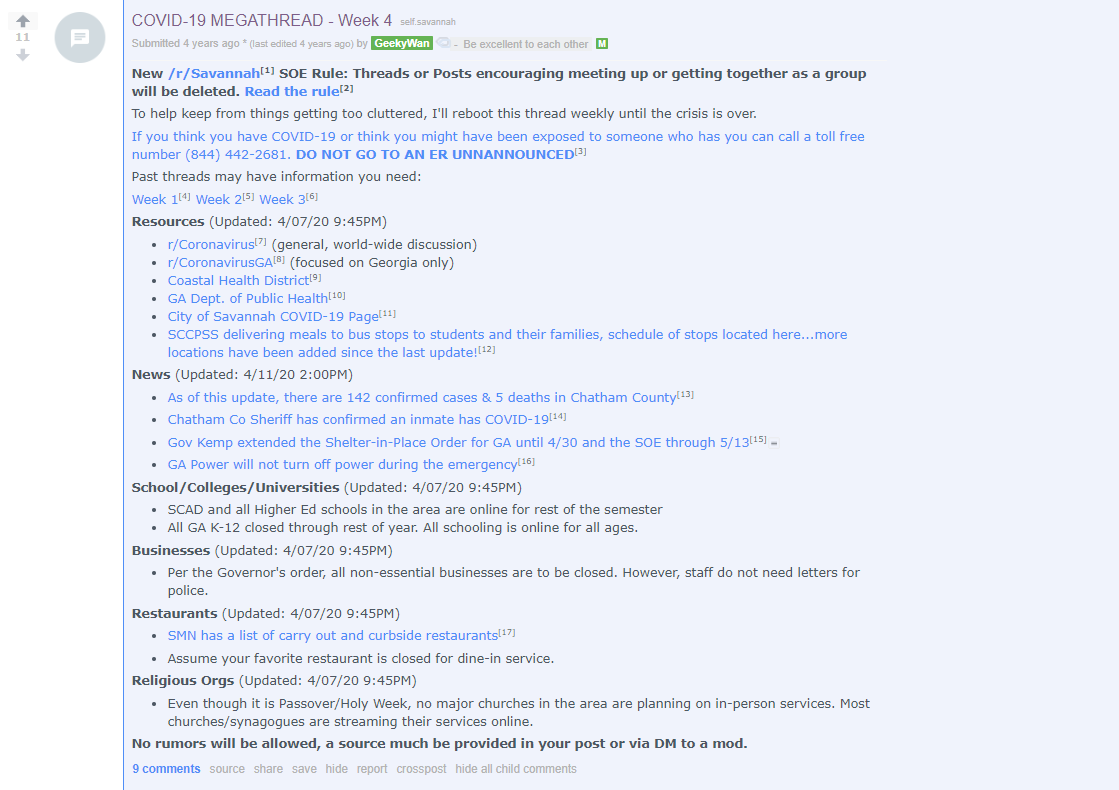
The results of this study indicate that many of the geographically based subreddits were used to equally share public health information, as well as request public health information. Requests for businesses and locations that followed masking and social-distancing protocols were the most-common information requested, and warnings about businesses and locations that did not follow masking and social-distancing protocols were the second-most volunteered form of information. The most common form of volunteered information was regular updates on the number of positive cases in the community; however that came with a compelling twist. The majority of those posts were made by “bots,” or computer scripts that would grab the case number information from the Georgia Department of Public Health and post it on the subreddit at a regular interval. That action, while simple, demonstrates that the subreddits began to figure out how to create their own decentralized forms of regularly updated community health information.

The results also demonstrated an active push-and-pull between users requesting information and volunteering information, which helps expand our understanding of the applicability of interactive components of Uses & Gratifications Theory, namely aspects of sociality as a guiding motivator for interaction in digital spaces.

As more community news outlets close, and as community news deserts in the United States continue to expand, it is important for scholarly research on community journalism to examine not just the impacts of community news closure, but also what is coming after to fill the void as humans continue to seek answers to questions related to public health – such as which local businesses are following safety protocols during a viral pandemic. Aside from the obvious benefit that proper information flow for public health information brings to a community, community reporting on outbreaks has been used by epidemiologists for decades to track and analyze community responses to disease spread (Branswell, 2018).


Literature Review

Uses & Gratification Theory

This study utilized Uses & Gratification Theory as its foundational theoretical framework. At its most basic, the audience-centered theory presupposes that people make active decisions in their mass-media consumption habits in order to satisfy specific internal needs (Blumler & Katz, 1974; Ruggiero, 2000).

Modern work examining the overlap of digital communities and Uses & Gratifications Theory has suggested that there are five active motivations specific to activity in digital spaces, including social media: Sociality and affection, the need to express negative feelings for catharsis, recognition of opinion or belief, entertainment, and cognitive needs (Leung, 2013; Menon, 2022). This study recognizes that the very nature of Reddit as a digital space means the way people interact with it as a platform will be fundamentally different from the ways they interact with a printed community newspaper, or even that community newspaper’s website, as there is a potentially a higher level for participatory interaction and two-way sharing of information. While there is the capacity for interaction with a community newspaper or community news website in the form of guest columns, letters-to-the-editor, and comment sections, the information flow is much more one sided. On Reddit, there is much more potential for what Lowrey (2012) referred to in community news as a “Listening and Changing Dimension,” (pg. 96, in Reader, 2012), wherein more voices are allowed to have a say. In turn, that increases the bond between the “community” and the people gathering and presenting the information. In the case of Reddit, those are the same groups, without a delineated difference between “community journalist” and “community member.”

There are also noted overlaps in the specific uses of community journalism and the gratification of those in the community, and some researchers have found that there are distinctly different patterns of consumption and assumptions of trustworthiness behind community news when it shifts into an online platform (Gulyas, O’Hara & Eilenberg, 2019). Echoing other work on Uses & Gratification Theory in digital spaces, Obot (2013) found there were consistencies of audience expectation within the gratification of independence in the reporting, quality of the reporting, and reach of the message.

Community Journalism

Even the scholars whose entire research agenda is “community journalism” have struggled at times to give it a simple, short working definition in a way that clearly differentiates it from “local journalism” or other vague possible titles for packaged information that relies heavily on proximity as the primary element of newsworthiness (Reader, 2012). Yet there is a sense of understanding about what the term actually means: news that has a “narrower closeness” (pg. 15) to the audience it serves. That closeness can come in the form of geographic closeness, as in a community newspaper publishing news articles about issues that are newsworthy to the smaller town, suburb or neighborhood from which it is located that might not be newsworthy to a larger, or neighboring, area.

The sense of closeness can also come in the form of familiarity, where a reader might recognize the reporter’s byline as someone who attends their church or social club, who they can comfortably approach to ask about the news. This study also recognizes that the closeness might also take the form of a connection that, instead of being geographic, is instead based on demographics, ideology, or general interest. From online forums for LGBTQ+ youths to printed newspapers for the Amish and Mennonites in the U.S., a considerable amount of research has found that the idea of “community” expands far beyond physical proximity (Davis, Elin & Reeher, 2002; Carey, 2012; Carey, 2016; Hawkins & Watson, 2017). However, this study progressed using physical proximity as its primary focus of “community.”

The world of community journalism has undergone a drastic change in the last two decades, despite still making up a large percentage of the overall volume of printed news in the U.S. (Reader, 2018). That change has been almost entirely economical (Abernathy, 2014; Abernathy, 2018; Lenz, 2020). Decreased circulation has caused a plummeting of advertising revenue rates and cash from lost subscriptions. The decrease in earnings has caused many community news outlets to close down, leaving many areas without consistent information-sharing outlets, which causes noticeable negative changes in a community.

News Deserts & Ghost Papers

News deserts, referred to by some researchers as media deserts, are geographic areas that do not contain regularly updated news from outlets dedicated to covering only that specific area (Ferrier, Sinha & Outrich, 2016; Abernathy, 2018). The term is used to refer to areas that once contained dedicated daily or weekly print newspapers, often with corresponding websites, that have since shuttered due to the impact of the Internet and social media on the traditional business model of community news (Abernathy, 2016). While news deserts are often conceptualized as dusty rural towns, large urban centers often have smaller designated neighborhoods with unique issues that are without regular coverage as well (Rafsky, 2020). Many times these news-desert neighborhoods within metropolitan areas carry a bigger population than the rural towns. Both metropolitan and rural news deserts carry a common issue where the news desert’s reach tends to sprawl further when the community in question is not predominantly white, not Christian, not within traditional sexual and gender norms, and at least middle class or lower (Ferrier, Sinha & Outrich, 2016).

Although news deserts are caused by economic issues, their impact reaches far beyond the pocketbook. Previous research on the impact of news deserts has found that expansion of news deserts correlates with a decline in civic information flow (Miller, 2018), a decline in voter turnout and engagement with local government (Watson & Cavanah, 2015; Abernathy, 2016), and higher levels of government inefficiency, likely caused by persistent lack of a watchdog (Gao, Lee & Murphy, 2018).

This study follows a slightly different path than the research studying the impact of news desert expansion. Instead of studying the negative impacts to people in a community and the community itself when the local community newspaper runs out of money and closes, this study is part of a growing body of work studying the continued information-seeking behavior of those people and communities. The assumption this work progresses with, based on established community journalism research, is that the closure of community news outlets is primarily driven by economic factors inherent in the collapse of subscription-based and advertisement-based revenues, not the publics’s aadeclining interest in community information . Experiments and analysis have demonstrated that people within a community still seek information about that community, but they are increasingly seeking the information on blogs, social media, and other digital spaces (Belair-Gagnon at al., 2019; Sukmono & Junaedi, 2019; Cardillo, 2021)

Another important note, specific to this study, is the decline in community news has also caused a decline in the available data for public health researchers and epidemiologists, who have traditionally relied on the output of information from community news outlets for studying disease outbreaks and providing communities with information needed to combat outbreaks (Branswell, 2018).

Television is often excluded from the news desert conversation because local television stations tend to be centralized in an urban area within a given market, where the majority of their reporters only extend journalistic coverage to smaller outlying communities in three predictable news frames: crime, disaster, and sports (Abernathy, 2016). Even though a television station’s coverage area might contain upwards of 20 counties in Georgia, for example, that station is less likely to send a reporter to the counties farthest away from the station’s home base unless there was a murder, a tornado, or a regional-level high-school sports championship. Thus, in terms of relief from the problems caused by news deserts, television lacks the capacity to fulfill most of the “closeness-based” community news obligations via its primary delivery system.

The increasingly common phenomenon of “ghost papers” has made the collection of analyzable news desert data difficult (Abernathy, 2020). “Ghost papers” are smaller community-based printed newspapers that, in the literal sense, still exist, but without the ability to perform core journalistic functions. They still publish at regular intervals, they still carry legally required governmental records and statements, and they still print community obituaries and birth announcements. What defines a ghost paper is that they no longer carry meaningful independent reporting by either professional or participatory community journalists. They often no longer pay for a regular staff of reporters, no longer regularly cover the social functions required of a community news outlet, and rarely if ever report on the actions of city councils, county commissions, school boards, or other political bodies. Because of the lack of journalistic personnel, they also tend to lack the manpower needed for proactive, anticipatory entrepreneurial reporting. Instead, ghost papers rely on unvetted press releases for most written copy. Ghost papers are the journalistic equivalent of empty calories: They exist, and you can read them, but you’re not getting much of anything educationally nutritious from them. Data from Abernathy (2020) suggests that the number of ghost papers in the U.S. is indeed increasing, caused by the same dynamics behind news deserts: A decline in the traditional revenue system of printed news.

Reddit

This study focused on Reddit as a potential alleviation for the problem of news deserts. Reddit is best defined as a social link aggregation system, making it somewhat more complex than a social networking service like Facebook or a microblogging platform like Twitter. Instead of there being a single thing called “Reddit,” the website is composed of thousands of individual topics-based pages known as “subreddits.” Subreddits are denoted by the use of “/r/” in front of their names, as that is what appears in the URL. According to Reddit, there are about 140,000 “active” subreddits out of 1.2 million total subreddits, although Reddit has not been clear about how it classifies “active” (Marotti, 2018). At the time of data collection, web data aggregation site Similarweb ranked Reddit in the top-20 of most-visited websites on Earth and is the 9th-most-visited in the U.S. (Similarweb Top Websites Ranking, 2022). Subsequent data lists it at 10th-most-visited in the U.S. as of May 2024 (Similarweb Top Websites Ranking, 2024)

Reddit functions differently than many other forms of social media. Users can create profiles, but they are not as closely linked to one’s central identity in the same way users tend to approach more traditional social networking sites like Facebook. Users can make three kinds of “posts” within a subreddit: A self-post, which is like typing in text as a blog post; an image-post, where the user submits an uploaded photograph that automatically loads within Reddit’s page; and a link-post, where users submit URLs to websites outside of Reddit. All content, regardless of the kind of post, will then appear on the subreddit’s page with a set of arrows next to it: an orange one pointed upwards and a blue one pointed downward. All users can then “upvote” or “downvote” the content by clicking on either arrow to signal either agreement or disagreement. Although official “Reddiquette” dictates that the voting should be done along lines of usefulness, it is accepted among Reddit users that the voting is primarily done as a form of showcasing agreement and disagreement (Reddiquette, 2021). The ratio of upvotes-to-downvotes is used by Reddit, along with the number of comments, the number of hours since it was posted, and other undisclosed components in their proprietary system for ranking the order of content on a subreddit. Reddit has never fully released their ranking algorithm out of fear advertisers would learn how to manipulate it (Coldewey, 2016).

Reddit has been the subject of a considerable amount of mass communication research over the last decade, especially in the last five years. The research has taken many forms, from studying general hoaxes and misinformation spread (Achimescu & Chachev, 2020; Tasnik, Hossain & Mazumder, 2020; Mamie, Ribeiro & West, 2021) to more specifically examining the use of Reddit among radicalizers (Grover & Mark, 2019; Raemdonck, 2019) to studying the way information flows from traditional news into Reddit (Funk, 2018; Riley & Cowart, 2018).

Research Questions

Based on the existing literature that has examined the impact and importance of informational needs at the community level, the study progressed with the following two research questions.

 R1) How have geographically based digital communities shared information related to the COVID-19 pandemic?

R2) Does content posted to geographically based digital communities fulfill the FCC’s identified community-based health informational needs?

Methods

This study was conducted as a mixed-method content analysis. First, a sample was made using qualifying geographically based subreddits. This study started with the same list of subreddits used by Riley & Cowart (2021), but reexamination of the subreddits revealed that seven of those subreddits no longer qualified as “active,” in that they did not have at least one active post in the previous week as measured on July 1, 2022. Each subreddit was assigned a news desert score, which was determined using the number of dedicated news outlets within the given county as collected by Abernathy (2018).

For the purposes of this analysis, a lower number represents a harsher news desert climate, while a larger number would mean more news outlets in that county. This study recognizes that some do disagree with the metrics Abernathy (2018) used to determine the existence of what would qualify for local and community news (Williams, 2020). However, Abernathy’s (2018) data is the most robust available determination of news desert status, and as such, this study progressed with that as a noted limitation. Georgia-based subreddits were chosen because of Georgia’s unique dynamic within news desert data. Georgia contains more counties without a dedicated news outlet, either daily or weekly, print or digital, than all of the other regions of the U.S. combined. The subreddits included in the sample and their corresponding population data are below in Table 1.

Table 1

The subreddits selected, their subscriber numbers, and the real-life population of those geographic areas.

Subreddit: Real population of geographic area: Number of subreddit subscribers: News score: Number of posts in previous week as of July 1, 2022:
/r/Alpharetta 65,818 26,068 11 8
/r/Athens 127,315 28,004 2 54
/r/Augusta 202,081 17,582 3 16
/r/ColumbusGA 206,922 10,246 2 17
/r/DaltonGA 34,417 2,491 1 3
/r/Gwinnett* 942,627 30,583 1 13
/r/Macon 157,346 9,346 1 3
/r/Marietta 60,972 14,600 1 6
/r/Newnan 42,549 4,518 1 2
/r/RomeGA 37,713 2,773 1 2
/r/Roswell 92,833 8,093 11 2
/r/Savannah 147,780 30,445 3 4
/r/Valdosta 55,378 4,154 1 3

*NOTE: /r/Gwinnett is a subreddit created to represent Gwinnett County, Georgia, and as such is the only subreddit not representing a single municipality.  

It should be noted that there are geographic areas examined as a part of this study that might not immediately conjure up the idea of a “news desert.” Athens, Savannah, and Macon are all used in this sample, and are serviced by daily newspapers and are the centralized hub for TV news stations in their given markets. However, this study is looking at the capacity for digital spaces to act as a conduit for both information-sharing and information-seeking behavior, and as such those places were included because they allow for comparison of those behaviors. This also allows for examination of user-created information that is entirely bypassing the traditional community journalism infrastructure, even in places that still have a functioning form of traditional, centralized news media.

Another important note is the exclusion of /r/Atlanta, which is the subreddit for the entire Atlanta metropolitan area. While existing research on community journalism does recognize that community news needs to exist within sub-areas of larger metros, the rules of the /r/Atlanta subreddit indicate it is to be used for information for the entire metropolitan area, and as such causes an overlap one level above the “community” level of news and more into the “local” level of news. As such, it does not make epistemological sense to include /r/Atlanta within the sample. There are no comparative sub-areas within any of the three larger cities of Athens, Savannah and Macon in the same way there are for Atlanta.

After the subreddit list was created, the study progressed by searching four key informational groupings using the internal search system in each subreddit. First was the disease itself, using the terms “coronavirus” and “COVID-19”; then were three earlier prevention elements of “social distancing,” “masks” or “mask mandate”; and finally the late prevention elements of  “vaccine” or “vaccination.”  After searching for those key terms, all results were screen-captured and saved for further analysis on July 1, 2022, making the effective date range of the sample January 1, 2020 to July 1, 2022. Results that matched the key terms but were irrelevant to the framework of community-based public health information were discarded. An example of an irrelevant post would be someone posting “I haven’t had good Thai food since before the COVID-19 mess, where is the best place to get a bowl of take-out curry around here?” COVID-19 is not the primary topic of the information-seeking request, nor is it a public-health-based request at all. However, if someone asked for a recommendation for a Thai restaurant that was following masking and social distancing protocols, that would be saved and analyzed, as public health is a part of the information-seeking request. Also, results before January 2020 were discarded, as they were not about the pandemic, despite the fact that the pandemic began in late 2019 in other parts of the world. Results prior to January 2020 contained no information about the COVID-19 pandemic.

A general, grounded codebook was developed using the FCC’s (Friedland et al., 2012) community informational needs, focusing just on the health-based sub-needs. The options for primary frames based on the Friedland et al. (2012) work were: access to information about basic public health; the availability, quality, and cost of local health care; information on health-based programs, and services; timely information in accessible language on the spread of disease and vaccination; and timely access to information about local health campaigns and intervention.

Posts were then read and analyzed for common phrasing, common structure, and common informational framing to determine if they fit within any of those health-based informational categories, with the final determination made by the coder. The initial sorting of the content was solely looking for if the information provided in the post met any of the criteria listed by Friedland et al. (2012).

After the primary informational frame was determined, posts were then re-read by the coder to determine if there were deeper patterns at play in the way information was being posted, where two differences emerged. If a Reddit user was seeking information from the other users of the subreddit, that was coded “Asking.” If the Reddit user was posting information for others to have, that was “Volunteering.” Posts that contained pandemic-related information, but not in a way that would qualify as health information, were saved and re-analyzed into their own subframes of information flow. That initial grouping allowed for deeper analysis into patterns, and possible intent, of both the information-sharing and information-seeking behaviors.

The study was completed using a single coder; however intercoder reliability was assessed using the study’s primary coder and one other independently trained coder. A 10% chunk of the sample, or about 60 posts, were independently coded for intercoder reliability tests, which were performed using ReCal2. Because of the more grounded, thematic-based approach to coding, simple percent agreement tests were used with an 80% threshold. All coded options passed with at least 86% as the lowest percent agreement.

Results

Three strata of activeness commonality appeared in the volume of COVID-related public health information posted to the subreddits. The top strata included /r/Savannah with 168 total posts, followed by /r/Athens at 125 and /r/Augusta at 116. Those three were the only subreddits with posts in the triple-digit range. Below that was a second strata of /r/Gwinnett with 85, /r/ColumbusGA with 42, /r/Roswell with 38, /r/Alpharetta with 24, and /r/Marietta with 19. The lowest-volume strata included /r/Macon with nine, /r/RomeGA with eight, /r/Valdosta with five, and /r/DaltonGA and /r/Newnan with one post each. That added up to a total sample of 641 posts about COVID-19 in the selected subreddits from the beginning of the pandemic in January 2020 until July 2022. Posts within that sample were not subsampled – all qualifying posts that were collected were included for analysis. The breakdown of posts compared to news desert score can be seen below in Table 2.

Table 2

The frequency of number of posts in the sample from each subreddit compared to the news desert score.

Subreddit Number of qualifying posts News desert score
/r/Savannah 168 3
/r/Athens 125 2
/r/Augusta 116 3
/r/Gwinnett 85 1
/r/ColumbusGA 42 2
/r/Roswell 38 11
/r/Alpharetta 24 11
/r/Marietta 19 1
/r/Macon 9 1
/r/RomeGA 8 1
/r/Valdosta 5 1
/r/DaltonGA 1 1
/r/Newnan 1 1
Total 641

Four distinct top-level groupings appeared within the information flow of the interactions of content within the thematic-based frame coding. The first will be referred to as “Asking.” These were public-health-based questions asked by a user to the rest of the users in the subreddit about one or multiple issues involving the COVID-19 pandemic. Of the 641 total coded posts, 189 were coded as “Asking”. The second will be referred to as “Volunteering.” These were pieces of public health-based information posted by a user for the apparent good of everyone else. Of the 641 total coded posts, 190 were coded as “Volunteering.” Both the Asking and the Volunteering categories of content almost entirely took the form of self-posts, which are the text-based blog–style posts, instead of posting photos or outside hyperlinks. The “Asking” and “Volunteering” content were all organically or semi-organically produced, meaning they were not direct hyperlinks to content from existing news outlets. That organic and semi-organic content represents the capacity for these subreddits to act as a supplement for decreases in community-level coverage and will be explored further later in this study.

The third grouping was content that led to an article or video from an existing news outlet. Of the 641 total coded posts, 141 were coded as “Linking.” Of those 141, 125 were links to basic news articles, video packages, or podcasts that included information about COVID-19, although many of those aligned with political arguments and fights over safety policy. Sixteen of the 141 were links to feature stories, with the most-common form of feature story being a personality profile of a prominent local figure who had died from the virus. In all, this whole grouping was almost exclusively news articles from the websites of local and regional newspapers, state-wide news outlets, or local TV stations. A few upstart digital-based community news outlets were represented in the sample, and although those do indicate another path for alleviating the problems caused by the collapse of community journalism in the U.S., they are not within the scope of this study’s analysis.

The fourth grouping was organic content, similar in nature to the “Asking” and “Volunteering” groups, but about issues that were only tangentially related to COVID-19. This group was coded as “Discussing.” These were points of conversation that involved COVID-19 and prevention methods but were not explicitly about public health. There were 121 posts in this grouping. Unlike the “Asking” and “Volunteering” groups, which were almost entirely self-posts, the “Discussing” group was a mixture of self-posts and image-posts, although there were still very few hyperlinks sending the reader away from Reddit.

A breakdown of the frequencies of the four top-level groupings can be seen below in Table 3.

Table 3

Frequencies of the top-level groupings found across the geographically based subreddits.

Grouping Number of posts
Volunteering information 190
Asking for information 189
Linking to information 141
Discussing information 121
Total 641

After the sample was sorted into the four basic categories, the content was then reexamined using thematic-based analysis to discover information-flow patterns within both the “Asking” and “Volunteering” sub-groupings. This looked for common frames, common tone, and common structure in the volunteering process.

Volunteering

Of the 190 posts coded as organic forms of “Volunteering,” the most-common category of information was posts volunteering how many positive cases were in the community. However, this comes with a bit of a caveat. The majority of those posts were automatically generated by a computer script. They were text-posts, so they were not direct hyperlinks, but the text posts tended to include links back to the Georgia Department of Public Health’s website that contained the official report of cases. They tended to be set to update once per-week on a regular interval of some . The language used was the same each time, indicating a template creation. The creators of those auto-posting computer scripts either included language in the posts themselves that indicated they were created by a bot, they were posted by accounts with “Bot” in the name, or the creator of the account, using a separate account, would clarify they had made the account to automatically post updates. The use of bots does not appear to be deceptive, and commentors were often thankful that someone went to the trouble to make something to keep the community updated.

Some of the automatic posts gathered community sources, and some had custom-created content. For example, for six months in 2021, a member of /r/Augusta posted the weekly podcast-style update on the number of cases in the area. The update podcasts were made by medical students at the Medical College of Georgia in Augusta, not the Reddit account using a script to automatically post the content to Reddit. That user also updated the safety protocols based on the ever-changing CDC guidance and included community assistance information. An example can be seen below in Figure 1:

A screenshot of an automatically generated COVID-19 update post made to /r/Augusta

Some went even further. In /r/Savannah, the main active moderator of the subreddit posted hand-curated weekly updates for the first eight months of the pandemic in 2020. The updates, nicknamed “Megathreads,” included an updated count of cases, a list of resources, news updates, school, churches, and business closure updates. An example of that can be seen below in Figure 2:

Figure 2

A screenshot of a hand-curated COVID-19 “Megathread” posted to /r/Savannah

Either automatically generated or hand-curated, the existence of these posts shows a sense of participatory entrepreneurship among the members of the community-based subreddits. Even the “bots” and the computer scripts that manage them had to be created by someone with coding skills, and instead of linking to established news outlets, they often linked directly to the Georgia Department of Public Health. In the most literal sense, this was members of a community creating their own micro version of a regular news publication in a way that mimics small hyperlocal news production.

After the semi-automatically posted updates, the second-most-common grouping of “Volunteered” information was 25 posts volunteering that people in a certain place or area were not adhering to calls to socially distance and not wearing masks. Essentially, these were posts that intended to warn others who tried to follow COVID-19 safety protocols that these were not safe locations. There were 10 different sub-groupings of these kinds of posts: eight warnings about specific restaurants, seven warnings about general areas of town, such as “downtown” or “midtown,” that did not mention any specific business, two warnings about bars or clubs, two warnings about doctors’ offices wherein the doctors and nurses had claimed they didn’t believe COVID-19 was real, and one warning each about a shopping mall, a mechanic’s shop, a catering business, a hardware store, and a grocery store. There was one post specifically warning that management at Plant Votgle, a nuclear power plant in Waynesboro, Georgia, was not requiring employees to wear masks and socially distance. It can be seen below in Figure 3:

Figure 3

A screenshot of a volunteered warning posted to /r/Augusta

After warnings about specific businesses or locations, the next-most-common form of “Volunteered” information was 23 posts about vaccines. These posts did not have any sub-groups, and were entirely people posting the locations, times, dates, and availability of vaccine distribution. Next, 23 posts volunteered information about changes in protocol in a given community, broken down into 10 sub-groups. Six of those posts volunteered changes in public school protocols, and six volunteered general changes in indoor masking protocols. Two each were about changes in stay-at-home orders, general public policy, and canceled community events. One each were about emergency government meetings that had been called to discuss changes in protocol, about changes in the community’s Animal Control office, about a new smartphone app to track changes in protocol, about policies at the local public pool, and about changes in the state’s legal liability rules for COVID in private businesses.

The next most-common form of “Volunteering” was people posting warnings that they had heard about businesses and workplaces having positive cases but keeping them hidden. The types of places being warned about were quite varied: three for specific restaurants, two for USPS post offices, two for specific public schools, and one each for a grocery store, a coffee shop, an OBGYN, the corporate offices for the insurance company AFLAC, and the Marietta police department.

From there, there were nine posts that volunteered information on testing. Five were general postings of the date and times testing would be available, two specified drive-in options one volunteered a service that could do virtual testing, and one was warning of the overall business of mass-testing sites.

As almost an inverse of the content that was warning people of places in the community not following safety protocols, eight posts volunteered information about, and often praising, community businesses that were enforcing masking and social-distancing protocols. Two posts were about local health clinics that were strictly enforcing masking protocols as well as organized outdoor activities, with the two posts, for example, praising Athens for having an outdoor kickball league after the CDC indicated that outdoor activities were considerably safer than being indoors. From there, there was one post each praising a grocery store, a concert venue, a restaurant, and a bookstore.

The number of “Volunteer” posts slimmed down after that. Three posts told people about their own experiences being ill with the disease, three posts volunteered which locations were strictly enforcing vaccine mandates, three posts told people where masks were available, and one post each: explained the scientific data about efficiency of different kinds of masks, who qualified for PPP loans, noted where general aid was available, and informed people a popular local business had closed.

Asking

Of the 189 posts coded as organic forms of “Asking,” the most-common category of question was people asking for recommendations for local businesses that followed proper safety protocols, with 70 posts. Masking enforcement was the most-commonly-desired form of safety protocol identified in the language of the request. Although some requests were specific about places following social distancing, there were no requests for businesses mandating vaccines or checking for positive vaccine status. An example of this kind of request can be seen below in Figure 4:

Figure 4

A screenshot of a request for a local business following safety protocols posted to /r/Savannah

Within the 60 posts requesting recommendations for businesses that are following safety protocols, 14 requested restaurants, 10 requested organized outdoor activities like adult kickball or disc golf, eight requested information about a general town area, such as asking “are people in downtown Savannah masking?” and eight requested hair salons, nail salons, or barber shops. From there, six requested gyms, three requested coffee shops, and three requested concert venues. Two each requested gun ranges, a primary care physician, grocery stores, and artist/craft workspaces, while one each requested a movie theater, a church, a tax accountant, a massage therapist, a manicure/pedicure salon, a haunted historical tour, a chiropractor, an auto mechanic, and a farmer’s market. These requests make up an important part of this study’s analysis – it represents something that goes above and beyond what centralized, traditional community news can accomplish. It is largely out of the realm of manpower for even a robust community news outlet to keep track of every possible business in every possible sector in their entire coverage area to see if they are following COVID-19 protocols. Because the subreddits can act as decentralized, participatory information hubs, they effectively act as an on-demand community information service.

While asking for businesses following protocols may have been the biggest chunk of information requests, they were not the only requests. Past that, the next-biggest sub-grouping in the “Asking” category was a collection of 26 posts asking about where to find COVID-19 tests in their community. Fifteen of those requests were general requests for testing times and locations, and all were answered in the comments by members. Chronologically, these requests were not common in the early days of the pandemic. Instead they became more popular after the vaccines became available, in spring and summer 2021. That is when more travel opened up, as well as some employers choosing to enforce rest results for those not willing to get the vaccine. Either way, there was a flood of posts asking about rapid tests for employment or travel. An example of that can be seen below in Figure 5:

Figure 5

A screenshot of a request for rapid-results tests posted to /r/Athens

There were then more-specific requests for testing: 11 posts specifically requested rapid tests, usually in the name of travel or work, four posts specifically requested free tests, three posts specifically requested at-home tests, three posts specifically requested drive-through testing, and one post specifically requested testing sites that were open late because they said they worked the third shift at a paper mill. There was one outlier in this subgrouping, which was four posts asking if other people had experienced delays in results from specific testing centers. The researchers of this study ponder if perhaps some of those individuals fell victim to the many scam testing sites that were rampant in Georgia in 2021 (Yu, 2022).

Next in the “Asking” sub-group by volume was requests for the status of general COVID-related public health policies, of which there were 18 total requests. Of those, eight asked about the current status of mask mandates, four asked about a general sense of policy unrelated to any single informational component, and two each asked about what the enforcement of policy is like, in the sense of if people are issued tickets, fines, etc., and what the current general policy was in public schools. One each asked about society in general “opening back up” and in general about vaccine policy. Many of these requests carried a tone of hopelessness that little clear guidance was coming from above, and many stressed the importance of community in the face of peril. An example of this can be seen below in Figure 6:

Figure 6:

A screenshot of a request for policy guidance posted to /r/Savannah

The next sub-group was 15 requests about vaccine information that broke down into various forms of specificity. Ten of the posts asked, generally, about the vaccine. Most of those general requests were questions about when others thought vaccines would be approved and when they would be available in their community. From there, seven were specifically requests about where vaccines were available in the early days of distribution. Earlier date requests tended to ask about large-scale drive-up and drive-through vaccination sites, and later dates tend to ask about which pharmacies had appointment availability. Two posts specifically asked about what the wait times were for mass-vaccination centers because they were trying to time their work lunch break correctly, and one-each was asking about where the 1-shot Johson & Johnson vaccine was available, asking if it was OK to skip the second dose of the two-shot vaccines, and asking which brand vaccine others planned on getting.

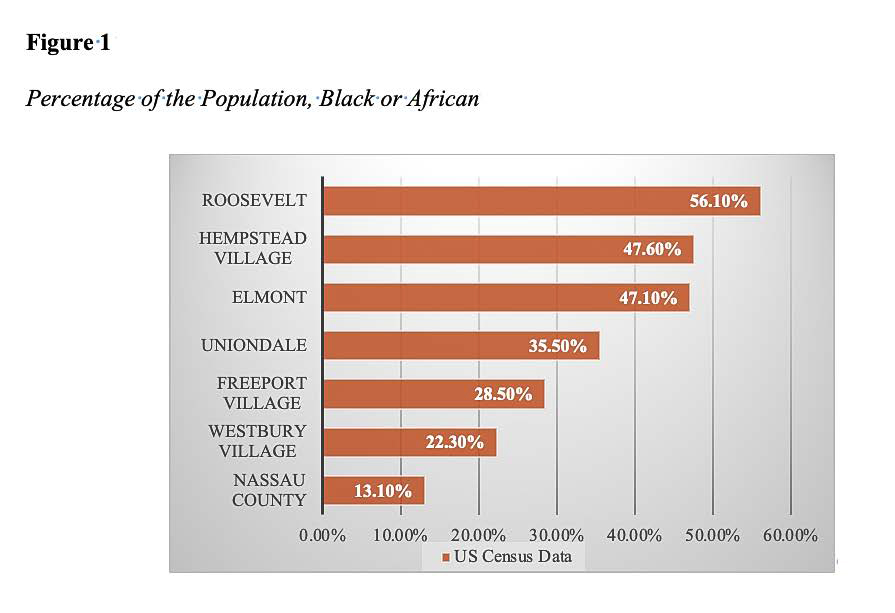
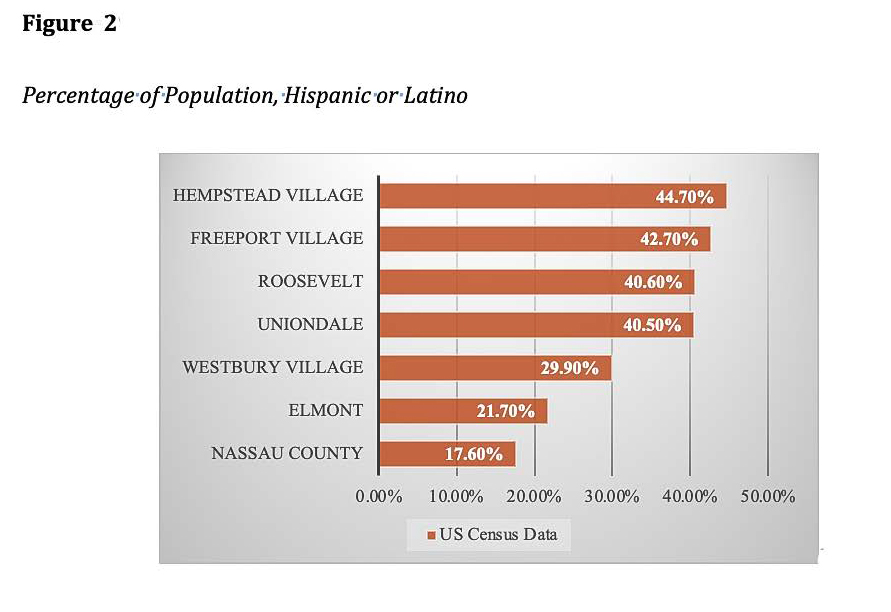
There were two other groups in the double-digits within the content coded “Asking”. There were 10 posts, all from the winter of 2020-2021, asking what the order of vaccine availability currently was. Most of those inquiries were people stating their situation, such as a pre-existing condition or a high-risk job, and asking if that means they are able to sign up for vaccination. There were no sub-groups within that request. The other 10 posts asked about masks. Seven of those were general inquiries about who had masks for sale in the given community area, with a breakdown into sub-groups that included one post specifically asking about child-sized cloth masks, one post asking specifically about which stores sold KN95 masks, and one post was from someone asking if anyone in the community could make custom masks with sports logos on them.

From there, the “Asking” group dips down into single–digit subgroups. There were nine posts generally requesting that people please consider wearing masks in public for the sake of public health in their community. These posts ranged across seven different subreddits. Eight posts asked how many official positive cases there were in the given community. Six total posts asked about other peoples’ vaccine status, with two of those being specific requests for others to share their side-effect experience. From there, three posts asked specifically about the status of community Halloween Trick-or-Treating plans. All three were posted in October 2020, before vaccine availability, and all three were posted in different subreddits, indicating that this was somewhat of a common community concern in late 2020.

Perhaps the eeriest set of “Asking” posts were the three posted in January and February 2020 in /r/Augusta, /r/Athens, and /r/Savannah asking when people in the given community thought that area would get their first case. At no point did anyone in the comments of those posts indicate they thought things would turn out OK – instead, there was an early assumption that COVID-19 was going to spread quickly through their community and there would be no stopping it. The tone of these posts were very much in the sense of “When will this problem get here?” There were three posts, all in June and July 2020, that asked about the general status of “businesses” being open. These were not requests specific to single named businesses, and instead were general requests in the frame of “Are things, in general, still open downtown?”

Two posts asked if anyone knew of a job that would be COVID-19 safe that was hiring in late 2020. And there were one each of the following “Asks”: One inquiry into the accuracy of COVID-19 at-home tests, one post asking if people in the community had experienced stigma from choosing to wear a mask in public, one post asking if the Masters Tournament in Augusta would be canceled, one post asking generally about the science of what makes the COVID-19 virus different from other viruses, and one post generally asking if others in the community thought things would be canceled because of the big summer wave of positive cases in 2021.

 Linking

The 141 posts coded “Linking” were hyperlinks back to existing news coverage. The biggest single sub-group was people posting links to articles about changes in masking protocols with 28 posts. From there, there were 14 posts about case surges during the late summer and early fall of 2020. There were also 16 feature articles, with seven of those on prominent local deaths from the disease. The rest of the “Linking” posts were a smattering of issues, many political. But because they linked directly to content from established news companies, they were not deeply analyzed for topic, as they do not represent the capacity for these geographically based subreddits to produce their own news.

Discussing

The final group was the “Discussing” group, which were the 121 posts that contained some element of public health information but were not purely a “Volunteer” of information nor a requested “Ask” of information. These tended to be framed in ways that spurred on discussion, or in many cases, argument.

The most-common type of “Discussing” post was 43 posts, common across all of the subreddits in the sample, that were noted as “Arguments, Rants, or Expressions of Anger.” All but one of these expressed some kind of anger toward people shirking public health guidelines. An example of this can be seen below in Figure 7

Figure 7

A screenshot of an Argument, Rant or Expression of Anger posted to /r/Gwinnett

Included in those 43 posts were photos of people lining up to get into clubs in /r/Athens, rants about how people complaining about masks were weak and selfish in /r/Augusta, and overall admonishing people who were not following protocols for elongating the crisis across all the subreddits. These posts were often filled with expletives and tended to have deep comment sections where people argued about the effectiveness of masks and various other virus-related points of contention. No other kind of “Discussion” post came close to those numbers, with the next-most-popular being eight posts volunteering non-medical services. That is an interesting juxtaposition compared to the bitter and argumentative rant posts. These posts, on the inverse, offered to help out others in their community, with such services offered as lawn mowing, grocery delivery, transportation to-and-from vaccination appointments, and house cleaning. Beyond that, the remaining 70 posts were a collection of 16 other sub-topics, none of which were coded at more than three each, and included excitement about vaccines being available, calls to boycott local businesses not following safety protocols, complaints about the University System of Georgia not enforcing masks on campuses, encouraging safety during the 2020 Black Lives Matter protests, and many other topics. However very few consistent commonalities in this group beyond rants and volunteering. 

Discussion

R1) How have geographically based digital communities used their platform as a part of the flow of information related to the COVID-19 pandemic?

The results of this study indicate that geographically based subreddits used their digital spaces to share, and trade, necessary information about the COVID-19 pandemic. Users were just as likely to request information as they were to volunteer it, which shows a level of balance within the information flow. If there had been a huge amount of “Asking” behavior and a considerably lower amount of “Volunteering” behavior, then perhaps the assumption would be that these subreddits represent information loss from community-based outlets. But instead, there is almost a paired back-and-forth to the information flow. The thing most asked for was recommendations of businesses and services that followed COVID-19 protocols. The most-volunteered information, after the often bot-created case number updates and large “Megathreads,” was people posting which businesses and services were not following protocol. That represents an appearance of some dynamics of Uses & Gratification Theory, where sociality is one of the guiding motivators for interaction in digital spaces. Or, seen another way, Lowrey (2012) referred to community news as having a “Listening and Changing Dimension,” (pg. 96, in Reader, 2012), that helps define community journalism as a separate utility from other forms of journalism. If one combines the notion of sociality as a driving force of Uses & Gratification Theory in the digital age with the idea that community news has a higher rate of interaction via the “Listening and Changing Dimension,” it becomes a compelling argument that the further growth of digital spaces as community news hubs – be they Facebook pages, NextDoor accounts, or subreddits – will be much more participatory and interactive. The push-and-pull of question asking and information volunteering demonstrates that.

It also represents the use of geographically based subreddits to fulfill an informational need in a way that a traditional community news outlet likely could not. It would not be feasible for a community news outlet to know at any given time which of all of the businesses in their area that are following protocols and which are not. They could possibly run some positive stories on a few of the businesses that are , and perhaps some negative stories about businesses that are not, but reporters cannot be in all places at all times, whereas crowdsourced information in a community essentially turns anyone who might have the answer into a reporter.

R2) Does content posted to geographically based digital communities fulfill the FCC’s identified community-based health informational needs?

This study finds that all of the informational needs identified by Friedland et al. (2012) are present in some capacity within the sample, but some of the sub-groups are more present than others. There are five health information sub-components. The first is “access to information about basic public health.” There were components of the qualitatively assessed data that represent a fulfillment of that need, albeit none of them represented an overwhelming majority. Perhaps because this study was coding just for information related to the COVID-19 pandemic, most of the health information was, in some way, about COVID-19, meaning that the notion of “basic public health” was somewhat out-of-step with the scope of the study. There were basic public health questions asked, however, but there was no dominant question or dominant form of volunteered information. Information was requested and volunteered about the efficiency of masks, the danger level of various variants, what positive cases felt like, and early on, predictions as to when their area would receive its first positive case.

The second is “the availability, quality, and cost of local health care.” This was somewhat fulfilled, especially in the “Asking” behavior. This could be seen monetarily, where people asked about where to get free masks and free tests. It could also be seen from a quality perspective from people asking for recommendations for doctors’ offices, walk-in-clinics, OBGYNs and dentists who did not think the COVID-19 pandemic was a hoax. It should be noted that “Asking” represents only one side of the equation, and this study was not coding the comments under the “Asking” posts; however, informal observations note that the comments did often contain answers when people asked questions.

The third is “information on health-based programs and services.” This showed a clear fulfillment in the form of both asking and volunteering information about many posts containing information about drive-through testing, rapid testing, and mask give-outs.

The fourth is “timely information in accessible language on the spread of disease and vaccination.” This was perhaps one of the most-fulfilled informational needs. The automatically updating posts with the number of positive cases, the moderator-curated “Megathreads,” as well as the flood of requests for businesses following protocols and volunteered information about which businesses treated safety seriously acted as a kind of warning system.

The fifth is “timely access to information about local health campaigns and intervention.” While this was fulfilled, the researchers must note that this category was more fulfilled by the posts that linked back to news articles from established news outlets instead of organically developed community information.

Conclusions

The findings of this study indicate a similar conclusion to Riley & Cowart’s (2021) work examining geographically based community subreddits. Many, but not all, of the community informational needs noted by Friedland et al. (2012) and the FCC can be seen on geographically based subreddits in the back-and-forth flow of people asking questions and others volunteering information based on public health. In some cases, like volunteering when and where mass vaccination centers were and when they would open, the information mimics what might be available on a traditional community journalism outlet. But in other cases, like requests for custom-made masks or requests for which businesses followed protocol, those are informational dynamics separate from what a traditional community journalism outlet can usually provide. The 25 posts of people volunteering that their place of work is covering up positive cases, like was the case in the findings with restaurants, mechanics shops, and a nuclear power plant, represent an interesting removal of the middle-man from investigative reporting.

This study did have noted limitations that should be addressed with further research. The study used a sample that was based out of a single U.S. state. A larger geographically varied sample could help find both national trends and national differences. The study was also limited in its lack of ability to check for the accuracy of the information being posted. Someone posting a warning to avoid a local business that was not following COVID safety protocols was taken at face value in this study’s coding system. It could have very well been that the person posting the warning was angry at the business for other reasons and was lying on the Internet.

Combined with Riley & Cowart’s (2021) work looking more generally at Reddit and the FCC informational needs, the results of this study speak to many different options for future research. One would be to include analysis of the back-and-forth dynamic of Volunteering and Asking content. When people post community-based questions to a geographically based subreddit, how often are the questions being answered with correct, valid information?

Perhaps the most obvious direction for future research must embrace our core understanding of Uses & Gratification Theory by surveying the users of geographically based subreddits to see if they feel they are receiving a “well-rounded diet” of information from the subreddits, if they have ever had any real-world impacts based on information they received from the subreddits, and comparing their usage of the subreddits to their interaction with traditional centralized community news content.

These geographically based digital spaces need to be better understood. As the traditional infrastructure of community journalism in the U.S. continues to crumble, it is becoming desperately important for community journalism researchers to understand the places that lost audiences go to for community information. It is not enough to only discover the impact that the closure of traditional community media causes. We must also know what is taking its place and how it works and how people use it, even if those things taking their place are not gate-kept or centralized.

References

  • Abernathy, P. M. (2016). The Rise of a New Media Baron and the Emerging Threat of News Deserts. Center for Innovation and Sustainability in Local Media, University of North Carolina Chapel Hill.
  • Abernathy, P. M. (2018). The Expanding News Desert. Center for Innovation and Sustainability in Local Media, School of Media and Journalism, University of North Carolina at Chapel Hill.
  • Acevedo, N., & Burke, M. (2020, February 29). Washington state man becomes first U.S. death from coronavirus. NBC News. https://www.nbcnews.com/news/us-news/1st-coronavirus-death-u-s-officials-say-n1145931
  • Achimescu, V., & Chachev, D. (2020). Raising the flag: Monitoring user perceived disinformation on Reddit. Information, 12(1), 4-18.
  • Allday, E., & Gafni, M. (2020, April 24). 1st US COVID-19 death was 57-year-old Santa Clara County woman, probe finds. San Francisco Chronicle. https://www.sfchronicle.com/bayarea/article/First-U-S-COVID-19-death-was-57-year-old-Santa-15218813.php
  • Belair-Gagnon, V., Nelson, J. L., & Lewis, S. C. (2019). Audience Engagement, Reciprocity, and the Pursuit of Community Connectedness in Public Media Journalism. Journalism Practice, 13(5), 558–575. https://doi.org/10.1080/17512786.2018.1542975
  • Blumler, J. G., & Katz, E. (1974). The Uses of Mass Communications: Current Perspectives on Gratifications Research (E. Katz & J. G. Blumler, Eds.). SAGE Publications.
  • Branswell, H. (2018, March 20). When towns lose their newspapers, disease detectives are left flying blind. STAT News. https://www.statnews.com/2018/03/20/news-deserts-infectious-disease/
  • Cardillo, S. (2021). Positive Solutions: Digital storytelling for social awareness – using technology to inspire. Community Journalism. Retrieved from https://tccjtsu.com/positive-solutions-digital-storytelling-for-social-awareness-using-technology-to-inspire/
  • Carey, M. C. (2016). Expression of culture in the Amish press: Media and community maintenance in a religious diaspora. Journalism & Communication Monographs, 18(3), 112-157.
  • CDC Media Telebriefing: Update on COVID-19 | CDC Online Newsroom | CDC. (2020, February 25). Centers for Disease Control and Prevention. Retrieved August 27, 2022, from https://www.cdc.gov/media/releases/2020/a0225-cdc-telebriefing-covid-19.html
  • Coldewey, D. (2016, December 7). Reddit overhauls upvote algorithm to thwart cheaters and show the site’s true scale. TechCrunch. https://techcrunch.com/2016/12/06/reddit-overhauls-upvote-algorithm-to-thwart-cheaters-and-show-the-sites-true-scale/
  • Ferrier, M., Outrich, M., & Sinha, G. (2016). Media deserts: Monitoring the changing media ecosystem. In M. Lloyd & L. A. Friedland (Eds.), The Communication Crisis in America, And How to Fix It (pp. 215-232). Palgrave Macmillan US.
  • Friedland, L., Ognyanova, K., Weil, C., & Wilson III, E. (2012). Review of the literature regarding critical information needs of the American public. submitted to the Federal Communications Commission, 15-19. http://transition. fcc. gov/bureaus/ocbo/Final_Literature_Review.
  • Funk, M. (2018). r/Agenda_rejection: Attribute agenda-setting resistance between horizontal Reddit pages and vertical news coverage. The Agenda Setting Journal, 2(2), 145-167.
  • Grover, T., & Mark, G. (2019, July). Detecting potential warning behaviors of ideological radicalization in an alt-right subreddit. Proceedings of the International AAAI Conference on Web and Social Media, 13, 193-204.
  • Gulyas, A., O’Hara, S., & Eilenberg, J. (2019). Experiencing Local News Online: Audience Practices and Perceptions. Journalism Studies20(13), 1846–1863. https://doi.org/10.1080/1461670X.2018.1539345
  • Hawkins, B., & Watson, R. J. (2017). LGBT cyberspaces: A need for a holistic investigation. Children’s Geographies, 15(1), 122-128.
  • Lenz, L., Scire, S., & Coddington, M. (2020, December 14). The real reason local newspapers are dying | Nieman Journalism Lab. Nieman Lab. Retrieved August 27, 2022, from https://www.niemanlab.org/2020/12/the-real-reason-local-newspapers-are-dying/
  • Leung, L. (2013). Generational differences in content generation in social media: The roles of the gratifications sought and of narcissism. Computers in Human Behavior, 29(3), 997-1006.
  • Menon, D. (2022). Factors influencing Instagram Reels usage behaviours: An examination of motives, contextual age and narcissism. Telematics and Informatics Reports. https://doi.org/10.1016/j.teler.2022.100007
  • Miller, J. (2018). News deserts: No news is bad news. Urban Policy, 59-76. https://www.manhattan-institute.org/html/urban-policy-2018-news-deserts-no-news-bad-news-11510.html
  • Most Visited Websites – Top Websites Ranking for July 2022 | Similarweb. (2022). SimilarWeb. Retrieved July 20, 2022, from https://www.similarweb.com/top-websites/
  • Obot, C. (2013). Social Media: Enlarging the Space for User-Generated Community Journalism. New Media and Mass Communication. 19(1) 63-75.
  • Reader, B. (2018). Despite losses, community newspapers still dominate the US market. Newspaper Research Journal, 39(1), 32-41.
  • Reddiquette – Reddit Help. (2021, March 30). Reddit Help. Retrieved July 23, 2022, from https://reddit.zendesk.com/hc/en-us/articles/205926439-Reddiquette
  • Ruggiero, T. E. (2000). Uses and gratifications theory in the 21st century. Mass Communication & Society, 3(1), 3-37.
  • Sukmono, F. G., & Junaedi, F. (2019). Citizen Journalism and Online Community Media: A Case Study of pwmu. co. Jurnal The Messenger, 11(2), 198-208.
  • Tasnim, S., Hossain, M. M., & Mazumder, H. (2020). Impact of rumors and misinformation on COVID-19 in social media. Journal of Preventive Medicine and Public Health, 53(3), 171-174.
  • Van Raemdonck, N. (2019). The echo chamber of anti-vaccination conspiracies: mechanisms of radicalization on Facebook and Reddit. Institute for Policy, Advocacy and Governance, Knowledge Series, Forthcoming.
  • Watson, B. R., & Cavanah, S. (n.d.). Community information needs: A theory and methodological framework. Mass Communication & Society, 18(5), 651-673.
  • WHO Director-General’s opening remarks at the media briefing on COVID-19 – 11 March 2020. (2020, March 11). WHO | World Health Organization. Retrieved August 27, 2022, from https://www.who.int/director-general/speeches/detail/who-director-general-s-opening-remarks-at-the-media-briefing-on-covid-19—11-march-2020
  • Williams, D., Burns, D., Sain, C., Shih, G., Judson, M. H., Birdwhistell, J., Brashear, I., & Smith, S. (2020, December). RURAL NEWSPAPERS. The Rural Blog. Retrieved August 27, 2022, from http://irjci.blogspot.com/p/rural-newspapers.html
  • Yu, J. (2022, January 8). Officials warn of scams as demand for COVID-19 testing continues. FOX 5 Atlanta. Retrieved August 27, 2022, from https://www.fox5atlanta.com/news/officials-warn-of-scams-as-demand-for-covid-19-testing-continues

About the Author

Jeffrey K. Riley is an associate professor of multimedia journalism at Georgia Southern University.

[pdf-embedder url=”https://tccjtsu.com/wp-content/uploads/2024/06/10-3-PDF.pdf” title=”10-3 PDF”]

Categories
Community Journalism Journal Volume 10

The Suburban News Desert: Where Communities of Color Are Starved for Critical Information Amid Crime-centered News Coverage

Abstract

Rarely has news deserts research examined a suburban region teeming with media outlets, and little attention has been paid to the neighborhoods of color within such an area. Through surveys and interviews with over three dozen community-based organization leaders and journalists, as well as a six-month, community-by-community audit of the coverage provided by 14 media outlets, this study aimed to determine whether one can reside in a news desert in densely populated Nassau County, NY, a suburb of New York City that is reported on by a wide range of large and small media outlets. In particular, we focused on the predominately Black and Brown neighborhoods therein. The majority of community-based organization leaders within these six areas contended the news media focused heavily or nearly exclusively on crime within their neighborhoods, and those perceptions were largely borne out in the quantitative data, except in the case of the two community newspapers, the Franklin Square-Elmont Herald and the Freeport Herald.

Introduction

The news deserts crisis caused by a decline in local reporting has been documented across the United States for more than a decade: a measurable deterioration in civic dialogue as a result of community and regional newspapers and other media outlets closing (Conte, 2022; Stites, 2018). The issue is exacerbated by a growing distrust of the mass media by a wide cross section of the population, particularly owing to the increasing polarization of the national news outlets (Garimella et al., 2021; Jurkowitz et al., 2020). The news desert, though seemingly a relatively new concept, has been a phenomenon in communities of color across the US since before the country was founded, often leaving them bereft of the essential information they need to make informed decisions and choices in this democratic society, even in regions with a multitude of robust media outlets (Conte, 2022; Gandy, 1997; González & Torres, 2011; Nelson, 1999).

One such region is Nassau County, NY, the nation’s 10th wealthiest county 33 miles due east of Midtown Manhattan, the center of the largest media market in the US, with 12% of the country’s newsroom employees (Baker, 2021; Grieco, 2019). This study will show that even in a suburban haven rich with a variety of news organizations, there exist news deserts spanning the majority of the six predominately Black and Brown communities that form what is known as Nassau’s “corridor of color”: Elmont (population 36,245, US Census Bureau, 2020), Freeport Village (44,199), Hempstead Village (58,734), Roosevelt (16,522), Uniondale (32,621), and Westbury Village (15,809).

If there are news deserts in largely Black and Brown neighborhoods in close proximity to what is often called the “media capital of the world,” New York City, then there are likely similar news information vacuums in communities of color across the US. Addressing whether suburban Black and Brown neighborhoods can be considered news deserts is crucial, in particular, because a majority of Americans—53%—live in suburbs, while 26% reside in cities and 21% in rural small towns (Kolko & Bucholtz, 2018). At the same time, suburbs are often misunderstood. They are widely seen as wealthy and majority-White, likely because they were historically so. Today, however, suburbs fully reflect America’s growing diversity. In 1990, approximately 20% of suburbanites were people of color. By 2000, that figure had risen to 30%. Today, it stands at 45% across the nation (Frey, 2022). In Nassau, people of color comprised 44.2% of the population as of June 1, 2022 (Census Bureau).

With a population today of approximately 1.39 million residents (Census Bureau, 2020), Nassau grew rapidly from a largely rural region, composed of small downtowns and farms, to crowded suburbia in the post-World War II era, with two cities, 64 incorporated villages, and 100 unincorporated areas that are divided among three towns—Hempstead, North Hempstead, and Oyster Bay (Nassau County website, Cities, Towns & Villages section). From the late 1940s through the ’60s, segregation was built into the economic model for development in this majority-White county, the specter of which lingers today.

Nassau is ranked the fourth most segregated county among 62 in New York State (Winslow, 2019), with segregation forming the basis for its development model dating back to a restrictive covenant preventing Black people and other underrepresented groups from moving into America’s first planned suburban community, Levittown, at its founding in 1947 (Lambert, 1997; Winslow, 2019). Levittown, which remains a majority-White community today (Census Bureau, 2020), may only be a 10- or 20-minute drive from the neighborhoods in this study, but racially and socio-economically, these areas have remained divided for decades (Winslow, 2019). Indeed, Nassau’s decades-long history of segregation looms large over Long Island, including, this study found, in the inordinate levels of crime reporting that the six studied communities received compared with other critical issues. In a six-month news audit that we conducted, we found issues-oriented coverage was limited or nearly absent, depending on the neighborhood.

The two notable exceptions were Elmont and Freeport, each with a working community newspaper that provided coverage across a wider range of issues for residents. Absent such hyperlocal outlets to offer counternarratives that provide context, news consumers may be led to believe neighborhoods of color such as these are trapped in a continuous cycle of violence, with few, if any, redeeming qualities, perpetuating a biased public perception of them while leaving them starved for vital issue-oriented and events-based reporting.

Grounded theory (Chun Tie et al., 2019; Glaser & Strauss, 1999) formed the basis for our research methodology in this study. We began by collecting qualitative data to assess how leaders in the six studied communities perceived the news media’s coverage of their neighborhoods through surveys and focus groups. Then, we sought data on the actual coverage that could be systematically collected, analyzed, and compared (Chun Tie et al., 2019; Glaser & Strauss, 1999) in order to ground the CBO leaders’ assertions and arguments in hard evidence. As well, we sought the thoughts and opinions of more than a dozen journalists. Through our study, we shall show how the news desert concept can be utilized to frame and understand media exclusivity in communities of color and the mainstream news media’s centuries-old stereotyping of Black and Brown people.

Literature Review

For this study, we took a community-by-community approach to studying the six news ecosystems outlined above. In our quantitative research in particular, we noted a clear difference in how mainstream regional news organizations and community media at the grassroots level approach coverage, with larger media centered, by and large, on crime, and the handful of community-based newspapers focused more on the everyday lives of residents.

Efforts to define community journalism date back at least to 1952, with publication of The Community Press in an Urban Setting, by sociologist Morris Janowitz (Janowitz, 1952; Robinson, 2014), who employed a number of the same research methods as this study, developing neighborhood profiles, interviewing residents and journalists, and analyzing the contents of publications. The community press, Janowitz hypothesized, maintains “local consensus through the emphasis on common values,” linking community leaders and readers through editors and reporters (Hatcher & Reader, 2012, p. 27; Janowitz, 1952). Or, as Conte (2022) wrote, in chronicling “the mundane, [hyperlocal media outlets] knit community together through the moments that otherwise might be overlooked” (pp. 17-18).

By contrast, national and larger regional news outlets many times must focus on the “big” stories owing to the size and scope of their coverage areas. As Conte (2022) wrote:

“Most often, [these stories] tend to be murders, other truly heinous crimes, and high-profile incidents such as house fires. None of these bigger outlets have enough journalists to cover the small stories and the minutia of daily life, even though those are the events that make up the substance of any community” (p. 65).

Defining the news desert

The Hussman School of Journalism and Media at the University of North Carolina at Chapel Hill defines a news desert as “a community, either rural or urban, with limited access to the sort of credible and comprehensive news and information that feeds democracy at the grassroots level” (Hussman School, n.d., para. 4). This definition does not include suburbs, though a report sponsored by the Hussman School, The Expanding News Desert, speaks of a growing “silence in the suburbs” caused by the closure of hundreds of suburban community weekly newspapers between 2004 and 2018 (Abernathy, 2018, p. 11).

To date, news deserts research has focused primarily on rural and urban communities that have lost their media outlets. Largely unanswered in the current literature is whether a suburban community with a wide range of media outlets to cover it could also be a news desert. This gap in the literature may be owing to a widely held belief that most suburbs are well-covered by news outlets because they primarily fall within the orbits of major metropolitan media markets with many outlets. As this study will show, a simple count of news organizations alone does not speak to the health of a local, or grassroots, media ecosystem, though. The coverage produced by news organizations must be examined through thematic, content, and textual analysis as well.

In March 2021, Impact Architects released a diagnostic framework to determine the health of local news and information ecosystems. The John S. and James L. Knight Foundation, the Democracy Fund, and the Google News Initiative funded the research behind this new framework (Stonebraker & Green-Barber, 2021). The authors conducted qualitative research through surveys, focus groups, and listening sessions with three key groups: community members, journalists, and representatives of other information providers such as community organizations, libraries, and universities. “The health of a news and information ecosystem can’t be understood by the presence or absence of journalism organizations alone,” the framework developers argued (Stonebraker & Green-Barber, 2021, p. 10).

Their report outlined six key factors in determining the vitality of a news and information ecosystem:

  • Number of journalism organizations serving a community.
  • Types of media.
  • The news outlets’ business models.
  • The diversity of media, including the number of BIPOC (Black, Indigenous, and People of Color) news organizations.
  • Collaboration among media companies.
  • Nonprofit funding available to the outlets.

In our study of news and communications deserts in Nassau County, we considered each of the above six metrics, conducting surveys, focus groups, and listening sessions with community organization leaders and journalists. To determine the health of a news ecosystem, however, the nature and quality of newspaper articles and TV and radio broadcasts about a community must also be examined through quantitative research to determine whether people’s information needs have been fulfilled and satisfied—and whether the news information distributed to the public ultimately encourages or discourages civic discourse and engagement, and/or distorts reality. Thus, we carried out a thematic news audit within the six studied communities over six months in 2022, the results of which demonstrated that news coverage primarily or nearly exclusively centered on crime and education in four of the six areas, with little to no reporting on other critical issues. Thus, we are calling these neighborhoods news deserts.

The term news desert entered the mainstream journalistic lexicon a little over a decade ago, after thousands of print journalists had been laid off and hundreds of newspapers had shut down operations starting in the early 2000s, leaving a steadily decreasing number of communities without media outlets of their own (Abernathy, 2018; Conte, 2022). Due in large part to the digital news revolution, coupled with a societal move toward social media, the past two decades have seen a sharp decline in print circulation at daily and weekly newspapers and thus advertising dollars, forcing the layoffs of more than 40,000 journalists from 2004 to 2022 (Abernathy, 2018; Claussen, 2020; Robinson, 2014; Waldman, 2022). During that same period, the US lost 2,500 newspapers (Simonetti, 2022).

The news desert was not, however, a new concept in communities of color, which for centuries were ignored and stereotyped by mainstream media organizations (Gandy, 1997; González & Torres 2011; Nelson, 1999), including, this study found, in Nassau County today to a large extent. For more than 250 years, the nation’s news media, regardless of political leanings, had remained central institutions of White America, according to González and Torres (2011). Native American, African American, Hispanic/Latino, and Asian American journalists were “systematically excluded” from newsrooms across the country through the 1970s, the two wrote (2011, p. 8). The lack of representation in newsrooms resulted in an “almost routine distortion of the lives and events of people of color by the press,” they emphasized (p. 15). For the roughly 204,000 residents of the six neighborhoods included in this study, little has changed since the ’70s, it appears.

News media representations of Black and Brown people

Overt racism may have largely disappeared from today’s media portrayals of people of color in the mainstream press, but many news organizations often ignore them and their issues while remaining focused, by and large, on crime coverage in their neighborhoods; as a result, news media many times fail to address the Critical Information Needs (CINS) of Black and Brown people (Keene & Padilla, 2013; Nishikawa et al., 2009; Wenzel & Crittenden, 2021).

At the same time, the media’s focus on crime in Black and Brown communities, we found in this study, can cause a clustering effect, whereby several outlets cover the most shocking criminal activity in these areas all at once, potentially leading the public to believe these communities are experiencing more crime than they do. This effect was described nearly 30 years ago by Sacco (1995), who noted that variations in the volume of crime coverage appeared unrelated to the actual number of crimes taking place within a given area. Crime statistics indicated that most crime was nonviolent three decades ago, but aggregated news media reports suggested otherwise, according to Sacco.

Gandy (1997) noted that continual coverage of crime in communities of color can give the wider public the impression that people of color, particularly Black people, are dangerous by nature. Gandy argued that the media tended to present people in strictly negative terms. The cumulative result of such coverage may be to reduce public social programs designed to support underrepresented and marginalized populations, according to the author, potentially exacerbating feelings of isolation and alienation in communities of color that are news deserts.

In fact, it appears the term news desert was popularized, at least in part, because of the dearth of original, quality reporting in and on communities of color. In an April 5, 2011, column for These Times Magazine, The Paradox of Our Media Age—And What to Do About It, Chicago-based writer Laura Washington described what she called the “communications desert.” In urban areas, most news decision-makers remained White, wrote Washington (2011), noting, “Reporters parachute into black and Latino neighborhoods to cover violent crime and community conflict” (para. 18).

Washington’s column helped thrust the term news desert into the fore (Conte, 2022). Shortly after its publication, Washington appeared beside Tom Stites, a media fellow at Harvard University’s Berkman Klein Center for Internet and Society, at a conference at which Washington explained her concept. Stites then began pushing out the notion of the news desert, stating, “Elites and the affluent are awash in information designed to serve them, but everyday people, who often grapple with significantly different concerns, are hungry for credible information they need to make their best life and citizenship decisions” (Conte, 2022, p. 17).

The percentage of journalists of color in newsrooms has grown but remains well below the percentage of the population comprised by people of color. In 1982, journalists of color made up 3.9% of newsrooms; in 1992, 8.2%; and in 2013, 10.8% (Willnat et al., 2022). As of 2018, people of color comprised 40% of the US population, but 17% of American newsrooms (Arana, 2018). Four years later, the newsroom figure had inched up by one percentage point, to 18% (Willnat et al., 2022).

Johnston and Flamiano (2007) noted there was evidence, based on findings at four major daily newspapers, to suggest that a lack of newsroom diversity affects news coverage, with people of color underrepresented as sources for and subjects of stories. Since the early 2000s, at least some newspapers have apologized for how they covered Black communities in the past (Burke, 2022; Neason, 2021; Pinsky, 2023). In 2021, after the Black Lives Matter protests, The Kansas City Star, among a growing number of American dailies that have sought to atone, undertook an introspective examination of its past coverage. In the editorial The Truth in Black and White: An Apology from The KC Star, Martin Fannin, the outlet’s president and editor, remarked:

Reporters were frequently sickened by what they found — decades of coverage that depicted Black Kansas Citians as criminals living in a crime-laden world. They felt shame at what was missing: the achievements, aspirations and milestones of an entire population routinely overlooked, as if Black people were invisible (Fannin, 2020, para. 14).

Patterns of coverage in communities of color

Why journalists remain focused on crime within communities of color, even now in a post-George Floyd era, is an open question and a potential source of debate. Script theory, developed by psychologist Silvan Tomkins in the 1950s, may suggest at least a partial answer.

Conceptual scripts—set patterns of doing and of being within society that humans utilize daily—aid us in interpreting and defining our ever-changing world (Tomkins, 1987). A conceptual script can be thought of as a heuristic, or mental shortcut. The script comprises a set of familiar scenes, each of which begins with a stimulus (an event), which is followed by an affect (an outward expression of emotion that demonstrates motivation) and then a response, according to Tomkins.

Thomson (2016), who studied visual representations in the news, employed script theory to show how the photojournalists he was studying often relied on deeply entrenched scripts to frame their stories when packaging the news. Conceptual scripts enable journalists to produce stories quickly and efficiently on deadline, Thomson noted, but they can also lead journalists to fall back on historically scripted narratives about people of color, portraying them as collectively angry, for example, rather than seeking individual opinion from them and reporting nuance. The researcher further demonstrated that people of color are often overlooked or ignored by the news media.

Thomson called on photojournalists to engage on a deeper level with subjects to learn about them as people and present their stories fully. A number of Black protesters interviewed by Thomson following the mass protests for racial equality at the University of Missouri at Columbia in 2015 noted photojournalists had not sought their names during the rallies after photographing them, leaving them as nameless faces. Images of racial integration within the protests also were not shown. Media outlets “tend to exclude and marginalize” the positive traits of people of color while focusing on the negative, Thomson concluded (2016, p. 224).

As well, resource allocation appears to play a part in how and why majority-White communities are often better served by the media than are communities of color. A study on the Critical Information Needs of communities by (Napoli et al., 2016) in Newark, New Brunswick, and Morristown, New Jersey reported that Morristown, the wealthiest, least diverse of the areas, with a population of roughly 20,000, had 10 times the number of journalistic resources than did Newark, the lowest-income, most diverse area, with a population of more than 307,000 people (Napoli et al., 2016; Census Bureau, 2022). As a result, Morristown residents received 13 times more coverage than did their Newark counterparts (Napoli et al., 2016).

It is little wonder then that studies indicate news consumers of color, especially in lower-income areas, are less satisfied with media coverage than are residents of more affluent areas. Hamilton and Morgan (2018) argue, “Income inequality readily translates into information inequality in the United States . . . . Poor people get poor information, because income inequality generates information inequality” (p. 2832).

In short, implicit, deeply held biases that have remained embedded in mainstream journalists’ daily scripts for centuries, coupled with a lack of newsroom diversity and significantly fewer reporting resources dedicated to communities of color, often leave these areas as news deserts, or information vacuums that are filled by the easiest, simplest form of reporting—crime.

For this research project, we addressed these questions:

RQ1: How are the six largely Black and Brown communities at the center of Nassau County, NY, presented in news coverage?

RQ2: How do community leaders within these areas think and feel about news reporting on their neighborhoods and constituencies?

RQ3: Do the leaders’ perceptions of news coverage align with actual media reports?

RQ4: To what degree are the six communities excluded from the media, leaving them as potential news deserts, or information vacuums?

Methods

As shown in Table One here, each of the six studied communities falls below Nassau County’s US Census average for household income, which as of 2020 was $120,036. As shown in Figures Two and Three below, the populations of the six communities are largely Black and Hispanic.

Table 1

Average Household Income by Studied Community

Community Household Income
Hempstead Village $62,569
Freeport Village $81,958
Roosevelt $90,423
Westbury Village $101,671
Elmont $104,671
Uniondale $105,307

Source: U.S. Census Bureau


Figure 1

Percentage of the Population, Black or African

Figure  2

Percentage of Population, Hispanic or Latino

In this three-phase, mixed-methods study, we first approached the question of whether critical local news information needs were being met through a qualitative lens, surveying and interviewing leaders of 21 community-based organizations (CBOs), along with a dozen editors and reporters. The study then layered on a quantitative review of the news information regarding each of the six studied communities. Data was analyzed sequentially, with results from the qualitative inquiry helping to inform the quantitative analysis. Lists of CBOs and news organizations were developed with the aid of library and newspaper directories and the annual Press Club of Long Island Media Guide. From there, key figures at the organizations were identified and invited by email and phone to take part in our research project.

Through triangulation of data—the surveys, interviews, and a news information audit—the health of each of the six media ecosystems could be gauged, and the influence of news organizations on a community, for better or for worse, could be assessed. Researcher triangulation was employed to help ensure the accuracy and validity of findings, with three researchers carrying out each of the study’s phases together.

To determine the level of access to news information, 18-questionsurveys were sent to the CBO leaders and 12-question surveys to the journalists in this study and recorded with Qualtrics software. The CBO surveys focused on how often groups had reached out to the media for—and whether they had received—coverage of their issues. The surveys of media organizations addressed the resources committed to covering the six communities and the frequency of reporting within them.

Interviews were then conducted during two focus group sessions, which were held in June 2022. The first, with the CBO leaders, took place at Hofstra University’s Lawrence Herbert School of Communication. Participants were divided into five tables, with leaders from two to five CBOs represented at each. Participants discussed two primary prompts, including, “What are some of the effective channels or methods that you and your organization have used to tell your community’s story?” and “How would you describe the way in which your organization or your constituents are represented in the media?” Groups developed consensus responses, which were presented to the larger gathering in a town-hall format. Research assistants recorded both the table discussions and the town-hall session, transcripts of which were later printed and analyzed.

The second session, with a dozen journalists, was conducted over Zoom. The reporters and editors responded to questions individually within the larger group. Two main prompts were discussed, including, “Talk a little about the origin of your stories” and “What are the challenges of connecting with sources at community-based organizations?” The Zoom session was recorded, and a transcript was printed and reviewed.

An audit of news stories, covering the period from January 1 to June 30, 2022, was then carried out, with work beginning in September 2022 and concluding four months later in December. The first objective was to identify and record all or nearly all the stories produced by 14 media outlets that were identified as providing coverage for the six communities, listed below in Table Two.

Table 2

Media Outlets in the News Audit

• Anton Media Group (Nassau Illustrated and Westbury Times, both weekly newspapers)
• Herald Community Newspapers (Franklin Square-Elmont Herald and Freeport Herald, both weeklies)
• Newsday (the only Long Island-based daily newspaper)
• News 12 Long Island (TV)
• The Daily Mail
• The Daily News
• The Long Island Press (a news and lifestyle monthly publication)
• The New York Post (a daily newspaper)
• The New York Times (the largest of the daily newspapers in the study)
• WABC Eyewitness News (TV)
• WCBS New York (TV)
• WCBS NewsRadio 880 FM
• WNBC New York (TV)

Fewer than 500 stories were culled from among several thousand possibilities in the NewsBank and Newsday Recent databases and through Advanced Google Boolean site searches of the news organizations themselves. Two research assistants were trained in Boolean searching of the databanks, and they helped to pull stories from them. Hard copies of the three local weekly papers—the Franklin Square-Elmont Herald, Freeport Herald and Westbury Times/Nassau Illustrated—were also examined, as they did not post all their stories online. The articles and/or broadcasts were each analyzed and coded according to issue or topic: crime, education, environment, government, politics, etc. They were also separated into one of two categories, depending on whether a piece was episodic, focusing on a particular story in one of the six communities, or whether it was thematic, including a community in a quote and/or caption as part of regional coverage on a larger issue or feature. All data points, including the media outlets in which the pieces appeared, the story headlines, and their publication and/or broadcast dates, were recorded in one of four Excel spreadsheets.

The Results section below begins with qualitative data from the CBO leaders and journalists, followed by quantitative data on the categories and number of stories that were reported in the six communities, with deeper examinations of their headlines and images.

Results

The community-based leaders’ perspective

In the surveys and interviews with more than two dozen leaders of the community-based organizations in this study, two key coverage themes emerged: one, news outlets were often unresponsive to their issues, and two, the media focused disproportionally on crime coverage. The leaders insisted there was a great deal more to their communities than the felonies and other sensational narratives that often define them in news coverage, but they said stories of hope and resilience were many times ignored by reporters, potentially leaving the impression in the minds of readers, viewers, and listeners that their neighborhoods were plagued by crime, particularly violent crime.

In a Qualtrics survey of 27 CBO leaders from the six studied communities, 17, or nearly 63%, said coverage of their neighborhoods and issues was “mostly peripheral and/or sensational,” while seven, or roughly 26%, said it was “very attuned to local needs.” Three said other. Among those who responded other, one said news media were “always multitasking,” while another described news outlets as “fickle, seldom interested in our population, our issues, or the evolution of services.” The third did not understand the question.

To the focus-group question of whether and how a CBO had sought coverage with a news organization within the past year, one leader responded that “negative and tragic stories are really what’s driving the headlines,” adding, “The grassroots news is really what’s kind of falling by the wayside.” By grassroots, this respondent was referring to community-based reporting.

To the focus-group question of how the CBO and its community were represented in the media, one respondent remarked, “All you ever hear about is crime and poverty and everything negative that [the media] can dig up about [these] neighborhoods.” As this study’s quantitative data will show, that was often the case in most of the six studied communities.

Another noted that coverage was generally positive at two points in the year—Thanksgiving and Christmas—“and then the rest of the year we’re sort of, you know, not on the top of everybody’s minds.”

One leader of a CBO that works with the formerly incarcerated described media misrepresentation as relentless, remarking, “When we’re talking about disinformation and misrepresentation in media, it’s something that we unfortunately encounter every day.”

Another CBO leader expressed concern for how media reports reflect on her group’s constituents, stating, “We’re trying to control how we’re perceived in the media, which involves, of course, prewriting these press releases . . . We don’t want to be misrepresented because the populations we serve, we don’t want them to be viewed negatively.”

The adjective most often used to describe the media’s coverage of the six communities and the CBOs themselves was “negative”—nine times during the focus-group interviews.

The journalists’ viewpoint

The 12 journalists in this study reported they were often frustrated by a lack of resources to cover the six studied communities and the neighborhoods beyond them. There were fewer editors and reporters at each of the outlets than there were in the past. Certain media organizations reduced staff members during the coronavirus pandemic and never brought them back. One outlet had recently merged three local weekly newspapers into one, with a single editor to cover the same territory that two or three once did.

To a survey question inquiring about the constraints that the journalists might face in reporting stories, one weekly editor said, “I have a feeling . . . I’ve disappointed many people. I get almost on a weekly basis calls, emails, texts, people asking, begging, pleading [with] me to look into something or other. I just don’t have the bandwidth.”

Another weekly editor noted, “I wish I could split myself like the sorcerer’s apprentice and send myself all over Hempstead.”

The experiences of these Long Island-based journalists reflect the national trends described in the Literature Review, with newsroom staff reductions spreading editors and reporters considerably thinner than they had been in the past, forcing many journalists to take what were considered “reporting shortcuts” a decade ago, emailing interview questions to sources (Loeppky, 2022), for example, rather than conducting street-level, in-person interviews, the traditionally recommended method of shoe-leather newsgathering. In a survey question of 14 journalists in this study regarding their preferred means of communicating with sources, 72% said either email or phone, while 14% chose face-to-face interviews, though in their focus-group interview, the journalists did report they were “boots on the ground” in the studied communities. One station executive noted that her organization had recently held a series of “community convenings” to hear about people’s issues.

Regardless, gaining trust within historically marginalized communities can be a challenge not only because of limited resources, but also because of widespread fear of media misrepresentation among local leaders and residents, the journalists reported. As one deputy editor stated, “You may go [into] Wyandanch or Hempstead, you want to talk to somebody, but they don’t want to talk to you, because they don’t think you’re going to present their side fairly.”

Crime stories

The news audit identified (N=469) stories on at least one of the six studied communities. Of those, 43.28%, or (n=203), were produced by the two Heralds; followed by Newsday, with 29.85% of stories, or (n=140); and then the 11 other media outlets, with almost 26.87%, or (n=126).

Herald Community Newspapers included the Franklin Square-Elmont Herald and the Freeport Herald. The aggregated news organizations comprised Anton Media Group, News 12 Long Island, The Daily Mail, The Daily News, The Long Island Press, The New York Post, The New York Times, WABC Eyewitness News, WCBS New York, WCBS NewsRadio 880 FM, and WNBC New York.

Statistically, crime pervaded coverage in a majority of outlets. Nowhere was this more evident than in Uniondale, an unincorporated area of the Town of Hempstead (population 793,526, Census Bureau, 2020) that had the highest percentage of crime stories in the news audit. In this community, 51% of the total news coverage—26 of 51 articles and broadcasts—was crime-related over the six months of the audit. When Newsday was removed from the mix of outlets examined, crime coverage rose to 73% of stories on Uniondale, or 19 of 26. Meanwhile, no critical issues other than education were covered in the community.

Much of the Uniondale coverage came from five sources—Newsday, News 12, The Daily Mail, WABC Eyewitness News, and WNBC New York—with only a handful of stories from other outlets. Table Three gives a breakdown of crime coverage in Uniondale versus other reporting for each of the five outlets.

Table 3

Crime Stories by Outlet in Uniondale

Outlet Crime and
Police Stories
In Uniondale
Stories Other
Than Crime
Total Stories Crime As a Percentage of Coverage
News 12 5 1 6 83%
Daily Mail 4 1 5 80%
WABC 3 1 4 75%
WNBC 3 1 4 75%
Newsday 7 18 25 28%


In the five other communities within this study, crime as a percentage of coverage was as follows below. Reporting by Newsday, the two Heralds, and the Westbury Times/Nassau Illustrated newspaper was excluded from these figures.

  • Hempstead Village: 62%
  • Elmont: 60%
  • Westbury Village: 36%
  • Freeport Village: 25%
  • Roosevelt: 25%

Across all six communities, an average of 25% of Newsday stories was crime-related, reaching a high of 46% in Hempstead.

Crime comprised a significantly lower percentage of the two Heralds’ coverage in Elmont and Freeport when compared with the above media outlets’ reporting. In the Franklin Square-Elmont Herald, crime accounted for 7.3% of the total coverage, and in the Freeport Herald, 3.28%.

In March 2022, The Westbury Times became Nassau Illustrated, which no longer covered Westbury full-time, but rather mostly aggregated stories from papers throughout the newly reconstituted eight-edition Anton Media Group. Five Westbury Times/Nassau Illustrated stories were on Westbury itself during the six-month audit. Meanwhile, there was one story on a murder in Uniondale, one on a fatal drunken-driving crash in Uniondale, and one on a murder in Hempstead, despite neither of the two communities falling within the coverage areas of Anton Media newspapers, which are based mainly in upper-income, majority-White neighborhoods on Nassau County’s North Shore, often referred to as Long Island’s “Gold Coast,” or middle-class, majority-White areas on Nassau’s South Shore (see AntonNews.com).

Overall, crime comprised nearly a quarter of all coverage in the 14 media outlets, at 23.2%, or 109 of 469 stories.

Issue-oriented stories

At the outset of this study, a list of 11 critical community issues, or themes, was developed against which media coverage could be evaluated to determine which of them had received substantive coverage within the six communities. Of 16 respondents, nearly half—7.3—said the media had provided either no coverage or poor coverage on the 11 issues, with immigration, youth empowerment, and gender receiving the lowest average marks. Table Five provides the respondents’ mean ratings for the issues, from highest to lowest.

Table 4

Community-based Leaders’ Ratings of News Coverage

Issue Mean Score
Culture/Arts 1.8
Food/Nutrition 1.76
Police Reform 1.6
Education 1.56
Healthcare 1.56
Housing 1.38
LGBTQ+ Issues 1.27
Environment 1.13
Gender 1.07
Youth Empowerment 1.06
Immigration 0.88


Meanwhile, in a survey of 10 journalists who cover the six studied communities, education, the environment, and housing were reported to be the most frequently covered issues,   and LGBTQ+ issues, police reform, and gender were the least.

Table 5

Journalists’ Reported Frequency of News Coverage

Issue Mean Score
Education 4
Environment 3.44
Housing 3.44
Healthcare 3.38
Culture/Arts 3.20
Immigration 2.86
Youth Empowerment 2.63
Food/Nutrition 2.38
LGBTQ+ Issues 2.33
Police Reform 2.25
Gender 1.75

In the news audit, the one issue among the 11 to receive coverage of any significance was education—115 of 469 stories, or 24.5% of total reporting. However, 59% of these stories—or 68 of the total—appeared in the Franklin Square-Elmont and Freeport Heralds.

Table Seven below gives the total number of stories for each of the issues that appeared in the 14 outlets during the news audit. It should be pointed out that half of the culture and arts stories—15 of 30—were published or broadcast during one of two times—the week of Dr. Martin Luther King Jr.’s birthday on January 15 and in February, Black History Month.

Table 6

Stories Covered by Issue

Issue Total Number of Stories Percentage of Overall Coverage
Education 115 of 469 24.5
Culture/Arts 30 6.4
Healthcare 16 3.4
Housing 9 1.9
Environment 7 1.5
Youth Empowerment 6 1.3
Immigration 2 .42
Police Reform 2 .42
Food/Nutrition 1 .2
LGBTQ+ Issues 0 0
Gender 0 0


Fifty-six percent of Newsday’s coverage of the six communities (79 of 140 stories) was thematic, with one or more of the communities included in a quote, photo caption, and/or paragraph as part of regional coverage on a larger issue or feature, while 44% was episodic, focused on a single story in a particular neighborhood. Among the aggregated media, 12.7% was thematic (16 of 126 stories), while 87.3% was episodic. And among the two Heralds, 8.4% was thematic (17 of 203 stories), while 91.6% was episodic. It should be noted, though, that 99% of Freeport Herald stories were focused on the community, making it the most hyperlocal outlet in this study.

The many thematic stories found in Newsday’s coverage provided overviews of big-picture Long Island stories and thus did not hone in on the six studied communities with depth, while its episodic stories did, as did the overwhelming majority of the Heralds’ stories. A number of CBO leaders noted they were often called for a “quick” quote or statistic on a larger issue rather than a deeper report on their organizations and their constituencies. Meanwhile, the aggregated media’s stories were primarily episodic because many of them were breaking-news pieces that applied only to a specific community.

Headlines

The proclivity of news organizations to center crime, as seen most conspicuously in Uniondale, often caused the clustering effect described in the Literature Review, whereby a string of startling story headlines from competing outlets appeared in the news cycle within short timeframes. Below are two samplings of 2022 headlines on Uniondale:

  • “Police arrest 5th person in alleged MS-13 teen killing in Uniondale,” News 12, January 18.
  • “Long Island MS-13 murderer, 22, is charged over FOURTH killing of teen murdered in woods in 2016,” Daily Mail, January 20.
  • “LI MS-13 gang member sentenced for involvement in 4 separate killings,” WCBS News Radio, January 25.
  • “Second man charged in gang killing of LI teen,” Newsday, January 27.
  • “Police: 32-year-old fatally shot in Uniondale,” News 12, June 3.
  • “Man fatally shot on quiet Uniondale street, stunning neighbors,” WABC Eyewitness News, June 3.
  • “35 years for LI gang murder: Bloods member admitted string of violent crimes,” Newsday, June 18. 
Quotes and photos

After the US Supreme Court handed down a decision in June 2022 expanding the right to carry firearms outside the home across all 50 states, New York strengthened its background requirements to own and carry a handgun and enacted a measure prohibiting concealed-carry permit holders from taking their firearms into “sensitive” locations such as Times Square, schools, and bars (Office of Governor Hochul, 2022).

On May 23, 2022, in the lead-up to the Supreme Court’s decision, The New York Times published the story, “The Latest on the Supreme Court’s Ruling and the Senate’s Passage of a National Gun Safety Law” (Astor, 2022). This national story included a photo of an unidentified gun shop in Hempstead, which was not otherwise cited in the piece. The image showed 12 large guns hung on a wall, with an American flag in black and blue below them. The caption read, “Rifles on Thursday at a gun store in Hempstead, N.Y.”

On June 23, The Times published the story, “Hochul Pledges New Legislation After ‘Shocking’ Court Decision on Guns,” about the governor’s plan to call a special legislative session to enact the new laws (Bromwich et al., 2022). The story included a quote from a Uniondale gun shop owner, Andrew Chernoff, who supported the Supreme Court’s decision.

On June 24, The New York Post published a story, “Eric Adams Says Private NYC Businesses Can Restrict Guns” (Crane, 2022). A photo of an unidentified gun shop in Hempstead illustrated the story, even though the piece was on New York City, not Nassau County where Hempstead is located. The close-up image showed two sets of White men’s hands fingering a Combat Master handgun above a glass countertop, with more guns inside the cabinet below.

There was not, in fact, a gun shop in Hempstead, NY (Village of Hempstead) at the time of this study, though there was a firearms training academy in the community. There were six gun shops throughout the wider Town of Hempstead, five of which were in majority-White neighborhoods and the one in Uniondale.

Discussion

Regardless of why The New York Times and New York Post ran these Associated Press images of gun shops, the photographs may have left readers with the impression that the Village of Hempstead had a gun shop when it did not. Moreover, the use of the quote and photos may have given readers the sense that Hempstead and Uniondale, two largely Black and Brown communities located next to each other, are heavily armed. No predominately White communities were selected for the three stories, despite the presence of gun shops in nearby Albertson, Franklin Square, Hicksville, Levittown, Merrick, Mineola, New Hyde Park, Rockville Centre, and Wantagh. According to the Bureau of Alcohol, Tobacco, Firearms, and Explosives, New York had 1,785 licensed firearms dealers and pawn brokers at the time that this study was conducted (Stebbins, 2022), any one of which could have been chosen for a quote or photo to illustrate the above stories, but they were not.

Publishing quotes from and photos of guns shops in Black and Brown communities (correctly identified or not), without the use of similar imagery in White neighborhoods, suggests a form of implicit bias in their selection and could fuel long-held stereotypes of these areas as armed and potentially dangerous, as if the issue of gun safety were confined to them. Seemingly arbitrary editorial choices such as the above, when made repeatedly, could leave residents in communities of color feeling ignored and stereotyped, particularly when their voices are not heard and their issues are not covered with consistency, which leads us back to our research questions.

RQ1: How are the six largely Black and Brown communities at the center of Nassau County, NY, presented in news coverage?

The majority of community-based organization leaders within these six areas contended the news media focused heavily or nearly exclusively on crime within their neighborhoods, and those perceptions were largely borne out in the quantitative data, except in the case of the two community newspapers, the Franklin Square-Elmont Herald and the Freeport Herald. Further, our study demonstrated that Black and Brown people were often excluded from regional news media coverage, with critical issues rarely covered, if at all, the one exception being education. Meanwhile, two community media outlets provided more balanced coverage, with a wider array of issues addressed and, more particularly, local events and human-interest stories covered.

RQ2: How do community leaders within these areas think and feel about news reporting on their neighborhoods and constituencies?

There was strong agreement in the CBO leaders’ perceptions of and thoughts on coverage of their communities and their constituencies, both in the qualitative and quantitative data. It was particularly striking to see the agreement within the quantitative data. News media, the leaders contended, were either stereotyping them and/or ignoring them. Meanwhile, the journalists spoke about a lack of resources to cover these communities properly and/or a sense within these areas that CBO leaders and average citizens were reluctant to speak with the news media because of fears of misrepresentation.

RQ3: Do the leaders’ perceptions of news coverage align with actual media reports?

Based on our quantitative review of news coverage, it appears the CBO leaders’ perceptions of reporting on the six studied communities were largely accurate and represent a strong understanding of their media ecosystems. The leaders believed the news media centered crime in their areas, and that was to a great extent accurate, the two exceptions being the Franklin Square-Elmont and Freeport Heralds. We should note here, though, that even within the two communities with hyperlocal outlets, the overall percentage of crime coverage remained high at 60% in Elmont and 25% in Freeport. This was despite the relatively low percentage of crime reporting within the two Heralds.

RQ4: To what degree are the six communities excluded from the media, leaving them as potential news deserts, or information vacuums?

Regional media, particularly the broadcast outlets, often excluded the Black and Brown communities within this study from coverage other than crime reporting during the six months of our research. Newsday made a clear attempt to report stories other than crime but was often limited in such coverage to education. Moreover, a majority of its reporting was thematic, only including one of the six communities in a photo caption, quote, or paragraph instead of a full-fledged story. As well, one in four of its stories was crime related. Meanwhile, as noted, the two community news outlets within the study, the Franklin Square-Elmont and Freeport Heralds, covered a broader range of issues and events. Therefore, we conclude, at minimum four of the six communities—Hempstead, Uniondale, Roosevelt, and Westbury—could be considered suburban news deserts.

The community journalism model in crisis

The Franklin Square-Elmont and Freeport Heralds followed a community journalism philosophy and model, according to interviews with journalists from these publications. Crime made up a significantly lower percentage of overall coverage within the Franklin Square-Elmont and Freeport Heralds because these publications covered their assigned communities with regular, neighborhood-based reporting, thus addressing people’s Critical Information Needs, or at least working to do so, and providing context to the crime stories that were published. No community should be defined solely or primarily by the felonies and misdemeanors that occur within it. These newspapers followed that principle. Elmont and Freeport thus could be described as news oases by comparison to the four nearby deserts, despite the relatively high percentages of crime reporting on these two areas found in other outlets. Or perhaps it might be said community papers follow a different script (Tomkins, 1987) than that of larger regional news organizations, one less centered on that which might go wrong within a neighborhood and one more focused on that which goes right.

In today’s media landscape, however, smaller community outlets are fighting for survival in an increasingly competitive news ecosystem in which ever more people consume stories on social media, with less focus on their immediate neighborhoods (Vorhaus, 2020). At the same time, local media, once thought to be immune to the type of skeptical questioning by the public that national and regional outlets have long faced, are increasingly vulnerable to the same deficits in people’s trust as seen with larger media (Sands, 2019). And Robinson (2014) points out that communities, once defined by location, have become porous in digital spaces. Many people no longer define themselves first and foremost by where they were born and where they live, though these remain important elements of community identity, but they also associate themselves with shared ethnic, professional, or ideological groups, as well as common causes (Hatcher & Reader, 2012). Though people might be closely connected to their local neighborhoods, they are becoming more tied to global online networks that pull them outside their geographic boundaries. Already-small community publications, therefore, may only become smaller—and fewer in number—in the future. The US now loses two newspapers per week, most of them local outlets (Fischer, 2022; Karter, 2022).

As shown in this study, though, community-based media organizations, where they exist, serve as key information providers for communities of color that have traditionally been portrayed in mainstream media as crime plagued and poverty stricken. Community newspapers and TV and radio stations often provide context by showing residents for who they are, many times with a focus on the good.

Conclusion

To understand and properly report on Black and Brown neighborhoods, journalists need the support and time to be on the ground in these places—not in their offices or homes communicating with the public via email and phone. As Babz Rawls Ivy, editor-in-chief of the Black-owned newspaper Inner-City News, in New Haven, Connecticut, told the Poynter Institute for a February 2023 article:

“I’m in community. [Residents] know me, and they trust us because I’m in community, because I go to their events . . . Don’t show up just for the tragedy. Don’t show up just for the shootings and the trauma. Show up for the celebratory things” (Chan, 2023, The Power of Being Present, para(s). 2 & 5).

Here, we must acknowledge the indelible mark that Black-owned and -operated newspapers, often referred to as the “Black press,” have made in not only covering and giving voice to communities of color dating back to America’s first Black-owned and -operated newspaper—Freedom’s Journal, founded in 1827—but also in shaping American history and democracy (Nelson, 1999). The Black press, which has practiced community journalism since its inception, was instrumental in providing for the Critical Information Needs of the formerly enslaved in the years and decades of the Reconstruction Era following the Civil War (1865-77), in bringing about the Great Migration of southern Black people to northern cities in the early part of the 20th century, and in igniting the Civil Rights Era of the 1950s and 1960s (Nelson, 1999). However, the Black press, like most all community press, has steadily declined in influence since the 1960s and ’70s (Nelson, 1999), leaving many communities stereotyped and starved for information.

News media funders such as the John S. and James L. Knight Foundation, the Democracy Fund, and the Google News Initiative would do well to focus their efforts to sustain journalism on supporting and expanding community outlets, the base of the US media ecosystem, in particular the Black press and other “ethnic media,” including the Hispanic press, the Native American press, the Asian press, and others. Within community-based news media, audiences find a counterbalance, a counternarrative, to provide context to the sensationalized crime coverage that too often defines communities of color. The essential mission of such hyperlocal media is to show communities in their true form, beyond the tragedies that often frame Black and Brown neighborhoods in larger news outlets.

 Study limitations

Our study did not include majority-White communities for comparison to determine how they might be treated by the media, which was a limitation. In recent years, a number of news organizations have reported extensively on the many forms of systemic racism within American society. If this project could determine definitively that majority-White communities received preferential treatment in the news, without the heavy focus on crime coverage and with their critical issues covered, then it could indicate potential bias, possibly even a form of structural racism, within the media on Long Island and perhaps beyond. As well, it should be noted that a new newspaper, the Uniondale Herald, was opened on May 18, 2023, after this study was completed; therefore, it was not included in our findings.

Next steps

The next step in this project would be to conduct a similar mixed-methods study of surrounding majority-White communities, as well as to extend the study of Black and Brown areas to neighboring Suffolk County to gauge the repeatability of this project’s findings. From there, it would be a matter of continuing to expand the number of sampled communities, examining other regions of the country.

References

About the Authors

Scott A. Brinton is an assistant professor of journalism, media studies and public relations at Hofstra University’s Lawrence Herbert School of Communication. He received his MA from Columbia University, Teachers College, and he is an MA candidate, at the  University of Missouri School of Journalism at Columbia

Aashish Kumar is a professor of television and immersive media at Hofstra University’s Lawrence Herbert School of Communication. He received his MFA from Brooklyn College and has an MS from  Indiana State and an MA Delhi University.

Mario A. Murillo is the vice dean and professor of radio journalism, media studies and Latin American studies at Hofstra University’s Lawrence Herbert School of Communication. He received his MA from New York University.

Conflict of interest statement

The study’s lead author, Scott Brinton, was formerly executive editor of Herald Community Newspapers, parent company of the Franklin Square-Elmont and Freeport Heralds. He was no longer employed by the Herald at the time of this study, and he did not have, nor does he have now, any financial or other interest in his former company. Rather, he was, and is now, a full-time Hofstra University journalism professor. Otherwise, there were no other potential conflicts of interest.

Categories
Community Journalism Journal Issue 1 Volume 9

Positive Solutions – Digital Storytelling for Social Awareness: Using Technology to Inspire

Abstract

There is much research looking at the negative aspects of media. There are studies addressing social concerns about the impact of media on how people define themselves, success, society, government and many other areas.

There has long been concern that a steady diet of negative news has contributed towards public disillusionment. Seeing images on the news night after night could lend itself to a learned world view far more negative than the world is in reality.

If this is true and negative media creates feelings of disillusionment and despair, then it would make sense that positive media should do the opposite-this was worth a try. Through research considering Interactive Documentary, Constructive/Solutions Journalism and Social Media, this paper looks at this idea.

Introduction

As media changes in the digital age, it is also important to look at story structure and how that is changing the ways in which stories are told.  The shift in audience metrics from “exposure” to “engagement” offers important opportunities for makers to think about different ways of communicating a message.  Different communication paths containing the message, or story, can be structured in what could be describe as “micro-narratives”—small narrative units that, like Legos, can be disaggregated and reconfigured in various ways (Uricchio,2015). This is where interactive documentary/storytelling come into play.

“If the growth of interactive documentary does anything, I think it will open our eyes to the hundreds of possibilities of telling stories in original ways, and re-defining what a story is, what an audience is, and what a maker is.” Gerry Flahive, National Film Board of Canada.

There are two journalism models considered for this research. Solutions journalism is a practice that looks at reporting on how people are doing better and adaptive responses that people can learn from.  Constructive journalism is described by Seán Dagan Wood as “a publication that shines a light on innovation, kindness, co-operation and the ways people are working to create solutions to the problems facing society.” Both of these styles use positivity to increase reader engagement.

This research examines the idea that creating positive solutions-based digital stories can enhance the narrative for social awareness. This research was done using an interactive web-based project entitled Each Others Shoulders. These techniques can be used in many aspects of journalism and storytelling.  Using digital and social media to enhance stories is becoming the norm.  Organizations such as community journalism, collaborative media, participatory journalism, democratic journalism, street journalism and social change organizations can all benefit from this research.

The Project

The Each Others Shoulders interactive is a site about women.  Women who have made the journey a little bit easier for others. It looks at the positive impact women have had on the world through the eyes of other women.  Users are asked to “share a story” of a woman who made a difference in their lives.  This can be someone they personally know or a historical or public figure who helped them be a better woman in some way.

Each Others Shoulders was initially set up on WordPress, a blog posting website This project began a few months prior to the first Women’s March on Washington, January 21, 2017. Although there was much negativity among women concerning the election of Donald Trump, this site dedicated to keeping the conversation positive.

As part of the project, open sourced, or approved existing video was re-edited to add to both the Inspirational Women and History sections of the project.

Figure 1: Each Others Shoulders website.

Methodology

A project was created to allow participants to share stories that would make a positive impact on a social cause. Social awareness is defined by the Collaborative for Academic, Social, and Emotional Learning as, “the ability to take the perspective of and empathize with others, including those from diverse backgrounds and cultures.”  Although social awareness was the main goal of this experiment, social change was looked at as a mark of success.  Social Change goes further in transforming a culture along with behaviors and social structure(Vago, 2004).

To best understand how to use digital media for social awareness the Ripple Strategies were used as a measurement. Ripple Strategies is a full-service communications agency that designs and implements media campaigns to accelerate positive social change (Ripple, 2018).

Ripple gives 3 suggestions to begin creating media for social change:

  • Establish Authority:
    • developing credible content- tell a good, true story
    • fostering credible relationships- credible, relevant experts and trusted
    • preparing credible responses- be proactive and to keep control of your messaging
  • Ignite Conversations and Change:
    • telling memorable stories
    • AIDA conversion funnel, which shows the progression a person makes from initially hearing about an issue to taking-action. The conversion funnel involves four sequential steps: Awareness, Interest, Desire, and Action (AIDA).
  • Measuring Impact
    • Online Analytics
    • Likes, Follows

Three areas of consideration were used for this project:

  • Interactive documentary
    • An interactive documentary, or multimedia documentary is a is considered non-fictional storytelling that not only uses video, audio, photographic, but also applies full complement of multimedia tools. These tools allow the user(watcher, listener, doer) to control or modify the journey as the go (Kim, 2014). This can happen in many ways; comment, like, share, add are all available in interactive documentary.
    • Using:
      • Unique and original footage
      • Aggregated footage from the Women’s March on Washington and organizations
      • Existing open-sourced media
      • Participatory media

For a project to be considered an Interactive Documentary for Social Change it must create social awareness, civic engagement and ultimately social change.

  • Constructive/Solutions Journalism
    • Solutions journalism is an approach to news reporting that focuses on the responses to social issues as well as the problems themselves. Solutions stories, anchored in credible evidence, explain how and why responses are working, or not working. Constructive journalism works alongside Solutions Journalism using positive, solutions-focused storytelling for community engagement. These types of journalism were created in response to the increase in negative, tabloidism and fake news in the new media.
  • Social Awareness through Social Media
    • Social awareness, can be defined as consciousness shared by different individuals within a society. We will look at using social media to create awareness of the problems within a society or a community.

Objectives

The objectives are to use the tools of technology to; film and edit short, meaningful segments and aggregate already existing media, to create the story.  The story will shed positive light on the social cause. This media will be shared through a social media campaign and interaction through blogging, to create an audience and effect social awareness.

With so much emphasis on the negativity in media, specifically when attached to social causes (Black Lives Matter, Trump Election) this paper will examine if positive interactive media alone can make a difference in creating social awareness.

This research considers the impact that positive interactive media combined with interactive documentary can create an awareness in a social justice situation.  The objectives were to use the tools of technology to; film and edit short, meaningful segments and aggregate already existing media, to create the story.  The story shed positive light on the social cause. This media was shared through a social media campaign and interaction through blogging, to create an audience and effect social awareness.

Analytics were used to measure citizen engagement in the cause and interaction data will be collected to determine social awareness and change.

This research worked around the experiment, Each Others Shoulders, an online interactive website which looked at the positive impact women have had on the world and share that as a way of advancing the cause.

Literature Review

“Interactive media/documentary/storytelling combined with the use of interactive and social media tools create the stage, audience and actors that are needed to bring about social awareness, engagement and change. In theory, if this is done in a positive way it will create an audience and interaction that is positive as well” (Cardillo, 2018). Interactive media/documentary is considered non-fictional storytelling that not only uses video, audio, photographic, but also applies full complement of multimedia tools. These tools allow the user (watcher, listener, doer) to control or modify the journey as the go (Kim, 2014).

This project combined Interactive documentary with Solutions/Constructive Journalism and Social Media to share a story and find results.

  • The Interactive Documentary:
    • Interactive and Cross-media innovations have created a new model of communication that can go in many directions, where audiences can both consume and produce in the social activist setting (Whiteman, 2003).  By 2005, more possibilities grew for online participation. The introduction of peer-to-peer broadcasting, largely influenced by YouTube created ever-expanding possibilities for social networking and change. Sites like Facebook continue to add to social networking possibilities. Web 2.0 has created a truly unique opportunity to explore International communities (Miller, 2009).

New interactive tools allow the viewer to take on a collaborative role as creator. When the viewer is encouraged to add their voice to a project, it enhances the community and welcomes others to do the same. This type of interactivity allows the user to become intimately involved with the project and the social cause.

Documentary filmmakers have been producing commentaries concerning the world’s marginalized people and places in an effort to shed light on the problems and help create social movements to effect change for the future (Moyano, 2011).   New technologies are now in place that can elevate this light to a much greater audience, through the use of interactive storytelling and multi-media platforms.

  • Constructive/Solutiouns Journalism:
    • Journalism today is so focused on highlighting problems; it often misses opportunities to tell the many stories about how society is responding effectively to those problems. Looking at the positive, solution-based side of the story can bring about forward moving conversation and involvement.
  • Solutions Journalism:
    • “Journalism’s historical approach is to spotlight social problems in order to spur reform, exposing wrongdoing or generating awareness — or outrage — about injustice, neglect or hidden threats. This “watchdog” role is critical to the vitality of democratic society. But we believe it’s also insufficient, because it fails to capture and circulate some of the most essential information that society needs to understand and solve its problems” (Reeves, 2017,1).

Constructive Journalism is a method of journalism that includes rigorous, compelling reporting that includes positive and solution-focused elements in order to empower audiences and present a fuller picture of truth, while upholding journalism’s core functions and ethics. Constructive Journalism was founded in 2014 by Sean Wood and Danielle Batista in London(Constructive Journalism Project, n.d.).

These types of journalism/storytelling can, not only, engage and empower people as consumers of media but, more importantly, as actors in the solutions.

The University of Pennsylvania did a study where they looked at several hundred New York Times articles to determine the type of news media consumers/users choose to share.  The results were overwhelming in favor of positive news. The Times’ John Tierney, describing the research. “The more positive an article, the more likely it was to be shared” (Tierney, 2013).

  • Social Media for Social Awareness:

According to Dovey (2014), the content of the blog world, Facebook, Twitter, Instagram or Flickr are all real, journalistic, and expressive and this is what interactive storytelling encompasses. These social media outlets are living documentaries for those who create them. New tools for collaboration and sharing in social media platforms build a participatory culture that creates the formation of groups with common views and goals (Jenkins 2006).  (Social) media plays an important rold in molding society and spreading awareness in important events. It is the best tool for spearding social awareness(Dwivedi & Pandey, 2013).

Analysis

The project, Each Others Shoulders is an interactive site about women. The format was set up in the style of Interactive Documentary and used Solutions/Constructive Journalism techniques as a basis.  Interactive Documentary uses short form(micro-documentary) clips to engage users to become involved with the cause.  Each Others Shoulders invited users to upload video, still photos and written stories to the site in order to engage the audience.  These additions also added to the story to make Each Others Shoulders a living document.  Constructive/Solutions Journalsim was used by applying positive techniques to the process and production in an effort to create productive and engaging coverage.

Users are asked to “share a story” of a woman who made a positive difference in their lives.  This can be someone they personally know or a historical or public figure who helped them be a better woman in some way.

The submission page states:

This is where Each Others Shoulders becomes an interactive, participatory, living documentary.

Please share a story about a woman who has influenced, inspired or changed you in some way.  This woman can be someone you personally know who is not “famous”(or known to the rest of us-yet), or she can be an historical or public woman who inspires you.

Please share a story, a photo, a video or audio recording…anything that allows us to know this woman better.  The more women we learn about the better we become.  We stand on each others shoulders.

In order to create a simple way to collect the Submit a Story information, Wix.com was used to create a small website with the Grabimo application for story collection.  “Grabimo is an application that allows you to collect, manage, and publish stories in multimedia format: Video, Audio, Photo, and Text” (Grabimo, 2018).

Figure 2: Submission Page

When considering the Ripple Strategies and social media for social awareness, there were three areas in the project where social media made a difference in awareness.

Establishing authority: the site, along with the Facebook page, was able to create credible content while fostering credible relationships. Great care was taken in preparing credible responses to comments and posts at all times. As this project started with the beginning of plans for the Women’s March and was quickly picked up and carried by those organizers, on their social media, there was immediate establishing of authority.

Figure 3: Response Page of Site

Igniting conversations: This was challenging at first. Getting people involved to submit stories and comments was the most difficult part. Likes, follows and shares were the most common with comments building as the March drew near.  In the few weeks prior to the march, as women were preparing for their journey, the story and photo submissions began to upload. Also, during and soon after the march the site continued to get engagement. One issue that began to occur was that the “positive” nature of the conversation began to wane as the inauguration of Donald Trump coincided with the Women’s March.  As we continued to only put out positive media the comments began to become more negative.

Measuring impact: This was done through analytics. An early post about the Women’s March on Washington entitled, “Why I Will March: A Bi-Partisan Approach received over 1500 hits and 130 shares in less than two weeks, using only Facebook as a channel.  This remained consistent from late November until the end of January (the march was on January 21, 2017). The Women’s March organizers continued to share our posts and women continued to share their stories and photos.  We received many photos and news stories on how women were preparing for the march.  The march dominated the site.  We continued to upload positive stories about women who were making a difference in the world but the uploads continued to center around the march, with a few exceptions of women who uploaded stories of female heroes in their lives.

Figure 4: Post on Facebook

This project continued for a few months after the Women’s March on Washington and proceeded to create numbers in the analytics with user interested in the cause of women’s rights. In a matter of approximately four months’ time the site drew in 3634 views with 2743 visitors.

Figure 5: Analytics on WordPress

Facebook gave this project the biggest boost which funneled traffic to the Each Others Shoulders site.

Figure 6: Analytics on Facebook

On Twitter we used the hashtag: #eachothersshoulders. Twitter worked well for story aggregation in that we could see who was using the hashtag and contact that user to get permission for their story and ask if they wanted to share.

A digital mini-documentary narrative video was made and sent out through social media soon after the march in order to keep the conversation going. This surprisingly received little to know coverage.  Once the march was over, although we continued to reach out on social media the interest waned. One hypothesis is that it was over three minutes and that is too long for social media users to decide to click on and stay.  Also, the site had no immediate or long-term gratification.

Figure 8: Mini-documentary

Is Social Awareness enough?  Or does there need to be Social Change for success?

Results

Deciding to delineate this paper as Positive Solutions- Digital Media Storytelling for Social Awareness rather than committing to Social Change opened up many questions for this researcher.  The thought process was to consider Positive Solutions Digital Media Storytelling in a way that it would begin a conversation that would help causes to make users more socially aware.  The problem lies in how this plays out in social media and what success looks like.

Considering the idea that visuals help us to learn and act, along with constructive/solutions journalism and interactive documentary, this paper looked at how we can create a social change environment by creating a positive campaign and asking for interaction.

For the most part the campaign stayed positive, with the only negativity coming from user comments about the election of Donald Trump.  The use of social media as a tool for social good has its strengths and challenges.  The strengths are that if the message is both timely, short and conveniently placed it will get large numbers.  But once the timeliness wares off there is little to no interaction, as there needs to be some kind of immediate gratification.  The creator would need to continually work to keep the campaign alive in order to have consistent interaction.

Also, there is strong evidence that users prefer to like and share more than comment.  And asking them to engage by adding content is difficult to achieve.  More research is needed in the area of how to keep consistent engagement for causes.  Although this site never asked for money, only time and effort, it was still difficult to get users to engage at that level.  If a set of procedures could be developed that would help to prolong engagement, this would benefit all social causes in the future.

When creating an Interactive Documentary for Social Change project there are three things that need to occur:

  • First the project must create social awareness, which this project did.
  • Next the project must create civic engagement, which this project also did, to some extent.
  • And the last piece to the puzzle is that the project needs to create social change.

Did change occur?

  • This is the piece of the puzzle that will be looked at in future work.
  • Does the cause campaign need to have a “finish” in order to be successful?
  • Is the project a success because it made people stop and get involved or did there need to be a greater outcome in order for success to be apparent?
  • What does change look like? 

Conclusion

There is much research looking at the negative aspects of media. This paper looked at what might happen using Interactive Documentary, Constructive/Solutions Journalism and Social media to tell a positive story. Each Others Shoulders was able to create social engagement for a short time.

These techniques can be used in many aspects of journalism and storytelling.  Using digital and social media to enhance stories is becoming the norm.  Organizations such as community journalism, collaborative media, participatory journalism, democratic journalism, street journalism and social change organizations can all benefit from this research.

Now more research needs to be done to find out how to keep the audience and create social change. There are so many amazing causes in this world that people can become involved with, we just have to find ways, other than like, share and comment to get people to act.

References

About the Author

Dr. Susan Cardillo, Assistant Professor of Digital Media and Journalism at the University of Hartford focuses her tenure work on Interactive/Micro Documentary for Social Awareness and Change. She is currently in post-production with Campus ReBoot, a crowd-sourced, interactive and collaborative documentary about College during Covid19. She can be reached at scardillo@hartford.edu

Categories
Uncategorized

What price, tag? A study of community voice and the monetization of Twitter

-Burton Speakman, Elizabeth Hendrickson, Aaron Atkins

Abstract

Twitter increasingly represents the first draft of history and as a source for journalists. Yet, this increasing importance of the site comes at a time when Twitter marched toward and then reached profitability. Potential virtual communities such as #BlackTwitter experienced issues with increased commercialization of Twitter including various types of disruption. This study suggests the increased notoriety of #BlackTwitter made it a target for both journalists and businesses which may reduce its potential journalistic utility.

Introduction

Twitter posts increasingly represent the first draft of history, overtaking the role of traditional media. Members of the press follow select Twitter users and prominently shared hashtags as part of their regular news coverage duties. For example, President Donald Trump uses the platform as an official information channel, taking his voice straight to the public and bypassing the media (Collins, 2018). Members of the media, in turn, use Twitter to find news sources and research online communities for stories (Broersma & Graham, 2013; Moon & Hadley, 2014).

One of the most-cited representations of an online community is #BlackTwitter, a hashtag that has been in use for many years. #BlackTwitter’s most recent iterations come at a time when journalists are demanding increased diversity in voices, and many journalists may look beyond traditional sources and toward trending hashtags to gain access to that diversity. As such, it is imperative that all journalists – including community journalists – understand this discourse and its use of national, regional and community media of all platforms.

This research looks at two distinct time periods to examine the public discourse offered within #BlackTwitter forums. The first time period, over the 2016 Fourth of July weekend, was months before both a presidential election and Twitter’s first profitable quarter. The second time period, May through June 2020, reflects the time when social media attention was focused on racial injustice as a result of a series of deaths of Black citizens. The first death was shown via a viral video posted to social media on May 8, 2020 that documented the shooting of an African American citizen by men claiming to make a citizen’s arrest in Brunswick, Georgia, on February 23, 2020. The second event was centered around protests demanding justice in the police-involved killing of Breanna Taylor in Louisville on March 13, 2020 and the subsequent protests that began on May 28, 2020 and continued for 30 days. The third and final event was the death of George Floyd on May 25, 2020 at the hands of Minneapolis police officers, and the surrounding protests still ongoing connected to all three incidents.

The goal of this comparison is to provide insights about #BlackTwitter’s functionality as it ages. This research considers the increasing significance of public discourse on the site during a time of change in the functionality of the platform. Twitter reported a profit for the first time during the first quarter of 2017, which corresponded, at least in part, to revenue growth based on increased corporate messaging in feeds (Flynn, 2018). It also considers the prominent individuals who use Twitter to bypass the media, thus increasing the site’s importance as a means of transmitting communication messages and augment its relevance to researchers who seek to understand communication on the site.

This project studies the use of #BlackTwitter as a virtual community that attempts to serve as its own messenger by both bypassing traditional journalists and presenting its own views directly to its public. The more than 1 billion news articles that use or mention #BlackTwitter since the tag’s inception demonstrate the importance of understanding the tag’s functions as a driver of community.

The growing prominence of communication on Twitter, both in general and as a news source, combined with increased commercial messages, may alter the ability of groups, such as those who use #BlackTwitter, to communicate using the site. Since #BlackTwitter is a well-known hashtag, it may serve as a target for groups who seek to either degrade, distract from, or attach themselves to the hashtag (Kang, Kim, Chu, Cho, & Kim, 2016), which can occur regardless of the poster’s intent. Irrelevant posts can negatively influence those who seek to participate on all forms of social media, and more generally online (Kang, Kim, Chu, Cho, & Kim, 2016; Sisson, 2017). Additionally, the open format of Twitter allows those outside of the virtual community to overwhelm the public using the platform (Hu, Tang, Zhang, & Liu, 2013).

This project does not simply review community journalism in a traditional sense. It also considers how media can use a virtual community to engage the audience and supply information on its own. This research also posits how communication can be negatively influenced by outside sources that engage in trolling, astroturfing, or “hashjacking”. When that occurs, it seems feasible that interruptions of communication could influence those who congregate around a tag and represent a community to stop using the hashtag and seek online community elsewhere. Previous research from Brock (2012) Florini (2013), and Clark (2014) found #BlackTwitter represents a virtual community. However, this project questions if a well-known, interest-based community that receives extensive, non-related communication continues to serve its intended purpose as a form of virtual community or if it simply becomes too large and well-known for that purpose becoming something else.

Twitter connections and community

Twitter can serve as a ready-made amplifier for public opinion and popular communication research. Its open format and hashtag organizational system carries the potential to alert mainstream journalists to issues otherwise not on their radar (Billings, 2014; Driscoll & Walker, 2014; Lipschultz, 2017). Hashtags allow people to cluster based on specific topics (Bode, Hanna, Yang, & Shah, 2015), creating the possibility for a community to grow. Furthermore, Twitter relevance overall is increasing because it now serves as a news source for 75 percent of those who use the site (Collins, 2018). In total, about 20 percent of Americans receive the majority of their news through social media. These totals are higher among nonwhite populations (Shearer & Gottfried, 2017).
The 2016 presidential campaign suggested that Twitter may be able to circumvent the traditional gatekeeping roles of the news media (Conway-Silva, Filer, Kenski, & Tsetsi, 2017), at least it as it relates to popular individuals or well-known tags on the site. Trump’s use of the site encouraged others to follow suit in bypassing traditional media gatekeepers (Collins, 2018), creating a form of hybrid media where individuals and groups use Twitter to generate press interest and coverage while simultaneously avoiding speaking directly to the press (Wells, et al., 2016). While Twitter and mainstream news media may exhibit a symbiotic relationship, Twitter posts increasingly lead to press coverage and not vice versa (Conway-Silva, Filer, Kenski, & Tsetsi, 2017).
This relationship alteration occurred as Twitter became profitable. The company was able to amass profit without increasing users by relying upon more advertising sales volume (Wagner, 2018). Twitter credits its increased revenue to connecting advertisers to targeted audiences in real time (Tsukayama, 2018). However, the question remains about if or how much the company’s increased focus on profitability (Wagner, 2018) will impact users of the site – including journalists.

Twitter as a news source

Journalists are using social media to find sources because of its open nature and curation mechanisms for information relating to specific topics (Broesma & Graham, 2014; Paulussen & Harder, 2014). Twitter allows journalists to interact with various groups in order to find information that might be challenging to obtain via other methods (Skogerbø, Bruns, Quodling, & Ingebretsen, 2016). Social media has changed the practices of journalists and their sources (Paulussen & Harder, 2014; Lecheler & Kruikemeier, 2016; Skogerbø, Bruns, Quodling, & Ingebretsen, 2016). It has also altered the relationship between journalists and the public, creating a more open and participatory news process (Broesma & Graham, 2014; Zeller & Hermida, 2015). Yet at this point, elite users and influencers remain the primary groups that journalists quote from the platform (Moon & Hadley, 2014; Skogerbø, Bruns, Quodling, & Ingebretsen, 2016). While news dissemination may be the primary interest of academic research about Twitter (Moon & Hadley), studies have evolved enough to consider more deeply how the site functions as a primary source for news content. Researchers must consider what motivates people to participate in an open forum that, while mostly anonymous, does provide the opportunity (or conversely the risk) of much wider exposure.

Motivation matters in digital communities

Previous #BlackTwitter researchers classified the tag as a form of digital community because of the personal relationships that have developed between its users (Clark, 2014). Personal experiences and perceived benefits motivate people’s participation or learning as it relates to media (Bandura, 1989; 2009). Personal agency can influence someone’s continued willingness to use certain media (Bandura, 1989; 1991), including a hashtag. Certain motivating factors exist as part of self-efficacy that can influence someone’s behavior as it relates to media use (Bandura, 1989; 1991). As it connects to social media, feedback or a lack thereof could represent one of those factors (Bandura, 1991). Online, people only use spaces that provide some level of personal gratification (LaRose & Eastin, 2004). Social media allow for direct personal agency, proxy agency, and collective agency to influence one’s behavior and actions (Bandura, 2001). Therefore, people who use #BlackTwitter might seek to attain a form of social capital through their participation, providing motivation for continued use (Chiu, Hsu, & Wang, 2006). The expectation is that those involved with the site would have both personal and community-based expectations for its appearance and use (Chiu, Hsu, & Wang, 2006). People continue to use Twitter based on their perception, combined with any habit they developed while using the site (Barnes & Böhringer, 2011). It is possible these same factors would influence use of #BlackTwitter.

The possibility exists that #BlackTwitter could lose users if the tag develops in a manner that goes against either personal or community expectations (Chiu, Hsu, & Wang, 2006). There are developments that can stop the habitual use of a site; for example, when changes reduce the gratification one might get from the use of a type of media, users may not engage with the hashtag anymore (LaRose & Eastin, 2004). Overall, there is substance to arguments for social media to serve as a form of support for certain populations (DeAndrea, Ellison, LaRose, Steinfield, & Fiore, 2012). As it relates to social media, one of the expectations is interaction, that comments will receive a type of reaction as part of self-efficacy (Abrams & Hogg, 1988; Kushin & Yamamoto, 2010; Branthwaite & Patterson, 2011). Political arenas such as #BlackTwitter often serve as a gathering site for motivated individuals to share like-minded ideas within a community (Kushin & Yamamoto, 2010). As opposed to location-based communities, virtual communities rely upon digital spaces to allow them to engage in community supporting activities. These communities provide support, conversation, engagement, and oft en act similarly for individuals to offline community (Rheingold, 2000). While prior research from Clark (2014), Brock (2012), and Florini (2013) determined #BlackTwitter did meet the definition of a virtual community, there is potential for challenges in #BlackTwitter remaining a digital community due to its tenuous bonds, which are based on a lack of a face-to-face relationships (Stefanone, Lackaff, & Rosen, 2010). Research suggests that Twitter overall serves primarily an information source, rather than a method of satisfying social needs (Johnson & Yang, 2009). However, Twitter as a form of social media has shown the potential to serve as a community for specific hashtag users through identification and use intention (Phua, Jin, & Kim, 2017).

Community

Digital media focus on the idea of collaborative communication involving interaction and engagement (DeAndrea, Van Der Heide, & Easley, 2015), which are among the main elements necessary for building and sustaining a community. Representing #BlackTwitter as a community may diverge from traditional notions of the concept, but the hashtag seems to connect a group of people who are through their interests related to race and social equality (Clark, 2014; Goel, 2014). Racial identity represents part of how people communicate in the digital media sphere (Clark, 2014; Sharma, 2013; Rightler-McDaniels & Hendrickson, 2014). The social qualities of Web 2.0 create a way of presentation whereby its users can interact in a manner that provides elements of racial modality (Sharma, 2013; Rightler-McDaniels & Hendrickson, 2014).

Some research considers groups using social media to communicate as a form of pseudo-gemeinschaft, which does not constitute a true community (Allen, 2013). While computer-mediated communities defy some norms within traditional definitions of community, they allow and support many other elements – including the participation and engagement in conversation considered necessary to support community (Baym, 1993).

Part of the importance of social media relates to its ability to foster new sources of quotable information, particularly for minority groups that believe themselves to be ignored by the mainstream press (Lipschultz, 2017). The importance of digital gathering places relates to the use of social media as a replacement for person-to-person communication (Ratkiewicz, et al., 2011). Yet, one of the challenges for Twitter as a space for community activity is the brevity of the site, which removes the possibility of complex conversation (Ott, 2017). Language use on Twitter can create a form of community by using a real or imagined “us-versus-them” dynamic connecting the writer and followers (Kreis, 2017, p. 615). This rhetoric helps to define members of a community either offline or online (Kreis, 2017).

#BlackTwitter

Those who use #BlackTwitter seek connectedness, to become part of a community (Clark, 2014). Clark refers to #BlackTwitter as a community on many levels, in that many of those involved have personal relationships, yet she is clear to differentiate that the group is not a monolith and represents multiple ideas within Blackness (Ramsey, 2015). One of the challenges within any online community is convincing members to share knowledge and participate (Chiu, Hsu, & Wang, 2006). As it relates specifically to #BlackTwitter, some research suggests it contains characteristics necessary for a community, as its members exhibit unique forms of communication with norms, rituals, and distinctive information-sharing behavior (Price & Robinson, 2016; Rheingold, 2000).

#BlackTwitter offers a form of a counter-public for members of the black community who feel underrepresented to demonstrate their cultural identity (Graham & Smith, 2016; Florini, 2014; Schiappa, 2015). During the Ferguson, Missouri protests, for example, #BlackTwitter was one of the primary tags used, second only behind #BlackLivesMatter (Lipschultz, 2017). However, even at the time of the protests, three of the primary influencers on Twitter were supporters of the movement, but two were critics (Lipschultz, 2017). Additionally, #BlackTwitter provides a space for the expression of black culture’s oral communication traditions with the digital sphere (Florini, 2014; Sharma, 2013). “Dexterous use of language and skilled verbal performance are key elements of signifyin’, and such performances have historically served important roles in the creation and preservation of Black communities” (Florini, 2014, p. 226).

Taking into consideration what we know about #BlackTwitter as a virtual community, the motivations for its use, its visibility during periods of social and political unrest, and its potential for misuse or otherwise off-label use, the following research question is posed:

RQ1: Based on previous research that considered #BlackTwitter a virtual community, can the argument be made that outside interests have altered the tenor of the site as it relates to the community?

From the shadows to the mainstream

#BlackTwitter increased in prominence and media coverage since it first connected to mainstream awareness through an article by Choire Sicha on The Awl website, titled “What Were Black People Talking About on Twitter Last Night,” (Majoo, 2010). In his article, Sicha noted how Twitter’s trending topic algorithm provided him access to a vast corpus of otherwise-restricted conversations about Black culture (Guo, 2015). A simple search of Google shows 16,800 news articles that include the term “Black Twitter” and another 851 that contain #BlackTwitter.

#BlackTwitter, because of its longevity, differs from most hashtags in that the majority of posts to the tag appear infrequently and disappear quickly (Glasgow & Fink, 2013). However, its durability may make #BlackTwitter a target for activist groups who engage in behaviors that seek to overtake, infiltrate, or derail typical conversation (Adi, 2015). It is important to note these types of dissent campaigns were rare just a few years ago (Adi, 2015).

#BlackTwitter also represents a frequent source for journalists, with the hashtag being the third most commonly used by journalists (Freelon et. al, 2018). Yet the original function of the tag was to allow Black Twitter users to discuss issues they believed were overlooked by the mainstream media (Freelon et. al, 2018). Relatedly, media outlets are the focus of criticism as to how they deal with their minority employees and minority issues in their communities (Mock, 2020; Smith, 2020). Yet all forms of media are left to consider what to do as they struggle to cover issues important to minorities, while minorities use tags such as #BlackTwitter to provide their own messages and support news important to them (Freelon et. al, 2018). This topic is of utmost importance as media outlets face reckonings – both internally and externally – resulting from problematic coverage of minorities (Farhi & Ellison, 2020; Mock, 2020; Smith, 2020). Such issues demonstrate the fluid notions of what journalists need to be today and how that fits into classic ideals such as objectivity (Lowery, 2020; Sullivan, 2020).

Potential disruption of the conversation

Although it is undeniable that #BlackTwitter is one of the longest-running and best-known minority-supported hashtags (Freelon et. al, 2018), one of the challenges with this type of research is the use of varied phrases to explain similar behavior that might have different motivations. For example, researchers use terms such as “trolling” (Bulut & Yoruk, 2017), “astro-turfing” (Lee, Tamilarasan, & Caverlee, 2015; Ratkiewicz J. , et al., 2011; Kang, Kim, Chu, Cho, & Kim, 2016), and still others use terms such as “hashjacking “(Bode, Hanna, Yang, & Shah, 2015), and “newsjacking.” While they vary slightly in meaning, each of the behaviors behind these terms seek to interrupt the natural conversations in digital forums. The premise is that the action described in each of these terms are part of a coordinated behavior, either centralized or by an individual, designed to insert a product, cause, opinion, or beliefs into the social media conversation. In some cases, the disruption is caused by companies simply attempting to connect to popular online communication topics or groups for commercial gain (Macnamara, 2016).

This research will address the less intentional forms of disruption, hashjacking and newsjacking, then address an intentional form of disruption, astroturfing. Given the sizeable depth and breadth of #BlackTwitter and the number of mainstream news articles that mention it as either subject or source, it is important to investigate how much of the content is generated or shared by its members and how much content is advanced through disruptive actors. With that in mind, the following research question is posed:

RQ2: Does jacking, astroturfing, or trolling constitute a sizable portion of the conversation using #BlackTwitter?

Hashjacking & Newsjacking

The open nature of Twitter permits grassroots interaction, yet it also provides the ability to manipulate the communication (Ratkiewicz et al., 2011). In the case of hashjacking and newsjacking, the intent does not appear to be disrupting the conversation, but instead to connect to it. However, the inauthentic communication associated with hashjacking and newsjacking can negatively impact the companies engaging in said behavior, leading to mistrust among those they attempted to reach (Sisson, 2017). Twitter users are developing skills that aid them in discerning which sources are authentic and credible (Castillo, Mendoza, & Poblete, 2015). Those who engage in hashjacking or newsjacking may simply view the tactic as a measure of reaching a desired, or large, audience in real time (Flowers & Sterbenk, 2016), which is similar to the logic Twitter both promotes for advertisers and touts as a central reason for its profitability.

There is uncertainty as to how inauthentic conversation impacts the behavior of users as it relates to specific hashtags, despite the large number of potentially disruptive tweets. Research speculates that some types of communication on social media seek to intimidate a community, yet could have the opposite effect (Suh, Vasi, & Chang, 2017). In these instances, members of the community were able to reframe aggressive tactics and use them to create support among the group (Suh, Vasi, & Chang, 2017).

Trolling & Astroturfing

The progressive nature of #BlackTwitter could make it a prime target for “trolls” because as many as one-third of posts that use a political hashtag could constitute some type of disruption (Bode, Hanna, Yang, & Shah, 2015). Conservative groups are more likely than liberal factions to engage in trolling or astroturfing behavior (Bode, Hanna, Yang, & Shah, 2015), meaning that #Twitter, as a mainly progressive community, is more likely to be subject to the practice. Groups like Black Lives Matter and its related hashtag experience similar behavior designed to discredit and deflect from its own community (Rickford, 2016).

Trolling occurs extensively throughout digital media and ranges from mild behavior to abuse (Binns, 2012). Trolling, unlike jacking behavior, has the specific goal of disrupting online conversation (Coles & West, 2016). Yet trolling is not easily identified, and one person’s troll is simply another’s impassioned social media user (Coles & West, 2016).

In fact, trolls who are active posters in a digital community are more accepted than those who are not (Coles & West, 2016). However, one of the key elements of trolling is that the act typically is executed by an individual who might take pleasure in communicating in a manner that subverts social norms and amuses the troll (Binns, 2012; Hardaker, 2015). There remains concern about trolling’s impact on digital conversation (Binns, 2012).

Another similar manner in which hashtags can be disrupted is through astroturfing, where those involved (either through crowdsourcing efforts or the use of bots) attempt to degrade the quality of discourse (Lee, Tamilarasan, & Caverlee, 2015). The key element of astroturfing includes centralized control designed to appear as grassroots efforts (Kang, Kim, Chu, Cho, & Kim, 2016; Ratkiewicz, et al., 2011). Astroturfing on social media appears to create interaction around the disruptive and increase the number of posts in opposition to the initial intent of the tag (Lee, Tamilarasan, & Caverlee, 2015).

Some research connects astroturfing to trolling behavior associated with social media (Bulut & Yoruk, 2017). However, astroturfing extends beyond the typical trolling behavior of an individual into coordinated attacks that might include trolling (Bulut & Yoruk, 2017). The goal of astroturfing is to have a negative impact on the targeted community (Kang, Kim, Chu, Cho, & Kim, 2016). One potential detriment of astroturfing is its ability to influence the attitudes of those not strongly connected to the community (DeAndrea, Van Der Heide, & Easley, 2015). Some groups on Twitter changed hashtags as a method of circumventing various disruption efforts (Bode, Hanna, Yang, & Shah, 2015).

The final research question, which dives deeper into the nature and influence of the potential for disruption and its consequence, is the following:

RQ3: Do potentially disruptive posts appear to influence the conversation on #BlackTwitter by potentially eliminating the motivation for conversation?

Method

This study examines #BlackTwitter over the Fourth of July holiday in the middle of the 2016 United States presidential race and between May 1 and June 30, 2020 to understand how communication might occur during an active, but not overly active communication time for #BlackTwitter. Discourse analysis is a form of methodology to study what people do (Van Leeuwen, 2008). This study uses it to primarily track the most vocal sample of the community. The researchers acknowledge that this study does not include those who view the tags frequently but do not post (Billings, 2014). While this study does not include statements from lurkers or those who simply monitor the conversation, it might provide insight into them (Bell & Newby, 1971).

The researchers reviewed all posts using #BlackTwitter between July 1 and July 5, 2016. The screen grabs occurred each day at 6 a.m., 1 p.m., and 7 p.m., and the sample constitutes all the conversation that occurred using the tag within those five days. The second sample consists of tweets posted on #Black Twitter between May 1 and June 30, 2020. In both cases, reviewers looked at a random sample of the total posts. In the 2016 example, 20 pages for each of the three time periods for each of the five days yielded a total of 15 samples. For the 2020 sample, researchers again examined 20 pages, but these were from six groupings: May 1 to May 10, May 11 to May 20, May 21 to May 31, June 1 to June 10, June 11 to June 20, and June 21 to June 30. In each case, reviewers evaluated the samples in chronological order in an effort to understand the natural dynamics of the community’s conversation and responses.

Qualitative research is important to the study of social media because it allows for the understanding and review of the conversational nature of the sites (Branthwaite & Patterson, 2011). It also allows for comprehension of context and intention (Branthwaite & Patterson, 2011). Qualitative research of Twitter posts offers context not possible in quantitative studies that often look into the use of words, but not necessarily the varying potential meanings of those words (Pal, 2017). Qualitative research allows for measuring the tone of the language used as well as intent (Pal, 2017). For example, not every post on Twitter seeks response or engagement.

When studying Twitter discourse it is important to review both texts and images posted. Visualization can be dispersive, so both words and images provide meaning (Van Leeuwen, 2008). These specific hashtags represent the unit of analysis, which is important because of Twitter’s horizontal structure and its ability to foster community surrounding specific hashtags. As part of this discourse analysis, those days of collection represent a purposive sample that reviews the discourse as part of a sequence, which also more closely mimics Twitter’s conversational and reactionary style.

To avoid some of the pitfalls that can occur, such as missing posts that can be associated with Twitter data collection (Driscoll & Walker, 2014), this project avoided third-party organizers and collected data directly from Twitter. Yet, it is understood that even using this method a small percentage of Tweets are not accessible based on either error or individuals with privacy settings on their account (Driscoll & Walker, 2014). However, the public nature of #BlackTwitter makes those limitations less likely to occur, at least in the portion of the study that deals with that population. There is still the chance of a missing as much as 2% of the population (Driscoll & Walker, 2014).

Findings & Discussion

A review of both the initial and later samples suggests that the popularity of #BlackTwitter made the tag a target for those wishing to connect with an African American community. For example, in the initial sample, a number of posters focused on support for Bernie Sanders as the best candidate for African Americans’ interests, as did a number of posters sharing a news article focusing on the appropriation of Black culture by liquor producer Jack Daniels. In each of the days examined initially, it appeared the predominant post using #BlackTwitter were a small group of journalists, trolls, and organizations who used the tag. The users IsItJustUs and BlackPressRadio, both alternative news sites geared toward African Americans, extensively promoted their work using the tag. For example, BlackPressRadio posted a number of articles related to the Hilary Clinton email investigation, while IsItJustUs was more prone to popular culture news such as Charles Barkley advising Kevin Durant on Twitter. The main individual journalist who appeared was Kathleen Wells, a Los Angeles-based reporter and hosts a radio show.

A typical Wells tweet includes information that attempts to remain relevant to the spirit of a potential #BlackTwitter community and could be her own work or that of other journalists. However, one must question if journalists promoting their work represents hashjacking behavior? While this does not appear malicious, it does fall under the category of hashjacking based on the definition, which simple commercial interests who attempt to connect to the desired audience in real time (Flowers & Sterbenk, 2016). In addition, Gina Humber, an author who writes about diversity, also posted frequently using the hashtag. Her posts also fell within the Flowers and Sterbenk (2016) definition of hashjacking. Humber typically promoted either a book, a podcast, articles quoting her, or clothing she sells on her website, such as T-shirts that contain the tag #diversityisaverb. Yet, there was a lack of response to these commercial and journalistic posts although they could be seen as inauthentic to the conversation (Suh, Vasi, & Chang, 2017).

Nearly four years later, it is clear the role of #BlackTwitter has changed. Despite the second sample occurring at a time of tremendous protest and activism within the Black community nationwide, #BlackTwitter still primarily featured commercial messages and notable trolling, suggesting hashjacking behavior occurs on #BlackTwitter.

For many business interests that used #BlackTwitter, the tag was often one of many that seemed to be more of a targeted marketing or advertising strategy in the initial sample. In such cases, the #BlackTwitter community may represent a demographic niche for marketing goods and services. For example, one post attempted to sell men’s underwear using Black models. In terms of direct commercial pitches, the Twitter user BlackTradeCircleApp was the dominant purveyor appearing consistently throughout the sample. The owner of the Twitter handle states that its goal is to promote Black-owned business. Therefore, one might safely state that promotional messages do represent a sizable portion of tweets on #BlackTwitter. Four years later, that trend, if anything, has expanded. Yet, at the same time, the hashtag use was more specific and singular. Much of the comments on #BlackTwitter are shouts with a marketing megaphone without any sort of specific audience, other than Black users. The tag appears as a type of generic marketplace for promotion of and by Black entrepreneurs. The lack of posts from members of the public in both samples suggests that Rheingold’s (2000) version of virtual community is not occurring on #BlackTwitter.

As it relates to astroturfing or trolling, this research looked among groups that attempted to use the tag to promote a specific message. Israel United in Christ was the main purveyor of these types of tweets. Other prominent activists included a pro-life activist who tweeted about abortion as a form of Black genocide; an organization called The Real Black Fist, a Black militant account that has since been changed to private; and Justica, whichprimarily tweeted in favor of Bernie Sanders and against Hilary Clinton and Donald Trump. Overall, these promotional tweets by organizations and activists each represented a large enough number to stick out far and above other posters using #BlackTwitter. The only group that appeared to engage in a larger-scale effort that might approach astroturfing was Israel United in Christ. This group published tweets promoting the wearing of beards as a religious symbol and that African Americans should not celebrate the Fourth of July due to the U.S. history of slavery and that July 4 did not represent Independence Day for African Americans.

This group used multiple accounts to publish its messages and used those same accounts to interact with itself in an attempt to make the posts appear more popular. There were at least five different Twitter handles used by the group. However, this still seems a far cry from the organized campaigns of astroturfing cited by other researchers (Kang, Kim, Chu, Cho, & Kim, 2016; Ratkiewicz, et al., 2011). Trolling, in this case, was readily apparent with numerous examples that constitute a considerable part of the overall posts. The posts seem designed to annoy those who regularly use the hashtag (Hardaker, 2015). However, these individuals and groups posted so frequently that it is possible that those who use the tag just consider them to be part of the group (Coles & West, 2016). Other less frequent posters might comment negatively about Black Lives Matter, make fun of those on #BlackTwitter who complain about cultural appropriation, accuse #BlackTwitter users of bullying tactics, or state that #BlackTwitter should not exist until there is a #WhiteTwitter, #AsianTwitter and #SpanishTwitter.

The newer sample includes considerable far-right trolling using the tag with individuals attempting to dispute with a conversation designed to anger with those who would be expected to be #BlackTwitter’s core users. Therefore, it is difficult to claim that astroturfing takes place on #BlackTwitter, but trolling certainly has a prominent role in the conversation. One element that should be mentioned about the newer sample is an attempt to use those following #BlackTwitter as a form of activist retribution network to go after those labeled racist by someone using the hashtag. A deeper dive suggests that the more recent trolling efforts of #BlackTwitter may be related, as many of the most caustic comments came from those with user profile photos that featured “Make America Great Again” attire and bios referencing the “QANON” conspiracy.

Based on previous studies that speak to the community nature of #BlackTwitter, this study examined the interaction in an attempt to gauge if the site has evolved. It seems as #BlackTwitter has become better known, it has attracted more people using it as a promotional tool. As a result, fewer users are talking about issues important to the community. This is not to say this type of communication does not occur, just that it occurs in a select few posts. For example, the comments of Juan Williams at the 2016 BET Awards ceremony along with the Trump-Clinton presidential race were topics of several tweets. Other users sought to discuss racist social media posts, police brutality, issues of racial injustice, or even making fun of Fox News pundit Tomi Lahren for comments about #BlackTwitter.

However, it is impossible not to notice that anytime someone would tweet about one of the issues that may be important to those who use #BlackTwitter as a way to feel connected, that user would then have to wade through multiple promotional messages to find another user who connected to the issue-related message. In this vein, it seems highly probable that the raw number of promotional posts altered the conversation on #BlackTwitter and made conversations more stunted and less likely to result in sustained, or even brief, periods of interaction and conversation between those who use the tag as something necessary for fostering an online community (Rheingold, 2000). The latter sample offered an additional evolution of #BlackTwitter, whereby conversations related to serious issues have migrated from the more general #BlackTwitter hashtag to tags related to individual issues. Most notable in this case is the presence of super-users who post to #BlackTwitter and serve as a form of Sherpa, guiding those using the tag to other more specific tags for related conversations and community. Users such as @KiDatHearto_O, provide a service to those less savvy with Twitter’s tagging functions. Poster Dr. Goddess stated that black people organized online on #BlackTwitter as a way of corrected the mainstream media.

As such, both samples indicate the amount of disruption in the tag makes it possible that longtime #BlackTwitter users have moved on to other tags that are less polluted with promotional messages. The power of #BlackTwitter now seems to be one of awareness for those new to Twitter. The tag contains rhetoric that is less serious and more playful in tone generally, despite the commercial and trolling attempts. This might be an issue with the open format of Twitter, in that anyone can insert themselves into a tag, and if a tag begins trending or otherwise becomes well-known, it might dilute the tag’s relevance to the original community (Hu, Tang, Zhang, & Liu, 2013). It seems unlikely that with the amount of hashjacking and trolling on Twitter, a tag could expect to exist beyond the onslaught it receives the more prominent it becomes (Bode, Hanna, Yang, & Shah, 2015). Therefore, it is possible those who seek to engage in community activities on Twitter may be forced to consistently look for new tags that are representative of that community.

For the reasons mentioned above, the researchers believe it is clear that Twitter’s format poses challenges toward the continued existence of a hashtag as a banner for virtual community. For example, these communities provide support, conversation, engagement, and often act similarly for individuals to an offline community (Rheingold, 2000). Because of the challenge of privacy, Twitter may be a platform best used for non-community functions and may not be a site for long-term planning and communication among those with similar interests necessary (Rheingold, 2000). The possibility, and likely probability, of others or outgroup members inserting themselves into an in-group social media conversation is a growing challenge. For example, Russian astroturfing efforts created an event – and protest of said event – in Houston, Texas on May 21, 2016 using social media (O’Sullivan, 2018). In fact, fake groups created more than 129 events in the U.S. between 2015 and 2017 (Volz & Ingram, 2018). The public is aware of this increasingly inauthentic activity on social media sites. Therefore, it is highly like that outside interests have altered the tenor of conversation on #BlackTwitter, as with nearly all social media sites, compared to previous studies.

The final research question is the most challenging to answer. Does the amount of communication that engages in jacking, trolling, or astroturfing behavior influence how people communicate on #BlackTwitter? Before reaching that point, it seems important to talk about how people communicate on the site. The results of this study suggest that when no prominent issue rises within the #BlackTwitter agenda, #BlackTwitter seems to be dominated by self-aggrandizement. Additionally, the tag seems to serve as a place where a dominant group seeks to connect with minority culture, not necessarily when a minority culture interacts and engages among themselves. As the hashtag gained notoriety, the level of authentic discourse decreased based on prior research (Florini, 2014; Sharma, 2013). Yet, the researchers note that there are still those who are attempting to use the tag as originally intended. Overall, there are actually more posts that go against or at least have little in common with the original intent. The fact is that the types of activists who started the tag seem less likely to post following the appropriation by commercial actors. Poster @blackismy suggested that everyone on #BlackTwitter should simply set their accounts to private during the next big event.

It appears the change corresponds both to #BlackTwitter’s increased notoriety and Twitter’s ascent into profitability. Twitter became a publicly traded company in 2013, sparking a more consistent effort toward profit maximization (Fiegerman, 2017). Twitter’s goal since going public on Nov. 7, 2013, was to build the number of users, i.e. the number of accounts, in order to increase advertising revenue (Fiegerman, 2014). An individual’s personal feed is increasingly less likely to resemble a closely curated information structure, and more likely to resemble its business interests (Fiegerman, 2014), which appears through viewing the content on #BlackTwitter. This may have implications for digital community networks and lead to the lack of community found in this study.

While advertising crept into Twitter feeds, active participation in online community networks that promote mutual respect and trust, as well as relationships of reciprocity and cooperation slipped out (Harrison, Zappen & Prell, 2002). Our sample suggests the connection forged via #BlackTwitter has become subdued, at best.

A virtual community often represents a key element for marginalized or minority groups as a way to stay connected and strengthen group ties (Jankowski & Prehn, 2002). As this study illustrates, the introduction of significant commercial profit expectations, including selling jewelry, hats, clothing, or other items that are either African in nature or designed to appeal to an African American audience, increases the likelihood of the community and its message getting lost. However, the increased promotion of Black-owned businesses does seem to be a priority, with some posters even asking for such companies in their area. Still these commercial efforts may also change the community expectations (Chiu, Hsu, & Wang, 2006), impacting the motivation of others to use the site or the tag, because the reduction in feedback decreases their self-efficacy beliefs (Bandura, 1989; 1991; 2001; 2009). While the web helps connect people in a manner beyond real-world, face-to-face interactions (Delanty, 2003), it also allows other entities to interrupt the conversation in a way that would seem galling at best in a face-to-face interaction. The challenge for individuals such as those in the Clark (2014) study, then, is to continue to act as a community using the tag as their messages blend into other, less relevant posts. In this study, it seems impossible to suggest that outside tweets changed the activity on #BlackTwitter, but the sheer preponderance of inauthentic content makes it likely.

Conclusion

The overarching amount of content outside of the prior expectations of #BlackTwitter seems to mute the cultural signifiers that one would expect to find in an online community (Florini, 2014). Is the increased inauthentic communication on #BlackTwitter the result of Twitter’s economic goals providing less incentive to tamp down commercially based promotional interests since going public, or has #BlackTwitter simply reached the end of its lifespan? It seems possible, maybe even probable, that as more people became aware of #BlackTwitter, those who started using the site moved on to less well-known hashtags and, therefore, places where less conversational interference – hashtag jacking and trolling – occurs. Based on the typical lifespan of other hashtags, #BlackTwitter has already outperformed most (Kywe, Hoang, Lim, & Zhu, 2012).

This article furthers the notion of community as it relates to social media and suggests challenges toward its meaningful existence (Rheingold, 2000). The open format of Twitter, often at odds with the motivation and self-efficacy of social cognitive theory, suggests that other more closed formats of social media might possess better long-term odds for continued participation.

The two samples of #BlackTwitter offer insights for journalists seeking to discover more diverse news sources. The first is the notion that #BlackTwitter is a fluid space and not a forum to simply dive into and attempt to contact someone quickly without context. A journalist might be just as likely to find a promotional or trolling source as a useful activist if they are not prudent. Secondly, journalists must understand that Black Twitter users have moved beyond the hashtag #BlackTwitter and now reside in specific venues much more representative of the current media landscape. The benefits and pitfalls of the transition from closed, vertical media to more open, horizontal media are illustrated within this study, as outside forces are increasingly able to take over and potentially remake a digital conversation. While horizontal media provides open access and participation to the public (Shaw, Hamm, & Terry, 2006), it also allows for the message to be hijacked and taken over by those who might not share the community’s agenda.

Furthermore, this study supports the correlation between trolling, astroturfing, and other jacking behaviors with the type of influence it on social media users, thus challenging the possibility of a long-lasting digital community. Indeed, if those seeking to connect to the group push away the most active participants from the gathering place, this could support the increase in popularity of closed groups on other social sites (Roose, 2017), where members can control membership and maintain a stronger sense of community. As it relates to news coverage, this study provides a caution for journalists seeking social media sourcing. Just as Lecheler and Kruikemeier (2016) focused on the challenges of individual identification, the findings of this paper suggest the challenge of using hashtags to link individuals to digital communities or groups. Therefore, it recommends journalists take caution when suggesting an individual or group of individuals using a certain tag represent an entire community. In this way the role of the journalist, their judgement, and industry norms remain paramount in selecting digital sources and using hashtags as a sorting process.

References

  • Abrams, D., & Hogg, M. (1988). Comments on the motivational status of self‐esteem in social identity and intergroup discrimination. European journal of social psychology, 18(4), 317-334.
  • Adi, A. (2015). Occupy PR: An analysis of online media communications of Occupy Wall Street and Occupy London. Public Relations Review, 41(4), 508-514.
  • Bandura, A. (1989). Human agency in social cognitive theory. American psychologist, 44(9), 1175-1184.
    Bandura, A. (1991). Social cognitive theory of self-regulation. Organizational behavior and human decision processes, 50(2), 248-287.
  • Bandura, A. (2001). Social cognitive theory: An agentic perspective. Annual review of psychology, 52(1), 1-26.
  • Bandura, A. (2009). Social cognitive theory of mass communication. In J. Bryant, & M. Oliver, Media effects: Advances in theory and research (pp. 110-140). New York: Routledge.
  • Barnes, S., & Böhringer, M. (2011). Modeling use continuance behavior in microblogging services: the case of Twitter. Journal of Computer Information Systems, 51(4), 1-10.
  • Billings, A. (2014). Power in the reverberation: Why Twitter matters, but not the way most believe. Communication & Sport, 2(2), 107-112.
  • Binns, A. (2012). DON’T FEED THE TROLLS! Managing troublemakers in magazines’ online communities. Journalism Practice, 6(4), 547-562.
  • Bode, L., Hanna, A., Yang, J., & Shah, D. (2015). Candidate networks, citizen clusters, and political expression: Strategic hashtag use in the 2010 midterms. The ANNALS of the American Academy of Political and Social Science, 659(1), 149-165.
  • Branthwaite, A., & Patterson, S. (2011). The power of qualitative research in the era of social media. Qualitative Market Research: An International Journal,, 14(4), 430-440.
  • Broersma, M., & Graham, T. (2013). Twitter as a news source: How Dutch and British newspapers used tweets in their news coverage, 2007–2011. Journalism practice, 7(4), 446-464.
  • Bulut, E., & Yoruk, E. (2017). Digital Populism: Trolls and Political Polarization of Twitter in Turkey. International Journal of Communication , 11, 4093–4117.
  • Castillo, C., Mendoza, M., & Poblete, B. (2015). Predicting information credibility in time-sensitive social media. Internet Research, 23(5), 560-588.
  • Chiu, C., Hsu, M., & Wang, E. (2006). Understanding knowledge sharing in virtual communities: An integration of social capital and social cognitive theories. Decision support systems,, 42(3), 1872-1888.
  • Clark, M. (2014). To tweet our own cause: A mixed-methods study of the onlinr phenomenon “Black Twitter”. Chapel Hill, N.C.
  • Coles, B., & West, M. (2016). Trolling the trolls: Online forum users constructions of the nature and properties of trolling. Computers in Human Behavior, 60, 233-244.
  • Collins, T. (2018, January 20). Trump’s itchy Twitter thumbs have redefined politics. Retrieved February 13, 2018, from CNET: https://www.cnet.com/news/donald-trump-twitter-redefines-presidency-politics/
  • Conway-Silva, B., Filer, C., Kenski, K., & Tsetsi, E. (2017). Reassessing Twitter’s agenda-building power: An analysis of intermedia agenda-setting effects during the 2016 presidential primary season. Social Science Computer Review, 1-15.
  • DeAndrea, D., Ellison, N., LaRose, R., Steinfield, C., & Fiore, A. (2012). Serious social media: On the use of social media for improving students’ adjustment to college. 15(1), 15-23.
  • DeAndrea, D., Van Der Heide, B., & Easley, N. (2015). How Modifying Third‐Party Information Affects Interpersonal Impressions and the Evaluation of Collaborative Online Media. Journal of Communication, 65(1), 62-78.
  • Driscoll, K., & Walker, S. (2014). Big data, big questions| working within a black box: Transparency in the collection and production of big twitter data. International Journal of Communication, 8, 1745–1764.
  • Farhi, P., & Ellison, S. (n.d.). Ignited by public protests, American newsrooms are having their own racial reckoning. Washington Post. Retrieved July 19, 2020, from https://www.washingtonpost.com/lifestyle/media/ignited-by-public-protests-american-newsrooms-are-having-their-own-racial-reckoning/2020/06/12/be622bce-a995-11ea-94d2-d7bc43b26bf9_story.html
  • Flowers, A., & Sterbenk, Y. (2016). Winter, you win: Ithaca Convention and Visitors Bureau “surrenders” to Key West with an unconventional campaign that goes viral. Case Studies in Strategic Communication, 224-234.
  • Flynn, K. (2018, February 8). Twitter reported profitability for the first time thanks to focus. Retrieved February 13, 2018, from Mashable: https://mashable.com/2018/02/08/twitter-profitable-earnings-2017-first-time/#jH_YDWPdgaqo
  • Freelon, D., Clark, M., Jackson, S. J., Lopez, L. (2018). How Black Twitter and Other Social Media Communities Interact With Mainstream News. Knight Foundation.
  • Glasgow, K., & Fink, C. (2013). Hashtag lifespan and social networks during the london riots. In International Conference on Social Computing, Behavioral-Cultural Modeling, and Prediction, 311-320.
  • Hardaker, C. (2015). ‘I refuse to respond to this obvious troll’: an overview of responses to (perceived) trolling. Corpura, 10(2), 201-229.
  • Hu, X., Tang, J., Zhang, Y., & Liu, H. (2013). Social Spammer Detection in Microblogging. IJCAI, 13, 2633-2639.
  • Hutchinson, A. (2014, January 27). Five notes on newsjacking in social media. Retrieved January 28, 2018, from Social Media Today: https://www.socialmediatoday.com/content/five-notes-newsjacking-social-media
  • Johnson, P., & Yang, S. (2009). Uses and gratifications of Twitter: An examination of user motives and satisfaction of Twitter use. Communication Technology Division of the annual convention of the Association for Education in Journalism and Mass Communication. Boston.
  • Kang, J., Kim, H., Chu, H., Cho, C. H., & Kim, H. (2016). In distrust of merits: the negative effects of astroturfs on people’s prosocial behaviors. International Journal of Advertising, 35(1), 135-148.
  • Kreis, R. (2017). The “Tweet Politics” of President Trump. Journal of Language and Politics, 16(4), 607-618.
  • Kushin, M., & Yamamoto, M. (2010). Did social media really matter? College students’ use of online media and political decision making in the 2008 election. Mass Communication and Society, 13(5), 608-630.
  • Kywe, S., Hoang, T., Lim, E., & Zhu, F. (2012). On recommending hashtags in twitter networks. International Conference on Social Informatics, 337-350.
  • LaRose, R., & Eastin, M. (2004). A social cognitive theory of Internet uses and gratifications: Toward a new model of media attendance. Journal of Broadcasting & Electronic Media, 48(3), 358-377.
  • Lasorsa, D. L., & Holton, A. (2012). Normalizing Twitter: Journalism practice in an emerging communication space. Journalism studies, 13(1), 19-36.
  • Lecheler, S., & Kruikemeier, S. (2016). Re-evaluating journalistic routines in a digital age: A review of research on the use of online sources. New media & society, 18(1), 156-171.
  • Lee, K., Tamilarasan, P., & Caverlee, J. (2015). Crowdturfers, Campaigns, and Social Media: Tracking and Revealing Crowdsourced Manipulation of Social Media. Proceedings of the Seventh International AAAI Conference on Weblogs and Social Media, 331-340.
  • Lipschultz, J. (2017). A Social Network Analysis of Ferguson and Its Progeny. In J. Conyers, Africana Race and Communication: A Social Study of Film, Communication, and Social Media (pp. 19-37). Lanham, MD: Lexington Books.
  • Lock, I., Seele, P., & Heath, R. (2016). Where grass has no roots: The concept of ‘shared strategic communication’as an answer to unethical astroturf lobbying. International Journal of Strategic Communication, 10(2), 87-100.
  • Lowery, W. (2020, June 23). Opinion | A Reckoning Over Objectivity, Led by Black Journalists. The New York Times. https://www.nytimes.com/2020/06/23/opinion/ objectivity-black-journalists-coronavirus.html
  • Macnamara, J. (2016). Illuminating and addressing two ‘black holes’ in public communication. PRism Online Journal, 13(1).
    Mill, J. S. (1998). On liberty and other essays. Oxford University Press, USA.
  • Mock, B. (2020, June 17). This is what happens when you’re threatened by diversity | Opinion | Pittsburgh | Pittsburgh City Paper. Pittsburgh City Paper. https://www.pghcitypaper.com/pittsburgh/this-is-what-happens-when-youre-threatened-by-diversity/Content?oid=17471970
  • Moon, S. J., & Hadley, P. (2014). Routinizing a new technology in the newsroom: Twitter as a news source in mainstream media. Journal of Broadcasting & Electronic Media, 58(2), 289-305.
  • O’Sullivan, S. (2018, January 26). Russian trolls created Facebook events seen by more than 300,000 users. Retrieved March 6, 2018, from CNN: http://money.cnn.com/2018/01/26/media/russia-trolls-facebook-events/index.html
  • Ott, B. (2017). The age of Twitter: Donald J. Trump and the politics of debasement. Critical Studies in Media Communication, 34(1), 59-68.
  • Pal, J. (2017). Studying political communication on Twitter: the case for small data. Current Opinion in Behavioral Sciences, 18, 97-102.
  • Paulussen, S., & Harder, R. A. (2014). Social media references in newspapers: Facebook, Twitter and YouTube as sources in newspaper journalism. Journalism practice, 8(5), 542-551.
  • Phua, J., Jin, S., & Kim, J. J. (2017). Gratifications of using Facebook, Twitter, Instagram, or Snapchat to follow brands: The moderating effect of social comparison, trust, tie strength, and network homophily on brand identification, brand engagement, brand commitment, and membership intention. Telematics and Informatics, 34(1), 412-424.
  • Ramsey, D. (2015, April 10). The Atlantic. Retrieved March 20, 2018, from The Truth About Black Twitter: https://www.theatlantic.com/technology/archive/2015/04/the-truth-about-black-twitter/390120/
  • Ratkiewicz, J., Conover, M., Meiss, M., Gonçalves, B., Flammini, A., & Menczer, F. (2011). Detecting and Tracking Political Abuse in Social Media. Proceedings of the Fifth International AAAI Conference on Weblogs and Social Media, 11, 297-304.
  • Ratkiewicz, J., Conover, M., Meiss, M., Gonçalves, B., Patil, S., Flammini, A., & Menczer, F. (2011). Truthy: mapping the spread of astroturf in microblog streams. In Proceedings of the 20th international conference companion on World wide web, 249-252.
  • Rheingold, H. (2000). The virtual community: Homesteading on the electronic frontier. Cambridge, MA: The MIT Press.
  • Rickford, R. (2016). Black lives matter: Toward a modern practice of mass struggle. New Labor Forum, 25(1), 34-42.
  • Roose, K. (2017, July 16). New York Times. Retrieved March 6, 2018, from Behind the Velvet Ropes of Facebook’s Private Groups: https://www.nytimes.com/2017/07/16/business/behind-the-velvet-ropes-of-facebooks-private-groups.html
  • Shearer, E., & Gottfried, J. (2017, September 7). News Use Across Social Media Platforms 2017. Retrieved February 13, 2018, from Pew Research Center: http://www.journalism.org/2017/09/07/news-use-across-social-media-platforms-2017/?utm_source=CJR+Daily+News&utm_campaign=69c5cac0f7-EMAIL_CAMPAIGN_2017_06_05&utm_medium=email&utm_term=0_9c93f57676-69c5cac0f7-174410353
  • Sisson, D. C. (2017). Inauthentic communication, organization-public relationships, and trust: A content analysis of online astroturfing news coverage. Public Relations Review, 43, 788-795.
  • Skogerbø, E., Bruns, A., Quodling, A., & Ingebretsen, T. (2016). Agenda-setting revisited: Social media and sourcing in mainstream journalism. The Routledge companion to social media and politics, 104-120.
  • Smith, B. (2020, June 9). Inside the Revolts Erupting in America’s Big Newsrooms—The New York Times. https://www.nytimes.com/2020/06/07/business/media/new-york-times-washington-post-protests.html
  • Stefanone, M., Lackaff, D., & Rosen, D. (2010). The relationship between traditional mass media and “social media”: Reality television as a model for social network site behavior. Journal of Broadcasting & Electronic Media, 54(3), 508-525.
  • Suh, C., Vasi, I., & Chang, P. (2017). How social media matter: Repression and the diffusion of the Occupy Wall Street movement. Social science research, 65, 282-293.
  • Tsukayama, H. (2018, February 8). Why Twitter is now profitable for the first time ever. Retrieved March 5, 2018, from Washington Post: https://www.washingtonpost.com/news/the-switch/wp/2018/02/08/why-twitter-is-now-profitable-for-the-first-time-ever/?utm_term=.3dc5f65faad6
  • Volz, D., & Ingram, D. (2018, January 26). Russian agents created 129 events on social media during U.S. election campaign: Facebook. Retrieved March 6, 2018, from The Globe & Mail: https://www.theglobeandmail.com/news/world/us-politics/russian-agents-created-129-events-on-social-media-during-us-election-campaign-facebook/article37741586/
  • Wagner, K. (2018, February 8). Twitter just reported its first profitable quarter ever, but didn’t add any new users in Q4. Retrieved March 5, 2018, from Recode: https://www.recode.net/2018/2/8/16989834/twitter-q4-2018-earnings-revenue-jack-dorsey
  • Wells, C., Shah, D., Pevehouse, J. Y., Pelled, A., Boehm, F., Lukito, J., . . . Schmidt, J. (2016). How Trump drove coverage to the nomination: Hybrid media campaigning. Political Communication, 33(4), 669-676.
  • Zeller, F., & Hermida, A. (2015). When tradition meets immediacy and interaction. The integration of social media in journalists’ everyday practices. Sur le journalisme, About journalism, Sobre jornalismo, 4(1), 106-119.
  • Zhang, Y., Wells, C., Wang, S., & Rohe, K. (2017). Attention and amplification in the hybrid media system: The composition and activity of Donald Trump’s Twitter following during the 2016 presidential election. New Media & Society, 1-22.
Categories
Issue 1 Volume 8

‘It’s Maine; People Like to Feel Connected’: Traditional Standards and Community Engagement in Local Television News

About the Author: Theodora Ruhs, Department of Journalism, Central Connecticut State University. Correspondence for this article should be addressed to Theodora Ruhs, Department of Journalism, Central Connecticut State University, New Britain, CT 06050.
Contact: ruhs@ccsu.edu

Abstract

New communication technology creates new ways for local television journalists to both engage with and learn about their communities. At the same time, there seems to be an overall push for these journalists to connect with their communities in multiple other ways. This study employs a thematic analysis of interviews with local television journalists in Maine to explore how they negotiate traditional journalism, while also adapting new technology and evolving what it means to serve the community. The analysis suggests journalists find it challenging to align traditional responsibilities with new media norms.

Keywords: journalism, professional standards, local news, social media, community engagement

In a small-market television newsroom in Maine, journalists regularly post selfies, behind-the-scenes information, and comments directly to audience members on Facebook and Twitter. A scroll through Twitter reveals these types of tweets from Maine broadcast journalists: A selfie sitting at the desk in a winter coat captioned, “You know you work in Maine when”; a shot of a fellow reporter looking windswept after reporting a storm; a reporter’s vantage point of a city council meeting showing what the reporter sees. “It’s Maine,” a local journalist said when this practice was questioned. “People like to feel connected.”

Journalists are required to cultivate engaged personas both on social media and within the community they serve, while also maintaining authority as distributors of essential civic information. Journalists must simultaneously preserve the neutrality and independence that safeguards their credibility, while simultaneously participating in conversations with the community that did not occur in previous eras.

This paper proposes that the tensions between these two roles are leading to new uncertainties journalists must learn to navigate. Through a thematic analysis of interviews with local television journalists in Maine, community involvement is explored, along with tensions and ambiguities that arise when involvement overlaps with changing technology and traditional journalistic standards.

The field of journalism continues to transform as technological and economic challenges alter what it means to be a journalist. Looking at television news in Maine, this paper suggests the impact of new technology on television journalists’ social and political roles can be further investigated through local journalists’ perceptions of the dual purposes of local television news—credible information distribution and local connections. These journalists are not just doing local television news, but also community journalism.

Local television news is a consistently influential part of democracy in the United States. Despite the decline in audience, it continues to draw larger audiences than other television news sources, according to Pew Research Center (2018). While digital news media audience size has increased to 43 percent of adults often getting their news online (though 93 percent find some of their news online), 50 percent of American adults still consistently get their news from television. Of that percentage, local television news has the largest share (Gottfried & Shearer, 2017).

In Maine, it seems local television news remains viable precisely because journalists are proving adaptable as technologies alter traditional practices. In particular, journalists define their role as being both integrated with and responsive to their local communities. While this idea is not new when it comes to local news media, audiences are increasingly seen as collaborative partners in the creation and distribution of information.  For instance, Batsell (2015) argues that it is imperative for today’s journalists to interact with audience members to survive in this new environment. While established norms, such as objectivity and independence, remain integral to practice, the tension between traditional and contemporary responsibilities can be stark. Understanding this relationship can inform news production practices beyond local television news and guide journalism training and education.

While local journalism does not necessarily mean community journalism, journalists’ roles in the community are an important part of how they think about what they do. Of note, since this research was conducted, one of the stations from which journalists were interviewed now has a section on their website for “Maine Moms” that brings together “a variety of news sources, community journalists, and comments and suggestions from Moms like you” (“Maine Moms”, n.d.).

While the primary job of journalism is to inform, its democratic function must also include space for a diversity of voices that engage the viewer with issues of common interest in both the broadcast and the larger public sphere. Continually declining audience numbers, overall, point to the fact that, while news is available, the public can’t be made to engage. Here, it is clear that local broadcast news sits in a unique position. That local news retains its significance among news audiences suggests its varying approaches and attitudes towards community engagement and traditional practices and standards may continue to impact the profession, and its differing connections to community are aspects worth examining.

Literature Review

The search for definition and standards of practice in professional journalism has seen numerous approaches, from overall deontology to situational decision-making of case studies (Bowen, 2013; Deuze, 2010). With that and the search for a global ethic focusing on transcendent principles, rather than applicable practices or concrete definitions (Herrscher, 2002; Ward, 2005), it seems best to think of standards, as Deuze (2005) argues, as part of a professional ideology. This study utilizes Deuze’s (2005) classification of this ideology as a basis to examine attitudes towards established normative practices and standards in news production.

Deuze (2005) argues that professional journalism consists of an overarching ideology that practitioners adhere to in order to provide legitimacy for their work. Based on a review of previous scholarship, Deuze breaks this ideology into five primary components: public service, autonomy, immediacy, ethics, and objectivity. These ideals, as Pihl-Thingvad (2014) finds, are an important part of a journalist’s identity, and can impact commitment to news production. Other scholars have found that traditional ideals are decreasing in priority because in their daily practices, journalists face pressures of producing more in less time with fewer resources, although they still believe they are committed to journalistic ideals in their work (Henderson & Cremedas, 2015).

A commitment to traditional standards and ideals has come up in a number of studies as a possible impediment to fully adapting the potential of online platforms such as social media (Reinardy & Bacon, 2014; Spyridou, Matsiola, Veglis, Kalliris, & Dimoulas, 2013). This impediment is not from a want of adapting to technology, but rather, as Lysak, Cremedas and Wolf’s (2012) survey results show, not fully understanding the journalistic value and how to judge its reliability as a source. Moon and Hadley (2014) found television journalists relied more heavily on Twitter than other traditional journalists. It was sometimes used as a primary source, creating concerns about credibility. Additionally, a growing workload from the adoption of multiple platforms disrupted routines and lead to concerns about quality and accuracy (Adornato, 2014; Lysak et al., 2012; Smith, Tanner, & Duhe, 2007).

The development of new technology, specifically social media, has changed how journalists choose and produce content. Lewis and Molyneux (2018) define social media broadly as media that enhance interpersonal communication but more specifically social networking platforms, such as apps. The social nature of these platforms has broadened the expectations of traditional journalists to include two-way communication and engagement with audience members, bringing them into the conversation about not just content, but journalistic practice as well (Feighery, 2011; Malone, 2010; Skoler, 2009).
Revers’ (2014) study of Twitter use among journalists in upstate New York found a divide between journalists who were wary of the breakdown of professional norms and those who embraced the platform as a space of transparency:

Traditionalists and light tweeters conceived of journalism as subjected to one set of norms, irrespective of the outlet it occurred on. Deviation from these norms on one level (or platform) meant undermining journalism as a whole. Intense tweeters assumed flexible boundaries and diversified their performance in different venues (Revers, 2014).
Although tensions still exist, relationships between the technology-adopting and the technology-ambivalent journalists were able to facilitate Twitter as a viable news alternative and push for adjusted professional norms that fit the nature of the medium. Revers (2014) further concludes the concept of transparency, as applied to journalistic use of Twitter and other social media, already fits within traditional notions of journalism, such as public service and autonomy.

While looking specifically at social media use at small circulation community newspapers, Wright (2018) found that journalists continue to hold onto traditional values and take on traditional roles in their posts. This seems to point to a continuing struggle to reconcile the engagement capabilities of new technology and journalistic ideals.
A focus on local television news provides another layer to this understanding of professional ideology. Local television news is, as argued by scholars such as Rose (1979), “its own unique, scrambled genre, with its own rules, forms and attitudes” (p. 168). Further, as Kaniss (1991) says, “local news has always played an important role in the way a city and region understands its problems, its opportunities, and its sense of local identity” (p. 2). It is biased towards a local audience. Television journalists feel the need to present newsworthy information while producing content that engages their community (Henderson & Cremedas, 2017).

Community journalism is often associated with small-circulation newspapers (Lauterer, 2006), but Reader (2012) asks, “who can really argue that a journalist who has lived and worked his whole life in a single large metropolis cannot practice community journalism because he works for the most popular TV news station in that city?” (p. 15). Community journalism also does not necessarily mean a geographic location, but can encompass journalism for a given community as it exists in many forms, especially as technology changes the boundaries of what community means (Robinson, 2014; Hatcher & Reader, 2012).

What makes a community journalist is both reporting focused on and a connection to a community. As Hatcher and Reader (2012) write, “The modern community journalist is not an autonomous outsider, objectively recording all that transpires, but a community connector who has both a professional and a personal stake in that community” (p. 8). The community journalist should be involved in community meaning-making through an active role in “listening and leading” (Lowery & Daniels, 2017).

This study aims to understand how local television journalists both view traditional standards and practices in the face of a changing news environment while engaging with their community in new ways.

Research questions

These questions seek to understand how the journalists in this study perceive aspects of their job discussed in the literature review:
RQ1: In the face of a changing news environment, what are local television journalists’ attitudes toward traditional journalistic standards?
RQ2: How do local television journalists perceive technology and social media-shaping journalistic standards and practices?
RQ3: How do local television journalists view their role in the community?

Method

This research is an analysis of data from a previous ethnographic study, which included participant observation and qualitative interviews. Only the interviews are analyzed here. The previous ethnographic research questioned attitudes toward newsroom norms and journalistic standards. The questions for the interviews were developed from observations, which revealed strong affinity to traditional standards, although not necessarily in practice, as well as interest in engaging with and participating in community through multiple means, including social media.

Semi-structured interviews allowed for the interviewer to tailor questions and interactions to the interviewee. Silverman (2011) described the interview as requiring flexibility, rapport, and active listening. The use of follow-up questions can engage the interviewee in more comprehensive replies, while building rapport creates the possibility of more open answers to questions. Higgins-Dobney and Sussman (2013) relied primarily on these types of interviews, in conjunction with descriptive data, for their study on the impact of ownership structures and technological re-organization on local television journalists, specifically regarding labor conditions. They identified several consistent trends in news production including the impact of different environments on the use of journalistic values through their interviews. How the participants constitute meaning in their discourse provides insight into how they construct themselves as good journalists.

Data Collection

Data was collected in 2015 in the state of Maine. Institutional Review Board approval was obtained for data collection. To ensure confidentiality, participant names and specific identifying information have been removed or altered.

Participants

All participants interviewed for this study worked for a local television station in Maine at the time the interviews were conducted. There were 11 participants interviewed for this study: three female and eight male journalists, ranging in age from their early 20s to late 50s, all of whom worked in four different newsrooms in Maine. These newsrooms are in markets 80, 156 and 205 (Nielsen, 2015). There was a varying degree of training, from journalism degrees to on-the-job learning. Experience ranged from approximately 30 years to less than one, with four of the participants having more than 19 years and seven having less than five years.

Interview Protocol

One-time semi-structured interviews were conducted primarily in the workplace, and one interview was conducted via telephone. The interviews used in this research were designed to promote open-ended responses and delve further into preliminary responses. Questions included “What is your job as a local news broadcaster?”, “What role does social media play in your work?”, “What are important considerations for putting together news that is up to your standards?” and “What are your thoughts on traditional journalistic standards?” Based on answers, follow-up questions included asking what it means to be part of their local community, and what kinds of activities were part of that role. Audio recordings and transcripts were made with the permission of the participants.

Data Analysis

Interview data were analyzed using a thematic analysis (Braun & Clarke, 2006; Leeds-Hurwitz, 2005; Lindlof & Taylor, 2011), which is an analytical process looking for patterns of meaning, ideas, or concepts. Within this analysis, thematic categories with sub-themes are developed from a textual analysis of recorded data. Transcripts of interviews were broken into chunks of text thought to contain a unit of meaning, and these were grouped according to similarities. The groups were then consolidated into larger thematic categories.
While there are no specific guidelines for the number of interviews for qualitative interviews, 11 interviews were found sufficient for this analysis based on participant homogeneity and thematic saturation, where new interviews did not add additional thematic content (Guest, Bunce, & Johnson, 2006). In their research on saturation, Guest, Bunce and Johnson (2006) found that saturation had occurred by the time they had analyzed 12 interviews. Additionally, based on the make-up of the journalists from the original ethnographic study, this was found to be a representative group.

Interpretation

The thematic analysis led to two primary thematic categories: Community engagement and building a relationship with community members for audience retention and story development. The first key finding is technology influences how and why stories are produced and distributed.

Within these thematic categories are notable overlaps, which highlight areas of ambiguity and tension in the journalists’ perceptions about how community engagement, technology, and traditional standards work in concert. To provide the foundation for these areas, first, I will discuss the first two themes individually, then discuss the tension between them as a third theme.

Theme 1: Community Engagement

Engaging the local community fell into three primary subcategories: Understanding and reflecting the interests of the community; Being a member of the community; and Building ethical relationships with community members. Each of these subcategories has a slightly different approach to the focus on community. In the first subcategory, Being a member of the community, the community is seen as primarily an audience that has specific needs and interests that need to be met by local media, which demonstrates the local bias discussed by Kaniss (1991). One interview participant referred to this as Mainer pride:

If we can find something that resonates with Mainers about somebody who’s working hard or, you know, a local business that a lot of people take pride in. I mean, there is such a sense of pride, especially in the part of Maine that we cover, about being from Maine. And we, I mean, it’s in our TV promos as you might have seen. I mean, that is something that we take pride in and then also try to look aggressively for stories that reflect that. I don’t know if you would call it a mission, but that trait of the place that we serve.

This sentiment was repeated by most participants, with the implication that only local news could do this job successfully, based on the connection local reporters have to the community. Phrases like “pulse on the community” and “in the know” were used to demonstrate the journalist’s ability to understand and provide for the particular needs of the local area. This includes a focus on topics of significance:

There’s certain stories that this community seems to really enjoy, like veterans pieces, for example. I think those are… that’s really something that this community connects with so, you know, you really try to focus on those kind of things.

Being in tune with the community’s needs and interests is how these journalists chose stories they believe will encourage the communities to engage with their content.

Part of being in tune is making sure to include content from all communities in the viewing area in an even manner. Audience members, they explained, need to feel like the news connects directly to their community, not just neighboring communities or the “big” city where the station is based. Without this localized attention, the audience might disengage. As one participant pointed out, specialized local content is what audiences tune in for:

You know, just try to give them as much as I can, keeping it as local as I can, ‘cause you can get any of that Red Sox… all that stuff anywhere else. So try to get stuff here that’s new to them…

Local sports, this participant said, is a key area of interest for all the communities served. Community members have children and friends on these teams and are excited to see them.

Another aspect of community engagement was that journalists themselves are members of the community. The following interview excerpt regards the number of journalists, who, unlike many younger reporters, decided to stay at their stations long-term:

We’re still local people with, with vested interest in our local community, you know. You’ve got a foundation here at this particular station where you have a lot of people who have been here a long time. They make this home. They happen to do this for a living, you know…

While not expressed by all participants, this sentiment was seen from both long-time journalists who have lived in the market for many years, as well as young journalists who still plan to move into larger markets in several years. The following excerpt came from a younger journalist, in his early 20s, who was newer to the area:

It is more of a community-based feel, and a lot of the times you’ll know, if you’re at a scene in Bangor, like I know, I often know the officers on scene just from like work, having worked here for a year and a half and just like being part of the community.

Being part of the community is not just an individual matter, but an aspect of news stations as whole entities. The participants’ stations make a point to be part of local events from holding food drives to covering and engaging in walks for cancer treatment.

I think one of my favorite parts about working in Bangor, and living in Bangor, is the community interaction, and you get to meet so many people in the community because you’re doing community events that really matter to people, and maybe one walk doesn’t matter to you, but another one might, and we’re usually at all of them.

This statement overlaps with the idea of covering stories that matter to the community, but also emphasizes the importance of being in the community as well.

Community was also discussed in terms of relationships. These relationships are integral to working effectively and living harmoniously in the stations’ coverage areas. Several participants mentioned approaching officials and other interview subjects politely, asking permission to film, even if they know they have the right to. In the following excerpt, the participant discusses finding a balance between being in a community and reporting on it:

We are small communities. We have to live with these people, and, yeah, a door can shut and you’re really in trouble trying to get information, you know. Uh, you can’t let that make you shy away from the story. At the same time, don’t go burning a bridge unnecessarily, you know. So yeah, yeah, your network, you can’t drop in, do the story and they’ll never see you again, you know.

This participant is also demonstrating the difference between local news and network or national news, highlighting the specific relationship demands of community news work, of which trust is a major element.

The term “fairness” was used frequently in the context of relationships. This is not the same fairness of equal time or providing response time to criticism, but fairness as it relates to sensitivity and building ethical relationships with the communities served. One of the participants described how a young girl and her younger brother were in an accident while using a recreational vehicle on their own. The younger brother was killed, and the police released the names of both children. The girl was not charged with anything for the accident, but, in reporting the story, questions were raised about whether it was ethical to use the girl’s name.

To be fair and sensitive, it was decided the name would not be used. The argument was that even though the story raised a number of questions about what happened, nothing in particular was gained by naming her, and it might make her life more difficult. This conception of fairness as a type of sensitivity to community members was found in the transcripts of interviews with most of the participants, ranging from dealing with reputations to deaths to illness or disability. The following excerpt encapsulates this sentiment:

You want to give the viewers the information, but you don’t also want to ruin someone’s life whose life didn’t need to be ruined in the first place.

Theme 2: Impact of Technology

Technological developments have long influenced the evolution of television news and broadcast journalism practices. With more recent changes in technology, however, participants with longer careers noted enthusiastically that the way they work has changed in multiple ways, becoming paradoxically easier and more difficult. With more mobile and networking capabilities, these participants noted both cell phones and networked, digital video created a more responsive system to breaking news or changes in story development. The expanded use of email and social media provided local journalists with more ways to reach out and connect with sources and engage with their audiences.

On the other hand, these same technologies create a heavier workload for everyone in the newsroom with more platforms to populate, the possibility of last-minute changes, and more spaces to engage with and search for information and stories. As discussed in the literature review, this concern has been found in numerous other studies. In particular, social media stood out in the interviews as an important factor in the daily workings of the newsroom, with one participant noting they are no longer a television station, but a multimedia station.

Overlapping with the concepts of community relationships, technology, specifically the use of internet and social media, have opened up avenues for building new types of relationships through accessibility to on-air talent and candid behind-the-scenes knowledge. Reporters and anchors are encouraged to post pictures and information about their work process, in addition to posting updates to and teases for the day’s big stories.

1) I want them on their personal pages because people know who they are and they’re becoming friends with them and that’s great because it’s also helpful for our brand.
2) I mean all of us are so accessible to viewers these days. We all have our own Facebook pages. We have our own Twitter pages.

These digital relationships with audience members create new avenues for connecting with what is happening in the community and what is important to audience members. Particularly, the use of social media is about new ways to engage and get input from viewers. As the following excerpt demonstrates, this includes ways for audience members to draw attention to potential news stories:

They’re more likely to weigh in their support on social media through someone who might initially start a campaign or effort, and then maybe we will look at it and say OK, well there might… maybe there’s more validity to this.

The excerpt suggests just how much impact audience members can have in getting a story covered in a space where they can engage with the newsroom as a group, creating noticeable trends, rather than individuals emailing or calling.

Participants described social media as a tool to specifically ask for audience member contributions and story ideas:

Earlier in the week we posted on Facebook, like, do you have a cool, like, Easter tradition we might be interested in covering. That’s definitely a feature story should nothing else be happening that… like nothing breaking… and people responded, oh yeah, we have like egg fights or things like that. So things like… things that sound cool. That’s a good way to, um, kind of… and then send them a message after and be like, hey, we saw you posted here. Are you interested in doing a story?

This use of social media for story development through both explicitly engaging with viewers and more passively watching and responding to viewers’ online activity was mentioned by most participants as a regular activity in the news development process.

Social media, specifically Facebook, also provides space to engage with users through posting content that is not deemed quite newsworthy enough for broadcast or worth sending a reporter to cover. It allows the newsroom to foster community without the “bridge burning” and loss of trust mentioned in the previous section in a different way.

People will write to us like a lot of fundraisers. Like, we don’t often cover fundraisers. Like if they’re like oh I want to… Like I’m trying to like start a business, here’s my Gofundme page. Can I get some coverage? Like, we’ll tell them to post it on our Facebook page where other people can see it and that way we’re not really promoting it ourselves, but it’s like they post it to us for other people to see and then people are still getting that… Not as much exposure as they would had we covered a story like that, but they’re still getting exposure and at the same time we’re not really burning any bridges by telling a person no.

Social media also provided a place to distribute content in both a more immediate and expanded way. Specifically, Twitter was mentioned as the place reporters posted information while in the middle of reporting and where breaking news is first distributed. This is part of how technology is changing audience expectations of how and when they get information, as demonstrated here:

The public’s expectation has definitely changed because you know our sense of like we have to get this out… we have to, you know, the second it happens, you know … I think court is probably for me the biggest example of that because you know every kind of major twist and turn in some sort of court proceeding is expected to be tweeted…
Rather than waiting for air time, reporters are constantly distributing information to their audiences, even though how that information is packaged changes as it moves from platform to platform.

Theme 3: Positions of Ambiguity and Tension

There is significant overlap between statements put into the previous themes of community engagement and technology. These overlaps were useful in revealing challenges facing journalism as these things further converge. It is not just changing technology that directly impacts newsroom perceptions about journalism, but it also changes ideas about community and steadfast attitudes about the importance of traditional standards. The particular intersection that spawned doubt changed from person to person, but there was an overall sense in the transcripts that there was some apprehension with the current state of local journalism.

The continued importance of traditional standards and ideals can be seen in the prevalent allusions that continued through the interviews. The focus of conversations around these topics often reflected the purpose of journalistic ideology discussed by Deuze (2005). Maintaining credibility and responsibility of the job were frequently used as explanations for the importance of these standards. The idea that following traditional journalistic standards is the responsibility of the journalist was clearly stated in several interviews, such as the following short example:

We have a responsibility to be accurate, to be, you know, to be balanced…

Others expressed a similar sentiment more implicitly. In the following excerpt, a participant discusses how being unbiased is integral to being a journalist.

I mean it’s, it’s like taking something without a bias. I mean it’s just, you know, telling viewers what they need to know and I would hope that’s what we’re doing. If not, I don’t want to work here anymore, you know what I mean? I think it’s the right of the folks watching at home to have a newscast that isn’t biased in any way or isn’t leaning in one way.

If a journalist does not do this, they are not doing journalism, as suggested by the claim, “I don’t want to work here anymore.” The concept of being unbiased is seen as integral to the point that it doesn’t require much explanation, but there is also a sense of responsibility of choice. The journalist presents facts, but it is the responsibility of the journalist to choose which ones the audience needs. Here, the journalist uses standards as tools in acting as a public servant.

Several participants repeated the importance of this sense of responsibility. In another example, a participant talks about these standards and responsibility in terms of quality.

Nice to meet your deadlines. Nice to have that as a goal and to do everything you can to meet them. Nice to get it first. Nice to scoop the competition, this is a business. And, nice to- and for egotistical, uh, reputation purposes, you know, it feels good to do that. But none of that should be the driving factor ultimately. The driving factor should be: is this solid? Can we rely on this? Have we touched enough bases here to have a solid story? You know, have we filled as many gaps as we can to put this out there, this information out there responsibly?

To do your job responsibly as a journalist requires making sure you have the best product with “gaps filled” to distribute. Ultimately, these standards of journalistic production should outweigh other business and personal motivations. If, as this participant says, “scooping” or “ego” take precedence, the implication is that a journalist is failing in their responsibility.

The concept of responsibility was most frequently brought up in relation to journalistic standards, but credibility was also emphasized as a reason for preserving related practices. It is a prudent business practice as a distrustful audience may not remain an audience. In these three excerpts, there is a sense of not losing the trust of the audience with anything that might be considered inaccurate or biased:

1) You have to serve an audience that wants to know that you’re unbiased when it comes to these things…
2) Without image what’s left for any kind of information sharing, whatever we call ourselves now, for journalists, you know. I mean you have to have credibility and you have to have um… and reputations are involved here. I mean obviously if you are very opinionated about a social issue and you share that freely then viewers and consumers have every right to question your objectivity when it comes to covering that issue…
3) You can’t be wrong or else that just makes you look bad, station look bad, and people might be, not that it’s that extreme here like if you get, like pronounce a name wrong, but people notice…

Some of the concerns about where these standards fall apart will not sound new to many, such as whether or not a story is providing free advertising for a business:

I forget what time of year, but like there’s a bakery and they have these strawberry tarts, and like every year we do a story about like, hey, the tarts are here, and I look at that and I go that’s not newsworthy.

While this attention to local business fits into a broader conception of being a part of and supporting the community, which was described by most as an important aspect of the job, there was a sense from some participants that taking on a purely promotional role for the community isn’t the right way to go about it. Making the story about a more newsworthy aspect that impacts more of the community, with the local business purely as an example, was suggested as an alternative.

Here, a poorly defined characterization of community engagement comes into conflict with traditional journalistic standards of independence. Other participants expressed this particular apprehension about community as the possibility that community members might abuse personal relationships to get promotion for their local businesses.

Local business was not the only subject of this type of tension between community engagement and journalistic standards. Prominent community members and prominent community attitudes also came up as subjects of doubt when it came to reflecting community interests while maintaining journalistic integrity:

You want to present information that your viewers are going to appreciate, but you don’t… you… I think you kind of get off the rails as far as objectivity goes when you start writing too much to what you think they want to hear, bec- You know, you obviously… You want to create content that they want to watch, but you also, you know… It’s like, oh well, people in this part of Maine think this or think that, like, I’m going to write my story a little bit more, you know, geared towards that. I think that’s dangerous.

Community engagement online seemed to lead to a similar concern about community members abusing or overly influencing news decisions based on the newsroom’s need to encourage community input. The sense of ambiguity here was around how to, with the new access social media provides audience members, gauge what topics are worth giving time to.

There are contributors, but this is still not their job and, you know. So, we have to, we have to remember that too, that it’s still our job to… to, you know, finally put out that product and things and not to say that the contribution isn’t of value, but I think sometimes we have to question the contribution and, you know, and really wonder like are we doing this just because social media deems that we should be doing something about this? I don’t know. I worry about that sometimes.

While community members are encouraged to contribute pictures, videos, anecdotes and story ideas, when do these contributions require a response? Is a specific issue trending on the station’s social media and email because of manipulation, as this excerpt posits?

A lot of the most vocal people, the ones that are really against something or really for something, they might be a very loud minority. Then again they might be a legitimate majority. But the point is that they’re going to tee off, but if they get some kind of organized response to you it can skew… it’s not scientific. We’ve got 400 responses and 300 of them were negative. Well it’s probably accurate, but you don’t know that for a fact. It could have been a concerted effort.

There are no clear guidelines for knowing when it is appropriate to incorporate audience input online into the reporting process.
The same tension resides around posted critiques and what are often called “trolls,” or people who purposely post disruptive content. Responding to legitimate critique and answering questions is not seen as a problem, but when does critique cross the line into trolling? When is it appropriate to delete comments or not respond? These two excerpts from different participants express the uncertainty around dealing with this aspect of engaging with people online:

1) Sometimes we monitor that sort of thing and we’ll delete things and other times we won’t. So that I feel like that’s something that could be… I don’t… I don’t really know how to… I feel like that’s something that like… I don’t know how many people… I don’t know if anyone knows really how to handle that because people are entitled to opinions, but, at the same time, like do you want vulgar stuff on your website, but, again, it’s just reaction from a story you did.


2) I know that we’ve run into that a couple of times in the newsroom and I can’t even pinpoint the specific examples, but it’s kind of like… you know, because a child is tit-for-tat sort of thing, and you just wonder like are we getting involved in that too much. Is that what we need to be doing?But not that can’t. You know, sometimes you do have to make an immediate response to people and reply to them.

The ambiguity around how to approach these situations comes across not only in what journalists are saying, but also in the almost hesitant way they try to explain the nature of these online interactions. While these types of commentary from audience members may have been present in the past through phone calls, letters, or visits to the station lobby, online interaction provides a whole new scope both through much greater accessibility and the public nature of such comments that raises questions about how to maintain community relationships and journalistic standards online.

The accessibility that social media provides also created a sense of ambiguity in the reverse situation, when audience members are exposed to the darker side of the medium. It opened new doors for gathering information and materials for reporting a story that, for some participants, is rife with potential ethical dilemmas. One participant described a situation during a report on a local soldier. Members of the newsroom were able to find and send a message to the wife using Facebook, but the approach and wording was not sensitive to the situation, which this participant thought was due to the more impersonal nature of the contact.

Some things that were said were kind of… like I would have never said to a person, so I kind of think there are boundaries that are kind of overlapped (…) like you can definitely reach a broader network of people on Facebook and that sort of thing, but I feel like there’s also things that, like, you shouldn’t do as a reporter, like ethically, that goes against what you should be doing.

This same participant also described another situation of reporting on a death where Facebook was used to find out information and a picture of the deceased person. Again, there was an ethical dilemma about approaching people in ways one might not do when actually in the community. For instance, the family should perhaps have been asked for permission to use the photo. However, the photo, as well as the message in the previous example, were technically public, not made private by the Facebook users. The technology provided ways to access the community in ways that are not available off-line, but using this access to report stories seems to come into conflict with the idea of building an ethical and sensitive relationship with the community discussed earlier.

Discussion and Conclusion

Local television journalists in Maine appear to be doing community journalism by, as Hatcher and Reader (2012) say, being community connectors who have “both a professional and a personal stake in that community” (p. 8). At the same time, traditional journalism standards and ideals continue to guide their practice. However, those traditional standards are evolving to respond to demands for engaging with the community. Expanding capabilities for reporting and interaction with the audience create new demands and concerns for Maine’s local television journalists. While still primarily attentive to reporting on the community interests, journalists appear to be increasing their emphasis on engagement with the community.

The concern with local community and the impact of changing technology is not new to local television news, but the current manifestations of these aspects of the local news business are evolving. The significance of community engagement and the growing use of social media are redefining the type of relationships and conversations that are occurring. These relationships are more immediate, more frequent, more accessible, and more participatory.

The questions facing journalists revolve around behavior and responsibility. When does community engagement threaten traditional journalistic ideals? When is sharing online too much? When do these activities impact journalistic integrity, as defined by traditional notions, by engaging in unprofessional or unethical behavior? These questions reflect concerns heard in the interviews regarding the possibility of giving community engagement and social media use too much emphasis over other professional concerns. This signals a need to figure out how credibility can be preserved as journalists push reporting into new arenas.

One limitation of this study is the particular nature of the location. Maine is tied as the state with the largest percentage of the population living rurally (U.S. Census, n.d.). The largest population center is in and around Portland, in the south of the state, which has a population of approximately 66,000 people. The Portland area has three local television news stations and is a medium-size market. Three additional local television stations are in Bangor, a city of about 35,000 people. One more station is in the north of the state in Presque Isle, which serves a market of approximately 27,000 viewers. While this research is based on a specific geographic area, as well as a smaller television market size, and, as such, cannot be generalized, there are some take-aways that can be useful for understanding the current state of local television news as it continues to be an important source of information for American audiences.

Overall, local television journalists in Maine are generally positive toward embracing new technology, and are working toward maintaining their work on multiple platforms.  However, there is tension at the intersection between the use of new digital platforms and a changing concept of community engagement and building relationships. Discussions with journalists showed building community relationships was an important part of their overall journalistic practice, and the use of social media was an important part of facilitating those relationships through both sharing about themselves and engaging directly in conversations with the community.

This study also provides qualitative support for a number of studies that examined journalists’ relationship to social media while bringing attention specifically to local television news. The findings here support previous research that showed journalists are trying to figure out how to combine traditional practices with new opportunities that challenge established norms. The thematic analysis also shows the tensions found with trying to fit the use of technology and traditional standards and ideals into new conceptions of community engagement and relationships.

The traditional ways of doing local news are tied up in a journalistic ideology and identity. Within local television news, this includes an embrace of technology and an understanding that viewers are connecting with on-screen personas. These aspects of the local television news journalist’s professional identity, as shown in the analysis, are still very much a part of how those interviewed for this study view their daily practice. The nature of both the current technological developments and connections with viewers are transforming in ways that sometimes conflict with older perceptions of what it is to report the news.

Even with uncertainties about how to handle new conversations happening about news work, journalists in Maine are managing to negotiate individual situations. The fact that a mostly rural state continues to support a number of local stations suggests that these negotiations are on the right track. As Newman (2016) points out, “In many cases, broadcast television is the only reliable and accessible source of information for these communities, which are outside the scope of broadband networks” (p. 5), providing an alternative explanation for local television’s continued prominence. However, as local television news seemingly maintains its position across the country, it is worth examining to see if these themes, tensions and negotiations are found in other markets.

References

  • Adornato, A. C. (2014). A digital juggling act: New media’s impact on the responsibilities of local television reporters. Electronic News, 8(1), 3–29. doi:10.1177/1931243114523963
  • Batsell, Jake. (2015). Engaged journalism: Connecting with digitally empowered news audiences. New York: Columbia University Press.
  • Bowen, S. A. (2013). Using classic social media cases to distill ethical guidelines for digital engagement. Journal of Mass Media Ethics, 28(2), 119–133. doi:10.1080/08900523.2013.793523
  • Braun, V., & Clarke, V. (2006). Using thematic analysis in psychology. Qualitative Research in Psychology, 3(2), 77–101. doi:10.1191/1478088706qp063oa
  • Deuze, M. (2005). What is journalism?: Professional identity and ideology of journalists reconsidered. Journalism, 6(4), 442–464. doi:10.1177/1464884905056815
  • Deuze, M. (2008). Understanding Journalism as Newswork: How It Changes, and How It Remains the Same. Westminster Papers in Communication and Culture, 5(2), 4–23.
  • Deuze, M. (2010). Ecquid Novi : African Journalism Studies Journalism studies beyond media : On ideology and identity Journalism studies beyond media : On ideology and identity, 0054(August 2014), 37–41. doi:10.1080/02560054.2004.9653298
  • Feighery, G. (2011). Conversation and Credibility: Broadening Journalism Criticism Through Public Engagement. Journal of Mass Media Ethics, 26(2), 158–175. doi:10.1080/08900523.2011.559806
  • Gottfried, J., & Shearer, E. (2017). Americans’ online news use is closing in on TV news use. Pew Research Center. Retrieved http://www.pewresearch.org/fact-tank/2017/09/07/americans-online-news-use-vs-tv-news-use/
  • Guest, G., Bunce, A., & Johnson, L. (2006). How Many Interviews Are Enough ? An Experiment with Data Saturation and Variability. Field Methods, 18(1), 59–82. doi:10.1177/1525822X05279903
  • Harmon, M. D. (1989). Market Size and Local Television News Judgment, (1978), 15–30.
  • Hatcher, J. A. & Reader, B. (2012). Foreword: New terrain for research in community journalism. Community Journalism, 1(1), 1-10.
  • Henderson, K., & Cremedas, M. (2017). Are traditional journalism principals alive in today’s local TV newsrooms? Electronic News, 11(4), 245-262. doi: 10.1177/1931243117694673
  • Herrscher, R. (2002). A Universal Code of Journalism Ethics : Problems , Limitations , and Proposals. Journal of Mass Media Ethics: Exploring Questions of Media Morality, 17(4), 277–289. doi:10.1207/S15327728JMME1704
  • Higgins-Dobney, C. L., & Sussman, G. (2013). The growth of TV news, the demise of the journalism profession. Media, Culture & Society, 35(7), 847-863.
  • Hutchby, I. (2006). Media talk: Conversation analysis and the study of broadcasting. Maidenhead, Berkshire, England: Open University Press.
  • Kaniss, P. (1991). Making local news. Chicago, IL: The University of Chicago Press.
  • Lauterer, J. (2006). Community journalism: Relentlessly local (3rd ed.). Chapel Hill: University of North Carolina Press.
  • Leeds-Hurwitz, W. (2005). Ethnography. In K. L. Fitch & R. E. Sanders (Eds.), Handbook of language and social interaction (pp. 327-353). Mahwah, NJ: Erlbaum
  • Lewis, S., & Molyneux, L. (2018). A Decade of Research on Social Media and Journalism: Assumptions, Blind Spots, and a Way Forward. Media and Communication, 6(4), 11-23. http://dx.doi.org/10.17645/mac.v6i4.1562
  • Lindlof, T., & Taylor, B. (2011). Qualitative communication research methods. Thousand Oaks, Calif: SAGE.
  • Lowery, W. & Daniels, G. L. (2017). Assessing a 10-year experiment in community journalism education. Journalism & Mass Communication Quarterly, 94(1), 335-354. Doi: 10.1177/1077699016681970
  • Lysak, S., Cremedas, M., & Wolf, J. (2012). Facebook and Twitter in the Newsroom How and Why Local Television News is Getting Social With Viewers? Electronic News, 6(4), 187–207. doi:10.1177/1931243112466095
  • Maine Moms. (n.d.) Retrieved from https://www.wabi.tv/momseveryday/
  • Malone, B. M. (2010). Local TV’s Top Tweeters Carry Clout Station reporters say microblogging more than a fad.
  • Moon, S. J., & Hadley, P. (2014). Routinizing a New Technology in the Newsroom: Twitter as a News Source in Mainstream Media. Journal of Broadcasting & Electronic Media, 58(2), 289–305. doi:10.1080/08838151.2014.906435
  • Neilsen. (2015, Sept. 26). Local television market universe estimates. Retrieved from http://www.nielsen.com/content/dam/corporate/us/en/docs/solutions/measurement/television/2015-2016-dma-ranks.pdf
  • Newman, L. (2016, Jan. 11). A rural lifeline not to be compromised. Broadcasting & Cable.
  • Pew Research Center. (2018a). Local TV news fact sheet. State of the Media. Retrieved from http://www.journalism.org/fact-sheet/local-tv-news/
  • Pihl-Thingvad, S. (2014). Professional ideals and daily practice in journalism. Journalism . doi:10.1177/1464884913517658
    Radio Television Digital News Association. (n.d.). Code of ethics. Retrieved from http://www.rtdna.org/content/rtdna_code_of_ethics
  • Reader, B. (2012) Community journalism: A concept of connectedness.In B. Reader & J. A. Hatcher (Eds.), Foundations of Community Journalism (3-20) Los Angeles, CA: Sage.
  • Reinardy, S., & Bacon, C. (2014). Feast and famine? Local television news workers expand the offerings but say they are hungry for quality journalism. Journal of Media Practice, 15(2), 133–145. doi:10.1080/14682753.2014.960766
  • Revers, M. (2014). The Twitterization of News Making: Transparency and Journalistic Professionalism. Journal of Communication, 64(January 2011), 806–826. doi:10.1111/jcom.12111
  • Robinson, S. (2014). Introduction. Journalism Practice, 8(2), 113-120. Doi:10.1080/17512786.2013.859822
  • Rose, B. (1979). “Good evening, here’s what’s happening…” The roots of local television news. Journal of Popular Film and Television, 7(2), 168-180.
  • Schmitz Weiss, a., & Domingo, D. (2010). Innovation processes in online newsrooms as actor-networks and communities of practice. New Media & Society, 12(7), 1156–1171. d. New Media & Society, 12(7), 1156–1171. doi:10.1177/1461444809360400
  • Silverman, D. (2011).  Interpreting qualitative data.  4th ed.  Los Angeles, CA: Sage.
  • Skoler, M. (2009). Why the news media became irrelevant – And how social media can help. Nieman Reports, 63(3), 38–40.
  • Smith, L. K., Tanner, A. H., & Duhe, S. F. (2007). Convergence Concerns in Local Television: Conflicting Views From the Newsroom. Journal of Broadcasting & Electronic Media, 51(4), 555–574.
  • Society for Professional Journalists (n.d.). SPJ Code of Ethics. Retrieved from http://www.spj.org/ethicscode.asp
  • Spyridou, L.-P., Matsiola, M., Veglis, A., Kalliris, G., & Dimoulas, C. (2013). Journalism in a state of flux: Journalists as agents of technology innovation and emerging news practices. International Communication Gazette, 75(1), 76–98. doi:10.1177/1748048512461763
  • US Census Bureau. (n.d.). Rural America. Retrieved from https://gis-portal.data.census.gov/arcgis/apps/MapSeries/index.html?appid=7a41374f6b03456e9d138cb014711e01
  • Ward, S. J. A. (2005). Philosophical Foundations for Global Journalism Ethics. Journal of Mass Media Ethics : Exploring Questions of Media Morality, 20(1), 3–21. doi:10.1207/s15327728jmme2001
  • Wright, L.L. (2018). Perceptions about posting: A survey of community journalists about social media postings. Community Journalism, 5(1), 24-40.

About the author: Theodora Ruhs, Department of Journalism, Central Connecticut State University. Correspondence for this article should be addressed to Theodora Ruhs, Department of Journalism, Central Connecticut State University, New Britain, CT 06050.
Contact: ruhs@ccsu.edu

Categories
Hyperlocal news Issue 1 Volume 8

Cultural geography: Local news fosters audience attachment to spaces and places in the digital era

Abstract

Despite the endless struggles that larger, daily print newspapers have battled for years–including circulation and revenue declines and increasing digital competition—geographically-bounded, small-town, weekly print newspapers across the United States continuously remain vital to their communities in the digital age, as they remain faithful to their fundamental function as providers of reliable and relevant news to their audiences.

This essay explores why these media remain relevant to their audiences in a global society. Ultimately, the researcher suggests geographically-bounded U.S. weekly print newspapers aren’t facing the same struggles as their larger brethren, the daily newspapers, and audiences across the board want local news in the global and digitally-transformed era because the local content generates a sense of connectedness to a place for news consumers by socially, politically, and economically mapping out community landscapes in a way that helps them make sense of their worlds.

Keywords: Cultural geography, community journalism, space, place, newspapers, identity

Introduction

Despite the endless struggles—including circulation and revenue declines and increasing digital competition—that larger daily print newspapers have been battling for years, geographically-bounded, small-town weekly print newspapers across the United States continuously remain vital to their communities in the digital age because they remain faithful to their fundamental function as providers of reliable and relevant news to their audiences (Abernathy, 2016/2019; Knolle, 2016; Radcliffe & Ali, 2017; Still Kicking, 2018; Cross, 2019 ). Also, recent descriptive data (Pew Research Center, 2019; Schroder, 2019) have revealed that despite globalization and technology transformations shaping news production and news access, news consumers still want local news – relevant information that pertains strictly to a certain locality. Ultimately, this researcher argues that audiences want newspapers to provide local news in order to help them create their sense of spaces and places.

Conceptual Framework

While the scholarly literature on geographically-bounded, small-town weekly print newspapers is extremely thin in comparison to the literature on larger daily newspapers, some theoretical insights on this media segment have emerged over the years, with particular focus on the roles and functions of the hyper-local press, including their service as builders of social cohesion between community members (Janowitz, 1952), as advocates for local economies (Edelstein and Larsen, 1960), as resources for helping new residents integrate into the community (Ball-Rokeach, Kim, & Mattei, 2001), and as promoters of community discussions (Lewis, Holton, & Coddington, 2014).

Cultural and Humanistic Geography Theoretical Perspectives

To help further understand why geographically-bounded, small-town weekly print newspapers remain important to their audiences and why media consumers across the board still want local news in the digital age, this researcher contends the theoretical perspective of cultural and humanistic geography offers worthwhile insight into further understanding the social phenomenon of the need of local news in the current globalized and technologically-transformed era. Guided by this interpretive lens, the researcher suggests geographically-bounded, small-town weekly print newspapers remain relevant in the digital age because their audiences continue to think of these news outlets as trusted, reliable sources of information that will help them feel attached to community spaces and places. Furthermore, audiences across the board want local news, despite their growing unlimited access to information because audiences want genuine connections to places.

Within geographic theory, there are two dominant paradigms (Buchanan, 2009): Physical geographers who see places as geographically-bounded locations and cultural and humanistic geographers who view places as cultural and social constructs, meaning they are shaped by layers of influences (Massey, 1994). For cultural and humanistic geographers, there is a distinction between space and place. Space tends to be regarded as a geographically-bounded location. On the other hand, place is a significant social space that holds meaning to a person. For Tuan (1977), a place “achieves concrete reality when our experience of it is total, that is, through all the senses as well as with the active and reflective mind” (p. 18). In other words, places are significant to people because of the attached experiences and meaning(s) they have put on them.

For cultural and humanistic geographers, meaning gets attached to a space through the intertwining of time with social, political, and economic influences (Massey, 1994; Couldry, 2003). Moreover, cultural and humanistic geographers believe news media are among the multiple layers that assist in converting a space into a place that holds meanings for audiences by mapping out people, traditions, institutions, and politics within communities (Figure 1). Understanding the construction of space and place is important, because ultimately, places are about the human experience – the connection people have with other people, their hometown, their nation, and/or their past (Tuan, 1977; Buchanan, 2009).

The Newspaper’s role(s) in Constructing Space and Place

Over the years, media scholars have examined the newspaper’s role in creating this sense of connecting with and belonging to a space, and the construction of a place – a community with meaning to its members (Edelstein & Larsen, 1960; Ball-Rokeach, Kim & Matei, 2001; Buchanan, 2009; Robinson, 2013). At the hyper-local, geographically-bounded newspaper level, conceptual insights have emerged, showing media producers influence neighborhood place identity simply through the way in which they frame the news about people and places in the community and by the types of news stories they choose to publish or not publish (Martin, 2000); generate geographic knowledge by informing audiences through news topics and stories of community official and non-official leaders, community history, and community values (Howe, 2009); create senses of place through their news coverage by serving as community advocates, boosters, critics, and watchdogs (Cass, 2006); and help people stay connected to their communities through online and print subscriptions long after they’ve moved (Robinson, 2013).

Additionally, the extent to which small-town presses create meaning within places for audiences was captured in Wotanis’s (2012) study of the impact of a local, small-town newspaper moving its newsroom out of the area that it served. The study showed community members felt senses of loss after the move, as the newspaper helped construct and maintain the identity of the town to which it belonged. Together, these studies on the local press show the significant impacts geographically-bounded, small-town weekly print newspapers, and local news in general, have in creating spaces and places for their audiences.

Cultural and Humanistic Geography in a Global World

Over the years, scholars have argued for the need to re-conceptualize the appropriateness of cultural and humanistic geography in a global world. For example, Morley (2000) has argued television globalizes the “home,” and ultimately weakens a person’s local connections. Couldry (2003) has contended there is no “place,” but rather a global society that is made up of “places.” Sylvie and Chyi (2007) claimed in their study on the role of geography in online newspaper markets that while the Internet opens doors for media organizations to very wide audiences, newspapers do not always win over those audiences, as their content isn’t always relevant. Furthermore, Mersey (2010) concluded that because of the Internet, localities are no longer distinct from each other, and therefore, theoretical models that aim to understand media use, media production, and media roles in the community have become somewhat irrelevant in the emergent media landscape. More recently, Hess (2013) argued that in light of the changing media landscape, the concept “geo-social” might best be used to describe the way in which scholars understand how newspapers create senses of identity/indentities for their communities without restricting them to specific geographical spaces.

In a Global World, Hyper-Local Print Newspapers Still Relevant

This researcher agrees with the above scholars that there is a need to constantly examine how technological and global changes impact media and their influences in creating spaces and places for audiences. And while the researcher believes it is important to recognize the influences of the Internet on a person’s sense of space and place, the researcher contends that audiences of geographically-bounded, small-town weekly newspapers still heavily rely on the print products over the digital versions, unlike larger newspapers that have continued to lose print circulation revenues (Schwartz, 2017; Still Kicking, 2018). This indicates geography remains a central concern in the production of news for geographically-bounded, small-town weekly newspapers. Therefore, theorizing the function(s) of the geographically-bounded, small-town weekly newspapers and audiences’ desires for local news through the interpretive lens of cultural and humanistic geography remains relevant in the current technologically-transformed era.

Conclusion

While the above exploration of weekly print newspapers through the interpretive lens of cultural and humanistic geography is far from exhaustive, the purpose here was never to present a formal study on the topic. Rather, the researcher hopes this essay lays some groundwork for additional critical scholarly inquiry into why geographically-bounded U.S. weekly print newspapers are surviving, and in some cases exceeding expectations, as well as why audiences still want local news in the digital and global age. To help answer these why questions, the researcher suggests future scholarship should examine the news production methods currently employed by geographically-bounded U.S. weekly print newspapers through the interpretive lenses of cultural and humanistic geography. Understanding the practices in which these newspapers construct spaces and places for their communities and readers is vital, as it is these practices that enable this segment of the media industry to remain faithful to its fundamental function as providers of reliable and relevant news to audiences in the current media climate.

Ultimately, this researcher suggests geographically-bounded U.S. weekly print newspapers aren’t facing the same struggles as their larger brethren, the daily newspapers. Audiences want local news in the global and digitally-transformed era, as local content generates a sense of connectedness to a place for news consumers by socially, politically, and economically mapping out community landscapes in a way that helps them make sense of their world. Simply put, the researcher argues that this sense of connection generates personal and social identities for readers, which provides meaning and purpose to their lives, motivates their behavior, and ultimately guides them in making sense of the worlds around them (Owens, Robinson & Smith-Lovin, 2010; Oyserman, Elmore & Smith, 2012). Furthermore, the researcher contends the insights into media influences on a person’s sense of connectedness to spaces and places might provide valuable lessons to newspaper organizations struggling to survive the emergent media landscape.

References

  • Abernathy, P. M. (2016). The rise of a new media baron and the emerging threat of news
    deserts. Retrieved from http://newspaperownership.com/newspaper-ownership-report/.
  • Abernathy, P. M. (2019). The expanding news deserts. Retrieved from https://www.usnewsdeserts.com/.
  • Ball-Rokeach, S. J., Kim, Y-C, and Matei, S. (2001). Storytelling Neighborhood: Paths to belonging in diverse urban environments. Communication Research, 28(4), 392-428.
  • Buchanan, C. (2009). Sense of place in the daily newspaper. Aetner, 4, 62-84.
  • Cass, J. (2006). Wonderful weeklies. American Journalism Review, 27(6), 20-29.
  • Couldry, N. (2003) Passing ethnographies: rethinking the sites of agency and reflexivity in a mediated world. In P. Murphy and M. Kraidy (Eds.). Global media studies: An Ethnographic Perspective (pp. 40-56). New York: Routledge.
  • Cross, A. (2019). Community newspapers not hopeless, but must adapt. Wisconsin Newspaper
    Association. Retrieved from https://wnanews.com/2019/04/18/community-newspapers-not-hopeless/.
  • Edelstein, A. S. and Larsen, O. N. (1960). The weekly press’ contribution to a sense of urban community. Journalism Quarterly, 37, 489-498.
  • Hess, K. (2013). Breaking boundaries: Recasting the “local” newspaper as “geo-social” news in a digital landscape. Digital Journalism, 1(1), 48-63.
  • Hess, K. (2015). Making connections: “Mediated” social capital and the small-town press. Journalism Studies, 16(4), 482-496.
  • Howe, P. D. (2009). Newsworthy spaces: The semantic geographies of local news. Aetner, 4, 43-61.
  • Janowitz, M. (1952). The community press in an urban setting (2nd ed.). Chicago: University of Chicago Press.
  • Knolle, S. (2016). Despite ‘doom and gloom,’ community newspapers are growing stronger. EDITOR & PUBLISHER. Retrieved from
    http://www.editorandpublisher.com/feature/despite-doom-and-gloom-community-newspapers-are-growing-stronger/.
  • Lewis, S. C. Holton, A. E., & Coddington, M. (2013). Reciprocal journalism: A concept of mutual exchange between journalists and audiences. Journalism Practice, 1-13.
  • Martin, D. G. (2000). Constructing place: Cultural gemonies and media images of an inner-city neighborhood. Urban Geography, 21(5), 380-405.
  • Massey, D. (1994). Space, place and gender. Cambridge: Polity.
  • Mersey, R. D. (2010). Reevaluating Stamm’s theory of newspapers and communities in a new media environment: Toward a new theory based on identifying and interdependence. Northwestern University Law Review, 104(2), 517-535
  • Morley, D. (2000). Home territories: Media, mobility and identity. Routledge.
  • Owens, T. J., Robinson, D. T., & Smith-Lovin, L. (2010). Three faces of identity. Annual Review of Sociology, 36, 477-499.
  • Oyserman, D., Elmore, K., & Smith, G. (2012). Self, self-concept, and identity. In M. R. Leary and J. P. Tangney (Eds.). Handbook of self and identity (2nd ed.) (pp. 69-104). New York: Guilford Press.
  • Pew Research Center (2019). For Local News, Americans Embrace Digital but Still Want Strong Community Connection. Retrieved from https://www.journalism.org/2019/03/26/for-local-news-americans-embrace-digital-but-still-want-strong-community-connection/.
  • Radcliffe, D. & Ali, C. (2017). Life at small-market newspapers: A survey of over 400 journalists. Tow Center for Digital Journalism. Retrieved from https://www.cjr.org/tow_center_reports/local-journalism-survey.php.
  • Robinson, S. (2013). Community journalism midst media revolution. Journalism Practice, 1-8.
  • Still kicking: Small-town American newspapers are surprisingly resilient. (2018, June 21). The Economist. Retrieved from https://www.economist.com/united-states/2018/06/23/small-town-american-newspapers-are-surprisingly-resilient.
  • Schroder, K. C. (2019). What do news readers really want to read about? How relevance works for news audiences. Retrieved from http://www.digitalnewsreport.org/publications/2019/news-readers-really-want-read-relevance-works-news-audiences/.
  • Schwartz, S. (2017). NNA survey: Newspapers still top choice for local news. Retrieved from
    https://www.nnaweb.org/nna-news?articleTitle=nna-survey-newspapers-still-top-choice-for-local-news–1497279875–1575–1top-story.
  • Sylvie, G., and Chyi, H. I. (2007). One product, two markets: How geography differentiates online newspaper audiences. Journalism & Mass Communication Quarterly, 84(3), 562-581.
  • Tuan, Yi-Fu. (1977). Space and place: The perspective of experience. Minneapolis: University of Minnesota Press.
  • Wotanis, Lindsey L. (2012). When the weekly leaves town: The impact of one newsroom’s relocation on sense of community. Community Journalism, 1(1), 11-28.

About the author: Sr. Christina Smith is an assistant professor of communication at Georgia College and State University, where she teaches journalism. Before getting her Ph.D. in mass communications in 2015 from the University of Iowa, she worked in the newspaper industry as a daily and weekly news reporter for more than 13 years. As a scholar, Smith’s primary research interest focuses on community journalism, specifically the role of journalism in rural towns in the U.S.

Categories
Community Journalism Journal Issue 1 Volume 1

Foreword: New terrain for research in community journalism

John Hatcher and Bill Reader

For the inaugural issue of Community Journalism, the publisher invited two distinguished community journalism scholars – John A. Hatcher and Bill Reader – to reflect on community journalism as a concept and important avenues of research that conceptualization should encourage. This essay is the product of their efforts.

In August of 2007, the two of us left the Association for Education in Journalism and Mass Communication’s annual convention in Washington, D.C., perplexed by the state of research in the relatively new Community Journalism Interest Group. Although that group’s members seemed to “get it” with regard to how “community journalism” differed from other sub-disciplines (Lauterer, 2006), many of our peers in the broader fields of mass communication continued to look down at community-journalism studies as the domain of former journalism practitioners whose knowledge, skills and interests were limited to one thing: rural, weekly newspapers.

We were frustrated because there were many other scholars, like us, who saw bigger and deeper concepts, and who wanted to see the research mission of COMJIG focus less on the practical and more on the theoretical — to explore the dynamic relationships that exist in the interplay between community and journalism. One of us emailed the other just days after the convention: “This struggle to inject theory into [the Community Journalism Interest Group] is important but will take time. We need to bring theory-driven researchers into the fold, as the professionals in our midst seem to be interested and responsive to such ideas…”

Fortunately, we were not the only ones to feel that way, and this inaugural issue of Community Journalism is evidence of that fact. This new peer-reviewed research journal offers the ideal venue for continued exploration of the role of journalism in community life (and vice versa) and brings together an editorial board that embraces a diversity of backgrounds that bodes well for the journal’s contributions.

The timing could not be better for this new venture. Over the past few years, community journalism has become en vogue. It is no coincidence that the theme of the 2012 International Communication Association Convention was “Communication and Community.” Academic institutions around the world are creating new centers and paths of study encouraging research in community journalism:

  • The home of this journal, Texas Christian University’s Texas Center for Community Journalism, is one example.
  • At UNC Chapel Hill, pioneer community-journalism scholar Jock Lauterer runs the Carolina Community Media Project.
  • The University of Kentucky offers the Institute for Rural Journalism and Community Issues.
  • The Huck Boyd National Center for Community Media at Kansas State University partners each year with the National Newspaper Association to run a research symposium.
  • The University of Alabama has a master’s degree program focused on community journalism, in partnership with the Anniston Star newspaper.
  • A small group of scholars at the University of Texas-Austin recently launched what they call the Community, Journalism & Communication Research collective.
  • Major publishers have begun to release entire books on the subject, including most recently Foundations of Community Journalism (Reader & Hatcher, 2011), which features chapters and essays written by leading scholars in the field and was compiled specifically to serve the growing number of media scholars who find community-journalism research important and rewarding.

A number of factors seem to be driving that interest. As the political scientist William Riker (1980) noted, in quiet times, the rules are fixed and human behavior is in flux; in turbulent times, institutions are challenged, shaped by social actors. For those who study mass communication, these are, indeed, turbulent times. The rules regarding all we think we know about the nature of journalism are being challenged, driven by a shift in the community/cultural landscape (Deuze, 2006).

“Community” is no longer defined exclusively in terms of proximity or social homogeneity; “journalism” is no longer defined as the work of professionals delivering “the news.” Each concept is amorphous and polysemous. Naturally, studying the nexus of the two poses a great number of intellectual and philosophical challenges. But it also provides a wide-open frontier for the expansion of journalism studies.

Clearly, one aspect of the study of community journalism is the study of culture, those unseen rules that dictate so much of social life (Weber, 1958). Community-focused journalism is not just a reflection of culture but a facilitator of it as well, a part of the ritual of cultural engagement and creation (Carey, 1992). Just as Tocqueville (1835) was interested in the role of the community newspaper in a fledgling democracy built upon the assumption of equality, current scholars of community media are interested in the profound changes in the way we perceive community and of the complete upheaval of the media ecology.

New communication technology is just part of the puzzle, but it is a very big and obvious part. That technology is accessible and adaptable; communication today is egalitarian and instantaneous. Individuals and collectives use media of all types to redefine the concept of news and the parameters of community. In physical communities from the Middle East to Eastern Europe and across Asia, the institutional rules of governance have changed. With them, the landscape in which journalism operates has changed as well. Meanwhile, entirely mediated communities — collectives of dispersed individuals who use media to come together over shared interests, goals and outcomes — appear to be taking a stronger prominence in the lives of individuals.

Today, a person can belong to a vibrant and active community without even knowing the people who live next door. Those communities still need and share news, opinions, and other bits of information that fall under the big tent of journalism. That phenomenon is the terra nova of community-journalism research.

DIFFERENT QUESTIONS. BIGGER ANSWERS.

Eroded is the Tocquevillian notion of the citizen and his newspaper, or the romantic idealism of “community” as defined by Thorton Wilder’s Our Town or depicted in the television series “Northern Exposure.” Geographically isolated, culturally homogeneous enclaves certainly still exist, as do local news media in communities, but none exist in isolation. In the early 21st century, even Brigadoon would have a coffee shop with free Wi-Fi, and its centennial reappearance would be greeted by a phalanx of national and international news media.

The modern states of both community and journalism are extraordinarily complicated. Consider the case of Sago, W.Va., site of the 2006 coal-mine disaster in which 13 miners were trapped for nearly two days and from which only one was rescued. The community of Sago is served by a weekly newspaper and a few radio stations in nearby Buckhannon, and it is within reasonable driving distance of larger media outlets in Charleston, W.Va., and medium-sized news outlets in the West Virginia towns of Morgantown and Clarksburg.

The disaster also attracted a great number of “parachute journalists” from major national and international news media, many of whom crowded into the tiny village with little or no understanding of the local culture — or the apparent strains their superfluous presence would place on the limited resources of the community.

Late into the night, a miscommunication between rescue workers in the mine and overwhelmed state and local officials resulted in a brief, erroneous belief that the miners had survived; before officials verified the information, journalists at the scene rushed to break the news. The New York Times announced “12 Miners Found Alive 41 Hours After Explosion” (Dao, 2006), only to recant hours later with “False Report of 12 Survivors Was Result of Miscommunication” (Dao & Newman, 2006). One reporter at the scene, NPR’s Frank Langfitt, wrote afterward that the heartbreaking error began when rescuers in the mine radioed to the surface that they had found “12 individuals,” one of whom was alive. Those on the surface who heard the garbled message quickly began calling friends and family on cell phones, and the desperate officials and family members waiting in the local Baptist church misunderstood the grim message. Langfitt (2006) described the moment:

The news of survivors sweeps through the sweltering sanctuary. In celebration, someone begins ringing the bells in the steeple. Reporters are standing down the hill, corralled by police in a small, muddy area, warming themselves by open fires. A gaggle rushes to the church. Family members say a mine foreman has told them that a dozen men have survived. West Virginia Governor Joe Manchin — apparently relying only on the families’ account — gives a thumbs up. Anderson Cooper goes live on CNN.

The local thrice-weekly newspaper, The Record Delta, also had put the headline on its pages and went to press at 1 a.m., but a call to the editor from the field reporter about two hours later caused the editor literally to stop the presses and change the headline to “Emotional Rollercoaster Ends in Tragedy,” along with an editor’s note that read “Due to a devastating series of miscommunications Tuesday night and early Wednesday morning, The Record Delta had to be reprinted to correct grievous errors being reported at the mine site at press time.” Editor Brian Bergstrom later explained to a student journalist:

We missed all the delivery deadlines, but we did what we had to do. We couldn’t have something like that on the front page, almost forcing the families to look at that, if the story was wrong. … The national media, they got their stories and left. They didn’t have to worry about the lingering effects of their stories in the community. We tried to walk the line between … covering the story and being respectful to the families (Dierkes, 2007).

When the funerals concluded about two weeks later — after the drama was over — the national media left town and discontinued coverage, with only local news media and a couple of large regional newspapers (the Charleston Gazette and Pittsburg Post-Gazette) providing regular coverage of the investigations and community recovery that followed (Kitch, 2007).

In the traditional mindset of journalism studies, the primary research questions of such a disaster would focus almost exclusively on how such an event was covered by major news media. The community journalism scholar begins by wondering why all of those major news outlets were there in the first place. Other questions to be pursued include:

  • Why wasn’t it sufficient to rely on news from their peers at local and regional media?
  • What benefit to major-media audiences, and to society at large, was provided, considering the extraordinary expense of dispatching staffers from New York or Washington, D.C., to such a remote area, only to have those journalists all gathered together in a designated press-area and provided with the same prepared statements from local authorities?
  • What were the short- and long-term effects of such journalistic excess on the miners’ family members? On the community at large? On the journalists who live and work in the community every day?

The Sago mine disaster also involved other communities than the people of Upshur County. The mine was owned at the time by International Coal Group, which operated several other mining complexes in four states; the Sago disaster certainly was of interest to the communities near those other mining operations. The disaster also was of interest to the broader community of coal miners, including members of the United Mine Workers of America labor union, which reported 47 coal-mine deaths in 2006, including five that May at the Darby Mine in Harlan County, Kentucky (UMWA, 2006).

Coal-mining companies also formed a distinct community of interest, as did their investors. Mine-safety regulators and inspectors formed another community of interest. Emergency-response workers in coal-mining regions formed another community. The list goes on.

Covering that complex network of communities were all manner of media – blogs, organizational newsletters, professional newsletters, local newspapers and broadcast stations, social media, etc. – producing all manner of journalism, including breaking news, opinion and analysis pieces, informational graphics, profiles and features, investigative reporting, process articles, letters to the editor, etc. That is precisely what we meant in Foundations of Community Journalism when we referred to community journalism as “the bottom of the iceberg; it forms the greatest bulk of journalism produced in the world, but it goes largely unnoticed….” (Reader & Hatcher, 2011: xiv). Focusing on how cable-news and major newspapers cover such a disaster, and how society at large reacts, only scratches the surface. It leaves the vast majority of the story untold.

The community journalism scholar looks beneath the surface, and also sees variation at almost every level. We reject assumptions of homogeneity within the citizen-audience. Even communities that define themselves in extraordinarily narrow and niche terms comprise individuals who are diverse and complex. Differences in background, privilege and class must be accounted for. The individual is, as political scientist Dalton (2000) notes, inherently more complicated and more empowered than what was believed in the past.

Furthermore, we can no longer assume that members of “the public” are all being exposed to the same media messages coming through a narrow band of media channels. We have known for some time that journalism does not flow in one direction, especially in the era of interactive digital communication (Rosenberry & St. John, 2009). There are countless formal and informal ways that individual community members produce information themselves and feed information back into the media system. It’s almost a stereotype now that as soon as a handful of people decide to form a community, they begin the process by launching a website.

This is where the scholar of community journalism resides. Journalism cannot be fully understood without adding the context of community. From “big N” quantitative work such as public-opinion surveys and content analyses to more close-in, qualitative studies, the opportunities to study community journalism should entice mass communication scholars from many disciplines: sociology, media effects, ethics, law, cultural studies, media and diversity, media economics, international studies, comparative studies.

Add the context of “community” to each of those areas of journalism research, and something happens. Theories get richer. Methods become more rigorous. Results become more interesting. Conclusions are more meaningful.

ESSENTIAL BUILDING BLOCKS OF COMMUNITY-JOURNALISM RESEARCH

Although the variables may be limitless, the starting points for community-journalism research are essentially fixed. It is crucial to start with a firm understanding of the concept of community itself. A great resource is Sage’s Encyclopedia of Community (Christensen & Levinson, 2003), which offers 500 articles addressing concepts, ideas and issues related to community, including those involving media and mass communication. One of its most valuable contributions is a clear conceptualization of community categorized in four ways: proximate, primordial, instrumental and affinity.

There is a rich body of work that sees place — whether physical or virtual —as the independent variable shaping many aspects of the journalism that is connected to a community. Although some journalists may see their role as “building” or “serving” a community and effecting change, community is seen to hold powerful sway over many aspects of news work. In communities defined by physical proximity, other disciplines, including urban studies and geography, offer a rich body of research to ground this kind of study. Scholars such as Jane Jacobs (1961) and Grady Clay (1980), both former journalists, have explored ways to map the community landscape and to understand what makes a community “work.” That is an area of research that is exciting scholars across disciplines.

Likewise, there is considerable work yet to be done on understanding the role of journalism in primordial communities — communities built around ethnicity or shared heritage much more than proximity. For example, ethnic newspapers are important factors in the lives of transnational communities, as immigrants establish new enclaves while remaining interested in their former homes, such that they have two (or more) distinct notions of “home,” and “local” can mean any number of things (Lin, Song & Ball-Rokeach, 2010).

Instrumental communities are built around common, relatively short-term goals. The intersection between instrumental communities and journalism is likely to gain much more attention as media scholars study some recent high-profile situations, such as the “Occupy” movement in North America or the “Arab Spring” revolutions of 2011. Likewise, journalism scholars may also be working at present on the role of journalism in certain affinity communities, such as people connected by their interests in “slow food” or Justin Bieber (or more serious topics, to be sure).

Beyond determining what kind of community is to be studied is recognizing that all communities are structured to a certain degree. Much of the work in community journalism scholarship over the past decade is built upon the earlier works of “The Minnesota Team” of Tichenor, Donohue and Olien (1973, 1980), who developed the structural pluralism model to explore how differences in community structure predict differences in the role journalists see for themselves. They first observed how journalists in smaller, more homogeneous communities made choices that framed news in a more consensus-oriented fashion, whereas journalists in more diverse communities favored – or felt empowered to allow, some say – a more conflict-oriented discourse.

That line of research has seen a resurgence. In a summary of both the theory and ways that community structure has been measured and explored, Nah and Armstrong (2011) found research in the community-structure dynamic has mushroomed out into myriad aspects of mass communication research. Scholars have used various measures – workforce, population, income, education, ethnicity and the structures of the media system itself – as the independent variables influencing the attitudes of journalists and the content they produce.

The questions being asked by the scholar determine which aspects of the community should be measured and understood. An important effort to reconcile that is the attempt by Lowrey et. al. (2008) to develop an “index of community journalism” that accounts for numerous variables, and not just the size or geographic ranges of community media. Pollock and colleagues (Pollock, 2007; Pollock & Haake, 2010), for example, found that coverage of same sex marriage issues was influenced by community-level differences in membership in various religious organizations. Watson and Riffe (2011) found that community stressors, such as higher incidents of crime, and not community structure measures, helped to predict whether individuals are more likely to create “placeblogs,” where they write about community public affairs issues.

Like the concept of community, the concept of journalism also is multifaceted and complexly structured. The tradition in journalism research has been to study one channel of the media spectrum. That is useful but limited. There are opportunities to compare different types of community media based on the structure of the media themselves.

Unfortunately, that type of research rarely occurs because often those different styles of community journalism are researched by scholars only interested in one particular silo: Community journalism has long been focused only on commercial, print newspapers. Community media scholars seem to focus mostly on not-for-profit, citizen-owned radio. Development journalism seems mostly focused on NGO-sponsored media serving communities in developing nations. Citizen journalism has been appropriated by those who study media produced by community volunteers.

A savvy scholar will see that there is much to be learned in making comparisons across those conceptual boundaries. Traditionally, community media have been compared with and to their larger cousins at national and regional media outlets. That approach has long since outlived its relevance. News media today are hybrid models that are hard to categorize using old definitions — newspapers produce video on websites, TV channels publish ink-on-paper magazines, “mass” media push individualized information to personal, portable devices, while individual journalists working out of their homes publish news and information to thousands of people.

Some of those news media are produced and intended for broad audiences, others for very distinct communities. Community journalism therefore is not only new terrain for journalism studies, but it also requires scholars to adopt new approaches to research in general.

CONCLUSION

Is there some central question or grand theme all of this builds toward? It seems that so many of these ideas tie into larger central questions of what new communication technologies mean for the concept of community and where the evolution of the new media system is taking journalism.

Part of being able to answer those questions requires looking back at how previous changes influenced community journalism. The rise of the industrial printing press, the arrival of the radio, the growth of television, the early years of the World Wide Web — each of those events brought with it considerable change to the community-journalism landscape. Each new change altered how media scholars approached the study of news media, but few scholars seemed to consider how those changes also altered the communities served by those media.

A community cannot be seen as a closed system or the individual community member as a passive recipient of information. The modern community journalist is not an autonomous outsider, objectively recording all that transpires, but a community connector who has both a professional and a personal stake in that community. The next step for community journalism research is not to define “community” or “journalism,” but to explore the new ground that exists between them.

WORKS CITED

  • Carey, J. (1992). Communication as Culture: Essays on Media and Society. New York: Routledge.
  • Christensen, K. & Levinson, D. (2003). Encyclopedia of community: From the village to the virtual world. Thousand Oaks, Calif.: Sage Publications.
  • Clay, G. (1980). Close-up: How to read the American city. Chicago: University of
    Chicago Press.
  • Dalton, R. J. (2000). Citizen attitudes and political behavior. Comparative Political Studies, 33 (6–7), 912–940.
  • Dao, J. (2006). 12 Miners Found Alive 41 Hours After Explosion. The New York Times, January 4, 2006. Fromhttp://www.nytimes.com/2006/01/04/national/04mine.html (accessed February 7, 2012).
  • Dao, J. & Newman, M. (2006). False Report of 12 Survivors Was Result of Miscommunications. The New York Times, January 4, 2006. From http://www.nytimes.com/2006/01/04/national/04cnd-mine.html (accessed February 7, 2012).
  • Deuze, M. (2006). Ethnic media, community media and participatory culture. Journalism, 7 (3), 262-280.
  • Dierkes, D. (2007). Local media coverage. Center for Working-Class Studies, Youngstown State University. Fromhttp://cwcs.ysu.edu/about/current-projects/journalism/articles/media (accessed February 7, 2012).
  • Donohue, G. A., Olien, C. N., & Tichenor, P. J. (1980). Leader and editor views of role of press in community development. Journalism Quarterly, 62 (2), 367–372.
  • Jacobs, J. (1993). The death and life of great American cities. New York: Random House. (Original work published 1961).
  • Kitch, C. (2007) Mourning ‘Men Joined in Peril and Purpose’: Working-class heroism in news repair of the Sago miners’ story. Critical Studies in Media Communication 24 (2), 115-131.
  • Langfitt, F. (2006). Covering the Sago mine disaster: How a game of ‘whisper down the coal mine’ ricocheted around the world. Nieman Reports 60 (2), 103-104.
  • Lauterer, J. (2006). Community journalism: Relentlessly Local. (3rd ed.). Chapel Hill: University of North Carolina Press.
  • Lin, W.Y, Song, H., & Ball-Rokeach, S. J. (June, 2010). Localizing the global: Exploring the transnational ties that bind in new immigrant communities. Journal of Communication, 60(2): 205-229.
  • Lowrey, W., Brozana, A., & Mackay, J. B. (2008). Toward a measure of community journalism. Mass Communication & Society, 11, 275-299.
  • Nah, S. & Armstrong, C. (2011). Structural pluralism in journalism and media studies: A concept explication and theory construction. Mass Communication and Society, 14 (6) 857–878.
  • Pollock, J. C. (2007). Tilted mirrors: Media alignment with political and social change. New York, NY: Hampton.
  • Pollock, J. C., & Haake, J. (2010). Nationwide newspaper coverage of same-sex marriage: A community structure approach. Journal of PR, 1(1), 13–40.
    Reader, B., & Hatcher, J. A. (2012). Foundations of community journalism. Thousand Oaks: SAGE Publications.
  • Riker, W. (1980). Implications for the disequilibrium of majority rule for the study of institutions. The American Political Science Review 74 (2) 432-446.
    Rosenberry, J. & St. John, B. (2009). Public journalism 2.0: The promise and reality of a citizen engaged press. New York: Routledge.
  • Tichenor, P. J., Donohue, G. A., & Olien, C. N. (1973). Mass communication research: Evolution of a structural model. Journalism Quarterly, 50 (3), 419–425.
  • Tocqueville, A. de. (2004). Democracy in America (A. Goldhammer, Trans.). New York: Penguin. (Original work published 1835).
  • Watson B. & Riffe, D. (2011). Structural determinants of local public affairs place blogging: Structural pluralism and community stress. Mass Communication and Society, 14 (6), 879-904.
  • Weber, M. (1958). The Protestant ethic and the spirit of capitalism. New York: Charles Scribner’s Sons.

About the Authors

John A. Hatcher is an associate professor at the University of Minnesota at Duluth.

Bill Reader is an associate professor in the E.W. Scripps School of Journalism at Ohio University.

[pdf-embedder url=”https://tccjtsu.com/wp-content/uploads/2012/08/hatcherreader-cj1-2012.pdf” title=”Foreward: New terrain for research”]