It’s what happens when newspapers pay attention, when they actively encourage reader-friendly writing.
So we’re beginning a weekly series of tips on good writing here on our website. It’s a series designed for busy reporters and writers. In fact, it’s all on podcast, so you can listen while you’re doing something else.
The podcasts feature America’s Writing Coach, Paula LaRocque. Paula has spoken at our workshops before, and there’s nobody better to explain what makes writing effective. The first week’s podcast is the three attributes of good writing. And next week, we’ll release another.
You can use these podcasts to structure your own writing improvement program at your newspaper. For instance, bring in burgers or pizza for a “writer’s lunch” once a week. Over lunch, listen to the podcast. Then talk about how to apply those principles to your newspapers. Have some papers at the meeting, so you can skim some articles and see how they could be improved, using the principles Paula talked about that day.
Even if you only make these available for staff members to listen at their computers, we think you’ll begin to see improvements – good writing flourishes in atmospheres where we think about it and talk about it and look for ways to implement it.
And watch next week for the next installment of Paula’s writing tips.
Listen to Paula’s first session here: /training/3-attributes-good-writing
In the following Q & A, we ask author and educator Paula LaRocque about the basics of writing well.
Paula is one of the country’s foremost writing coaches. She’s taught thousands of professionals in the United States, Canada, and Europe. She served as writing coach for the Associated Press, the European Stars & Stripes, and the Drehscheibe Institute in Germany. She taught writing at Texas Christian, Southern Methodist, Texas A&M, and Western Michigan universities, and for 20 years was writing coach at The Dallas Morning News. She’s author of four books, and in 2001 received the Associated Press Managing Editors highest honor: the Meritorious Service Award for Exemplary Contribution to Journalism.
Q. Paula, thank you for being willing to speak with us about writing.
A. You’re welcome.
Q. We know you’ve developed specific guidelines for writing well. We also know that one of those guidelines is to get right to the point. So let’s get right to the point: In a few words, what constitutes good writing?
A. Accuracy. Clarity. Brevity.
Q. It’s that simple?
A. It’s that complex. Accuracy is simple enough. No decent writer questions the need for accuracy; you just commit to truth and fact in content, and to Standard English in form. Nor do writers balk at the need for clarity and brevity—in someone else’s work.
Q. Not in their own?
A. I’ve found that the weaker the writer, the stronger the resistance to clarity and brevity. We can liken that reaction to the mountain granny’s response to the preacher’s Sunday sermon. Every time the preacher condemned the sins of the other parishioners—moonshinin’, say—she’d cry Amen, brother! and spit tobacco juice emphatically into the spittoon. Or say he condemned lyin’ and thievin’. She’d cry Amen! Amen! and send saliva ringing against the spittoon. And when it came to coveting thy neighbor’s wife—well, it was Amen! Amen! Amen!
But! When the preacher mentioned the “sins” of chewin’ tobaccy and dippin’ snuff, the ol’ granny sat back in disgust and muttered: “Now he done stopped his preachin’ and gone to meddlin’!”
Q. [Laughter] I guess it depends upon whose ox is being gored. But why would anyone resist such worthy ideals as clarity and brevity in writing?
A. They are worthy ideals, but achieving them often takes hard, slogging work. After all, simple English is no one’s mother tongue. And the weakest writers are going to have to work the hardest, and to change the most. So it’s often easier to reject the idea that one’s writing is unclear than it is to clarify it.
And let me ask you: When are writers rewarded for the extra work of being clear and brief? Clarity and brevity are all but invisible. The readers know only that they’ve read quickly and understood well. It might not occur to them that being able to read quickly and understand well is to the writer’s credit. Literate readers will immediately understand when the writing is accurate, clear, and concise. I can add that the writing we love—the writing we call seamless or beautiful or compelling—is inevitably clear writing. Maybe we love without always knowing why.
Here’s another question: When are we taught to recognize the simple mechanical attributes of muddy writing—especially when the writing is our own? Put another way, when was Blather 101 part of the curriculum? Consider the CEO who wrote: “Financial exigencies made it necessary for the company to implement budgetary measures to minimize expenditures.” When I suggested that he write instead: “We had to cut costs,” he accused me of changing his style. Here’s an educated professional who thinks mumbo-jumbo is a “style.” And worse, that it’s a style worth cultivating.
Q. Are there simple and recognizable mechanical attributes in poor writing?
A. Yes. And some are as easy and routine as the number of words in a sentence. Or the number of ideas in a sentence. Or the number of prepositions. Or numbers themselves.
A. OK, so let’s have a crash course in Blather 101.
A. Trying to impress rather than to communicate. Wordiness. Empty, showy, pretentious, abstract, timid, overqualified, euphemistic phrasing. Hiding one’s uncertain grasp of the subject in gobbledygook. Or hiding one’s fear of clarity in a veil of ambiguity . . . I’m remembering a reporter who remarked when we’d rewritten some of his stories: “If I’m going to be that clear, I’d better also be that right.”
Q. So how about a crash course in good writing—Writing Tips 101?
A. You’ve heard writing experts say to write as you speak. But that goes too far and yet not far enough. It’s more helpful to say that we should write as we speak when we speak well. Avoid the trite or hackneyed—journalese and media-speak, for example. Skip clichés and trendy talk and use your own fresh vocabulary.
Know there’s a difference between simplicity and the simple-minded, and put away forever the notion that clarity dumbs anything down. Write below the tenth-grade reading level as calculated by your computer’s software—because studies show that even the most highly educated readers prefer to read at or below that level. And remember that the more difficult the subject, the simpler the writing about that subject should be. I say this because some writers use the difficult subject as an excuse for a difficult style.
Prefer short sentences and short words. Prune prepositions and numbers. Lose qualifiers such as very, really, completely, rather, quite, etcetera, and use instead precise words that need no qualification.
Oh, and have little faith in your computer’s grammar checker. What the computer does well, it does very well. But it is a machine and therefore reacts in rote. But grammar and usage are not always rote. In short, artificial intelligence is wonderful, but sometimes we need the real thing.
Q. So we’ve gone full circle—back to accuracy and the importance of accuracy.
A. Yep. And I done stopped my meddlin’. . . . Let me just add that what we’ve said here is largely abstract. But in my writing tips to come, we’ll put some meat on these bones. We’ll look at concrete and simple techniques for making any writing better—as well as easier and faster.
Q. We’ll look forward to that. Thank you, Paula LaRocque.
Cultural competence has been embraced by a number of professions whose members interact with culturally diverse communities. Yet the concept has been criticized as being narrowly conceived and ill-defined and lacking effective measures. This study attempts to refine the definition and measures of cultural competence, applying the concept through a textual analysis of the multimedia news texts of student journalists reporting on inner-city communities. The study found that multimedia practices offer the potential to move news texts toward a more culturally competent approach to journalism. Additionally, reporters need to develop strategies to negotiate their “insider-outsider” status in culturally diverse communities.
Key words: Cultural competence; community journalism; Others; inner-city neighborhood
The need for a better understanding about communities and cultures other than our own has taken on a new urgency, given today’s rapidly expanding process of globalization, increasingly diverse domestic populations, and increased engagement through digital technologies. An important way that people at home and across the globe learn about communities and perspectives other than their own is through the mass media, including the news media (Bennett, 2005; Brennen & Duffy, 2003; Gans, 1979/1980; Lippmann, 1922; The Commission on Freedom of the Press, 1947; Tuchman, 1978). Yet, journalists have long been criticized for their inability to cross cultural boundaries and report about communities and perspectives that may differ from their own (Brennen & Duffy, 2003; Gans, 2011, 1979/1980; Natarajan & Xiaoming, 2003; Said, 1978). In response, some scholars have called for a new approach to mass communication and, in particular, journalism that includes multiple perspectives to provide more inclusive coverage and promote understanding (Gans, 2011, 1979/1980; JanMohamed, 1992; Mowlana, 1984; Ward, 2005).
Many professions have begun to address the issue of inclusiveness and the ability to work effectively with individuals and communities from cultures different from their own by embracing the concept of “cultural competence.” These professions include social work, psychology, public relations, business, government, education, and health care (Craig, Hull, Haggart, & Perez-Selles, 2000; D’Andrea, Daniels, & Heck, 1991; Doutrich & Story, 2004; Johnston & Herzig, 2006; National Association of Social Workers, 2001; Leiba-O’Sullivan, 1999). Georgetown University’s Center for Child and Human Development features a National Center for Cultural Competence (National Center for Cultural Competence, 2012).
This study applies the concept of cultural competence to journalists by examining the ways in which reporters portray culturally different “Others” in their news texts. The theoretical frameworks used in the study include the social construction of reality, which addresses how people within social groups interpret the world around them (Berger & Luckmann, 1966; Schutz, 1944), and concepts related to social cognition including schema, attribution, and cognitive complexity, which address how individuals construct and perceive the world around them (Fiske & Taylor, 1984; Hamilton, Devine, & Ostrom, 1994). The ways in which reporters are influenced by their social groups and personal experiences have the potential to affect the way in which they perceive and report on culturally diverse communities and culturally different “Others.” These perceptions can make their way into news content, and audiences could in turn be influenced by these texts.
As Krippendorff (2004) noted, a text “means something to someone, it is produced by someone to have meanings for someone else, and these meanings therefore must not be ignored” (p. 19). Hall (1997) wrote that the importance of texts is situated in their function; they construct and transmit meaning. Language and texts, he wrote, “operate as symbols, which stand for or represent (i.e., symbolize) the meaning we wish to communicate” [italics added] (p. 5).
Thus, afundamental aspect of journalists’ work is the news text they produce and the potential meanings they construct. Increasingly, journalists’ texts involve more than written articles. They also include multimedia content such as videos, photos, photo galleries, and blogs, all published over the Internet. Multimedia, short for “multiple media,” is defined as “using various forms and combinations of media – sounds, text, video, animations (and anything else that may come along) – and presenting them to users/consumers of that content” (Wilkinson, Grant, & Fisher, 2009, p. 165). Multimedia journalism has been defined as the “presentation of a news story package on a Web site using two or more media formats” (Deuze, 2004, p. 140).
This study examines multimedia news coverage of urban communities that is published on a university-based website devoted to hyperlocal coverage of one city’s neighborhoods. The coverage can be considered part of community journalism, a concept that has been evolving after having first been conceived as reporting on specific geographical locations such as small towns, suburbs, and particular neighborhoods in large cities (Reader, 2012). Community journalism is distinct from other kinds of journalism in a number of ways, including that it has been characterized by the close relationship between the journalists and members of their audience. Today, the notion of community journalism has expanded to encompass coverage of special-interest magazines, hyperlocal websites and communities that are not tied to a particular location, including virtual communities, which makes the concept ripe for further investigation (Rosenberry, 2012).
Specifically, this study closely examines the multimedia news texts of student reporters covering cultures and communities that are different from their own to identify factors that influence the cultural competence of journalists and to determine whether the students’ texts demonstrate a culturally competent approach to journalism.
CULTURAL COMPETENCE: CURRENT CONCEPTUALIZATIONS AND CRITICISMS
Cultural competence, sometimes referred to as cross-cultural competence or multicultural competence, broadly involves the extent to which individuals develop the awareness, knowledge, and skills necessary to understand and work effectively with communities and people from diverse cultures (D’Andrea, Daniels, & Heck, 1991; Sue, 1991; Sue, Arredondo, & McDavis, 1992). Sue, a scholar in the field of psychology, began developing the notion of cultural competence in 1982, categorizing the concept with the dimensions of attitudes and beliefs, knowledge and skills (Sue, 2001). The first dimension later was updated as “awareness” (Sue et al., 1992). The awareness dimension, according to Sue (2001), involved the counselor’s acknowledgement of his or her own attitudes and beliefs, including assumptions, biases, and notions about other cultures and the world, the role of racism and oppression in society, and the impact of social and cultural influences on human functioning; the knowledge dimension involved an understanding of the worldview of the culturally “different” client, or the client’s values and assumptions about human behavior; and the skills dimension involved the practice of appropriate and sensitive intervention strategies. Sue (2001) further updated his model of cultural competence to include the dimensions of foci of cultural competence (individual, professional, organizational, and societal) and race- and culture-specific attributes (African American, Asian American, Latino American, Native American, and European American).
Scholars and practitioners in the fields of psychology, nursing and social work have embraced cultural competence and, like Sue, have attempted to expand the concept’s dimensions. Sodowsky, Taffe, Gutkin, and Wise (1994) found that knowledge and skills were not enough for one to be a culturally skilled counselor and suggested that cultural competence models include a dimension that assesses the impact of cultural and racial attitudes on the dynamics of the counseling relationship. Other scholars have proposed dimensions for cultural competence such as the seeking out “cultural encounters” and “cultural desire,” which refer to professionals’ motivation to engage in the process of becoming more culturally aware (Campinha-Bacote, 2007). Another study advocated for “cultural proficiency” to replace the concept of cultural competence as a way to achieve culturally appropriate nursing care (Wells, 2000). Cultural proficiency, according to Wells, would integrate the dimensions of cultural competence into the culture of an organization, as well as in professional practice, teaching, and research. While these and other additional dimensions of cultural competence have been proposed, Sue’s original three dimensions of awareness, knowledge, and skills continue to form the basis of most cultural competence research, training and education programs today.
Meanwhile, the fields of mental health and social work in particular are rife with cultural competence tools and scales. The Multicultural Awareness-Knowledge-Skills Survey (MAKSS) is a 60-item survey used to assess, through multiple-choice questions, a measure of social work students’ perceptions of their level of multicultural counseling awareness, knowledge, and skills (D’Andrea, Daniels, & Heck, 1991). Using a four-point Likert scale ranging from very limited to very aware, for example, students answer questions such as “At this time in your life, how would you rate your understanding of the impact of the way you think and act when interacting with persons of different cultural backgrounds?” or “In general, how would you rate your level of awareness regarding different cultural institutions and systems?” Another instrument is Ponterotto’s Multicultural Counseling Knowledge and Awareness Scale (MCKAS), a 32-item, self-reporting measure with a seven-point Likert scale; each scale contains 20 items that pertain to social workers’ awareness and knowledge (Kohl, 2005). Respondents are asked to rate on a scale ranging from “Not at All True” to “Totally True” a series of statements such as, “I think that clients who do not discuss intimate aspects of their lives are being resistant and defensive” or “I am comfortable with differences that exist between me and my clients in terms of race and beliefs.”
In a study of the cultural competence of communication professionals, Freitag (2002) assessed the ability of U.S. public relations practitioners to undertake international assignments through a survey instrument, looking at the practitioners’ college study of foreign languages and subjects such as non-U.S. history and economics, as well as professional and nonprofessional international travel. He found that cumulative time spent outside the United States was the best indicator of the practitioners’ cultural competence, while college study of non-U.S. subjects and foreign languages were partial indicators of cultural competence.
In qualitative studies of cultural competence, researchers have examined the concept through individual and group interviews (Doutrich & Story, 2004; Fitzgerald, Williamson, Russell, & Manor, 2005; Johnston & Herzig, 2006), and the collection of narrative data, such as audiotaped reflective discussions about cross-cultural encounters (Doutrich & Story, 2004) and the use of narrative interviews (Taylor, Gambourg, Rivera, & Laureano, 2006).
However, while cultural competence has gained use and credibility among a broad range of professions during the past two decades, it also has been criticized as relying on vague definitions and inconsistent empirical measures, and missing important perspectives of the so-called “Other” (Herman, Tucker, Ferdinand, Mirsu-Paun, Hasan, & Beato, 2007; Kocarek, Talbot, Batka, & Anderson, 2001). Scholars from the fields of social work and psychology have maintained that cultural competence has not been conceptualized to address the important issues of oppression and social injustice (Dean, 2001) or considerations of power and positionality of those involved in the cultural competence dynamic (Suzuki, McRae, & Short, 2001). In addition, the concept thus far has been measured mainly through quantitative assessments, usually through surveys of professionals before and after they have undergone cultural competence training.
Some scholars argue that the concepts of culture and cultural competence are complicated in nature and best assessed solely through qualitative means (Johnston & Herzig, 2006). Anthropologists in particular have criticized cultural competence as essentializing the multifaceted nature of culture, with some calling the concept a “backdoor to racism”(Lee & Farrell, 2006). Culture, according to anthropologists, is historically situated, de-territorialized, and continually evolving due to internal and external influences. It also should be broadly defined and related to the ways in which people and communities make meaning in their lives (Geertz, 1973; Rosaldo, 1989/1993).
This study seeks to answer whether and how journalists can better understand and represent various cultural perspectives in the news and potentially promote understanding about these perspectives by becoming more culturally competent. To address criticisms of cultural competence and to tailor the concept for journalists, expanded conceptual and operational definitions of cultural competence were created for this study. Due to the complex nature of culture noted by anthropologists, the conceptualization of cultural competence used in the research is based on a culturally competent approach to journalism and the position of a journalist along a continuum of cultural competence, as discussed by Cross, Bazron, Dennis, and Isaacs (1989), rather than determining whether a reporter “is” or “is not” culturally competent.
In addition, the study conceptualizes culture, located within the knowledge dimension of cultural competence, as a multifaceted notion that includes “macro” aspects involving cultural practices that conform to common codes and norms; shared language; and common historical, political, social, and economic development. It also includes anti-essentialized “micro” aspects, such as internal contradictions and inconsistencies, continual change due to internal and external influences, and the multiple identities of individuals within the culture. An understanding of the macro aspects of culture provides a generalized context for the culture, while the micro aspects reveal the reality on the ground, so to speak, meaning the contradictions and complexities inherent in any human activity. A culturally competent journalist would develop an understanding of “macro” and “micro” aspects of a culture and have the ability to convey those aspects of culture to a mass media audience.
The dimensions of awareness and skills developed by Sue et al. (1992) also were used in the operationalization of cultural competence of journalists. For journalists, awareness would involve being cognizant of one’s socially constructed and individual cultural perspectives and biases. The awareness dimension also would include mindfulness of potential power issues between sources and journalists, in that journalists ultimately control the content of news texts. A culturally competent journalist would be willing to relinquish some degree of control over news texts to sources, such as not interrupting sources during interviews, using lengthy and accurate quotations by news sources, and incorporating into texts numerous audio and video clips with sources speaking with their own voices. They also would be aware of the complexities involved in intercultural communication, using culturally sensitive language, challenging stereotypes and not being hesitant to approach news sources from different cultures.
The skills dimension of cultural competence for journalists would involve a myriad of skills to interact effectively and appropriately with culturally different “Others,” such as communicating effectively and appropriately, creating news texts that avoid stereotypes, and providing context for the way people make sense of their lives by covering a broad array of perspectives and issues related to a particular culture. Being comfortable, open to different perspectives, flexible, empathetic and respectful with others also are important attributes and skills for journalists, particularly those who are reporting on culturally diverse communities.
METHOD
This study attempts to refine the definition and measures of cultural competence, applying the concept through a textual analysis of the multimedia news texts of student journalists reporting on inner-city communities.The research is part of an extensive case study of a multimedia urban reporting lab in which undergraduate student journalists produced multimedia news and feature stories about urban communities in a large northeastern city. An important aspect of the study and the focus of this article is a close examination of the student journalists’ news texts as they relate to cultural competence. The close examination was conducted through a textual analysis of the students’ multimedia news texts, supported by in-depth interviews with the students’ news sources and community representatives about the reporting and news texts. The operational definition of cultural competence developed for this study was used as a basis for the analysis.
The texts of two student groups working in the multimedia urban reporting laboratory as part of their university coursework were identified for the textual analysis. The two groups of student reporters covered the same issue in the same neighborhood – the sale, use, and abuse of illegal drugs. Each reporting group was made up of three student journalists; one group produced texts about the neighborhood during the Spring 2008 university semester and the other covered the same community during the Summer 2008 semester. The students’ multimedia news packages about the neighborhood were posted on a course website and included written text articles, videos, audio news packages, photographs, and photo galleries.
In a textual analysis, the researcher attempts to “make an educated guess at some of the most likely interpretations that might be made of that text” (McKee, 2003, p. 1). In addition to likely interpretations of the students’ texts, evidence of culturally competent awareness, knowledge, and skills was sought within the texts. Other important aspects of assessing the cultural competence of the news coverage included evaluating whether the students were able to represent the complexities of life in the neighborhood and determining the potential meanings that could be generated from the texts.
The neighborhood the students covered is considered part of so-called “Badlands” and is the home to the city’s number one drug-selling corner (Volk, 2007, 2011). The sale of illegal drugs, particularly heroin and cocaine, has created a hub of economic activity in the neighborhood that cannot be matched anywhere else in the community. A local newspaper article quoted a university sociologist as saying that narcotics are the “major employer” in the neighborhood (Volk, 2007).
The sale and use of drugs in the neighborhood also can be considered similar to the conceptualization of “inner-city street culture” by anthropologist Philippe Bourgois, who defined street culture as: “a complex and conflictual web of beliefs, symbols, modes of interaction, values, and ideologies that have emerged in opposition to exclusion from mainstream society” (1996/2003, p. 8). This study argues that the sale and use of drugs in the neighborhood examined in this study represents a “culture” according to the way that culture is conceptualized in this study, using anthropologists’ Clifford Geertz’s definition of culture, which involves “webs of significance,” (1973, p. 5) as well as Renato Rosaldo’s conceptualization of culture as the way in which people “make sense of their lives” (1989/1993, p. 26). What follows is an analysis of how the student reporters in the two groups covered the neighborhood’s drug culture in their news texts.
RESULTS
The first group, the Summer 2008 student group, covered the neighborhood during a six-week summer session at the university in May and June 2008. This group consisted of three students who were 22 to 23 years of age. One student was an African-American woman, who will be called “Sharon,” and the others were two men, one white man, who will be called “George,” and one mixed-race of Irish and Puerto Rican descent, who will be called “Ryan.” All reported that they had grown up in middle-class, suburban areas of 30,000 people or less, with residential populations that were somewhat ethnically diverse; all had grown up approximately within a 75-mile radius of the city in which the university was located. Sharon was majoring in the broadcast journalism sequence; Ryan was in the magazine sequence, and George was in the news-editorial sequence.
Summer 2008 Group: “The Corner That Cares”
The Summer 2008 group produced several multimedia pieces as assigned during the semester. This analysis examines the students’ final multimedia package, which focused on local services for drug-addicted people. The multimedia package was titled “The Neighborhood Corner That Cares.” One text featured a 5:47 video called “The Saving Corner,” about three social service organizations located around one corner of the neighborhood. One of the organizations provides Christian-based ministry for addicts by a local pastor who is a former drug addict; another is a food kitchen run by a local Catholic organization; and the third is a 12 Step recovery house, which runs programs for addicted people and provides apartments for homeless addicted people. The students’ video features interviews with the pastor at the service agency, the priest who directs the food kitchen, and workers and addicts at the recovery house including recovering drug addicts who now live or work there. Accompanying the video was a written, print-style article, “The Last Stop is Always the Hardest,” about the 12-Step recovery house and the apartments it provides next door for homeless addicts. The article describes the recovery clubhouse and the apartment building, and it includes quotes from some of the former addicts who have received services. Most of those same quotes also were featured in the video.
The recovery house and stories of former addicts are part of the “web” of the neighborhood’s drug culture. An analysis of the news pieces showed that the student reporters demonstrated aspects of a culturally competent approach to their coverage relative to the community’s drug culture. For example, the students’ news texts revealed an understanding of little known, nuanced, “micro” aspects of the drug culture. In “The Saving Corner” video package, multiple voices and perspectives of recovering addicts were heard, revealing their struggles with addiction and the help they had received in the recovery house. The reporters also were covering an issue of significance in the neighborhood, which indicates a “micro” level of knowledge of the community and its priorities. Thus, the students’ texts had the potential to transmit some knowledge of the culturally different “Other” to their audiences.
Another indication of knowledge of the Other in the group’s news texts was that the student reporters were able to represent some of the complexities of life in the “web” of the drug culture, according to interviews with news sources and neighborhood representatives. One news source said in an interview that the video in particular represented the reality of life for an addict, and he noted that audiences “need to hear about both sides. They need to see the struggle everybody came out of and where they are at now, versus where they were before…It gave it a good point of view of reality.”
One reason the student reporters were able to provide a representative account was because they featured recovering drug addicts telling their own stories. The students extensively used the former addicts’ own voices, particularly in the video, and allowed the sources to speak for extended periods of time without interruption. During the interviews, the camera held on people’s faces for extended periods of time, with few edits. The lack of interruption and amount of time the students provided for the subjects to tell their stories demonstrated empathy and respect for the recovering addicts, both of which are skills and attributes associated with cultural competence. In addition, even though the stories addressed common mainstream news media storylines about the community – drugs in the so-called “Badlands” – the student reporters produced alternative storylines by focusing on solutions to the problem such as services for addicts and other people in need. This approach contrasts with the city’s mainstream media’s coverage of the community, which tended to focus on crime and law-and-order themes.
The nature of multimedia storytelling was highly contextual. Photographs, audio packages, and videos used in multimedia storytelling take the audience to a particular location and allow people to tell their stories in their own words. Having people speaking in their own voices – rather than solely mediated through a reporter’s notes and texts – not only shifted some of the control of the narrative in the residents’ direction, but it also allowed the audience to come to know local residents. But while the student reporters in the Summer 2008 group interviewed a number of people and featured them speaking in their own voices and within their own context, they did not harness the full contextual potential of multimedia storytelling. The written article that was located below the video on the students’ web page for the course used the same interviews and same information as “The Saving Corner” video. The news article provided no new information for the audience about the recovery house and addicts’ lives. Also, there were technical problems revealed in shaky camera shots and quick cuts in the video; one interview was conducted in an environment so noisy that the speaker could not be heard. These technical issues have the potential to lower the credibility of both the reporters and the piece.
The textual analysis of the students’ news package also revealed that one reporter’s perspectives came through in the written article about the recovery house. For example, the article described the black-colored door of the apartment building for homeless addicts as looking “like it could lead to another dimension.” It is not clear what dimension the reporter was referring to, but the representation reflects the reporter’s perspective and would not necessarily be shared by others. A more culturally competent approach to reporting would be for the student journalist to be aware of his own perceptions and attempt to learn other perspectives, such as finding out about the meaning of the black door from the individuals who live in the building and local residents who live nearby. The reporter also wrote that after entering the apartment building, “it is easy to see that what its residents call an apartment looks more like a jail.” Again, the residents refer to the place as an “apartment,” yet the reporter writes that it is “more like a jail” – another reference to the way the reporter makes sense of the world rather than the individuals he is writing about. The text goes on to state that life in the building is “almost like living in primitive times…in the sense that entertainment and technology are non-existent.” Once again, the reporter’s socially constructed way of making sense of the world – that life without entertainment or technology is “primitive” – could be viewed differently by those who have other perspectives. The text also does not demonstrate empathy for the lives of people in the community. In this case, dimensions of cultural competence such as awareness of one’s biases, knowledge of the Other, and the skills of being empathic and open to different perspectives do not appear evident.
In addition, alternative voices relative to the services available in the community were missing in the video package, according to interviews with the news sources. One news source said he wished the student reporters had talked with people who go to the food kitchen to “help people understand that people don’t really choose to live here. A lot of middle-class people think that they just don’t want to get a job and they are lazy.” Thus, while the multiple perspectives were provided regarding recovering addicts at the 12 Step recovery house, the perspectives of other local people who need the food services featured in the video were not provided.
Little “macro” information was provided within the students’ news texts, indicating a lack of cultural competence. One of Ryan’s course-related blog postings provided some neighborhood history about manufacturing jobs leaving the neighborhood, which helped to pave the way for an economy based on the sale of illegal drugs, but this information was not included in the video package or the text article. The blog post stated that the loss of manufacturing jobs in the neighborhood left a “void of business (and) created a hub for drugs, especially heroin.” Inclusion of this important contextual information would have made for a more culturally competent “The Corner That Cares” text.
Another way the students could have provided more context and “macro” information in their pieces on recovery from drug addiction would have been to dig deeper into the “whys” of addiction. According to one news source:
They only view their present condition and the present condition that they are in. I don’t think they dig enough to try to ask the questions of why. I think if they ask that question, they will find out why, you know, sexual abuse has driven some of these girls to, not just to their addiction, but also to the prostitution, to support it and to numb their pain.
As Hall (1997) noted, meaning in texts is based on the symbolic function of the word, photo or electronic transmission; this tells us what the text stands for. “The Corner That Cares” multimedia text features the food kitchen and services for drug addicts, and includes interviews with addicts who talk of their struggles with drugs. The main message seems to be: These people need help. While this representation of the culture is a compassionate one, this representation – coupled with some of the language used in the text article about the apartment building seeming “primitive,” within “another dimension,” and like a “jail” – also is a limited one and indicates “exoticizing” of the recovered addicts. This multimedia package included factors that both contributed to and hindered the level of cultural competence in the texts.
Spring 2008 Group: “War on Drugs”
This section analyzes a multimedia package about drug addiction and sales in the same community produced by the second student group working in the neighborhood. This student group was made up of three female journalism majors, all 21 to 22 years of age. In this case, one of the students (“Maya”) grew up in the neighborhood and still lived there at the time she was reporting on it. She was majoring in the broadcast journalism sequence and the other two were in the magazine sequence. Maya and another student, “Susan,” were of Asian descent, and one, “Joanne,” was white. Susan, who was of Korean descent and had been adopted by a white family, grew up in an upper-middle-class suburban county that was contiguous with the city. Joanne grew up in a middle-class, suburban community about 95 miles away from the university. Maya, who was of Vietnamese descent, had lived in the neighborhood since the age of three. In contrast to the previous group, which covered the neighborhood during the condensed six-week summer period, the students in this group were working in the neighborhood during a typical 15-week semester.
The group’s text analyzed in this study also focused on the students’ final project about drug addiction and sales in the community. Like the text produced by the other student group, elements of the multimedia piece represented aspects of the “web” of the local drug culture. The multimedia piece included: a photo gallery with captions that led viewers through different drug-related aspects of the neighborhood, such as the railroad tracks where addicts shoot up and garbage cans that act as stashes for drugs; a text article providing the economic history of the neighborhood and discussing how drug sales have become the new economy; and a series of two- to three-minute videos, including one set of a “drug tour” of the neighborhood, another set that featured “Voices” links of interviews with local people in various stages of addiction, a video news package about a needle exchange program in the area, and a video of a local community activist rapping about the local drug problems. Other links included blog postings in which the students wrote about their experiences reporting on the story, contact information for the sources, and email addresses for the reporters.
Several factors that contribute to cultural competence emerged from a textual analysis of the group’s texts. Some of the same indicators of cultural competence uncovered in the previous group’s stories also were demonstrated here, including that the texts reflected “micro” knowledge of the neighborhood by providing nuance and multiple perspectives and by addressing an issue that was important to local residents. In addition, as with the previous group, news sources interviewed said the texts represented the complexities of the drug culture in the neighborhood.
The Spring 2008 group also demonstrated several factors that contribute to culturally competent news coverage that were not reflected in the previous group’s stories. The texts revealed a deeper level of knowledge of the Other in the form of additional context about the community’s drug culture. For example, the texts included “micro” level information, such as the needle exchange program – a specific aspect of the neighborhood’s web and a concern for local residents – as well as “macro” level information, such as structural issues and the economic history and development of the neighborhood. Elements in the group’s multimedia text, including the photo and video drug “tour” of the neighborhood, emotional interviews with current and recovering drug addicts, and the article outlining the historical background and information about the socio-political development of the neighborhood, provided other “micro” and “macro” context needed to help audiences understand the extent of the drug problem in the neighborhood and its effect on local residents.
The “War on Drugs” stories indicated other factors that could be considered contributors to cultural competence. For example, like the first group, alternative storylines were offered. The texts included the voices of current and former drug addicts, as well the director of the needle exchange program and community residents who oppose the program because they say it litters area parks with needles and attracts addicts. The Spring 2008 coverage contrasts with the previous group’s drug services story, which did not include the perspectives of active addicts, of residents who oppose services for addicts in the community, or of others affected by the web of the drug culture in the community.
In addition, the students in the Spring 2008 group developed attributes and skills specific to knowledge of the Other and toward more cultural competence by clearly moving out of their comfort zone to report on the story. While the previous student group went to local organizations providing services for addicts, the students in this group went to drug corners to observe transactions, underneath railroad bridges where addicts shoot up heroin, to parks littered with needles, and to local businesses affected by the discarded needles. The active addicts were interviewed on the street.
A community organizer who acted as a guide on the “drug tour” for the Spring 2008 group said he has provided such tours for other journalists, including professional journalists, and took note that this student group went beyond the information he provided and found active and recovering addicts to interview. He said:
The stuff they did without us, interviewing the other people, that stuff was impressive to me because that’s really not easy to get…. It still takes a lot of courage to go and approach them and try to get them to open up like that. They don’t know… how they’re going to be perceived and there’s a very delicate thing about being a specimen. Nobody wants to be looked at like you’re coming down here to look at me ’cause I’m a freak. You know, like, no one likes that feeling, so you have to cross that barrier and make them feel like, you know, it’s all right.
The Spring 2008 group not only went out of their comfort zone to report the story, but the students also went beyond their primary news sources – the community organizers who took the group on a “drug tour” – in order to provide information to their audiences. The students presented their audience with additional “micro” knowledge with interviews with active addicts. And, while the community organizers provided a “macro” perspective by discussing the economic decline of the neighborhood, the students’ written article in the multimedia piece included additional “macro” information such as U.S. Census data providing the latest employment and economic statistics on the neighborhood.
In fact, the “War on Drugs” package demonstrated a great deal of “micro” and “macro” knowledge of the community’s drug culture. The students’ video and written news text discussed the historical and socio-political development of the community, as well as the roots of structural issues, in the form of economic and political deprivation in the urban neighborhoods relative to the suburban communities in which some of the students were raised. “Micro” knowledge also was evident in the students’ drug stories, where the texts were multi-vocal and interviewees were placed within their context: on the street, along a particular side-street that is falling into hands of drug dealers, at the drug corners, and in parks where used needles litter the grass. The interviews with addicts and local residents were often emotional and were shot in close-ups, drawing in the audience and almost making them a part of the story.
In addition, the blogs for the Spring 2008 reporters indicated awareness of self, a willingness to challenge or even change their own perspectives, and an inclination to remain open to the perspectives of community members. One blog described a student’s visit to a local Narcotics Anonymous meeting to learn more about addiction; another wrote that she came to realize the sale of drugs “wasn’t a business that only affects certain people. People of all ages and races were on that corner trying to make money to survive.” The students’ blogs also were open about the students’ experiences during the reporting process; the blogs revealed the students’ positionality and expressed a great deal of compassion the students felt toward the addicts and the people in the neighborhood. Joanne wrote in her blog that the drug tour was “one of the most eye-opening experiences I’ve had” in the city, later adding that she left the drug tour “with my eyes wide open with nothing to say,” while Maya – who observed recovery sessions in the same 12-Step house as the students in the other group – wrote twice in her blog that she wanted to cry over the drug addicts’ stories. This type of empathetic revelation and self-awareness was not evident in the previous group’s blogs.
Maya was the student who also was a resident of the community. Although Maya’s position in the web may be differently located compared with the other students because she and her family are affected as local residents, she still said she had had limited exposure to the culture and remains on its outer edges. Thus, while she could have been considered an “insider” as a resident of the neighborhood, she still was an “outsider” to the drug culture in the community. Interestingly, Maya was aware of her “outsider” status relative to the drug culture and arranged the tour with community organizers to learn more about the use of sales of drugs in the community. She was able to negotiate her “outsider” status by connecting with an “insider” to the culture she wanted to cover.
Returning to Hall’s (1997) notion of the meaning and symbolic function of texts, an examination of the “War on Drug” package showed that it attempted to draw in its audience with historical context, multiple perspectives from people in the neighborhood affected by drugs and the drug trade, closely shot interviews, a take-you-there tour of the neighborhood, and revelatory blogs. Even the title of the package, “War on Drugs,” while indicating a mainstream law-and-order storyline, also seemed designed to activate the audience. The meaning of the piece indicated “a call to arms” and implied that we all should do something about the drug problem in the neighborhood. This meaning reflects more of an “insider’s” perspective on the drug problem in the neighborhood because it attempts to make the issue a salient one for everyone to solve for the good of the neighborhood, versus a “situation” to be observed, with a certain amount of shock and surprise, from the outside. The reporters were able to cover more aspects of the drug culture’s webs of meaning, including its complexities, such as the desperation of the addicts and storeowners who no longer want to sweep up used needles in front of their shop. They also were able to penetrate the cultural web’s interior, and help the audience to understand more how people involved in the neighborhood’s drug culture make sense of the world.
IMPLICATIONS AND CONCLUSIONS
The text in this study that indicated the more culturally competent approach to journalism was the “War on Drugs” package. The package’s videos, photo galleries and written article provided important “macro” historical context about the neighborhood such as how and why drugs became a major aspect of the area’s local economy, as well as “micro” information about what local residents are doing today to address the drug problem in the neighborhood. The “drug tour” video and photo gallery links gave audiences a chance to visit the neighborhood and see some of the devastation caused by the drug trade. A link called “Voices” featured video interviews with drug addicts discussing their situations in their own voices with very little editing or reporter interference. Another link navigated to the students’ blogs, which reflect awareness of their position in relation to their sources, their perspective on the drug issues in the neighborhood, as well as local contact information and the opportunity for audience interactivity. Reflecting on one’s interactions with those who have cultural perspectives different from one’s own is an important part of the process of cultural competence. Interestingly, the “War on Drugs” multimedia package continued to be featured on the lab’s website a year later. The other package was taken down from the website as additional content by the course’s students was posted.
The study uncovered a new factor that contributes to a culturally competent approach to journalism: negotiation of the complexity of an “insider” or “outsider” status. While most of the students reporting in the neighborhood were “outsiders” to the community, one student, Maya, had grown up there and was still living there with her parents. Yet, she was unaware of the extent of the use and sale of drugs within the community, thus was an “outsider” to this particular culture. Because she was aware of her “outsider” status on this issue, she and her fellow group members garnered the assistance of an “insider” guide to show them the nuances – or “micro” knowledge – associated with the community’s drug culture, such as drug stashes, sites where addicts used drugs, and the location of the busiest drug corner in the city. The other student group, meanwhile, produced texts that exoticized recovering addicts, which indicated an “outsider’s” perspective. The reporters were not able to negotiate their “outsider” status in the community and gain knowledge of the Other; they and their texts remained on the fringes of the cultural web.
The textual analysis also found that multimedia journalism provided a great deal of context for news stories, offering the potential to move journalists and their news texts toward a greater degree of cultural competence. This potential can only be realized if reporters utilize the potential of new multimedia journalistic practices, including using various media platforms to provide “macro” and “micro” context for news stories in a way that approaches what Geertz (1973) referred to as a “thicker description” of a particular culture. Harnessing the potential of multimedia would involve understanding how to best make use of the strengths and weaknesses each medium in order to produce an effective multimedia story. In order to provide a more culturally competent text, reporters also would allow news sources to speak for themselves in news stories, thereby shifting power through control of the narrative toward people in the community. While mainstream broadcast journalism can also feature video interviews, the norms and time constraints of the industry diminish journalists’ ability to air long-form and uninterrupted interviews. Web-based videos are less constrained by such norms.
In addition, the web allows journalists to produce texts such as blogs that demonstrate a high level of self-awareness of one’s cultural perspectives and biases and that increase the transparency of the reporting process. But while blogging has added a new dimension to the journalistic process, allowing reporters to move away from a strict journalistic voice and format and toward a more personal mode of communication with their audiences, reporters need to take care not to locate important factual information and context in their blogs while leaving them out of their news stories. Also, factors that seemed to diminish the level of cultural competence of the journalists’ texts included evidence of stereotyping or a reporter’s perspectives in news texts, missing perspectives about an important community issue, and technical problems that diminished the texts’ credibility.
The textual analysis also found additional factors to add to the operational definition of journalistic cultural competence developed for this study. Specifically, some of the factors that contributed to the cultural competence of the student journalists’ news stories included producing alternative storylines from the mainstream media in order to provide additional context about an issue of concern to the culture, and leaving one’s comfort zone to report multiple perspectives on an issue. In addition, the study showed that while it can be important to use “insider” sources to help negotiate one’s “insider/outsider” status, journalists need to go beyond those news sources to provide more complete context and culturally competent coverage. A revised operational definition of the cultural competence of journalists as it relates to their news texts is located in Table 1.
TABLE 1: REFINED OPERATIONAL DEFINITION OF CULTURALLY COMPETENT NEWS TEXTS
Awareness
Knowledge
Skills
Production of news texts that demonstrate:Awareness of one’s own position and cultural perspectives and biasesAwareness of potential power issues associated with sources and journalists, including the use of lengthy and accurate quotations by news sources and use of a high level of use of audio and video clips with news sources speaking with their own voicesAwareness of the complexities involved in intercultural communication, including the use of culturally sensitive language when speaking to news sources and through the demonstration of dispositions associated with effective and appropriate intercultural communication including:little hesitation to approach news sources who are of a different culture;self-confidence, or the ability to approach news sources with relative ease;inquisitiveness, or asking numerous questions and listening to responses about the news source’s perspective;maturity, or being even-tempered and respectful in interactions with sources; andthe willingness to challenge stereotypes, understand one’s limits, and learn from their news sources
Production of news texts that demonstrate:Knowledge of the specifics of the “macro” aspects of particular cultures,such as knowledge of the cultures’ history; political, economic, and power relations; and certain beliefs and values, including religious beliefsKnowledge of the specifics of the “micro” aspects of particular cultures, such as the ability to produce alternative storylines from the mainstream media, include a wide range of diversity and type of (official versus nonofficial) sources and diverse range of news sources interviewed
Production of news texts that demonstrate:Attributes and skills that demonstrate empathy, respect and non-judgment of those culturally different “Others,” including open-mindedness and the ability to obtain and reflect multiple and diverse perspectivesProduction of news texts that represent the complexities of life in the cultureNonstereotypical language in news texts and level of contextualization of story in the form of background information on people or issue and use of photographs and videoProducing a wide variety of perspectives and stories and covering a broad array of issues related to one particular storyProducing alternative storylines from the mainstream mediaLeaving one’s comfort zone to report find multiple perspectivesDemonstrating awareness of one’s own cultural perspectives through blogsNegotiation of “insider” or “outsider” statusAbility to negotiate “insider” or “outsider” status as a journalist, such as having awareness of your status in the community and/orusing “insider” sources as a bridge to different culturesGoing beyond official or insider sources to gain informationHarnessing the potential of new multimedia journalistic practicesProviding macro and micro context for news stories using various media platforms and in a way that approaches “thicker description” of a particular culture; this includes an understanding of the strengths and weaknesses of multimedia storytellingHaving news sources speak for themselves in news stories, thereby shifting power through control of the narrative toward the news sourcesProducing texts such as blogs that demonstrate a high level of self-awareness of one’s cultural perspectives and biases and that increase the transparency of the reporting processFew technical problems to reduce the credibility of the texts
A major implication from this research is that a culturally competent approach to journalism should become a topic of discussion in journalism courses. Awareness of self and knowledge of the Other, not just skills, should be taught and encouraged with the journalism students. With training and education in cultural competence, journalists can learn to become aware of their own social constructions and their individual perceptions related to their own schema and attributions. The result of increased cultural competence is the potentially for more representative news coverage of culturally diverse communities.
A limitation of this study is that it examined the news texts of only six student reporters. While the textual analysis is part of a larger, extensive case study of the multimedia lab and the texts were selected because the reporters covered the same issue in the same neighborhood, it is important to recognize that the sample size used in the study is small. The analysis should be considered part of an exploratory study that can inform community journalism, journalism education, and future research in this area. Some of the findings in this study deserve further research, including the potential of multimedia storytelling to increase understanding foraudiences about culturally different Others. The latter topic would involve audience reception research and would be best addressed in a separate study. Another important area of research would be the examination of cultural competence as it relates to reporting practices.
It is clear from the study’s findings that cultural competence is not only an appropriate concept to be applied to journalists and community journalism, but it also is an important one. The value of coverage that presents multiple cultural perspectives and increased understanding for audiences cannot be underestimated. In our increasingly interconnected world, there can be no better goal for the journalism profession today.
WORKS CITED
Bennett, W. L. (2005). News: The politics of illusion. Boston/New York/ San Francisco: Pearson Education Inc.
Berger, P. L., & Luckmann, T. (1966). The social construction of reality: A treatise in the sociology of knowledge.Garden City, NY: Doubleday.
Bourgois, P. (1996/2003). In search of respect: Selling crack in el barrio (2nd ed.). Cambridge, England: Cambridge University Press.
Brennen, B., & Duffy, M. (2003). If a problem cannot be solved, enlarge it: An ideological critique of the “Other” in Pearl Harbor and September 11 New York Times coverage. Journalism Studies, 4(1), 3-14.
Campinha-Bacote, J. (2007). The process of cultural competence in the delivery of healthcare services. Models of Cultural Competence. Retrieved from http://www.transculturalcare.net/.
Craig, S., Hull, K., Haggart, A. G., & Perez-Selles, M. (2000). Promoting cultural competence through teacher assistance teams. TEACHING Exceptional Children, 32(3), 6-12.
Cross, T. L., Bazron, B. J., Dennis, K. W., & Issacs, M. R. (1989). Towards a culturally competent system of care, Volume 1: A monograph on effective services for minority children who are severely emotionally disturbed. Washington, D.C.: National Technical Assistance Center for Children’s Mental Health, Georgetown University Child Development Center.
D’Andrea, M., Daniels, J., & Heck, R. (1991). Evaluating the impact of multicultural counseling training. Journal of Counseling & Development, 70(1), 143-150.
Dean, R. G. (2001). The myth of cross-cultural competence. Families in Society: The Journal of Contemporary Human Services, 82(6), 623-630.
Deuze, M. (2004). What is multimedia journalism? Journalism Studies, 5(2), 139-152.
Doutrich, D., & Storey, M. (2004). Education and practice: Dynamic partners for improving cultural competence in public health. Family Community Health, 27(4), 298-307.
Fiske, S. T., & Taylor, S. E. (1984). Social cognition. Menlo Park, CA: Addison-Wesley Publishing Company, Inc.
Fitzgerald, M. H., Williamson, P., Russell, C., & Manor, D. (2005). Doubling the cloak of (in)competence in client/therapist interactions. Medical Anthropology Quarterly, 19(3), 331-347.
Freitag, A. R. (2002). Ascending cultural competence potential: An assessment and profile of U.S. public relations practitioners’ preparation for international assignments. Journal of Public Relations Research, 14(3), 207-227.
Gans, H. J. (2011) Multiperspectival news revisited: Journalism and representative democracy. Journalism,12(1): 3-13.
Gans, H. J. (1979/1980). Deciding what’s news: A study of CBS evening news, NBC nightly news, Newsweek, and Time. New York: Vintage Books.
Geertz, C. (1973). The interpretation of cultures: Selected essays. New York: Basic Books.
Hall, S. (1997). Introduction, The work of representation. In S. Hall (Ed.), Representation: Cultural representations and signifying practices (pp. 1-74). London: Sage Publications Ltd.
Hamilton, D. L., Devine, P. G., & Ostrom, T. M. (1994). Social cognition and classic issues in social psychology. In P. G. Devine, D. L. Hamilton, & T. L. Ostrom (Eds.), Social cognition: Impact on social psychology (pp. 1-13). San Diego, CA: All Academic Press, Inc.
Herman, K.C., Tucker, C.M., Ferdinand, L.A., Mirsu-Paun, A., Hasan, N.T., Beato, C. (2007) Culturally sensitive health care and counseling psychology: an overview. The Counseling Psychologist 35(5): 633-649.
JanMohamed, A. R. (1992). Worldiness-without-world, homelessness-as-home: Toward a definition of the specular border intellectual. In M. Sprinker (Ed.), Edward Said: A critical reader (pp. 96-120). Cambridge: Blackwell Publishers.
Johnston, M. E., & Herzig, R. M. (2006). The interpretation of “culture”: Diverging perspectives on medical provision in rural Montana. Social Science & Medicine, 63, 2500-2511.
Kocarek, C. E., Talbot, D. M., Batka, J. C., & Anderson, M. Z. (2001). Reliability and validity of three measures of multicultural competency. Journal of Counseling & Development, 79, 486-496.
Kohl Jr., B. G. (2005). Evaluating cultural competency in social work field education: Expanding the vision for agency and university collaboration. Unpublished doctoral dissertation, New York University. (UMI No. 3189183).
Kovach, B., & Rosenstiel, T. (2001). The elements of journalism: What newspeople should know and the public should expect. New York: Three Rivers Press.
Krippendorff, K. (2004.) Content analysis: Introduction to its methodology. Second Edition. Thousand Oaks, CA: Sage Publications, Inc.
Leiba-O’Sullivan, S. (1999). The distinction between stable and dynamic cross-cultural competencies: Implications for expatriate trainability. Journal of International Business Studies, 30(4), 709-725.
Lippmann, W. (1922). Public opinion. New York: MacMillan.
McKee, A. (2003). Textual analysis: A beginner’s guide. Thousand Oaks, CA: Sage Publications.
Merton, R. K. (1972). Insiders and outsiders: A chapter in the sociology of knowledge. The American Journal of Sociology, 78(1), 9-47.
Mowlana, H. (1984). The role of the media in the U.S.-Iranian conflict. In A. Arno & W. Dissanayake (Eds.), The news media in national and international conflict(pp. 71-99). Boulder, CO: Westview Press, Inc.
Natarajan, K., & Xiaoming, H. (2003). An Asian voice? A comparative study of Channel News Asia and CNN. Journal of Communication, 53(2), 300-314.
National Association of Social Workers. (2001). NASW Standards for cultural competence in social work practice. Washington, D.C.: National Association of Social Workers.
Paz, S. (2008). Cultural competency. School Administrator, 65(10), 1-5.
Reader, B. (2012). Community journalism: A concept of connectedness. In B. Reader & J. Hatcher (Eds.), Foundations of community journalism(pp. 3-19). Thousand Oaks, CA: Sage Publications, Inc.
Rosenberry, J. (2012). Key works: Some connections between journalism and community. In B. Reader & J. Hatcher (Eds.), Foundations of community journalism(pp. 25-42). Thousand Oaks, CA: Sage Publications, Inc.
Rosaldo, R. (1989/1993). Culture and truth: The remaking of social analysis. Boston, MA: Beacon Press.
Said, E. W. (1978/1979). Orientalism (First Vintage Books Edition). New York: Random House.
Schutz, A. (1944). The stranger: An essay in social psychology. The American Journal of Sociology, 49(6), 499-507.
Sodowsky, G. R., Taffe, R. C., Gutkin, T. B., & Wise, S. L. (1994). Development of the multicultural counseling inventory: A self-report measure of multicultural competencies. Journal of Counseling Psychology, 41(2), 137-148.
Sue, D. W. (1991). A model for cultural diversity training. Journal of Counseling and Development, 70(1), 99-105.
Sue, D. W., Arredondo, P., & McDavis, R. J. (1992). Multicultural counseling competencies and standards: A call to the profession. Journal of Counseling & Development, 70(4), 477-486.
Sue, D. W. (2001). Multidimensional facets of cultural competence. The Counseling Psychologist, 29(6), 780-821.
Suzuki, L. A., McRae, M. B., & Short, E. L. (2001). The facets of cultural competence: Searching outside the box. The Counseling Psychologist, 29, 842-849.
Taylor, B. A., Gambourg, M. B., Rivera, M., & Laureano, D. (2006). Constructing cultural competence: Perspectives of family therapists working with Latino families. The American Journal of Family Therapy, 34, 429-445.
The Commission on Freedom of the Press. (1947). A free and responsible press: A general report on mass communication: Newspapers, radio, motion pictures, magazines, and books. Chicago, IL: The University of Chicago Press.
Tuchman, G. (1978). Making news: A study in the construction of reality. New York: Macmillan.
Ward, S. J. A. (2005). Philosophical foundations for global journalism ethics. Journal of Mass Media Ethics, 20(1), 3-21.
Wells, M. I. (2000). Beyond cultural competence: A model for individual and institutional cultural development. Journal of Community Health Nursing, 17(4), 189-199.
Wilkinson, J. S., Grant, A. E., & Fisher, D. J. (2009). Principles of convergent journalism. New York: Oxford University Press.
About the Author
Dianne M. Garyantes, Ph.D., is an assistant professor of journalism at Rowan University.
This study focuses on the civic engagement of high school journalism students in the so-called Millennial generation. Through a pilot study and focus groups, this paper examines the way high school journalism students feel about civic engagement, and if the students connect civic engagement to their works as young journalists. The focus group findings indicate that being involved in journalism does increase an interest in the community around them, and creates a group of students that believe they know more about current affairs than their peers. Cyclically, the students believe that civic engagement also helps develop their journalism skills.
Key Words: Civic engagement; scholastic journalism; Millennials; journalism students; community journalism; high school
Scholastic journalism students are caught in a civic quandary. As news consumption and press involvement often are cited as key aspects of civic involvement in their communities, young journalists find themselves simultaneously contributing to and being shaped by civic participation at a time when civic engagement continues a downward spiral among their generational cohorts (Delli Carpini, 2000; Mindich, 2005; Pew, 2010; Putnam, 2000; Reese & Cohen, 2000). Scholars, pundits, demographers, and analysts have attributed the decline in civic engagement to a generational gap (Delli Carpini, 2000; Mindich, 2005; Pew, 2010; Putnam, 2000; Schudson, 1998; Skocpol, 2003; Zukin, Keeter, Andolina, Jenkins & Delli Carpini, 2006).
However, other scholars argue the daily technology usage of the generation that contemporary scholastic journalists belong to equates to a shift in civic engagement, and not a waning, as a result of these technological changes (Gil de Zúñiga, Eulalia & Rojas, 2009; Gil de Zúñiga & Valenzuela, 2010; Zukin et al, 2006). Even Robert Putnam, whose Bowling Alone chronicles the decline of civic involvement and speculates on how this is harming the very fabric of American democracy (Putnam, 2000), appears willing to accept this premise (Sander & Putnam, 2010). Scholars, such as Delli Carpini (2000), envision the online realm as a space for political re-engagement, particularly for young people.
If this perspective is indeed the case, then the most recent generation of young journalists has much insight to offer, given they were born in, and have come of age in a disruptive technological time that has had transformative political, cultural, and social ramifications. Thus, this study examines the civic engagement of journalism students in the so-called Millennial generation, often identified as those born 1980 and after (Pew, 2010), and the way engaging in their communities impacts their journalism skills. These Millennial-generation journalism students are teenagers with what Community Journalism: Relentlessly Local author Jock Lauterer describes as a “sense of community” (Lauterer, 2006, p. 88). They have distinct communities (i.e. high school identities) both within their demographic (youth) and within their community (hometown).
The existing literature reveals three consistent patterns. The first is that civic engagement is a generational issue. The second is that civic engagement is changing. The third is that the defining characteristic of the Millennial generation, technology, is contributing to, and accelerating the changes in civic engagement, as well as participatory democracy. These shifts appear to be noticeable particularly with journalism students. Journalism classes have been found to increase civic knowledge in high school students (Clark & Monserrate, 2011). McLeod has advanced the idea of actively engaged adolescents participating in civic development through interactions with family, peers, teachers, and the media in contrast to young students as passive recipients of information from parents and teachers (2000). Community involvement and civic engagement occurs from skills developed from participation in school and in community volunteer activities and with news media use (McLeod, 2000) — the type of knowledge high school journalists gains vis-à-vis scholastic journalism programs.
The purpose of this study is to examine the civic engagement levels of high school journalism students, and the way civic engagement impacts journalism practices. Through a pilot study and focus groups, this paper examines the way high school journalism students feel about civic engagement, and if the students find a connection between civic engagement and their work as young journalists.
LITERATURE REVIEW
Youth, Community, and Civic engagement
Millennial generation scholastic journalism students are teenagers who identify not only with their high school communities, but with their hometown communities as well as within their own age group— which fill characteristics of community journalism offered by Lauterer (2006). While the Internet has expanded community beyond the geographic boundaries of audience members in a newspaper circulation area (Gilligan, 2011), another common definition of community journalism comes from the National Newspaper Association. The NNA, the leading trade group for nondaily and alternative newspapers, defines the term as a community and the newspaper joined by a “shared sense of belonging,” which can be “geographic, political, social or religious” and can exist in the “real” world or in cyberspace (Terry, 2011).Community newspapers, in particular, have long had ties to promoting civic engagement in their communities. A 2007 study by Jeffres, Lee, Neuendorf, and Atkin found newspaper reading supports community involvement, as newspapers “have been more active practitioners of civic journalism and its commitment to a more robust civic democracy” (p. 7).
More recently, two studies found further evidence of connections between local newspapers and civic engagement. In a 2011 study, “How people learn about their local community,” funded by the Pew Research Center’s Project for Excellence in Journalism, the Pew Research Center’s Internet & American Life Project, and the John S. and James L. Knight Foundation, newspapers and newspaper websites ranked first or tied for first as the source people said they rely on the most for the most civically-oriented topics such as zoning, development, community events, local government and information about taxes.(Rosenstiel, Mitchell, Purcell & Rainie, 2011). In the other study, Yamamoto (2011) found evidence that community newspaper use promotes social cohesion, indicating community newspapers are important to community engagement. Yamamoto discovered that community newspapers provide “mobilizing information,” which facilitates participation in local community organizations and volunteer efforts. Taken together, these findings suggest that those who closely follow civic matters, while perhaps smaller in numbers, are more likely to be engaged in these matters. While using community news as a source for information does not necessarily directly equate with civic engagement per se, there is evidence that consumption may influence action.
Like community newspapers, broader definitions of community journalism also have long encapsulated civic values. In a study of mass communication scholarship over an 11-year period looking at the relationship between community and news media, Lowrey, Bozana, and Mackay (2008) found evidence that many of the explicit definitions of community journalism reflect civic or public journalism principles. Many of the articles took a normative tone assuming civic journalism principles benefit communities (Lowrey, Bozana, & Mackay, 2008).
News Consumption
Traditionally, newspaper consumption has been used as a surrogate measure of civic involvement. However, as traditional newspaper readership declines concerns abound regarding what the decline means for the state of democracy (Mindich, 2005; Schudson, 1998). Just as the decline in civic engagement has been cited as a generational problem, so has the continued decline in news consumption. Young people are estranged from the daily newspaper, have consumed much less news, and have failed to make news consumption a routine part of their day (Mindich, 2005). Reading newspapers ranked lowest among teens out of all available media options (Pardun& Scott, 2004). While newspaper readership is down across all demographics, newspaper readership among teenagers has decreased to an even greater degree. Teenagers who do not read the newspaper attribute this lack of use to the many media outlets competing for their time (Cobb-Walgren, 1990).
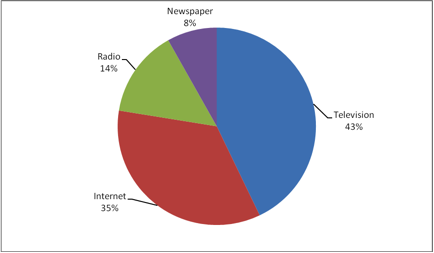
The Millennial generation is the first generation to be born with the Internet and brought up in a computer mediated environment (the creation of alternate realities through computer interfaces) (La Ferle, Edwards & Lee, 2000; Zukin, et al., 2006). The Millennial generation is a multitasking generation spending their entire lives connected to digital technology (Pew, 2010). These generational distinctions are shown in their news consumption habits. The Millennial generation relies heavily on television and the Internet for news, with 65% of Pew survey respondents indicating they received most of their news from television and 59% indicating they received most of their news from the Internet. Gen Xers (ages 30 to 45) and Millennials rely on Internet and television sources nearly equally, although television is still the leading news source for both of these younger cohorts (Pew, 2010). As a news source, Millennials (characterized in the Pew report as those born after 1980) are just as likely to use cable or broadcast television. They are less likely than Boomers (ages 46 to 64) or Silents (ages 65 and older) to get most of their national and international news from the major networks (ABC, CBS and NBC). Only 24% of Millennials surveyed receive most of their news from newspapers, and 18% use radio as their main news source (Pew, 2010).
Mindich (2005) worried the decline in news consumption among young people may lead to a decline in public affairs knowledge and democratic participation. However, studies have found parents and schools can encourage an increased use of newspaper and television (for news consumption) (Vraga, Borah, Wang & Shah, 2009) and civic engagement, particularly among tweens and teens (Golieb, Kyoung & Gabay, 2009) as well as scholastic journalism students (Graybeal, Dennis & Sindik, 2010).
Civic Engagement Habits
Pointing to the changing nature of civic involvement (which historically was tied to political engagement), Zukin et al. contrast civic engagement from political engagement by defining civic engagement as organized voluntary activity focused on problem solving and helping others (2006). The definition of civic engagement appears to be shifting, with no answer that fully encompasses civic engagement in the 21st century (Zukin et al., 2006). Determining a definition for civic engagement is difficult due to competing theories of democracy and empirical measures of participation (Zukin et al, 2006). Despite difficulties surrounding the meaning of the term, Delli Carpini defines civic engagement as the way individual and collective actions are designed to identify and to address issues of public concern. Civic engagement can take many forms, from volunteerism and organizational involvement to electoral participation (Delli Carpini, 2000; Delli Carpini, 2006; American Psychological Association, 2012). On the American Psychological Association website, the organization posits civic engagement can include addressing an issue directly, working with others in a community to solve a problem, or interacting with the institutions of representative democracy. Civic engagement encompasses a range of specific activities such as working in a soup kitchen, serving on a neighborhood association, writing a letter to an elected official, or voting in elections (American Psychological Association, 2012).
Scholars often have tied civic engagement to news consumption in that when news consumption decreases, so does civic engagement. And although one perspective considers the Millennial generation’s decrease in civic engagement as inevitable as news consumption decreases, not all predictions for future news consumption and civic engagement decline are dire (Schudson, 1998; Skocpol, 2003; Zukin et al., 2006). Scholars argue that forms and types of civic engagement and news consumption have changed; therefore, researchers should make a similar effort in finding the appropriate methodological ways to measure the new cultural and media landscapes. Parents (talking about politics at home) and schools (arranging for volunteer opportunities) are the most powerful predictors of engagement, among high school and college students (Zukin et al, 2006). Opportunities in high school to learn about civic engagement can be related to the ability to engage in civic activities (Kahne & Middaugh, 2008). Empirically, recent studies have shown that Millennials often volunteer at higher rates than Americans in other generations, suggesting an interest in civic engagement still exists (Civic Health Index, 2009; Pew, 2010).
Besides volunteering more than other generations, Millennials are on par with other generations in the frequency with which they sign petitions online and paper petitions (Pew, 2010). About one-third of Millennials, Gen Xers and Boomers say they have boycotted a company in the past year. And nearly as many said they have participated in “buycotting” in the past year, which is purchasing a product or service to show support for a company whose business practices one believes are ethical (Pew, 2010). Millennials often use their favored news resources and new technologies to share information regarding civic engagement (Civic Health Index, 2009). Millennials are more likely than older generations to use the Internet, blogs, text messaging and social networking sites to gather civic-related information and express their opinions on issues (NCOC, 2009).
Some best practices for civic engagement in the high school classroom include the discussion of current events, the study of issues important to students, the discussion of social and political topics in an open classroom environment, the study of government, history and social sciences, the interaction with civic role models, the participation in after-school activities, the study of community problems and ways to respond, the service learning projects, and the engagement in civic engagement simulations (Kahne & Middaugh, 2008).There is strong evidence that talking about politics and civic participation today leads to civic participation and to political participation in the future (Gil de Zúñiga & Rojas, 2009).
Technology and Civic Engagement
Scholars have conducted research into effects of technology on civic engagement in both online social networks (such as blogs and social networking sites like a Facebook) and offline social networks (such as neighborhood and educational associations like a PTA). Network size, both online and offline, is related positively with civic engagement and online networks entail greater exposure to weak ties than offline networks (Gil de Zúñiga & Valenzuela, 2010). Some of the barriers preventing access to developing weak ties offline can be overcome by the geographically boundless Internet,. Also, engaging in conversations online has a stronger relationship with civic involvement (Gil de Zúñiga & Valenzuela, 2010). Other research has honed in on the types of Internet content that foster higher levels of civic engagement. News consumption, both online and offline, positively relates to interpersonal discussion, to political involvement and to political engagement (Gil de Zúñiga, Eulalia, & Rojas, 2009).
Mesch and Talmud (2010) found that Internet connectivity and attitudes toward technology provide more channels for local civic participation. Formation and active participation in local community electronic networks not only adds to, but also amplifies civic participation and an elevated sense of community attachment (Mesch & Talmud, 2010). Overall, active participation in locally based electronic forums is associated with multiple measures of community participation over other traditional (offline) forms of social capital, such as face-to-face neighborhood meetings, talking with friends, and membership in local organizations (Mesch & Talmud, 2010).
In summary, a generational gap has led to declines in both news consumption and civic engagement. A news habit has not developed among members of the Millennial generation, the first to be surrounded by digital technologies at birth. When news consumption decreases, so does civic engagement, however, participation in school activities can stimulate an interest in civic engagement. This study looks how participating in high school journalism studies impacts civic engagement. Thus, the following research questions are posited:
RQ1: How does participating in high school journalism impact civic engagement?
RQ2: How does students’ focus on online news impact civic engagement?
METHODS
This study used mixed methodology of a pilot survey and focus groups to determine the dependent variable of civic engagement. Using Delli Carpini’s characterization of civic engagement as a guiding point, this study operationalized civic engagement as involvement in community, involvement in civic and/or political events, as well as an awareness of issues impacting the respondent’s community. The independent variables were high school journalism practices and online engagement. High school journalism practices were operationalized as high school students who engage in journalism activities for their high school. Online engagement is operationalized as level of online use. The participants were high school students attending a week-long summer scholastic journalism academy at a university in the southeastern United States in 2009 and 2010 (n= 147). The journalism academy consisted of high school students — mostly from the host state — that enrolled in one of four writing courses or one of three visual communication courses. At the end of the week, students produced a 12-page newspaper and a 15-minute broadcast TV news show. To attend the journalism academy, students must either pay for the $525 tuition or apply for a scholarship. Roughly 25% of the participants attended on scholarships funded by CNN or the Hispanic Scholarship Fund. Although open to all students who demonstrate financial need, the scholarships are marketed to students in schools with high concentrations of African American and/or Latino students.
Pilot Study
A pilot survey of students was conducted at the journalism academy to gain initial impressions regarding the participants’ general news and media consumption habits to determine ideal focus group participants. The survey measured media consumption habits, attitudes toward community engagement, civic involvement, and interest in news and current events. The optional online survey was conducted during academy classes and had a 97% response rate (n = 142). The convenience sample was comprised of 84% female respondents and 16% male. Statewide and national demographic data of scholastic journalists was not available so it is unknown if the survey sample is representative of a typical make-up of scholastic journalism participants or heavily skewed toward female respondents. A national study of recent college journalism programs, however, found 75% of recent graduates were female, which seems to suggest the skew toward females is normal among journalism students (Becker, Vlad, Olin, Hanisak & Wilcox, 2009). The majority of the survey respondents were upperclassmen (Figure 1).
Figure 1: Grade level of respondents
Note: As the academy was held in the summer in between grade levels “rising” indicates the grade level of the student when they return to school in the fall.
Many of the respondents are involved in multiple media outlets in their high school, with the newspaper or newsmagazine being the most popular outlet (Figure 2). While most of the respondents had experience in scholastic journalism, nearly one-fifth of survey respondents are not involved in a media outlet at their high school, 17%, n = 24. This suggests summer scholastic journalism academies fill a void for students interested in journalism who might not be involved in media outlets in their own high schools.
Figure 2: Scholastic journalism activity
The majority of respondents are Caucasian, 60%, n = 82. Because a focus of the journalism academy is exposing minorities to journalism opportunities, there are a greater number of minorities represented in the sample. This is more than double the number of college journalism graduates (19%) who are members of racial ethnic minorities (Becker et al., 2009). Survey respondents were allowed to check more than one option for their minority status. A majority of survey respondents (58%) identified themselves as members of racial minorities. Participants indicated several minority groups they identified with including African American, Asian, Latino, Native American, Indian and multiracial.
Focus Groups
The purpose of the focus groups was to determine the level of civic engagement felt by the high school journalism students (n = 32). The students participated in one of four hour-long focus groups conducted during the week-long academy. Focus group participants were grouped on different criteria selected by the researchers. One group consisted of rising sophomores; another group consisted of rising seniors; another group consisted of students with an interest in writing; and the fourth group consisted of students with multimedia interests. The focus groups further delved into many of the subjects covered in the survey. The focus group questions were pre-tested in an in-depth interview with a local high school journalism student. The focus group moderator routinely conducted member checks throughout the focus groups by summarizing and clarifying the statements being made and asking for agreement or corrections to his statements. The high school journalism academy director also presented a preliminary summary of research findings from the survey at the academy. This, in effect, also served as a de facto member check on validity to help show that the survey asked what the researchers intended to ask.
RESULTS
Pilot Survey
The high school journalism students were heavy consumers of media products, with newspapers, the Internet and television being the biggest sources of media consumed at least once a week (Figure 3).
Figure 3: Media consumption habits
Forty percent of the participants read the news online every day (n = 53), but are not heavy consumers of mobile news, with 71% (n = 100) never checking the news on their phones or other new media products, such as podcasts. However, the phone and email are the main ways the respondents communicate with their friends (59%, n = 83), suggesting that the uses for mobile devices are primarily social for this group. In terms of news consumption, television is the primary source of news for the participants, followed by the Internet, radio and the newspaper (Figure 4).
Figure 4: Primary source of news
In addition to demonstrating high levels of media consumption, the survey respondents also had high levels of civic engagement, with 60% of the respondents stating they are somewhat involved in community, civic and political events, n = 58. An additional 9% (n = 13) described themselves as extremely involved and 16% (n = 23) described themselves as very involved in community, civic and political events. The remaining 14% (n = 20) described themselves as not at all involved in civic events. There was a moderate relationship between being involved in community, civic and political events, and having an interest in news and civic events, r = .310, p < .001. There was also a moderate relationship between respondents who were involved in civic events and respondents who get their news from the Internet at least once a week, r = .264, p < .01. A low correlation also existed between respondents involved in civic events and those interested in broadcast journalism, r = .187, p < .05.
Focus Groups
The study’s focus groups provided more in-depth information into what the high school journalism students think about civic engagement. The importance of civic involvement was prevalent across all four focus groups, with many of the participants being involved in their own communities through volunteer work (civic service programs, elementary schools, church work and Habitat for Humanity) and active in civic engagement activities through their high schools (Figure 5).
Figure 5: Civic engagement activities in high school
High School Journalism
In response to the first research question, the focus group participants stated that being involved in a high school journalism program provided them with more opportunities for, and a better appreciation of, civic engagement activities. The participants explained civic engagement increased their understanding of what was happening in their communities, which in turn made them better journalists. The participants also believed high school journalists, as well as their non-journalism peers, should be engaged actively in civic activities as early as possible, and definitely should be engaged by the age of fourteen or fifteen. One focus group participant who volunteered at an elementary school explained:
We worked with the kids and really find out where the news is. You can really write a story better when you know how the news feels firsthand [rather] then just going out there and interviewing somebody. We were actually experiencing it. Some of my best news stories have been done after doing community service.
Another participant echoed these sentiments when explaining the ways her high school newspaper attempted to integrate itself into the community to produce in-depth stories, and attempted to advocate the merits of civic journalism. She believed “most of your best stories are from going to the homeless shelter, going to a food drive – don’t look down on the community and think you know about everything if you aren’t being affected.” These statements suggest civic involvement can enhance journalism skills and can impact the type of news stories written by journalists who are active in their community. It also suggests when at the grassroots level, civic engagement and scholastic journalism influence and inspire one another.
The focus group participants also felt being civically engaged in their communities allowed them to discover stories they would not learn about from the news they consumed online, or from other media sources. One participant stated, “I feel like [civic activities] can get you closer to the news. I feel like instead of doing stories about how bad the economy is, if you go and see it firsthand that will give you a better understanding of it instead of going and looking it up on the Internet.” In addition to this perspective, some of the focus group participants also felt that civic engagement involved their interest in journalism and local media. A participant who attended a school for the blind expressed the belief that being involved in civic affairs made her more interested in the media:
I think it is important for people to be involved. At my school we are from all over the state so we try to be as involved in the community as we can. It’s important to give back to the community. As blind people, we show what we are capable of in the community and it makes you pay more attention to the local news. You hear about it firsthand.
However, not all of the focus group participants believed the civic engagement was necessary for a career in journalism, and also reflected pessimism when describing the civic interests of their non-journalism school friends and classmates. One participant stated, “I think that kids are turning more towards apathy in terms of being involved,” and believed that unless his peers had specific civic goals or future career plans in mind, they likely would not be motivated to engage in civic activity.
The participants also shared the belief that the combination of civic engagement and journalism made them more aware of current events than their classmates, and expressed a certain unhappiness with the civic awareness level of their classmates, complaining their peers who were eligible to vote either did not know the issues well enough or chose not to vote at all. Some of the participants recognized a connection between their news and current events knowledge, and political and civic involvement. One female participant spoke passionately about the significance of an informed citizenry toward political and civic engagement:
I think it’s extremely important for people our age to know and understand the news because I just feel like there’s a lot of ignorance going on. There’s a lot of ignorant people, especially in our age group. They don’t know anything. You ask them and they’ll just be like (*blankly stares*). I don’t know. I just have a big thing against ignorance, I guess. I just feel like young people need to get more in touch with the news now, especially now with so many more things going on.
Overall, participation in high school journalism appears to positively impact the level of civic engagement for high school students, as well as an appreciation of the civic engagement activities. High school journalism students believed civic involvement increased the depth and quality of their stories, and explained civic involvement also increased their news consumption so they could be better informed as to what was happening in the world around them, particularly in their local communities. While the participants were aware that not all of their peers shared an interest in civic engagement, the participants clearly believed being actively engaged in volunteerism, politics and other civic activities had positive benefits for them, both as journalists and as humans.
Online News
In response to the second research question, the most popular ways for focus group participants to consume media was through new technologies and online media. The participants acknowledged the ease in blending media consumption with media creation enabled by new technologies had blurred the lines of professional and amateur content. The proliferation in use of social networking sites such as Facebook to gain information further complicates what the student journalists and their friends consider news. And while the aspiring student journalists recognized they would one day likely be creating content for online platforms, they said that professional online news sources needed to remain viable to maintain civic engagements for themselves and their peer groups. The students, many whom grew up in households where their parents regularly listened to and read legacy media outlets such and The New York Times and NPR, said traditional media outlets still do a better job of facilitating civic engagement than new technologies with content derived from less of a professional journalistic ethos.
The focus group participants watched a clip from “EPIC2014” video, which depicts the effects of an increasingly converged world may have on journalism and society at large in a hypothesized future that culminates with the downfall of The New York Times at the hands of a merged Amazon-Google technology giant. “EPIC2014” was produced in 2004 by Robin Sloan and Matt Thompson, who both worked at the Poynter Institute at the time, as an imagined future media history to depict the waning fortunes of the Fourth Estate. In the clip, The New York Times has gone offline, and the fictitious Googlezon company has replaced “news” with the Evolving Personalized Information Construct (EPIC) – a meta-tagged world of facts and notes and media assets mixed and re-mixed for every reader.
The participants were divided as to whether the future projected in the video could happen and threaten future civic engagement. One focus group participant believed the concepts shown in the video had happened, as more traditional media properties moved online. Another participant echoed this belief, explaining as more news is received online; people are not interested in getting different versions of the same story. The participant added “I don’t think people will all get news from different places because then no one would have the same story.”
A larger portion of focus group participants did not believe the future shown in the EPIC 2014 video would occur, for both civic and logistical reasons. One participant believed local news was too important to allow such a scenario to occur, adding, “Logistically [it] wouldn’t happen. All news is local. Unless you had people actually report on things, there would be no news.” Another student also dismissed the idea by considering the media employment side of the scenario, stating “I certainly don’t think as long as there’s kids interested in writing for The New York Times, I don’t think the pendulum will ever fully swing to the side of social media dominating.”
Other participants also believed the situation in the video would not occur, but believed the audience, not the media, would be the most resistant to the changes because one dominant media platform would not provide information everyone would want to read. If the audience were not interested in reading the content, they would just stay away from the new media source. As one participant explained, “You have to make it interesting enough for me to actually get into it. If what’s going on is not interesting enough I’m not going to read it.” Another participant echoed this concern, adding “It’s more about the people. [You] can’t make people read the paper. There’s people who just will never read the newspaper and you can’t really change that. There’s a lot of people like that.”
Overall, the focus group participants did not believe the shift to online journalism that is currently occurring would lead to a world in which civic engagement was no longer practiced. Like research has predicted (Zukin et al., 2006), the participants mainly believed an increasingly online world would not erase civic engagement, but would rather shift the terms and practices in some manner. The participants believed due to both the ideals and motivations of journalists and readers, the bleak world of an online future with one dominant voice would not come to be. Journalist and audience interest would ensure civic engagement would continue. Considering both the journalist and audience angles of future civic engagement indicates the participants believe that both parties are responsible for maintaining and increasing civic activities and awareness.
CONCLUSION
This study indicates when it comes to civic engagement, participation in high school journalism matters. The focus group participants credited their experiences with scholastic journalism programs for not only fostering an interest in news and current events, but also for fueling a desire to be engaged in local and national civic and community matters. The high school journalism participants expressed a strong advocacy of civic engagement, and expressed a connection between civic engagement and journalism skills. Nearly uniformly, the focus group participants felt being civically engaged enhanced their journalism skills and made them more aware of their surroundings, which in turn gave them inspiration for ways to cover their local communities. The sentiments of the focus group participants indicate civic engagement is not dead, but may be shifting as the Millennial generation consumes news in different fashions. While the participants expressed a preference for online news, they did not believe this preference would drastically change the role civic engagement had on their journalistic habits and story preferences.
Just as Graybeal, Dennis & Sindik (2010) found parents and teachers to be powerful influencers on teenagers’ interest in news; this study finds those two key groups to have an influence on teenagers’ civic engagement. The study also echoes previous findings that parents and schools are the most powerful predictors of engagement (Golieb, Kyoung & Gabay, 2009; Lee & Wei, 2007; Vraga et al., 2009; Zukin et al., 2006). Theoretically, this paper offers a contribution to the shifting notion of civic engagement. Like Zukin et al., Gil de Zúñiga, Schudson, Skocpol and even Putnam himself, this study found evidence civic engagement is changing, not necessarily declining, at least among the scholastic journalists belonging to America’s first generation to grow up with the advent of the Internet. Given that Putnam has said the stakes in stopping the decline of civic engagement is the fate of American democracy itself, this appears to be good news for America.
Of course, the extent of the impact on civic engagement of the Millennial generation’s increasing focus on online news is less clear. While acknowledging a high use of online technologies among both themselves and their peers, the focus group participants expressed a greater trust in traditional media as credible sources of information. Their own political and civic engagement and knowledge also was spurred more from traditional media and participation in scholastic journalism programs than the emerging technologies. The high school journalists believe strongly in the future of the industries they hope to one day work in, and bemoan the doom and gloom scenarios of the fall of mainstream news outlets and the resulting ramifications for democracy.
Despite the promising results, there are a number of limitations with this study. The first is the study was limited to a non-random sample of high school journalism students. The survey and focus groups were a convenience sample of all the journalism academy participants. As a non-random sample of high school journalism students, the results of this study are not generalizable to either the total population of high school journalism students, or the total population of Millennials. The students participating in the high school journalism academy are sophisticated media users, whose views on media use and civic engagement may not be representative of all teenagers. However, as an exploratory study beginning to examine the civic engagement patterns of high school journalists, the study adds value to the literature on the civic engagement of young journalism students.
Nevertheless, the study offers some initial insights and grounds for future research. Little previous research has examined teenagers’ civic engagement, much less the civic engagement of scholastic journalists. This study offers hope that scholastic journalism programs are useful tools to facilitate civic engagement. Future research is needed to further examine the civic engagement feelings and patterns of high school journalism students. Future research could include a longitudinal study tracking the civic engagement activities and feelings of high school students at future journalism academies. Additional research also could investigate the civic engagement sentiments of all high school students’ civic engagement as well as a broader sample of Millennials, to examine if the civic engagement of high school journalists differs from the engagement of general high school students.
Becker, L., Vlad, T., Olin, D., Hanisak, S. & Wilcox, D. (2009). 2008 annual survey of journalism & mass communication graduates. Journalism & Mass Communication Educator, 63 (3), 28-63.
Gil de Zúñiga, H., Eulalia, P., & Rojas, H. (2009). Weblogs, traditional sources, online and political participation: An assessment of how the internet is changing the political environment.New Media & Society, 11(4), 554-574.
Gil de Zúñiga, H., &Valenzuela, S. (2010). Effects of online and offline discussion networks and weak ties on civic engagement. Presented at the 11th annual International Symposium on Online Journalism, Austin, Texas.
Gilligan, E. (2011). Online publication expands reach of community journalism. Newspaper Research Journal, 32(1), 63-70.
Golieb, M. R., Kyoung, K. &Gabay, I. (2009). Political consumerism and youth citizenship: The development of identity politics among Tweens and Teens.Paper presented at the Association for Education in Journalism & Mass Communication annual conference, Boston.
Graybeal, G.M., Dennis, J.G. &Sindik, A. (2010). Scholastic Millennials and the media: News consumption habits of young journalism students.Presented at the Association for Education in Journalism & Mass Communication annual conference, Denver.
Jeffres, L.W., Lee, J.; Neundorf, K. &Atkin, D. (2007). Newspaper reading supports community involvement. Newspaper Research Journal, 28, 1, 6-23.
Kahne, J.,& Middaugh, E. (2008). Democracy for some: The civic opportunity gap in high school. CIRCLE Working Paper 59.
Lauterer, J. (2006). Community journalism: Relentlessly local, 3rd ed. Chapel Hill: University of North Carolina Press.
La Ferle, C., Edwards, S.M., & Lee, W.N. (2000). Teen’s use of traditional media and the Internet. Journal of Advertising Research, 40(3), 55-65
Lee, T., & Wei, L. (2007). The impacts of declining newspaper readership on young Americans’ political knowledge and participation: A longitudinal analysis.Paper presented at the Association for Education in Journalism & Mass Communication annual conference, Washington D.C.
Lowrey, W., Brozana, A. & Mackay, J.B. (2008). Toward a measure of community journalism. Mass Communication & Society, 11, 275-299.
Mesch, G. & Talmud, I. (2010). Internet connectivity, community participation, and place attachment: A longitudinal study. American Behavioral Scientist, 53, 1083-1094.
Mindich, D (2005). Tuned out: Why Americans under 40 don’t follow the news. New York: Oxford University Press USA.
McLeod, J.M. (2000). Media and civic socialization of youth. Journal of Adolescent Health, 27 (2), 45-51.
Pew Research Center for the People & the Press (2010). Millennials: Confident-Connected-Open to Change
Pardun, C.J., & Scott, G.W. (2004). Reading newspapers ranked lowest versus other media for early teens. Newspaper Research Journal, 25(3), 77-82.
Putnam, R. (2000). Bowling alone: The collapse and revival of American community. New York: Simon & Schuster.
Reese, S., & Cohen, J. (2000). Educating for journalism: The professionalism of scholarship. Journalism Studies, 1 (2), 213-217.
Rosenstiel, T., Mitchell, A., Purcell, K. & Rainie, L. (2011). How people learn about their local community. Pew Research Center Project for Excellence in Journalism, Pew Internet & American Life Project, Knight Foundation report. Retrieved September 26, 2011 from http://www.knightfoundation.org.
Sander, T.H., & Putnam, R.D. (2010). Still bowling alone? The post 9-11 split. Journal of Democracy,21 (1), 9-16.
Schudson, M. (1998).The good citizen: A history of American civic life. Washington D.C.: Free Press.
Skocpol, T. (2003).Diminished democracy: From membership to management in American civic life. Norman, OK: University of Oklahoma Press.
Terry, T.C. (2011). Community journalism provides model for future. Newspaper Research Journal, 32 (1), 71-83.
Vraga, E., Borah, P., Wang, M., & Shah, D. (2009). Building the habit: Growth in news use among teens during the 2008 campaign. Paper presented at the Association for Education in Journalism & Mass Communication conference, Boston.
Yamamoto, M. (2011). Community newspaper use promotes social cohesion. Newspaper Research Journal, 32(1), 19-33.
Zukin, C., Keeter, S., Andolina, M., Jenkins, K. and Delli Carpini, M.X. (2006). A new engagement? Political participation, civic life, and the changing American citizen. New York: Oxford University Press.
About the Authors:
Geoffrey Graybeal, Ph.D., is a visiting assistant professor in the School of Communication at the University of Hartford.
Amy Sindik, Ph.D., is a visiting assistant professor at the University of Georgia’s Grady College of Journalism & Mass Communication.
In December 2008, the Laurel Leader, a weekly newspaper serving Laurel, Maryland, moved its newsroom 10 miles north of town to a consolidated newsroom in Columbia, Maryland as a result of corporate financial constraints and real estate consolidation. This study, which utilizes ethnographic interviewing, examines the perspectives of a variety of stakeholders including journalists, readers, city officials, and advertisers on this relocation. James Carey’s (1989) ritual theory is used as a theoretical framework to explain the community’s reaction to this change. Findings suggest newsroom location contributes to stakeholders’ sense of community, which is largely influenced by readers’ sense of place. Findings also suggest the move impacted key stakeholders’ — journalists, readers and advertisers — perceptions of the newspaper’s ability to cover the community.
Community journalism has been regarded as occurring within the context of a particular geographic community and is often represented by daily or weekly newspapers, short-reach radio and television stations, or local magazines serving small towns and villages across the globe. Community journalism also has been regarded as different from metro, or big-city, journalism.
One popular form of community journalism can be found in the community newspaper. According to the National Newspaper Association (2012), “the distinguishing characteristic of a community newspaper is its commitment to serving the information needs of a particular community.” Whether printed in newspapers or published online, the news that community newspaper reporters produce usually highlights a particular place. Place, then, becomes a central component to the practice of community newspaper reporting and publishing.
But, as more independently-owned or chain-owned newspapers feel the financial pressures of a changing market, some have made questionable modifications to their practices to stay afloat. In December 2008, as a result of corporate financial constraints and real estate consolidation, the Laurel Leader, a weekly newspaper serving Laurel, Maryland, for more than 100 years, moved its newsroom from Laurel’s historic Main Street 10 miles north to a consolidated newsroom in Columbia, Maryland. While this move may have produced the positive financial results corporate executives desired, it created significant challenges on the ground for the other stakeholders, including journalists, readers, and advertisers. This study examines the aftermath of the move from the perspective of those key stakeholders. James Carey’s (1989) ritual theory is used to explain what happens to these key stakeholders’ sense of community when the newspaper moves out of town.
LITERATURE REVIEW
In 2009, Editor & Publisher listed 6,055 community/weekly newspapers and 1,408 daily papers circulating in the United States. According to Editor & Publisher, a “weekly” is defined as “any publication printing at least once a week, but less than four times a week” (Maddux, 2009, ii). Although daily metro newspapers have continued decreasing circulation, the same could not be said of community newspapers. The popularity and necessity of community journalism is undeniable; communities everywhere need newspapers committed to the towns they serve. As a result, circulation of weekly papers (paid and free) is nearly on par with dailies, at a total of 45.5 million (Maddux, 2009). Not much current literature exists on the numbers of paid versus free weekly newspapers circulating in the United States. Research has shown paid circulation weeklies far outnumber free circulation weeklies, though free weeklies tend to circulate more copies than paid weeklies. Furthermore, Coulson, Lacy, and Wilson (2001), who used a random stratified sample of weekly newspapers, found ownership of weeklies was fairly equally divided between independents and groups, 50.3 percent to 49.7 percent respectively, and suburban weeklies outnumbered central city and rural publications.
A number of earlier studies interrogated the role news media play in connecting people, finding newspaper reading is linked to both sense of community and community involvement (Park, 1922; Janowitz, 1952; Stamm, 1985; Rothenbuhler, Mullen, DeLaurell, & Ryu, 1996; Stamm, Emig & Hesse, 1997; Yamamoto, 2011). When compared to big city dailies, Lauterer, long-time community journalist turned journalism professor and scholar, said that there is a “philosophical difference” in the way community newspapers approach readers, advertisers, and news in general, because often community journalists know intimately or at least through acquaintance the people and places on which they are reporting (1995, p. xiv). Community journalists, he argued, need to understand the essence of community, the importance of place, of the relationships people maintain, and of the values and goals they share. They also realize they cannot hide behind a masthead. Their readers are their neighbors, their fellow church members, and the people they see in line at the local grocery store or at a table in the coffee shop.
Likewise, readers tend to value community news. This exchange of news between journalists and readers becomes an ongoing conversation people count on engaging in each day or each week. The exchange of news centers on Carey’s (1989) idea of ritual communication, which he “conceives [of] communication as a process through which a shared culture is created, modified, and transformed” (p.43). The notion of ritual communication provides the theoretical grounds for a discussion of the purposes of and possibilities for community journalism. Carey’s ritual view of communication suggests that communication, both interpersonal and mediated, is not simply a means to transmit information, but rather a ritual that draws “persons together in fellowship and commonality” (p. 43). But, even more than that, communication allows people to create and sustain the communities through the sharing of common values. He added, “A ritual view of communication is directed not toward the extension of messages in space but toward the maintenance of society in time; not the act of imparting information but the representation of shared beliefs” (p. 18).
Carey’s ritual theory makes clear that conversation and communication are the elements to make community possible. A sense of community is created and is sustained through the process of communicating whether face-to-face or through media. Anderson (1983) made a similar argument about the role newspapers play in creating community in his book on nationalism. Like Carey, he viewed newspaper reading as a “mass ceremony” that contributes to a sense of imagined community. He posits “the newspaper reader, observing exact replicas of his own paper being consumed by his subway, barbershop, or residential neighbours, is continually reassured that the imagined world is visibly rooted in everyday life” (p. 36).
In an age when new technologies allow people to maintain connections with other people and places via the Internet rather than being physically present for conversations or even special events, place remains an essential starting point for a discussion on the requirements of community journalism. Clearly, place or physical proximity is no longer necessary for people to interact, to form relationships, and to stay connected. The Internet affords opportunities for meeting new people and for sharing experiences easily and across virtual space (Evans, 2004).
While it might not be necessary, place still holds importance in an understanding of community insofar as it grounds people and provides them with a sense of identity and a sense of belonging, which serves as an important foundation to build community. After all, people live in some place. Because people’s need to connect with others is so strong, when meeting new acquaintances one of the first questions they tend to ask is “where are you from?” (Frantz, 2003, p. 1). Place serves as an important way for people to establish something in common. Hummon (1990) said conversations about hometowns or places of residence are not merely ways to pass time, but instead represent a distinctly important way in American culture for people to make sense of reality. Debates about small towns, suburbs, and cities characterize contending values, theories of social structure, and even serve to define people. Hummon added that “questions about where one lives become queries about who one is” (p. xiv).
As Hummon (1990) pointed out, place is important for both personal and communal identity. Meyrowitz (1985) highlighted the specialness of place in his treatise on the impact of electronic media, like the television, which he believed were eroding the importance of the physicality of place. Additionally, those who value face-to-face conversation, like Dewey (1927), Carey (1997), and even Habermas (1991), argued that place, or rather social space, is important for fostering social relationships and community. Carey’s (1997) notion of a republican community “is organized around the principle of common social space in which people mingle and become aware of one another as inhabiting a common place” (p. 10). These common places could include a town or neighborhood, but also what Oldenburg (1999) described as third places or “a generic designation for a great variety of public places that host the regular, voluntary, informal, and happily anticipated gatherings of individuals beyond the realms of home and work” (p. 16).
Yet, journalists tend to disregard the need to be involved with, or live in, the community on which they report. Gaziano and McGrath’s (1987) survey of 100 journalists demonstrated the discomfort many journalists feel when living within or getting involved within the communities they cover. While “nearly 9 in 10 agreed that ‘it’s important to know a lot of people in the community’ … fewer than 3 in 10 agreed that ‘it’s important for people who work for newspapers to be involved in community organizations’” (p. 320). Overall, Gaziano and McGrath concluded community journalists seek to keep distance between themselves and their readers to maintain a level of credibility for their newspaper (p. 325). This belief likely stems from journalistic codes of ethics, like that of the Society of Professional Journalists’, which is “voluntarily embraced by thousands of journalists” and states that journalists should act independently and “remain free of associations and activities that may compromise integrity or damage credibility” (Society of Professional Journalists, 2000).
This trend identified by Gaziano and McGrath in 1987 has not waned. Mayer (2011) found “journalists still foster and celebrate otherness more than they do connection. Ever mindful of conflicts of interest — actual or perceived — they hold themselves apart from influence and are wary of being swayed by sources or vocal readers” (p. 12). So, community journalism, which Janowitz (1952) argued required human interest and historical perspective, is being done in many places by journalists with little or no connection or intimate knowledge of the towns and communities they cover. As Lauterer (1995) argued, this lack of connection has the potential to diminish the quality of community news. In Laurel, this problem is now exacerbated by the fact that the Leader’s newsroom is no longer physically located within the town limits.
METHOD
Background
On December 11, 2008, at the height of the recent recession, the Leader announced its newsroom would relocate to Columbia on December 15, 2008. Trish M. Carroll, president of Patuxent Publishing, and Timothy E. Ryan, president of The Baltimore Sun Media Group, which is owned by the Tribune Company and publishes the Leader, announced in a letter to readers the Tribune Company had “filed to restructure debt obligations under the protection of Chapter 11 of the U.S. Bankruptcy Code” (“Note From Company President,” 2008). On December 10, Melanie Dzwonchyk, 53-year-old editor of the Leader, posted a brief article online announcing that the Leader would relocate its office to the Patuxent Publishing headquarters in Columbia (“New Location,” 2008). The same article appeared in the print edition the next day. In a another article published December 11, Dzwonchyk said though the mailing address and production facilities would be changing, the process of covering the community would remain the same; reporters, photographers and editors would be in the community on a daily basis, covering the news. She concluded, “We know how important it is to keep a connection with the community and we pledge to continue it (“Leader Office Relocating,” 2008).
Case Study
Laurel is an appropriate location to study the intersection of community and journalism for a variety of reasons. Laurel is a suburb of two major metropolitan areas, Baltimore and Washington, D.C. Although The Baltimore Sun and The Washington Post can be found on doorsteps in Laurel, neither newspaper regularly covers with any depth the news of the surrounding suburbs. Besides these national media that are in a sense local, Laurel does not support its own news radio or televisions stations. The Laurel Cable Network Foundation, Inc. has served Laurel with public access television for the past 22 years, but the television station has little news. Because of these factors, Laurel news often only can be found in the weekly newspapers including The Laurel Leader and the Laurel edition of The Gazette, the competing Laurel weekly produced by the Washington Post Co. These two newspapers play a vital role in informing residents about their town. In particular, the Leader’s move to Columbia had significant impact on local stakeholders, many of whom regarded the newspaper as the “hometown paper” because of its longevity in serving the town.
Because of the case study, the researcher decided to do ethnography to determine how the move of the newspaper impacted people’s feelings toward community. Berg (2007) called for ethnography in case studies because “community case studies may specifically focus on some particular aspect of the community or even some phenomenon that occurs within that community” (p. 297).
The researcher interviewed 40 participants, including journalists and executives at the Laurel Leader, city government officials, business owners who advertised in the newspaper, and readers and citizens in Laurel, where the population nears 108,000. Interviews were conducted with individuals, with pairs, and with small groups of three to four people. A different set of questions was devised for participants in each of the constituent groups listed above (see Appendix 1). All participants, depending on the category within which they fell, were asked questions from the appropriate list. Most questions were open-ended and all interviews were semi-structured and conversational.
The participants represented “exemplars of a wide range of characteristics” (Lindlof & Taylor, 2002, p. 123) and were located through snowball sampling. All interviews were conducted face-to-face at various locations in and around Laurel. Interviews ranged from 30 minutes to two hours. Though the study had a set of pre-determined questions, interviews were conversational and sometimes took unexpected, yet interesting turns. Participants were asked several questions about Laurel, some which allowed them to describe Laurel as if doing so to an outsider; these questions provided insights into how the participants understood Laurel as a place. Then, participants were asked a set of questions related to their consumption, use and/or production of news in Laurel, depending upon the category into which they fell; these questions got at the participants’ perceptions of the state of community news in Laurel. All participants were eager to discuss the status of the newspaper industry in Laurel, including the Leader’s recent relocation.
According to the most recent census figures available at the time of the data collection (2000), the study’s sample fairly closely matched the racial make-up of Laurel. While Laurel is 55% white, 65% of the participants identified themselves as white. Blacks in Laurel account for 34% of the population, while 13% of the participants identified themselves as black. Asians and “other” account for 7% and 4% of Laurel’s population, respectively, while the participants identified themselves as 1% and 10%, respectively. Obviously, the sample of participants impacted the finding in this research. Those interested in participating in community research were those who felt invested in the community in some way, regardless of their age, race or gender.
All those considered public figures, those whose names are known to the public because of their role in the community, including journalists, city officials and business owners, are referred to by their real, full names. All other participants not considered public figures, such as citizen and readers, are referred to by a first-name pseudonym.
Upon their written consent, participants who were considered public officials (journalists, publishers, public officials) were named to maintain levels of authenticity and credibility. However, to minimize the risks to the named participants, each was allowed to view a draft of the original work to ensure they were comfortable with the information included. Following Liebow (1993), all named participants also were given an opportunity to comment on the draft, and any information they found to be damaging to their status in Laurel was discussed and was negotiated. Of the 21 named participants, 11 replied with comments. None of the participants requested any changes to their original comments, but rather often responded to the comments made by others. Relevant comments have been included and have been marked as follow-up commentary throughout the findings section. Additionally, some individuals, organizations, or businesses named by the participants in interviews were altered to protect the anonymity of people or places not directly involved in this research.
Interview transcripts were analyzed for common themes and threads. An initial reading of transcripts allowed for thematic categories to emerge; second and third readings allowed for categories to be honed and comments to be further categorized.
FINDINGS
The Leader’s Move Disrupts Status Quo
Most of the participants either voluntarily referred to the relocation or were eager to discuss it, although some had not realized the office had moved because the announcement came immediately ahead of the move. Even Leader journalists felt uneasy about the way the company handled the move. Pat Farmer, 65-year-old Laurel resident and part-time editorial assistant at the Leader, confessed she was upset by the quick announcement and wished the executives had tried to keep the newsroom in Laurel, even suggesting that the editor, Dzwonychk, should ask the mayor for office space in city hall:
The thing that bothered me the most, and I’ll go out and say this, is that everything was kept so quiet and the mayor and the other government officials didn’t know we were going to be moving until the paper came out.
Mike McLaughlin, 56-year-old Laurel resident and community columnist for the Leader, agreed that the decision came quickly, and he overtly criticized the handling of the announcement. He admitted it “wasn’t like taking the Baltimore Colts in the middle of the night,” but he speculated moving the Leader off of Main Street had “devastated a lot of people” in Laurel.
One person devastated by the move was Bob Mignon, 59-year-old Laurel resident and owner of Minuteman Press in Laurel. He was not shy about expressing his disappointment with not only the Leader’s move, but also its performance in general and immediately following the move to Columbia. Mignon felt the editions immediately following the move were “weak” though the content had been getting stronger since. “It’s really a classic destruction of a newspaper. It’s horrible. Then [Leader editors] wonder why people are going other places [for news] and the reason they’re going other places is that these people aren’t providing the content to make themselves successful,” Mignon said.
Dzwonchyk acknowledged people’s frustration with the newsroom relocation. Residents even had questioned whether or not the newspaper had folded altogether. She recounted a February 2009 phone call with a woman from South Carolina, formerly of Laurel, who told Dzwonchyk the Leader had gone out of business. When Dzwonchyk told the woman she was speaking with the editor, the woman continued to insist that they had gone “belly up,” or so her friends had told her. Dzwonchyk insisted journalists still were present in Laurel—covering sporting events, schools, and city government. But the perception that the Leader had gone out of business since it had relocated to Columbia was real.
Physical Distance Hinders Coverage
Being located 10 miles from the place the paper aimed to cover provided challenges even readers recognized. G. Rick Wilson, 51-year-old Laurel resident and local blogger, also was upset to learn the Leader left town. He speculated the move must have affected the Leader’s ability to cover Laurel:
Geography is important. Geography is terribly important because it’s news. So now you’re a reporter working a story here in town, and you came in to cover [a story] and normally you would have gone back to where [the restaurant] Red, Hot, and Blue is, right to their offices there [on Main Street] and you sit at your desk and you do whatever you’re going to do. But now you have to drive back to Columbia. While you’re driving back to Columbia another story comes up. How likely are you to be turning around and driving the 20 minutes back to Laurel to cover that story? It’s got to affect it. I appreciate why they did it, but it’s got to affect it.
Fredrick Smalls, 58-year-old Laurel resident and city council member, agreed, adding, “whether real or imagined…for a local paper not to be located locally, you’re losing something.” By the time journalists arrive to cover spot news, the newsworthy happening could have concluded. Smalls said, “in some cases, the reporters, when covering city council kinds of things, are relying more on the video tape review than actually being there at meetings.”
Leader journalists Dan Schwind and Gwendolyn Glenn confirmed the challenges. In mid-March 2009, Schwind, a 26-year-old resident of nearby Rockville, Maryland, was sorting out his routine given the newspaper’s move to Columbia. He decided he would spend Thursdays and Fridays in Laurel and Monday through Wednesday in Columbia. But, this plan could become complicated, he said, without access to the tools of his trade, a business cell phone and laptop computer, none of which were in place prior to the move out of town. He cited the Chapter 11 filing of the Tribune Company as explaining the lack of availability of these tools. As a result, Schwind was spending just about every day in Columbia because “that’s where my email is, and that’s where my voicemail is,” he said.
Though the company had offered to pay him for use of his personal cell phone minutes, he said he preferred not to give his personal phone number out to sources. “As much as I love the people of Laurel, I don’t want to give my cell phone out to everyone,” he said. Since that time, the Tribune Company has provided Leader reporters with laptops, video cameras, air cards, and business cell phones, Glenn, a resident of Silver Spring, Maryland, said. She added since the move, the journalists have been allowed more flexibility about working from Laurel or from the Columbia office. Some days, she said, she spends all of her time in Laurel:
I rarely come into the Columbia office these days, although I have a work station there. This way, we have a greater presence in the city and I’ve been able to be on the scene of breaking news stories and am able to observe changes in the city, such as a new restaurant opening, a business opening or closing, construction work, road closures that help commuters, etc.
But, doing her job was difficult without office space. She frequently used the Laurel Library to write and to email stories back to the newsroom, but this was not always the most efficient solution, especially in the evenings, when the library fills with teens who occupy all of the available computers. She recalled a recent instance when she had to call her editor because she had to wait 20 minutes to gain access to a computer at the library. While she waited, she wrote the story by hand, and then typed and sent it once she could use a library computer.
Being in the office, however, posed as many challenges as being away from it, Glenn said. She cited a time when she missed a deadline because a report from the Economic Development office, located in city hall, had been released, but the report could not be emailed to her at the Columbia office. Because she was on a deadline, she was unable to acquire the report in time. The story was published that week on the web and in print the following week. She said she suspected the Leader had missed out on potential news by not having reporters and editors in town five days a week, “especially [news about] crimes and accidents.”
Like Glenn, Schwind said the move affected¬¬ the way he covered the education beat in Laurel. For example, he cited the difficulty he faced when trying to contact one Laurel principal, who rarely sat behind his desk to receive phone calls. When the offices were located in Laurel, Schwind thought nothing of hopping in his car and taking the four-minute drive to the school to catch the principal in person. Schwind added, “now, it’s a 20-minute ride, so that’s not something I can just hop in the car and do.”
For full-time reporters Schwind and Glenn, the move to Columbia meant more than just a change in location. With all Patuxent Publishing papers working under one roof, the company began pooling reporters and asking them to cover stories for several different Patuxent papers. Schwind said at first he enjoyed the hustle and bustle of being in a bigger newsroom, but he quickly realized the challenges that came with it, especially dealing with towns he knew nothing about:
The last couple of weeks I’ve had to help out with some Howard County stories, which I don’t necessarily mind; I just feel bad because I don’t know squat about Howard County outside of North Laurel. And, Gwendolyn, I know she’s been working on some economic stories on Howard County. So, that’s also obviously pulled me away from [reporting on Laurel].
Pat Farmer, part-time editorial assistant, had a different explanation for how the move made her job a bit more difficult. Since the pooling of editorial assistants, she was no longer part of editorial meetings as she was when the Leader maintained its own office in Laurel. She felt “it could be detrimental to the paper, because, you know, I have this investment in the community, an investment in the paper.” Farmer lives in Laurel, as does Dzwonchyk, and community columnists McLaughlin and Christine Folks. As residents, they have a different relationship with Laurel and the Leader than do Schwind and Glenn, who do not live, and never have lived, in Laurel.
Journalists, Newspaper Perceived as Outsiders
Since moving to Columbia, some participants now consider Leader journalists as “outsiders,” even though some of them actually live in Laurel. But, even before the move, several participants said they perceived many of the Leader’s journalists to be somewhat detached from Laurel. Mignon has been upset with the Leader’s performance ever since it switched from independent to corporate ownership in 1980, when he said everything seemed to become about “dollars and cents.” He added:
[The newspapers] have to pay for themselves, but I expect certain content about the community in my newspaper, and the Laurel Leader simply doesn’t care that much about community content. They don’t send reporters; they don’t report on many of the activities that take place in the Laurel community.
Kristie Mills, 60-year-old Laurel city administrator, said the journalists were somewhat removed from the day-to-day activities of Laurel, even before the move to Columbia. She cited a recent Martin Luther King, Jr. event, held on a weekend. While Glenn wrote a personal story about her experience with Martin Luther King, Jr. day, Mills said none of the local reporters actually came to the event to cover it. Mills added that when events are held on weekends, reporters generally don’t come out, but she believed they should. Covering Laurel is an around-the-clock job, with the journalists needing to be available whenever important things are happening in town. “Like me,” she said, “they made a career choice.” However, Glenn refuted Mills’ claims when reviewing an earlier draft of this research, saying often they did not cover city events because they were not made aware of events taking place, even though Glenn has requested to be kept “in the loop.” Glenn added, “unlike the new Prince George’s County Executive, Rushern Baker, who sends out his daily itinerary, the Mayor [of Laurel] does not, even though we’ve made this request over the years I’ve been here. Often we are not informed of speeches he’s making, testimony he’s giving on legislation elsewhere, etc.”
Glenn said that she and her fellow reporters were doing the best community coverage they could with the information made available to them. Glenn came to the Laurel Leader after working stints at NPR, CNN, and the Washington Post and did not see her role as a reporter any differently working for a small, community newspaper. She found her job was “no different from anywhere else I’ve ever worked [at the] national level, international level; it’s to do the story. Do an objective story; check the validity of the story. That part I think is always the same.” Glenn, who lives in Silver Spring, Maryland, just north of Washington, D.C., said she doesn’t consider herself to be part of the community in Laurel.
I don’t live here so, no. I think if I lived here that would be different, but I’m known in the community. People know me, people say ‘hi,’ and people call me with ideas. But I just feel to be part of a community you have to live there. […] And that’s not to say you can’t do your job well. I don’t think you have to live here to be a reporter.
Mills and Glenn expressed a difference of opinion on the role of the reporter in the community. Dzwonchyk said being involved in various activities and organizations in Laurel, and being neighbors with some of the city council members, puts her in a somewhat difficult position as the “friendly critic.” Many of the local people referred to Dzwonchyk by her first name and knew she was the editor of the Leader. Several reported being friends with her and feeling very comfortable talking with her. But Donna Crary, a 50-year-old city council member, said while she feels comfortable interacting with Dzwonchyk, she found some of the other reporters from the Leader and The Gazette to be somewhat detached. She added, “I think that the reporters can go to certain people all the time for comments,” but she was not one of those people. Jan Robison, 59-year-old Laurel city council member, pointed out turnover among community reporters proved challenging for the coverage, because when new reporters come to cover the city government meetings, they were not aware of the “dynamics” and “who to go to and who will talk to you if you want.”
Schwind agreed that these dynamics and other intimate details about covering the community are not only difficult to learn, but take time and effort, something working directly in the community helps. He said casual, local interaction with sources helped him to learn how to time difficult questions and to know who would rather answer them first and get them out of the way, and whom he needed to talk with for a while before he hit them with a tough question. And, interacting with locals at various community events helped to integrate Schwind into the community as not only a journalist but as a participant in local life.
If you want to learn what’s going on with the Laurel city council, you can’t just go to the council meetings and the work sessions. You’ve kind of got to go to those, the barbecues they do and things like that or any of their events because that’s when you get to talk to the city council members out of their element.
Such interactions were difficult to maintain for Schwind, who said being miles removed from Laurel when working in the Columbia office hindered his ability to get out and about in the Laurel community.
Readers, Advertisers Feel Abandoned
Readers and advertisers also reported feeling a sense of abandonment with the Leader’s move to Columbia. Nate, a real estate agent who lives and works in Laurel, said he advertised homes in the Leader every other week instead of every week as he did in the past, “because we’re not sure anybody is reading it.” Nate’s assistant, who is in charge of placing the ads, apparently was upset when the local advertising contact she dealt with at the Leader was no longer available. When the paper moved to Columbia, all of its advertising was handled by the Sun, the parent company of Patuxent Publishing. Because that relationship was lost and because Nate believed the Leader was garnering less and less interest from the people of Laurel, he and his assistant discussed stopping the advertising all together. “It’s a vicious circle because the less [editorial content] you have, the less interest there is, and the less people read it. [Then] people don’t want to advertise,” he said.
Dr. Joan Kim, a 39-year-old Laurel resident and owner of Main Street Pharmacy, located in historic Laurel, stopped advertising her business in the Leader once it moved to Columbia. She was hesitant to discuss her reasoning for fear the local newspapers might boycott her business. But she felt strongly that the Leader made the wrong move when it relocated. She added, “I think publications have the obligation to provide for the immediate neighborhood that they provide their services to…I just felt like they jumped the ship at the wrong time and angered a lot of people in the local community.” In the past, Kim advertised fairly regularly in both the Leader and The Gazette, but has, since the Leader’s move, changed her advertising strategy altogether. Kim became frustrated with the fact that the Leader published advertisements for businesses operating outside of Laurel. This coupled with the fact several local physicians had recently relocated their practices to Columbia, left a bad taste in her mouth:
A lot of the practices and businesses that [the Leader] advertise are all Columbia-based, which leads me to think that, as a Laurel business owner, you are driving people to go to Columbia to buy their shoes or get their MRI’s and go to the doctor’s offices. […] If you want to be a local paper, you better support the local community. You cannot just use our name and say you’re the Laurel Leader and suck everybody out into Columbia.
Kim said that she was very happy with the Leader until it decided to “skip town.” She actually found its content and local focus superior to that of The Gazette. She pointed out her pharmacy business hinged on local customers, relationships, and trust. She said, “I really doubt that people would drive 10, 20 miles to come to get their services from me.” She decided to start sponsoring local events to get her name out in the community via word of mouth while giving back to it at the same time rather than advertising in the weekly papers.
Dzwonchyk argued with Kim’s assertion after she reviewed an earlier draft, adding that while she still received occasional complaints about not being located on Main Street, the initial uproar from readers and advertisers largely had ceased. She also said with the new laptops and cell phones provided by the company, she and her team are better able to work more frequently in the community “without much regard for bricks and mortar to define our workspace.” She added, “I think our readers, if asked now, would be more sympathetic to our forced move and would also agree that it hasn’t affected our coverage of news and events in Laurel.”
However, many of the participants disagreed. Doug, a 76-year-old resident of Laurel, said, “[The newspaper] brings the community together, but I think…they have to be very careful and make sure that they stick with the community and know what’s going on in the community. If they don’t do that, then I think people will stop reading.” The Leader, though, has attempted to remain an integral part of the community. Paul Milton, executive editor of Patuxent Publishing, said that the Leader is not “a product that we thought was ever in any danger of not being here,” though he admitted it is struggling “like every other newspaper is,” adding:
This is sort of a perfect storm right now for newspapers. The economy is bad. It’s getting better, but since the size of our papers are determined by the number of ads that are sold, that’s why it’s getting smaller. Between the website and the newspaper, I think we’re probably providing as hyperlocal of content as we ever have.
However, many participants expressed real fears about the Leader’s future and about their ability to get quality local news from and about their hometown. Losing the Leader altogether was of real concern to many of the readers and city officials. Many discussed the consequences of losing the newspaper, which were succinctly summarized by Frederick Smalls, a member of the Laurel City Council. He said, “Despite all the criticism we may have about the papers, not having it there truly would be a void; there wouldn’t be any other resource for us to get local news.”
DISCUSSION
The many excerpts gathered here demonstrate the people in Laurel have a need for and care a great deal about community journalism. This look at one weekly’s relocation highlights the importance of place to the practice of community journalism and serves as a cautionary tale for other newspapers considering similar moves in the wake of financial distress or consolidation.
Certainly, the move was not the only factor contributing to the community’s perceptions of the paper. Attrition and overall consolidation coupled with the move likely contributed to the change in perception. However, the community’s strong reactions to the newspaper’s physical relocation showed that readers’ sense of community was strongly tied to their sense of place. And, the journalists’ discussion of the challenges created by not “being there” in the community further validates the role place plays in the practice of community journalism. “Being there,” as Meyrowitz (1985) pointed out, contributes to the specialness of place and, as Hummon (1990) argued, to the formation of community identity. Much of covering a community is wrapped up in the day-to-day observations and interactions with a place and its people, something hindered when the Leader moved 10 miles away from its readers.
Furthermore, the journalists interacted in a shared office with less frequency thanks to the move and the new media technologies that allowed them to work from anywhere. This means journalists had fewer conversations around the water cooler with each other and had fewer debates at daily editorial meetings about what readers in the community both need and want to read. This has the potential to weaken the journalists’ sense of newsroom community, as well.
As for advertisers, the move was indicative not only of a physical distancing from the community, but also a commercial one. Because the Leader operates within a group of community newspapers under Patuxuent Publishing, advertising bundles mean less hyperlocal advertising and more regional advertising, which erodes the focus on and perceived value of the goods and services provided in Laurel. Such bundling could have adverse effects on hyperlocal publications claiming to serve a very specific town or location through editorial and advertising content.
The fact the community was so engaged in discussing the newspaper’s move is an indication the relocation had an impact on its members’ sense of community. Carey’s (1989) ritual theory helps to explain this phenomenon. The members of the Laurel community had, over time, grown accustomed to a kind and quality of newspaper reporting provided by the Leader, which they regarded as their hometown newspaper. Their expectation for this kind and quality became part of their newspaper reading and community ritual. Even the editor acknowledged this idea in her initial letter announcing the move. When the paper’s everyday practices, which involved reporting “from the trenches” and doing so from a Main Street newsroom, were altered, so too were the stakeholders’ rituals; as a result, their sense of community was shaken. The local newsroom, a more than 100-year-old institution, had become a significant part of the community’s identity. The newspaper was part of the town’s history and served as its primary recorder of local history. It had become the primary means for residents to learn about the comings and goings of their neighbors, leaders, and friends. Even for those community members who may never have visited the Leader’s office, knowing it was located on Main Street for the past 100 years shaped their community reality. As Anderson’s (1983) phenomenon of newspaper reading served to create a sense of imagined community, so too did the location of the Main Street newsroom, which became a piece of the community reality.
The Leader’s location on Main Street was tied to the community’s communication ritual, which Carey said was not about “the extension of messages in space but toward the maintenance of society in time; not the act of imparting information but the representation of shared beliefs” (1989, p. 18). Key to any ritual, like attending Mass each week, is consistency. The move from Main Street disrupted more than 100 years of consistency experienced by the community and in many ways negatively impacted the perceptions as well as the sense of community held not only the key stakeholders, but also the community as a whole.
CONCLUSION
This study is not without limitations. The data was collected in late 2008 and early 2009, and likely much has changed in the community and at the Laurel Leader since that time. However, the study does provide a cautionary tale for newspaper executives looking to make decisions regarding relocation and for editors and reporters who must deal with the day-to-day realities of such situations. Furthermore, though many of the interviewees were key stakeholders in the community, they represented only a very small slice of the Laurel community. A larger, more quantitative approach, like surveying the population at large, could paint a more comprehensive picture of the community’s perceptions of the newspaper’s relocation.
However, this study provides a starting point for important research on the significance of place in community journalism as a new economy has forced news organizations to downsize, to consolidate, and to force budget cuts. While such consolidation, which in this case was also coupled with relocation, is an attractive option for improving the overall bottom line, such decisions could prove to be detrimental if the community responds negatively to the change. Carey’s ritual theory has provided a helpful framework for examining peoples’ understanding of community journalism as connected to place, especially as we enter the uncharted new media landscape in the 21st century.
WORKS CITED
Anderson, B. (1983). Imagined Communities. New York: Verso.
Berg, B. L. (2007). Qualitative Research Methods for the Social Sciences. 6th edition. Boston: Pearson.
Carey, J.W. (1989). Communication as Culture: Essays on Media and Society. New York: Routledge.
Carey, J. W. (1997). ‘A Republic, If You Can Keep It’: Liberty and Public Life in the Age of Glasnot. In E. Stryker Munson and C. A. Warren (Eds.), James Carey: A Critical Reader. Minneapolis: University of Minnesota Press.
Coulson, D., Lacy, S. and Wilson, J. (2001). Weekly Newspapers—Solid Industry With Many Variations. Newspaper Research Journal, 22:3, 16-29.
Dewey, J. (1927). The Public and Its Problems. Denver: Alan Swallow.
Evans, K. F. (2004). Maintaining Community in the Information Age: The Importance of Trust, Place, and Situated Knowledge. New York, NY: Palgrave Macmillan.
Frantz, A. B. (2003). Re-imagining community identity through articulation: A case study of two newspapers, a strike, and a community’s negotiation of change. UMI Dissertation Abstracts: Ann Arbor, MI.
Gaziano, C. & McGrath, K. (1987). Newspaper Credibility and Relationships Of Newspaper Journalists to Communities. Journalism Quarterly, 64. 317-345.
Habermas, J. (1991). The Structural Transformation of the Public Sphere. MIT Press.
Hummon, D. M. (1990). Commonplaces: Community Ideology and Identity in American Culture. Albany: State University of New York Press.
Janowitz, M. (1952). The Community Press in an Urban Setting. Glencoe: The Free Press.
Lauterer, J. (1995). Community Journalism: the Personal Approach. Iowa State University Press.
Liebow, E. (1993). Tell Them Who I Am. New York: The Free Press.
Lindlof, T. R. & Taylor, B. C. (2002). Qualitative Communication Research Methods (2 Ed.). Thousand Oaks: Sage.
Maddux, D. (Ed.). (2009) Editor & Publisher International Yearbook: The encyclopedia of the newspaper industry (Part 1: Dailies and Part 2: Weeklies). New York: The Nielsen Co.
Mayer, J. (2011). Engaging Communities: Content and Conversation. Neiman Reports, Summer 2011, 12-14.
Meyrowitz, J. (1985). No Sense of Place: The Impact of Electronic Media on Social Behavior. New York: Oxford.
Oldenburg, R. (1999). The Great Good Place: Cafes, Coffee Shops, Bookstores, Bars, Hair Salons and Other Hangouts at the Heart of a Community. Cambridge: Da Capo Press.
Park, R. E. (1922). The Immigrant Press and Its Control. New York: Harper & Brothers Publishers.
Rothenbuhler, E. W., Mullen, L. J., DeLaurell, R. & Ryu, C. R. (1996). Communication, Community Attachment, and Involvement. Journalism & Mass Communication Quarterly, 73, 445-466.
Stamm, K. R. (1985). Newspaper Use and Community Ties: Toward a Dynamic Theory. New Jersey: Ablex Publishing Corporation.
Stamm, K.R., Emig, A. G, & Hesse, M. B. (1997). The Contribution of Local Media to Community Involvement. Journalism & Mass Communication Quarterly, 74, 97-107.
Yamamoto, M. (2011). Community Newspaper Use Promotes Social Cohesion. Newspaper Research Journal, 23:1, 19-33.
APPENDIX 1
Interview Master List
Laurel City Government
Date
Time (h:mm)
Location
Craig A. Moe, 49, mayor, government employee
2/26/2009
0:43
Mayor’s Office, Laurel City Hall
Fredrick Smalls, 58, councilmember, financial director
Gina, 20, college student, part-time leasing agent*
5/17/2009
1:48
Researcher’s Apartment, Main Street, Laurel, MD
Julie, 22, unemployed, recent college graduate*
5/17/2009
1:48
Researcher’s Apartment, Main Street, Laurel, MD
Brian, 21, police officer*
5/17/2009
1:48
Researcher’s Apartment, Main Street, Laurel, MD
About the Author
Lindsey L. Wotanis, Ph.D., is an assistant professor and director of the journalism program at Marywood University in Scranton, PA. She conducted this research while pursuing her doctorate at the Philip Merrill College of Journalism at the University of Maryland.
For the inaugural issue of Community Journalism, the publisher invited two distinguished community journalism scholars – John A. Hatcher and Bill Reader – to reflect on community journalism as a concept and important avenues of research that conceptualization should encourage. This essay is the product of their efforts.
In August of 2007, the two of us left the Association for Education in Journalism and Mass Communication’s annual convention in Washington, D.C., perplexed by the state of research in the relatively new Community Journalism Interest Group. Although that group’s members seemed to “get it” with regard to how “community journalism” differed from other sub-disciplines (Lauterer, 2006), many of our peers in the broader fields of mass communication continued to look down at community-journalism studies as the domain of former journalism practitioners whose knowledge, skills and interests were limited to one thing: rural, weekly newspapers.
We were frustrated because there were many other scholars, like us, who saw bigger and deeper concepts, and who wanted to see the research mission of COMJIG focus less on the practical and more on the theoretical — to explore the dynamic relationships that exist in the interplay between community and journalism. One of us emailed the other just days after the convention: “This struggle to inject theory into [the Community Journalism Interest Group] is important but will take time. We need to bring theory-driven researchers into the fold, as the professionals in our midst seem to be interested and responsive to such ideas…”
Fortunately, we were not the only ones to feel that way, and this inaugural issue of Community Journalism is evidence of that fact. This new peer-reviewed research journal offers the ideal venue for continued exploration of the role of journalism in community life (and vice versa) and brings together an editorial board that embraces a diversity of backgrounds that bodes well for the journal’s contributions.
The timing could not be better for this new venture. Over the past few years, community journalism has become en vogue. It is no coincidence that the theme of the 2012 International Communication Association Convention was “Communication and Community.” Academic institutions around the world are creating new centers and paths of study encouraging research in community journalism:
The home of this journal, Texas Christian University’s Texas Center for Community Journalism, is one example.
At UNC Chapel Hill, pioneer community-journalism scholar Jock Lauterer runs the Carolina Community Media Project.
The University of Kentucky offers the Institute for Rural Journalism and Community Issues.
The Huck Boyd National Center for Community Media at Kansas State University partners each year with the National Newspaper Association to run a research symposium.
The University of Alabama has a master’s degree program focused on community journalism, in partnership with the Anniston Star newspaper.
A small group of scholars at the University of Texas-Austin recently launched what they call the Community, Journalism & Communication Research collective.
Major publishers have begun to release entire books on the subject, including most recently Foundations of Community Journalism (Reader & Hatcher, 2011), which features chapters and essays written by leading scholars in the field and was compiled specifically to serve the growing number of media scholars who find community-journalism research important and rewarding.
A number of factors seem to be driving that interest. As the political scientist William Riker (1980) noted, in quiet times, the rules are fixed and human behavior is in flux; in turbulent times, institutions are challenged, shaped by social actors. For those who study mass communication, these are, indeed, turbulent times. The rules regarding all we think we know about the nature of journalism are being challenged, driven by a shift in the community/cultural landscape (Deuze, 2006).
“Community” is no longer defined exclusively in terms of proximity or social homogeneity; “journalism” is no longer defined as the work of professionals delivering “the news.” Each concept is amorphous and polysemous. Naturally, studying the nexus of the two poses a great number of intellectual and philosophical challenges. But it also provides a wide-open frontier for the expansion of journalism studies.
Clearly, one aspect of the study of community journalism is the study of culture, those unseen rules that dictate so much of social life (Weber, 1958). Community-focused journalism is not just a reflection of culture but a facilitator of it as well, a part of the ritual of cultural engagement and creation (Carey, 1992). Just as Tocqueville (1835) was interested in the role of the community newspaper in a fledgling democracy built upon the assumption of equality, current scholars of community media are interested in the profound changes in the way we perceive community and of the complete upheaval of the media ecology.
New communication technology is just part of the puzzle, but it is a very big and obvious part. That technology is accessible and adaptable; communication today is egalitarian and instantaneous. Individuals and collectives use media of all types to redefine the concept of news and the parameters of community. In physical communities from the Middle East to Eastern Europe and across Asia, the institutional rules of governance have changed. With them, the landscape in which journalism operates has changed as well. Meanwhile, entirely mediated communities — collectives of dispersed individuals who use media to come together over shared interests, goals and outcomes — appear to be taking a stronger prominence in the lives of individuals.
Today, a person can belong to a vibrant and active community without even knowing the people who live next door. Those communities still need and share news, opinions, and other bits of information that fall under the big tent of journalism. That phenomenon is the terra nova of community-journalism research.
DIFFERENT QUESTIONS. BIGGER ANSWERS.
Eroded is the Tocquevillian notion of the citizen and his newspaper, or the romantic idealism of “community” as defined by Thorton Wilder’s Our Town or depicted in the television series “Northern Exposure.” Geographically isolated, culturally homogeneous enclaves certainly still exist, as do local news media in communities, but none exist in isolation. In the early 21st century, even Brigadoon would have a coffee shop with free Wi-Fi, and its centennial reappearance would be greeted by a phalanx of national and international news media.
The modern states of both community and journalism are extraordinarily complicated. Consider the case of Sago, W.Va., site of the 2006 coal-mine disaster in which 13 miners were trapped for nearly two days and from which only one was rescued. The community of Sago is served by a weekly newspaper and a few radio stations in nearby Buckhannon, and it is within reasonable driving distance of larger media outlets in Charleston, W.Va., and medium-sized news outlets in the West Virginia towns of Morgantown and Clarksburg.
The disaster also attracted a great number of “parachute journalists” from major national and international news media, many of whom crowded into the tiny village with little or no understanding of the local culture — or the apparent strains their superfluous presence would place on the limited resources of the community.
Late into the night, a miscommunication between rescue workers in the mine and overwhelmed state and local officials resulted in a brief, erroneous belief that the miners had survived; before officials verified the information, journalists at the scene rushed to break the news. The New York Times announced “12 Miners Found Alive 41 Hours After Explosion” (Dao, 2006), only to recant hours later with “False Report of 12 Survivors Was Result of Miscommunication” (Dao & Newman, 2006). One reporter at the scene, NPR’s Frank Langfitt, wrote afterward that the heartbreaking error began when rescuers in the mine radioed to the surface that they had found “12 individuals,” one of whom was alive. Those on the surface who heard the garbled message quickly began calling friends and family on cell phones, and the desperate officials and family members waiting in the local Baptist church misunderstood the grim message. Langfitt (2006) described the moment:
The news of survivors sweeps through the sweltering sanctuary. In celebration, someone begins ringing the bells in the steeple. Reporters are standing down the hill, corralled by police in a small, muddy area, warming themselves by open fires. A gaggle rushes to the church. Family members say a mine foreman has told them that a dozen men have survived. West Virginia Governor Joe Manchin — apparently relying only on the families’ account — gives a thumbs up. Anderson Cooper goes live on CNN.
The local thrice-weekly newspaper, The Record Delta, also had put the headline on its pages and went to press at 1 a.m., but a call to the editor from the field reporter about two hours later caused the editor literally to stop the presses and change the headline to “Emotional Rollercoaster Ends in Tragedy,” along with an editor’s note that read “Due to a devastating series of miscommunications Tuesday night and early Wednesday morning, The Record Delta had to be reprinted to correct grievous errors being reported at the mine site at press time.” Editor Brian Bergstrom later explained to a student journalist:
We missed all the delivery deadlines, but we did what we had to do. We couldn’t have something like that on the front page, almost forcing the families to look at that, if the story was wrong. … The national media, they got their stories and left. They didn’t have to worry about the lingering effects of their stories in the community. We tried to walk the line between … covering the story and being respectful to the families (Dierkes, 2007).
When the funerals concluded about two weeks later — after the drama was over — the national media left town and discontinued coverage, with only local news media and a couple of large regional newspapers (the Charleston Gazette and Pittsburg Post-Gazette) providing regular coverage of the investigations and community recovery that followed (Kitch, 2007).
In the traditional mindset of journalism studies, the primary research questions of such a disaster would focus almost exclusively on how such an event was covered by major news media. The community journalism scholar begins by wondering why all of those major news outlets were there in the first place. Other questions to be pursued include:
Why wasn’t it sufficient to rely on news from their peers at local and regional media?
What benefit to major-media audiences, and to society at large, was provided, considering the extraordinary expense of dispatching staffers from New York or Washington, D.C., to such a remote area, only to have those journalists all gathered together in a designated press-area and provided with the same prepared statements from local authorities?
What were the short- and long-term effects of such journalistic excess on the miners’ family members? On the community at large? On the journalists who live and work in the community every day?
The Sago mine disaster also involved other communities than the people of Upshur County. The mine was owned at the time by International Coal Group, which operated several other mining complexes in four states; the Sago disaster certainly was of interest to the communities near those other mining operations. The disaster also was of interest to the broader community of coal miners, including members of the United Mine Workers of America labor union, which reported 47 coal-mine deaths in 2006, including five that May at the Darby Mine in Harlan County, Kentucky (UMWA, 2006).
Coal-mining companies also formed a distinct community of interest, as did their investors. Mine-safety regulators and inspectors formed another community of interest. Emergency-response workers in coal-mining regions formed another community. The list goes on.
Covering that complex network of communities were all manner of media – blogs, organizational newsletters, professional newsletters, local newspapers and broadcast stations, social media, etc. – producing all manner of journalism, including breaking news, opinion and analysis pieces, informational graphics, profiles and features, investigative reporting, process articles, letters to the editor, etc. That is precisely what we meant in Foundations of Community Journalism when we referred to community journalism as “the bottom of the iceberg; it forms the greatest bulk of journalism produced in the world, but it goes largely unnoticed….” (Reader & Hatcher, 2011: xiv). Focusing on how cable-news and major newspapers cover such a disaster, and how society at large reacts, only scratches the surface. It leaves the vast majority of the story untold.
The community journalism scholar looks beneath the surface, and also sees variation at almost every level. We reject assumptions of homogeneity within the citizen-audience. Even communities that define themselves in extraordinarily narrow and niche terms comprise individuals who are diverse and complex. Differences in background, privilege and class must be accounted for. The individual is, as political scientist Dalton (2000) notes, inherently more complicated and more empowered than what was believed in the past.
Furthermore, we can no longer assume that members of “the public” are all being exposed to the same media messages coming through a narrow band of media channels. We have known for some time that journalism does not flow in one direction, especially in the era of interactive digital communication (Rosenberry & St. John, 2009). There are countless formal and informal ways that individual community members produce information themselves and feed information back into the media system. It’s almost a stereotype now that as soon as a handful of people decide to form a community, they begin the process by launching a website.
This is where the scholar of community journalism resides. Journalism cannot be fully understood without adding the context of community. From “big N” quantitative work such as public-opinion surveys and content analyses to more close-in, qualitative studies, the opportunities to study community journalism should entice mass communication scholars from many disciplines: sociology, media effects, ethics, law, cultural studies, media and diversity, media economics, international studies, comparative studies.
Add the context of “community” to each of those areas of journalism research, and something happens. Theories get richer. Methods become more rigorous. Results become more interesting. Conclusions are more meaningful.
ESSENTIAL BUILDING BLOCKS OF COMMUNITY-JOURNALISM RESEARCH
Although the variables may be limitless, the starting points for community-journalism research are essentially fixed. It is crucial to start with a firm understanding of the concept of community itself. A great resource is Sage’s Encyclopedia of Community (Christensen & Levinson, 2003), which offers 500 articles addressing concepts, ideas and issues related to community, including those involving media and mass communication. One of its most valuable contributions is a clear conceptualization of community categorized in four ways: proximate, primordial, instrumental and affinity.
There is a rich body of work that sees place — whether physical or virtual —as the independent variable shaping many aspects of the journalism that is connected to a community. Although some journalists may see their role as “building” or “serving” a community and effecting change, community is seen to hold powerful sway over many aspects of news work. In communities defined by physical proximity, other disciplines, including urban studies and geography, offer a rich body of research to ground this kind of study. Scholars such as Jane Jacobs (1961) and Grady Clay (1980), both former journalists, have explored ways to map the community landscape and to understand what makes a community “work.” That is an area of research that is exciting scholars across disciplines.
Likewise, there is considerable work yet to be done on understanding the role of journalism in primordial communities — communities built around ethnicity or shared heritage much more than proximity. For example, ethnic newspapers are important factors in the lives of transnational communities, as immigrants establish new enclaves while remaining interested in their former homes, such that they have two (or more) distinct notions of “home,” and “local” can mean any number of things (Lin, Song & Ball-Rokeach, 2010).
Instrumental communities are built around common, relatively short-term goals. The intersection between instrumental communities and journalism is likely to gain much more attention as media scholars study some recent high-profile situations, such as the “Occupy” movement in North America or the “Arab Spring” revolutions of 2011. Likewise, journalism scholars may also be working at present on the role of journalism in certain affinity communities, such as people connected by their interests in “slow food” or Justin Bieber (or more serious topics, to be sure).
Beyond determining what kind of community is to be studied is recognizing that all communities are structured to a certain degree. Much of the work in community journalism scholarship over the past decade is built upon the earlier works of “The Minnesota Team” of Tichenor, Donohue and Olien (1973, 1980), who developed the structural pluralism model to explore how differences in community structure predict differences in the role journalists see for themselves. They first observed how journalists in smaller, more homogeneous communities made choices that framed news in a more consensus-oriented fashion, whereas journalists in more diverse communities favored – or felt empowered to allow, some say – a more conflict-oriented discourse.
That line of research has seen a resurgence. In a summary of both the theory and ways that community structure has been measured and explored, Nah and Armstrong (2011) found research in the community-structure dynamic has mushroomed out into myriad aspects of mass communication research. Scholars have used various measures – workforce, population, income, education, ethnicity and the structures of the media system itself – as the independent variables influencing the attitudes of journalists and the content they produce.
The questions being asked by the scholar determine which aspects of the community should be measured and understood. An important effort to reconcile that is the attempt by Lowrey et. al. (2008) to develop an “index of community journalism” that accounts for numerous variables, and not just the size or geographic ranges of community media. Pollock and colleagues (Pollock, 2007; Pollock & Haake, 2010), for example, found that coverage of same sex marriage issues was influenced by community-level differences in membership in various religious organizations. Watson and Riffe (2011) found that community stressors, such as higher incidents of crime, and not community structure measures, helped to predict whether individuals are more likely to create “placeblogs,” where they write about community public affairs issues.
Like the concept of community, the concept of journalism also is multifaceted and complexly structured. The tradition in journalism research has been to study one channel of the media spectrum. That is useful but limited. There are opportunities to compare different types of community media based on the structure of the media themselves.
Unfortunately, that type of research rarely occurs because often those different styles of community journalism are researched by scholars only interested in one particular silo: Community journalism has long been focused only on commercial, print newspapers. Community media scholars seem to focus mostly on not-for-profit, citizen-owned radio. Development journalism seems mostly focused on NGO-sponsored media serving communities in developing nations. Citizen journalism has been appropriated by those who study media produced by community volunteers.
A savvy scholar will see that there is much to be learned in making comparisons across those conceptual boundaries. Traditionally, community media have been compared with and to their larger cousins at national and regional media outlets. That approach has long since outlived its relevance. News media today are hybrid models that are hard to categorize using old definitions — newspapers produce video on websites, TV channels publish ink-on-paper magazines, “mass” media push individualized information to personal, portable devices, while individual journalists working out of their homes publish news and information to thousands of people.
Some of those news media are produced and intended for broad audiences, others for very distinct communities. Community journalism therefore is not only new terrain for journalism studies, but it also requires scholars to adopt new approaches to research in general.
CONCLUSION
Is there some central question or grand theme all of this builds toward? It seems that so many of these ideas tie into larger central questions of what new communication technologies mean for the concept of community and where the evolution of the new media system is taking journalism.
Part of being able to answer those questions requires looking back at how previous changes influenced community journalism. The rise of the industrial printing press, the arrival of the radio, the growth of television, the early years of the World Wide Web — each of those events brought with it considerable change to the community-journalism landscape. Each new change altered how media scholars approached the study of news media, but few scholars seemed to consider how those changes also altered the communities served by those media.
A community cannot be seen as a closed system or the individual community member as a passive recipient of information. The modern community journalist is not an autonomous outsider, objectively recording all that transpires, but a community connector who has both a professional and a personal stake in that community. The next step for community journalism research is not to define “community” or “journalism,” but to explore the new ground that exists between them.
WORKS CITED
Carey, J. (1992). Communication as Culture: Essays on Media and Society. New York: Routledge.
Christensen, K. & Levinson, D. (2003). Encyclopedia of community: From the village to the virtual world. Thousand Oaks, Calif.: Sage Publications.
Clay, G. (1980). Close-up: How to read the American city. Chicago: University of Chicago Press.
Dalton, R. J. (2000). Citizen attitudes and political behavior. Comparative Political Studies, 33 (6–7), 912–940.
Deuze, M. (2006). Ethnic media, community media and participatory culture. Journalism, 7 (3), 262-280.
Dierkes, D. (2007). Local media coverage. Center for Working-Class Studies, Youngstown State University. Fromhttp://cwcs.ysu.edu/about/current-projects/journalism/articles/media (accessed February 7, 2012).
Donohue, G. A., Olien, C. N., & Tichenor, P. J. (1980). Leader and editor views of role of press in community development. Journalism Quarterly, 62 (2), 367–372.
Jacobs, J. (1993). The death and life of great American cities. New York: Random House. (Original work published 1961).
Kitch, C. (2007) Mourning ‘Men Joined in Peril and Purpose’: Working-class heroism in news repair of the Sago miners’ story. Critical Studies in Media Communication 24 (2), 115-131.
Langfitt, F. (2006). Covering the Sago mine disaster: How a game of ‘whisper down the coal mine’ ricocheted around the world. Nieman Reports 60 (2), 103-104.
Lauterer, J. (2006). Community journalism: Relentlessly Local. (3rd ed.). Chapel Hill: University of North Carolina Press.
Lin, W.Y, Song, H., & Ball-Rokeach, S. J. (June, 2010). Localizing the global: Exploring the transnational ties that bind in new immigrant communities. Journal of Communication, 60(2): 205-229.
Lowrey, W., Brozana, A., & Mackay, J. B. (2008). Toward a measure of community journalism. Mass Communication & Society, 11, 275-299.
Nah, S. & Armstrong, C. (2011). Structural pluralism in journalism and media studies: A concept explication and theory construction. Mass Communication and Society, 14 (6) 857–878.
Pollock, J. C. (2007). Tilted mirrors: Media alignment with political and social change. New York, NY: Hampton.
Pollock, J. C., & Haake, J. (2010). Nationwide newspaper coverage of same-sex marriage: A community structure approach. Journal of PR, 1(1), 13–40. Reader, B., & Hatcher, J. A. (2012). Foundations of community journalism. Thousand Oaks: SAGE Publications.
Riker, W. (1980). Implications for the disequilibrium of majority rule for the study of institutions. The American Political Science Review 74 (2) 432-446. Rosenberry, J. & St. John, B. (2009). Public journalism 2.0: The promise and reality of a citizen engaged press. New York: Routledge.
Tichenor, P. J., Donohue, G. A., & Olien, C. N. (1973). Mass communication research: Evolution of a structural model. Journalism Quarterly, 50 (3), 419–425.
Tocqueville, A. de. (2004). Democracy in America (A. Goldhammer, Trans.). New York: Penguin. (Original work published 1835).
Watson B. & Riffe, D. (2011). Structural determinants of local public affairs place blogging: Structural pluralism and community stress. Mass Communication and Society, 14 (6), 879-904.
Weber, M. (1958). The Protestant ethic and the spirit of capitalism. New York: Charles Scribner’s Sons.
About the Authors:
John A. Hatcher is an associate professor at the University of Minnesota at Duluth.
Bill Reader is an associate professor in the E.W. Scripps School of Journalism at Ohio University.
For the inaugural issue of Community Journalism, the publisher invited two distinguished community journalism scholars – John A. Hatcher and Bill Reader – to reflect on community journalism as a concept and important avenues of research that conceptualization should encourage. This essay is the product of their efforts.
In August of 2007, the two of us left the Association for Education in Journalism and Mass Communication’s annual convention in Washington, D.C., perplexed by the state of research in the relatively new Community Journalism Interest Group. Although that group’s members seemed to “get it” with regard to how “community journalism” differed from other sub-disciplines (Lauterer, 2006), many of our peers in the broader fields of mass communication continued to look down at community-journalism studies as the domain of former journalism practitioners whose knowledge, skills and interests were limited to one thing: rural, weekly newspapers.
We were frustrated because there were many other scholars, like us, who saw bigger and deeper concepts, and who wanted to see the research mission of COMJIG focus less on the practical and more on the theoretical — to explore the dynamic relationships that exist in the interplay between community and journalism. One of us emailed the other just days after the convention: “This struggle to inject theory into [the Community Journalism Interest Group] is important but will take time. We need to bring theory-driven researchers into the fold, as the professionals in our midst seem to be interested and responsive to such ideas…”
Fortunately, we were not the only ones to feel that way, and this inaugural issue of Community Journalism is evidence of that fact. This new peer-reviewed research journal offers the ideal venue for continued exploration of the role of journalism in community life (and vice versa) and brings together an editorial board that embraces a diversity of backgrounds that bodes well for the journal’s contributions.
The timing could not be better for this new venture. Over the past few years, community journalism has become en vogue. It is no coincidence that the theme of the 2012 International Communication Association Convention was “Communication and Community.” Academic institutions around the world are creating new centers and paths of study encouraging research in community journalism:
The home of this journal, Texas Christian University’s Texas Center for Community Journalism, is one example.
At UNC Chapel Hill, pioneer community-journalism scholar Jock Lauterer runs the Carolina Community Media Project.
The University of Kentucky offers the Institute for Rural Journalism and Community Issues.
The Huck Boyd National Center for Community Media at Kansas State University partners each year with the National Newspaper Association to run a research symposium.
The University of Alabama has a master’s degree program focused on community journalism, in partnership with the Anniston Star newspaper.
A small group of scholars at the University of Texas-Austin recently launched what they call the Community, Journalism & Communication Research collective.
Major publishers have begun to release entire books on the subject, including most recently Foundations of Community Journalism (Reader & Hatcher, 2011), which features chapters and essays written by leading scholars in the field and was compiled specifically to serve the growing number of media scholars who find community-journalism research important and rewarding.
A number of factors seem to be driving that interest. As the political scientist William Riker (1980) noted, in quiet times, the rules are fixed and human behavior is in flux; in turbulent times, institutions are challenged, shaped by social actors. For those who study mass communication, these are, indeed, turbulent times. The rules regarding all we think we know about the nature of journalism are being challenged, driven by a shift in the community/cultural landscape (Deuze, 2006).
“Community” is no longer defined exclusively in terms of proximity or social homogeneity; “journalism” is no longer defined as the work of professionals delivering “the news.” Each concept is amorphous and polysemous. Naturally, studying the nexus of the two poses a great number of intellectual and philosophical challenges. But it also provides a wide-open frontier for the expansion of journalism studies.
Clearly, one aspect of the study of community journalism is the study of culture, those unseen rules that dictate so much of social life (Weber, 1958). Community-focused journalism is not just a reflection of culture but a facilitator of it as well, a part of the ritual of cultural engagement and creation (Carey, 1992). Just as Tocqueville (1835) was interested in the role of the community newspaper in a fledgling democracy built upon the assumption of equality, current scholars of community media are interested in the profound changes in the way we perceive community and of the complete upheaval of the media ecology.
New communication technology is just part of the puzzle, but it is a very big and obvious part. That technology is accessible and adaptable; communication today is egalitarian and instantaneous. Individuals and collectives use media of all types to redefine the concept of news and the parameters of community. In physical communities from the Middle East to Eastern Europe and across Asia, the institutional rules of governance have changed. With them, the landscape in which journalism operates has changed as well. Meanwhile, entirely mediated communities — collectives of dispersed individuals who use media to come together over shared interests, goals and outcomes — appear to be taking a stronger prominence in the lives of individuals.
Today, a person can belong to a vibrant and active community without even knowing the people who live next door. Those communities still need and share news, opinions, and other bits of information that fall under the big tent of journalism. That phenomenon is the terra nova of community-journalism research.
DIFFERENT QUESTIONS. BIGGER ANSWERS.
Eroded is the Tocquevillian notion of the citizen and his newspaper, or the romantic idealism of “community” as defined by Thorton Wilder’s Our Town or depicted in the television series “Northern Exposure.” Geographically isolated, culturally homogeneous enclaves certainly still exist, as do local news media in communities, but none exist in isolation. In the early 21st century, even Brigadoon would have a coffee shop with free Wi-Fi, and its centennial reappearance would be greeted by a phalanx of national and international news media.
The modern states of both community and journalism are extraordinarily complicated. Consider the case of Sago, W.Va., site of the 2006 coal-mine disaster in which 13 miners were trapped for nearly two days and from which only one was rescued. The community of Sago is served by a weekly newspaper and a few radio stations in nearby Buckhannon, and it is within reasonable driving distance of larger media outlets in Charleston, W.Va., and medium-sized news outlets in the West Virginia towns of Morgantown and Clarksburg.
The disaster also attracted a great number of “parachute journalists” from major national and international news media, many of whom crowded into the tiny village with little or no understanding of the local culture — or the apparent strains their superfluous presence would place on the limited resources of the community.
Late into the night, a miscommunication between rescue workers in the mine and overwhelmed state and local officials resulted in a brief, erroneous belief that the miners had survived; before officials verified the information, journalists at the scene rushed to break the news. The New York Times announced “12 Miners Found Alive 41 Hours After Explosion” (Dao, 2006), only to recant hours later with “False Report of 12 Survivors Was Result of Miscommunication” (Dao & Newman, 2006). One reporter at the scene, NPR’s Frank Langfitt, wrote afterward that the heartbreaking error began when rescuers in the mine radioed to the surface that they had found “12 individuals,” one of whom was alive. Those on the surface who heard the garbled message quickly began calling friends and family on cell phones, and the desperate officials and family members waiting in the local Baptist church misunderstood the grim message. Langfitt (2006) described the moment:
The news of survivors sweeps through the sweltering sanctuary. In celebration, someone begins ringing the bells in the steeple. Reporters are standing down the hill, corralled by police in a small, muddy area, warming themselves by open fires. A gaggle rushes to the church. Family members say a mine foreman has told them that a dozen men have survived. West Virginia Governor Joe Manchin — apparently relying only on the families’ account — gives a thumbs up. Anderson Cooper goes live on CNN.
The local thrice-weekly newspaper, The Record Delta, also had put the headline on its pages and went to press at 1 a.m., but a call to the editor from the field reporter about two hours later caused the editor literally to stop the presses and change the headline to “Emotional Rollercoaster Ends in Tragedy,” along with an editor’s note that read “Due to a devastating series of miscommunications Tuesday night and early Wednesday morning, The Record Delta had to be reprinted to correct grievous errors being reported at the mine site at press time.” Editor Brian Bergstrom later explained to a student journalist:
We missed all the delivery deadlines, but we did what we had to do. We couldn’t have something like that on the front page, almost forcing the families to look at that, if the story was wrong. … The national media, they got their stories and left. They didn’t have to worry about the lingering effects of their stories in the community. We tried to walk the line between … covering the story and being respectful to the families (Dierkes, 2007).
When the funerals concluded about two weeks later — after the drama was over — the national media left town and discontinued coverage, with only local news media and a couple of large regional newspapers (the Charleston Gazette and Pittsburg Post-Gazette) providing regular coverage of the investigations and community recovery that followed (Kitch, 2007).
In the traditional mindset of journalism studies, the primary research questions of such a disaster would focus almost exclusively on how such an event was covered by major news media. The community journalism scholar begins by wondering why all of those major news outlets were there in the first place. Other questions to be pursued include:
Why wasn’t it sufficient to rely on news from their peers at local and regional media?
What benefit to major-media audiences, and to society at large, was provided, considering the extraordinary expense of dispatching staffers from New York or Washington, D.C., to such a remote area, only to have those journalists all gathered together in a designated press-area and provided with the same prepared statements from local authorities?
What were the short- and long-term effects of such journalistic excess on the miners’ family members? On the community at large? On the journalists who live and work in the community every day?
The Sago mine disaster also involved other communities than the people of Upshur County. The mine was owned at the time by International Coal Group, which operated several other mining complexes in four states; the Sago disaster certainly was of interest to the communities near those other mining operations. The disaster also was of interest to the broader community of coal miners, including members of the United Mine Workers of America labor union, which reported 47 coal-mine deaths in 2006, including five that May at the Darby Mine in Harlan County, Kentucky (UMWA, 2006).
Coal-mining companies also formed a distinct community of interest, as did their investors. Mine-safety regulators and inspectors formed another community of interest. Emergency-response workers in coal-mining regions formed another community. The list goes on.
Covering that complex network of communities were all manner of media – blogs, organizational newsletters, professional newsletters, local newspapers and broadcast stations, social media, etc. – producing all manner of journalism, including breaking news, opinion and analysis pieces, informational graphics, profiles and features, investigative reporting, process articles, letters to the editor, etc. That is precisely what we meant in Foundations of Community Journalism when we referred to community journalism as “the bottom of the iceberg; it forms the greatest bulk of journalism produced in the world, but it goes largely unnoticed….” (Reader & Hatcher, 2011: xiv). Focusing on how cable-news and major newspapers cover such a disaster, and how society at large reacts, only scratches the surface. It leaves the vast majority of the story untold.
The community journalism scholar looks beneath the surface, and also sees variation at almost every level. We reject assumptions of homogeneity within the citizen-audience. Even communities that define themselves in extraordinarily narrow and niche terms comprise individuals who are diverse and complex. Differences in background, privilege and class must be accounted for. The individual is, as political scientist Dalton (2000) notes, inherently more complicated and more empowered than what was believed in the past.
Furthermore, we can no longer assume that members of “the public” are all being exposed to the same media messages coming through a narrow band of media channels. We have known for some time that journalism does not flow in one direction, especially in the era of interactive digital communication (Rosenberry & St. John, 2009). There are countless formal and informal ways that individual community members produce information themselves and feed information back into the media system. It’s almost a stereotype now that as soon as a handful of people decide to form a community, they begin the process by launching a website.
This is where the scholar of community journalism resides. Journalism cannot be fully understood without adding the context of community. From “big N” quantitative work such as public-opinion surveys and content analyses to more close-in, qualitative studies, the opportunities to study community journalism should entice mass communication scholars from many disciplines: sociology, media effects, ethics, law, cultural studies, media and diversity, media economics, international studies, comparative studies.
Add the context of “community” to each of those areas of journalism research, and something happens. Theories get richer. Methods become more rigorous. Results become more interesting. Conclusions are more meaningful.
ESSENTIAL BUILDING BLOCKS OF COMMUNITY-JOURNALISM RESEARCH
Although the variables may be limitless, the starting points for community-journalism research are essentially fixed. It is crucial to start with a firm understanding of the concept of community itself. A great resource is Sage’s Encyclopedia of Community (Christensen & Levinson, 2003), which offers 500 articles addressing concepts, ideas and issues related to community, including those involving media and mass communication. One of its most valuable contributions is a clear conceptualization of community categorized in four ways: proximate, primordial, instrumental and affinity.
There is a rich body of work that sees place — whether physical or virtual —as the independent variable shaping many aspects of the journalism that is connected to a community. Although some journalists may see their role as “building” or “serving” a community and effecting change, community is seen to hold powerful sway over many aspects of news work. In communities defined by physical proximity, other disciplines, including urban studies and geography, offer a rich body of research to ground this kind of study. Scholars such as Jane Jacobs (1961) and Grady Clay (1980), both former journalists, have explored ways to map the community landscape and to understand what makes a community “work.” That is an area of research that is exciting scholars across disciplines.
Likewise, there is considerable work yet to be done on understanding the role of journalism in primordial communities — communities built around ethnicity or shared heritage much more than proximity. For example, ethnic newspapers are important factors in the lives of transnational communities, as immigrants establish new enclaves while remaining interested in their former homes, such that they have two (or more) distinct notions of “home,” and “local” can mean any number of things (Lin, Song & Ball-Rokeach, 2010).
Instrumental communities are built around common, relatively short-term goals. The intersection between instrumental communities and journalism is likely to gain much more attention as media scholars study some recent high-profile situations, such as the “Occupy” movement in North America or the “Arab Spring” revolutions of 2011. Likewise, journalism scholars may also be working at present on the role of journalism in certain affinity communities, such as people connected by their interests in “slow food” or Justin Bieber (or more serious topics, to be sure).
Beyond determining what kind of community is to be studied is recognizing that all communities are structured to a certain degree. Much of the work in community journalism scholarship over the past decade is built upon the earlier works of “The Minnesota Team” of Tichenor, Donohue and Olien (1973, 1980), who developed the structural pluralism model to explore how differences in community structure predict differences in the role journalists see for themselves. They first observed how journalists in smaller, more homogeneous communities made choices that framed news in a more consensus-oriented fashion, whereas journalists in more diverse communities favored – or felt empowered to allow, some say – a more conflict-oriented discourse.
That line of research has seen a resurgence. In a summary of both the theory and ways that community structure has been measured and explored, Nah and Armstrong (2011) found research in the community-structure dynamic has mushroomed out into myriad aspects of mass communication research. Scholars have used various measures – workforce, population, income, education, ethnicity and the structures of the media system itself – as the independent variables influencing the attitudes of journalists and the content they produce.
The questions being asked by the scholar determine which aspects of the community should be measured and understood. An important effort to reconcile that is the attempt by Lowrey et. al. (2008) to develop an “index of community journalism” that accounts for numerous variables, and not just the size or geographic ranges of community media. Pollock and colleagues (Pollock, 2007; Pollock & Haake, 2010), for example, found that coverage of same sex marriage issues was influenced by community-level differences in membership in various religious organizations. Watson and Riffe (2011) found that community stressors, such as higher incidents of crime, and not community structure measures, helped to predict whether individuals are more likely to create “placeblogs,” where they write about community public affairs issues.
Like the concept of community, the concept of journalism also is multifaceted and complexly structured. The tradition in journalism research has been to study one channel of the media spectrum. That is useful but limited. There are opportunities to compare different types of community media based on the structure of the media themselves.
Unfortunately, that type of research rarely occurs because often those different styles of community journalism are researched by scholars only interested in one particular silo: Community journalism has long been focused only on commercial, print newspapers. Community media scholars seem to focus mostly on not-for-profit, citizen-owned radio. Development journalism seems mostly focused on NGO-sponsored media serving communities in developing nations. Citizen journalism has been appropriated by those who study media produced by community volunteers.
A savvy scholar will see that there is much to be learned in making comparisons across those conceptual boundaries. Traditionally, community media have been compared with and to their larger cousins at national and regional media outlets. That approach has long since outlived its relevance. News media today are hybrid models that are hard to categorize using old definitions — newspapers produce video on websites, TV channels publish ink-on-paper magazines, “mass” media push individualized information to personal, portable devices, while individual journalists working out of their homes publish news and information to thousands of people.
Some of those news media are produced and intended for broad audiences, others for very distinct communities. Community journalism therefore is not only new terrain for journalism studies, but it also requires scholars to adopt new approaches to research in general.
CONCLUSION
Is there some central question or grand theme all of this builds toward? It seems that so many of these ideas tie into larger central questions of what new communication technologies mean for the concept of community and where the evolution of the new media system is taking journalism.
Part of being able to answer those questions requires looking back at how previous changes influenced community journalism. The rise of the industrial printing press, the arrival of the radio, the growth of television, the early years of the World Wide Web — each of those events brought with it considerable change to the community-journalism landscape. Each new change altered how media scholars approached the study of news media, but few scholars seemed to consider how those changes also altered the communities served by those media.
A community cannot be seen as a closed system or the individual community member as a passive recipient of information. The modern community journalist is not an autonomous outsider, objectively recording all that transpires, but a community connector who has both a professional and a personal stake in that community. The next step for community journalism research is not to define “community” or “journalism,” but to explore the new ground that exists between them.
WORKS CITED
Carey, J. (1992). Communication as Culture: Essays on Media and Society. New York: Routledge.
Christensen, K. & Levinson, D. (2003). Encyclopedia of community: From the village to the virtual world. Thousand Oaks, Calif.: Sage Publications.
Clay, G. (1980). Close-up: How to read the American city. Chicago: University of
Chicago Press.
Dalton, R. J. (2000). Citizen attitudes and political behavior. Comparative Political Studies, 33 (6–7), 912–940.
Dao, J. (2006). 12 Miners Found Alive 41 Hours After Explosion. The New York Times, January 4, 2006. Fromhttp://www.nytimes.com/2006/01/04/national/04mine.html (accessed February 7, 2012).
Deuze, M. (2006). Ethnic media, community media and participatory culture. Journalism, 7 (3), 262-280.
Dierkes, D. (2007). Local media coverage. Center for Working-Class Studies, Youngstown State University. Fromhttp://cwcs.ysu.edu/about/current-projects/journalism/articles/media (accessed February 7, 2012).
Donohue, G. A., Olien, C. N., & Tichenor, P. J. (1980). Leader and editor views of role of press in community development. Journalism Quarterly, 62 (2), 367–372.
Jacobs, J. (1993). The death and life of great American cities. New York: Random House. (Original work published 1961).
Kitch, C. (2007) Mourning ‘Men Joined in Peril and Purpose’: Working-class heroism in news repair of the Sago miners’ story. Critical Studies in Media Communication 24 (2), 115-131.
Langfitt, F. (2006). Covering the Sago mine disaster: How a game of ‘whisper down the coal mine’ ricocheted around the world. Nieman Reports 60 (2), 103-104.
Lauterer, J. (2006). Community journalism: Relentlessly Local. (3rd ed.). Chapel Hill: University of North Carolina Press.
Lin, W.Y, Song, H., & Ball-Rokeach, S. J. (June, 2010). Localizing the global: Exploring the transnational ties that bind in new immigrant communities. Journal of Communication, 60(2): 205-229.
Lowrey, W., Brozana, A., & Mackay, J. B. (2008). Toward a measure of community journalism. Mass Communication & Society, 11, 275-299.
Nah, S. & Armstrong, C. (2011). Structural pluralism in journalism and media studies: A concept explication and theory construction. Mass Communication and Society, 14 (6) 857–878.
Pollock, J. C. (2007). Tilted mirrors: Media alignment with political and social change. New York, NY: Hampton.
Pollock, J. C., & Haake, J. (2010). Nationwide newspaper coverage of same-sex marriage: A community structure approach. Journal of PR, 1(1), 13–40.
Reader, B., & Hatcher, J. A. (2012). Foundations of community journalism. Thousand Oaks: SAGE Publications.
Riker, W. (1980). Implications for the disequilibrium of majority rule for the study of institutions. The American Political Science Review 74 (2) 432-446.
Rosenberry, J. & St. John, B. (2009). Public journalism 2.0: The promise and reality of a citizen engaged press. New York: Routledge.
Tichenor, P. J., Donohue, G. A., & Olien, C. N. (1973). Mass communication research: Evolution of a structural model. Journalism Quarterly, 50 (3), 419–425.
Tocqueville, A. de. (2004). Democracy in America (A. Goldhammer, Trans.). New York: Penguin. (Original work published 1835).
Watson B. & Riffe, D. (2011). Structural determinants of local public affairs place blogging: Structural pluralism and community stress. Mass Communication and Society, 14 (6), 879-904.
Weber, M. (1958). The Protestant ethic and the spirit of capitalism. New York: Charles Scribner’s Sons.
About the Authors
John A. Hatcher is an associate professor at the University of Minnesota at Duluth.
Bill Reader is an associate professor in the E.W. Scripps School of Journalism at Ohio University.
[pdf-embedder url=”https://tccjtsu.com/wp-content/uploads/2012/08/hatcherreader-cj1-2012.pdf” title=”Foreward: New terrain for research”]
Question:The national news says the recession is over, but obviously a lot of my advertisers haven’t heard about it. They are asking, “Why advertise when business is bad?” What can I tell them?
Answer: The recession may have “officially” ended, but the recovery is slow and shoppers are cautious. Business is tough to get.
Here’s what we have to keep telling retailers, service providers, professional businesses and companies: You have to maintain or increase your advertising spending during a challenging economic environment if you want get ahead.
Here’s the mantra we must keep repeating: Business isn’t bad – it’s tough to get. You can actually increase your market share in down economic times if you take an assertive, well-thought-out, consistent and ongoing advertising program.
A reduction in advertising expenditures guarantees reduced profits, sales and lost market share due, in part, to three significant impacts:
Loss of top-of-mind awareness.
Loss of image in the marketplace and local community.
A change in perceptions held about the retailer, service provider, professional business or company.
Why should you counsel your advertisers to continue to advertise in a slowly recovering economy? To be successful — to grow and to survive — businesses need to have a constant presence in the marketplace. Customers have to know who the business is and what they do. And in today’s world, that awareness typically comes through advertising.
What strategy might you suggest to assist your client in seizing the opportunity presented by a recovering economy? Try these:
Stress benefits and talk value. Stress benefits and values, rather than just price, in your advertising message thereby reducing buying risk for your customers and potential customers.
Capitalize on local awareness and familiarity. Your readers and advertisers and their customers should be familiar with your local businesses through past advertising campaigns. Leverage that awareness and familiarity to reduce buying reluctance while reinforcing the advantages of safety and security in shopping locally. The best advice and the best value … always come from someone you KNOW!
Maximize competitive advantages. Help your advertisers seize the moment when their competitors may be cutting back or eliminating their advertising, by identifying and articulating what separates and makes them unique or different from others.
It’s all about the long term.Coach your advertisers to implement the plan and preparation you helped them put in place when the business decline first began. With the economic certainty improving, remind them to continue looking to and designing the future, rather than seeking to reinvent the past!
Don’t sell an ad – sell ideas and campaigns. Talk to advertisers about investing in a series of ads, within a timeframe, with a set aside or allocated budget, to meet an identified need, problem or opportunity with a desired outcome — rather than placing one-time, single-shot ads or promotions.
Helping the retailers, service providers, professional businesses and companies in your community create a public awareness of who they are and what they do promotes growth for your community, your retailer and your newspaper, both in print and online.
“In towns and cities where there is a strong sense of community, there is no more important institution than the local paper.” The speaker was not a journalist – it is billionaire Warren Buffet, who just invested an additional $142 million to purchase newspapers. We are all tired of hearing that “print is dead” and that our industry is history. We all know our that newspapers have a lot to offer to the public and to our advertisers. Apparently the legendary Warren Buffet agrees with us. He just invested $142 million purchasing newspapers and has expressed an interest in buying more publications. Warren Buffet has become one of the wealthiest persons in the world by following a simple strategy—he looks for business opportunities that are undervalued because most people don’t see the potential they offer. Buffet sees the potential of print advertising. When someone tells you that print is dying, tell them they might want to talk to Warren Buffet!
The summer months will feature pre-convention skirmishes between the Obama and Romney camps, but all too often community newspapers largely ignore the national race to focus exclusively on local campaigns.
Too bad. Tip O’Neil’s insight still rings true: All politics is local. Every vote for the national ticket is cast locally. Most national candidates have political roots first planted in local politics. And national candidates owe their current position to local organization and local successes in the early primary states.
So how can Texas community newspapers cover national races if those candidates never come to town? How do you localize a national election?
Start by picturing the Democratic and Republican campaigns giant icebergs. If you have ever seen a picture of an iceberg, you know that it’s four-fifths underwater – no matter how big the visible part looks, most of the iceberg is below the water line. Presidential campaigns are like that. The “visible” part is what shows up on the nightly news or in The New York Times or in prime-time TV campaign commercials – but the voters who elect candidates are your readers and the people who live in your community.
So what are the national presidential campaign stories you can find right in your own community? Let’s look at a few:
Campaign contributions. How much is your city or county donating to the various candidates? Any search engine will give you as much data as you want, down to individual contributors. You may want to start with the Open Secrets site, http://www.opensecrets.org/states/, which will let you search by Zip Code and compare the contributions in this election cycle with contributions in past years. After you have some numbers, talk with local political experts about people’s willingness to give in a down economy. If you have a nearby college, political science professors make great sources for stories like this.
Young people and politics. During the last election, the Obama campaign made significant use of the youth vote. Talk with high school teachers about what they are noticing about the political interest of their students. Find youth sources – student government leaders, officers of political clubs, young people who volunteer for local campaigns – and ask them what they notice about their peers’ involvement in this year’s election.
The woman vote. Recent polls show women favoring the president and men supporting Romney. Is that true in your community? Talk to Republican and Democratic women, as well as local politicians and political experts (teachers, professors).
The get-out-the-vote efforts. As the election draws near, both parties will launch efforts to get their supporters to the polls. What plans does each party in your town have to increase Election Day turnout? Talk to an elections administrator to get the turnout figures on past presidential elections. Talk to local experts about what factors typically affect turnout in your city and county.
Voter registration. Get the voter registration numbers for your area and see how they have been trending over the past few elections. Compare them to national and state figures. Look at voter registration efforts in your city, paying special attention to organized efforts to sign up church members, minorities and young voters. Which groups have the most active voter registration efforts? Ask them how successful they have been.
Special interests. Look beyond candidates and parties. What groups have active efforts to influence election outcomes? Religious groups? Minority groups? Teachers? Women’s groups? When you find a group trying to influence turnout and voting, find out specifically what they are doing and what they hope the results will be. Find out how long they have been in operation and if this is just a local effort, as opposed to a part of a national effort. And don’t forget to find out where they are getting the money to finance their efforts.
Localizing issues. When issues are being debated on the national stage, it’s easy to overlook what those issues mean on Main Street. You may not have gay couples in your community lining up to be married, but the issue itself may be a hotbutton for many voters. Gas prices certainly affect many commuters and low-income families and truckers. And you can talk with local experts on the economy – business owners – about the impact of economic proposals from both sides.
Impact of the campaign. Look for stories on how the national campaign is affecting your town. Is there a local Mormon congregation? How has the increased attention on Mormonism affected the growth of their local church or perceptions of Mormonism? Is anyone from your town attending the national conventions or donating time to work out-of-town in the campaigns? Who is spearheading the efforts for Obama and Romney in your town and what are they doing?
And that’s just for starters. No matter how big your staff, get them together and brainstorm campaign coverage, perhaps beginning with the above list of ideas. Since presidential campaigns come around only every four years, newspaper staffs don’t have the opportunity to fall into the routines of campaign coverage, as we do with police and court and education and local government beats. Be sure to include ad sales people in your meeting – they may have better ideas about economics stories than your reporters and editors.
One good way to kick-start your thinking is by taking part in a June 22 webinar led by Al Cross, director of the Institute for Rural Journalism and Community Issues in Kentucky. Al, a friend of TCCJ and a nationally recognized expert on community journalism, will share strategies you can use to localize national elections. You can get more information on the webinar at http://bit.ly/JLL1Th.
One more resource is TCCJ itself – we will be sharing ideas throughout the summer and the fall on how you can bring the election home for your readers. We will also offer a convention news service that will localize the Republican convention in Tampa and the Democratic convention in Charlotte – if you have people from your city who are attending as delegates or campaign workers, we can get you a story on them just for your newspaper.
Theodore H. White, who chronicled many campaigns as a journalist and author, said that there is no excitement anywhere in the world – short of war – to match the excitement of an American presidential campaign.
He was right. And community newspapers need to capture that excitement in our pages to build readership and bring the campaign back to Main Street.