Categories
Uncategorized

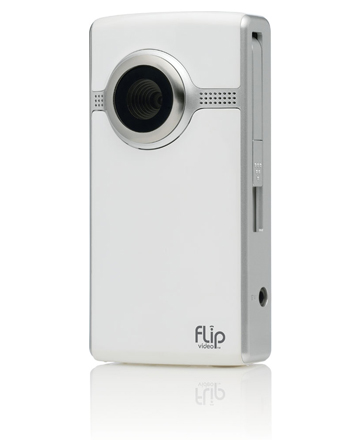
Community journalists, we want to give you a Flip camera

If you’ve been to one of our Web workshops you’ve probably heard us talk about the Flip camera. It’s an easy-to-use, point-and-shoot video camera that we’ve recommended for those who want to get started with digital video.

Now we have one (a Flip Ultra, worth $149), and we want to give it to you, the community journalists who take advantage of our online services.

To be eligible to win this all you have to do is be a registered user of this site, and a subscriber to our e-mail newsletter.

If you’re not registered yet, just point your browser to /user/register and sign up. Make sure you leave the box checked for “Subscribe to Weekly update from the Digital Initiative” so you’re eligible for the Flip camera giveaway.

You’ll be entered into the contest additional times if you’re also our follower on Twitter (our username is @tccj) or a fan of our page on Facebook (just search for Texas Center for Community Journalism) so if you aren’t registered on either of those sites, this could be a great time to do so.

We’ll select the winner on September 21st, so sign up by then to be eligible.

This is only open to individual journalists (so you can’t register under your newspaper’s name), and you have to live in the U.S.

Good luck.

Categories
Advertisng

Newspapers ads still send consumers to the store

Here’s a statistic to share with your advertisers: Newspapers are still the main medium that influences the buying decisions of 59% of adults. That’s according to data released by NAA, which contain a wealth of interesting stats about how newspapers readers are affected by advertising. The first link, to MediaPost, has some analysis with the highlights of the data. The second link is to a news release on NAA’s site with the numbers.

Categories
Online news

Many starting their day with the Web, not a newspaper

A story in the NYT looks at how many are starting their day online, which could mean an even further decrease in the amount of time people have to read the paper in the morning. “It used to be you woke up, went to the bathroom, maybe brushed your teeth and picked up the newspaper,” Naomi S. Baron, a professor at American University told the NYT. “But what we do first now has changed dramatically.” The story uses Web traffic patterns and anecdotal accounts to discuss the phenomenon, which is likely already affecting how many consume their news.

Categories
Online news Paid content

Five questions to ask before you start charging for online content

During the last few months, we’ve seen more and more newspapers make plans to begin charging for online content — despite the lack of success most have had with paywalls. You may be considering the same thing. But before you do, take five minutes to read Michelle McLellan’s blog. She asks five questions that any newspaper should ask before it erects a paywall. This one’s worth your time.

Categories
Hyperlocal news

Despite economic woes, community newspapers still strong

Community newspapers, while hurting from the economic downturn, have been largely immune to other changes in media that have hurt large, metro newspapers, according to an AP story. Also, metros might look to hyperlocal, the bread and butter of community newspapers, to shape the model of the large dailies of the future. Much of this story will be old news to community journalists, but there are some interesting statistics in this story about the performance of community newspapers as a part of the industry.

Categories
Uncategorized

New hope for ad sales, especially among community newspapers

Fitz & Jen point to a Borrell Associates report that indicates advertising revenue might finally be on the rise. The best part for community newspapers is that the report expects “much of the upcoming growth to come from community and suburban papers.”

Categories
Future of news Online news Paid content

Great list of ways to monetize online news

The CUNY Graduate School of Journalism has been looking at new models for online news lately, and speaking with online news operations all over the country. In doing so, they’ve provided a great list of ways people are monetizing online content. There is a great deal of information in here, and anyone with a website should check it out.

Categories
Future of news Online advertising Online news

Check out this new model for community journalism

Shortly after the Ann Arbor News closed, AnnArbor.com went live. The site has an interesting format — it’s rather blog-like — and it screams hyperlocal. It’s definitely worth looking at if you’re a community journalist. And on top of the interesting format for news, they’ve also rethought advertising in a unique way. Check out the articles for more information. The first link, from the Nieman Journalism Lab at Harvard, covers the reasoning behind the sites layout and delves into the ad issue as well. See the other two links for some commentary on the site from Steve Buttry and Jeff Jarvis.

Categories
Uncategorized

5 quick, easy online tricks you can try for football season

With football season right around the corner, it’s a great time to experiment with your website.

High school football is great for generating interesting photos, compelling narratives, and, best of all, reader interest. That’s all the more reason to give something new a shot online.

With that in mind, I’ve got five things you can try online this season. And did I mention they’re free?

  1. A new twist on the sound slideshow
    You’ve likely seen the slideshows that combine audio interviews and photos to turn a simple slideshow into a great narrative piece of mulitmedia journalism. These are great, and you can create them for free online with a program such as Flowgram, but they can be a lot of work out in the field if you’re a one man (or woman) band. Instead, you can use a service such as Animoto that will take your images and automatically set them to music.
  2. Crowdsource
    Let’s face it, you have readers that have some great insights into high school sports. So use them.
    Using the Web (and your print edition), you can ask your readers to submit questions that you can pose when you’re doing interviews and follow-ups. You can take questions by e-mail, in a comment thread on your site, or using one of the ways below (specifically No. 3 and No. 4).
    You can use those same methods to help your travelers for out-of-town games. One could ask, for instance, where the best post-game meal is, and have readers respond online or by e-mail, then post the results.
  3. Go live
    Of course all of your readers aren’t going to make it out for the friday night lights. In that case, there are several things you can do to bring the game to them, via the Internet.
    One of the easiest ways to do that is using CoveritLive. CoveritLive allows you to host live blogs, or even talk live with your readers. There’s also a scoreboard feature that will let you update your readers throughout the game. Readers can talk back to you, too, but it’s not the typical free-for-all you’ve seen other places. You’re the only one who sees what people are saying, and you can choose to showcase only the most insightful stuff — or none of it. The good stuff can be repurposed for print, and don’t forget to give a shout out in print to your reader if you happen to use a question or quote from them, that’ll just keep them coming back.
  4. Use the Twitterverse
    If you’ve yet to try out Twitter, this is a great time to do it. First, check to see that there are local people on Twitter by using Twitter’s advanced search. Type iin your town in the “Near this place” field, and see if it would be worth it for you to try to use the service.
    Assuming there are enough “tweeps” in your town to justify using Twitter, a great way to build conversation around a game or your team would be to promote a hashtag (more about hashtags here) in your print edition, and ask all the “tweeps” in your community to append it to their posts on Twitter. If that’s all Gibberish to you, don’t worry. You’re not alone. If you want to know more about Twitter, see our resources here and here.
  5. Let their voices be heard
    Sure, the TV folks are the ones known for the often-mocked man-on-the street interview. But check out a new take on that from the Lawrence Journal World called “On the Street“. You could easily apply this man-on-the-street tactic to creating a quick online (or print) piece.
    You can record these pieces with just about any video camera, and if you do it right, you shouldn’t even need to edit them. Just tell the person you’re interviewing to state his or her name, then answer the question succinctly. Press record right after you ask the question, then stop it when they’re done answering and go on to the next person. Do that and you’ll have a finished product — no need for titles or editing — as soon as you get back to a computer. Upload it to YouTube and call it a night.
    Promote it in print by posting a few quotes and teasing to the Web feature. You could also take this in another direction and just go downtown and shoot similar videos before a big game that offer encouragement to the team, and post that.

Think you can’t handle any of these things? Let me know, and I’ll clarify where necessary. If you want more ideas or have a few of your own, let us know in the comments and I’ll post a follow-up with a yours and another five of mine.

Categories
Future of news

How newspapers must change

It’s not your father’s newspaper business any more. This business is changing as radically as the buggy whip business changed around the turn of the 20th century. One of our goals in the Around the Web service we provide is to share with you some of the innovative thinking out there related to the business we know and love. This article is one you should definitely read. You may not agree with all of it, but it’s a concept you should think about. Here’s a sample: “20th century news isn’t fit for 21st century society. Yesterday’s approaches to news are failing to educate, enlighten, or inform. The Fourth Estate has fallen into disrepair. It is the news industry itself that commoditized news by racing repeatedly to the bottom. It’s time for a better kind of news. A new generation of innovators is already building 21st century newspapers: nichepapers. The future of journalism arrived right under the industry’s nose.”